Keep updated on all that is happening around Thiessen Farms!


2 Comments

CSA 2016 – week 4

IMG_7367

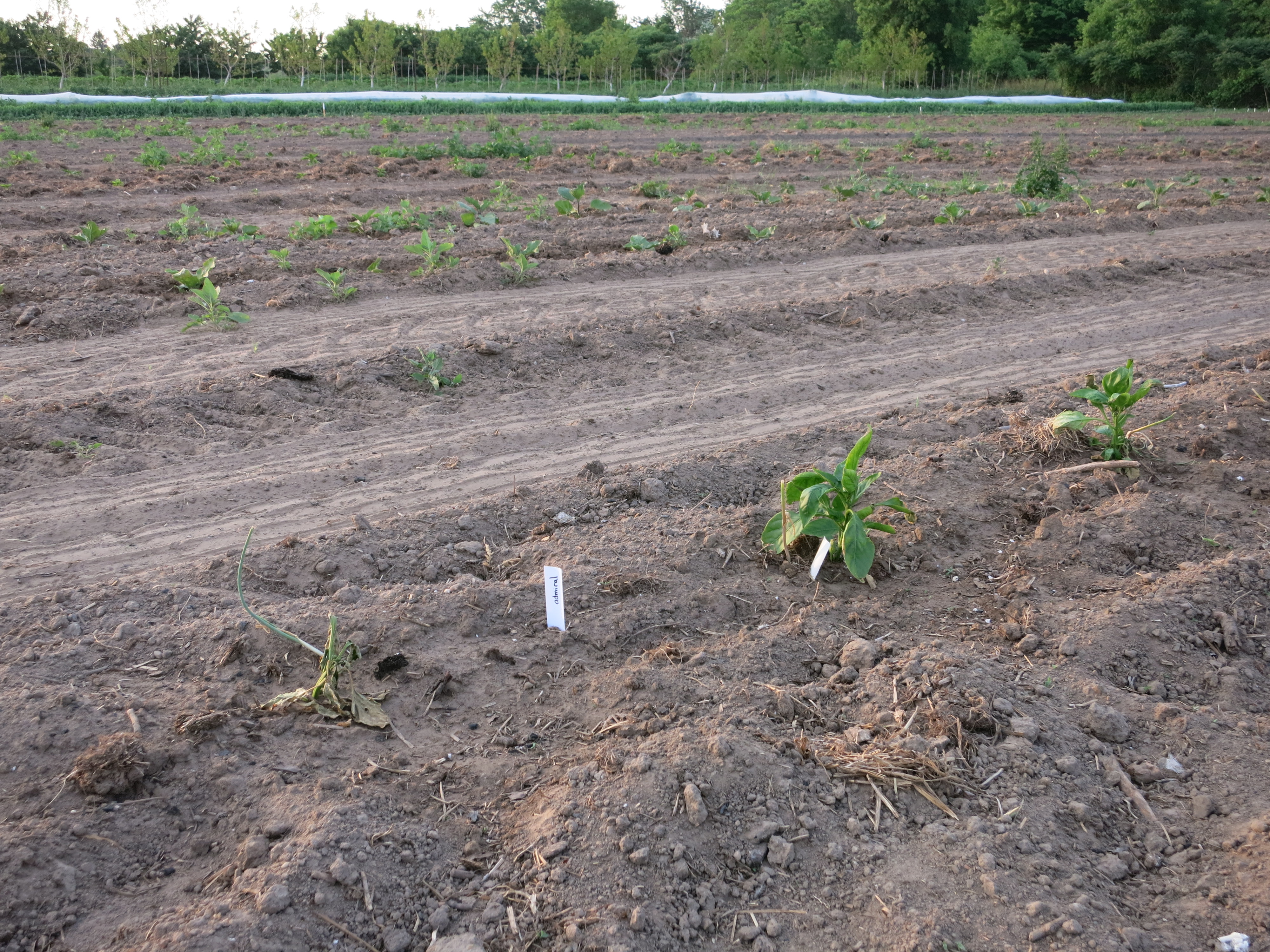
This is a picture of bean plants just poking up through the soil.

When I checked this morning to see if they were up, there was nothing. This evening most of the row was visible. I’m always amazed how they first appear as little green hoops (like on the left). Then the one end pops out of the ground & quickly the first leaves unfurl. By tomorrow morning there will be a whole row of bright green leaves on little stems. We’ll be eating these beans later in August.

Seeds germinating & growing are always amazing & beautiful – but common on the farm. We plant beans every few weeks in order to have a continuous supply for much of the summer.

What is different about this planting is the extra effort that it took for them to reach this stage. Last week we sowed these beans into soil that was really just dry dust – barely any moisture was visible. I watered the row hard after planting & almost every day since. It paid off & most seeds have germinated. However I cannot continue to water daily so I hope their roots will go down deep & find enough moisture to grow & thrive on their own.
IMG_7371

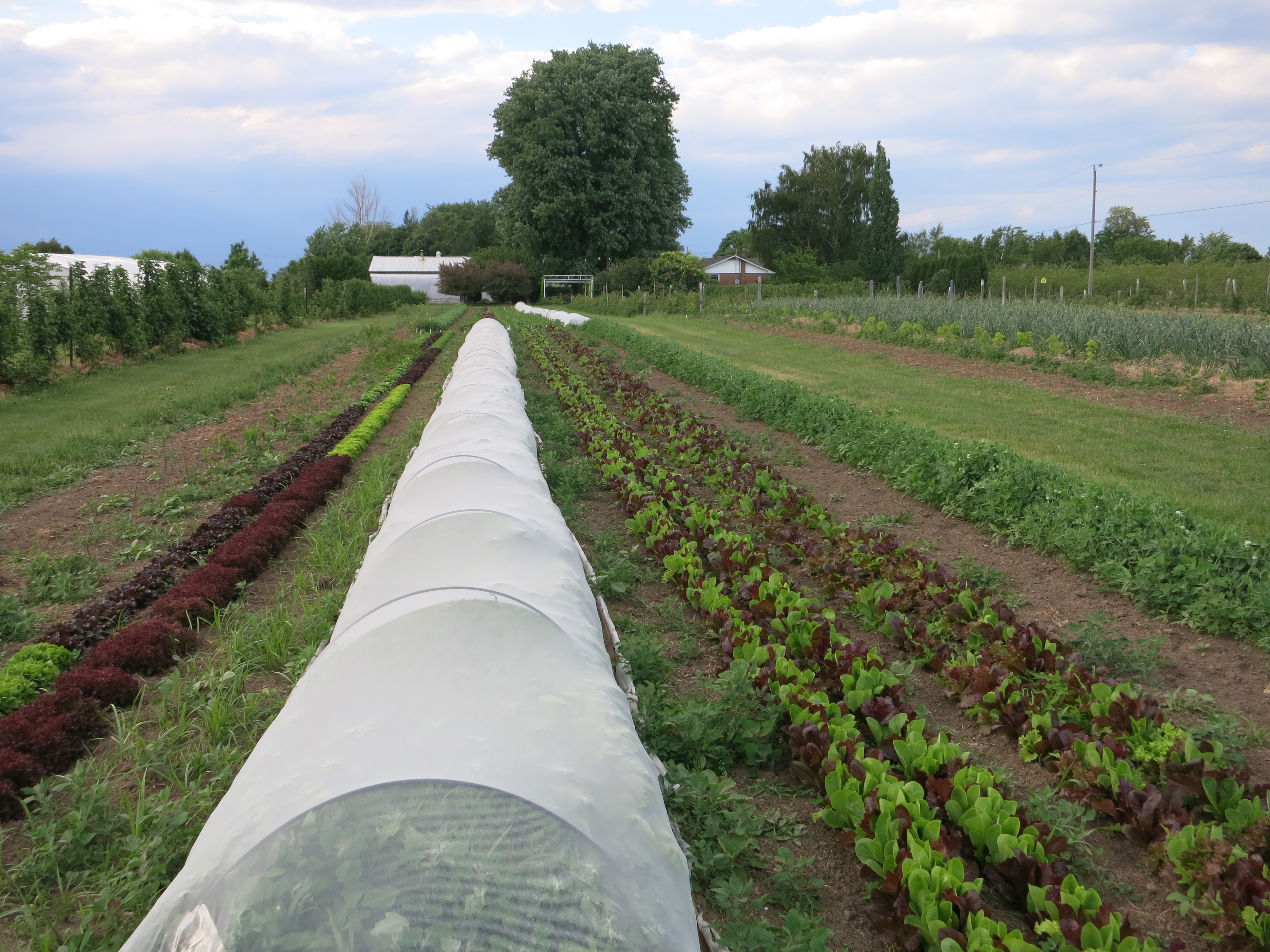
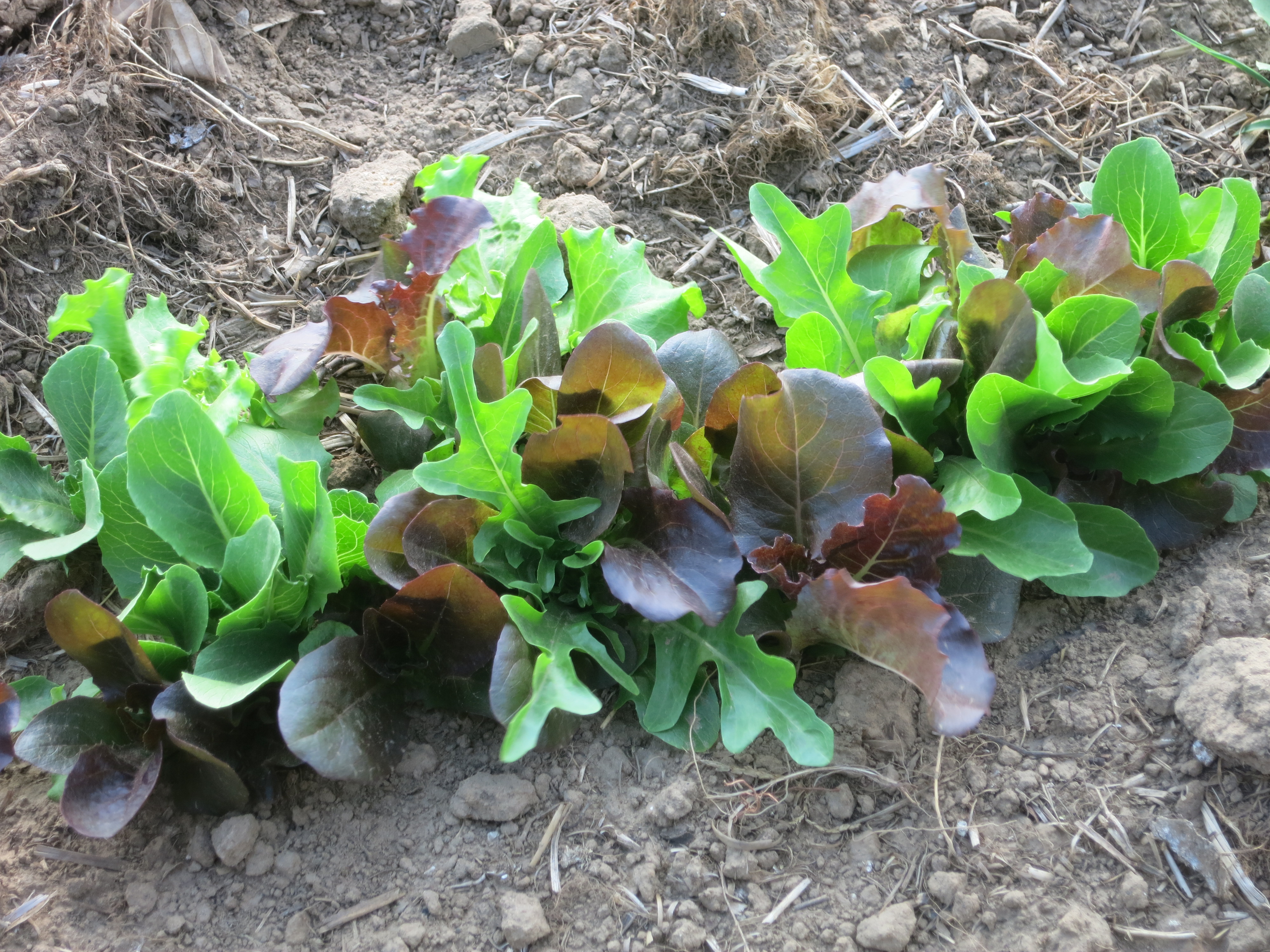
In contrast to the beans, our latest seeding of lettuce mix is doing well without any watering. Notice how dry the soil is.

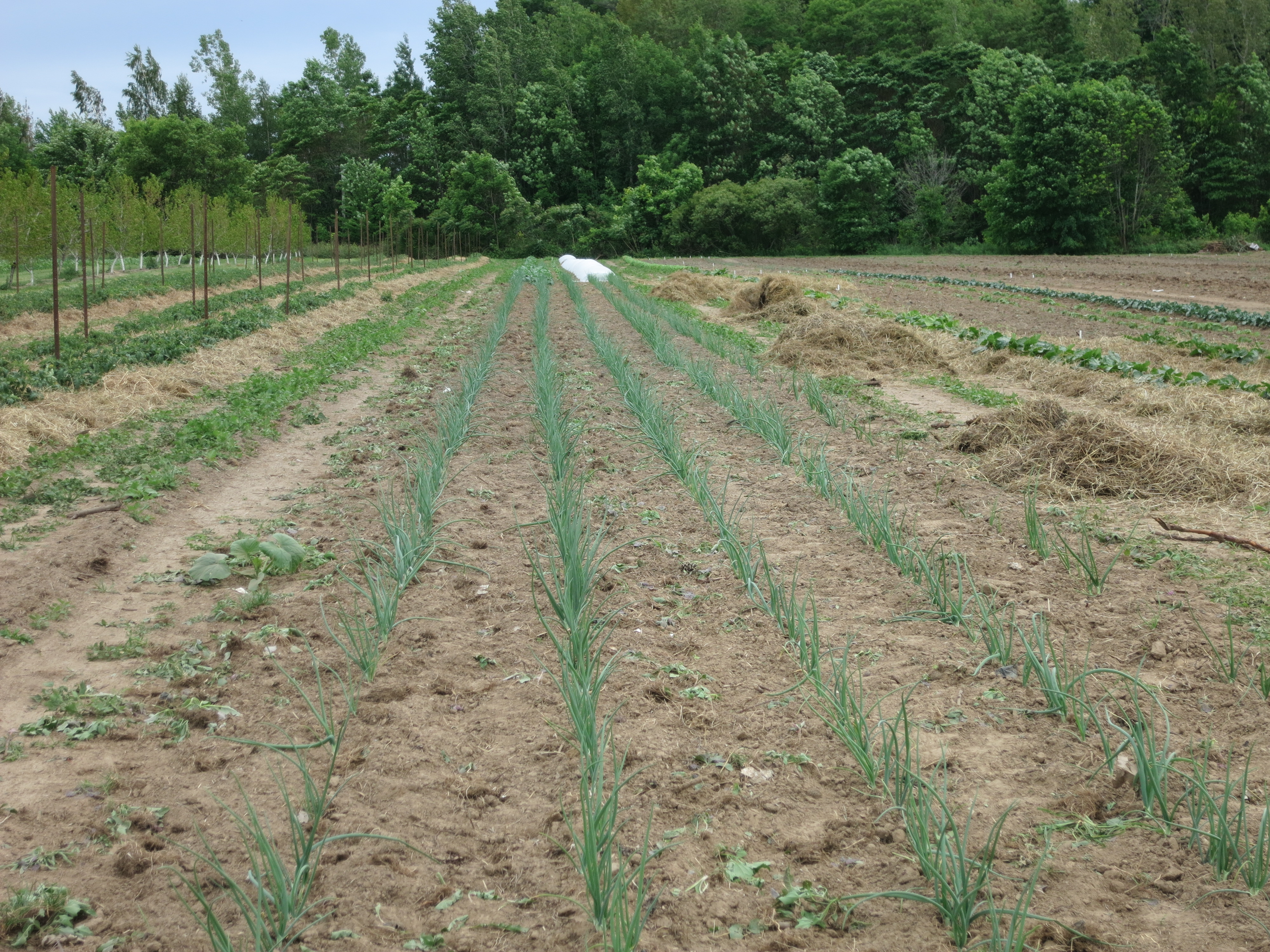
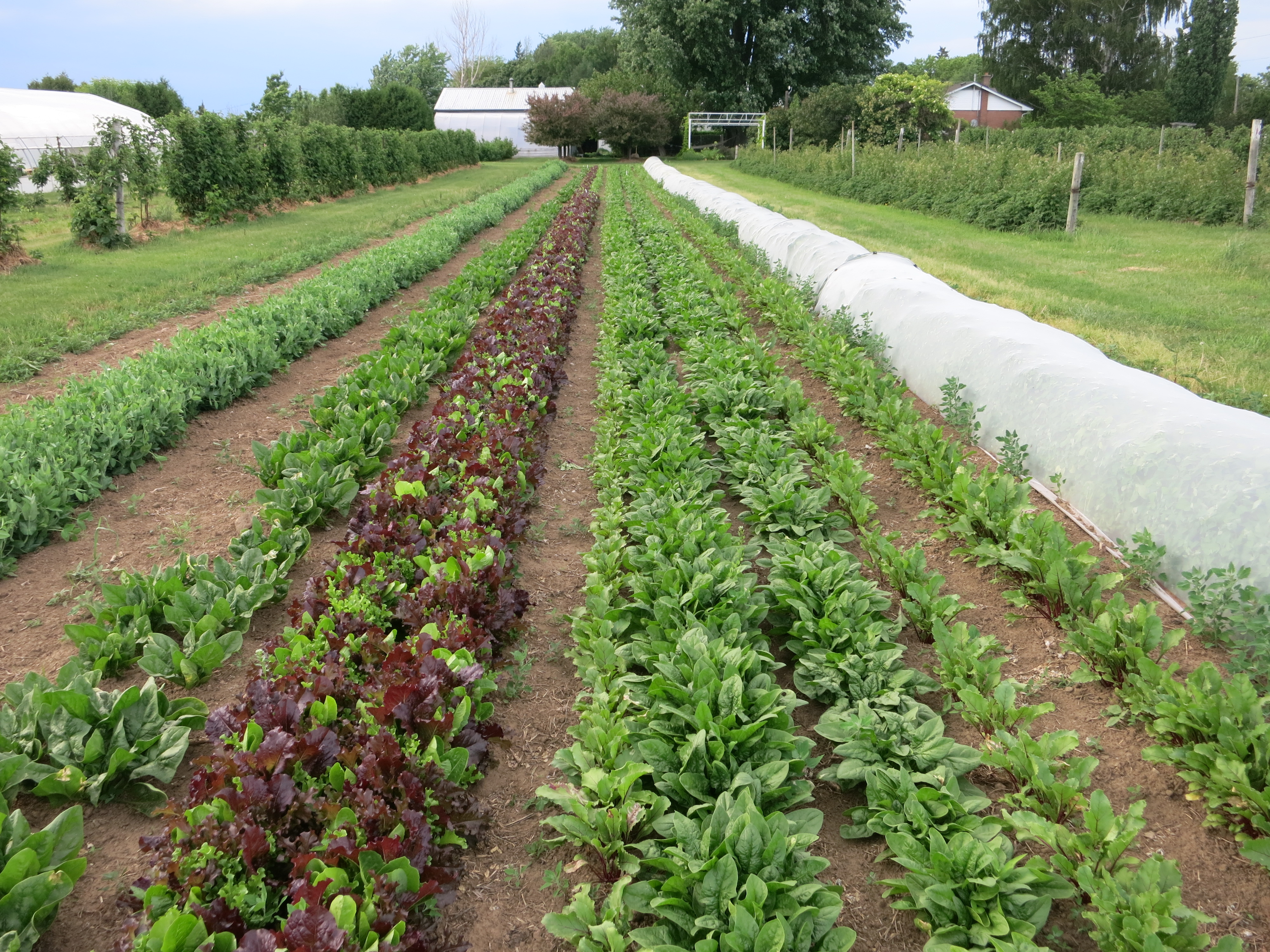
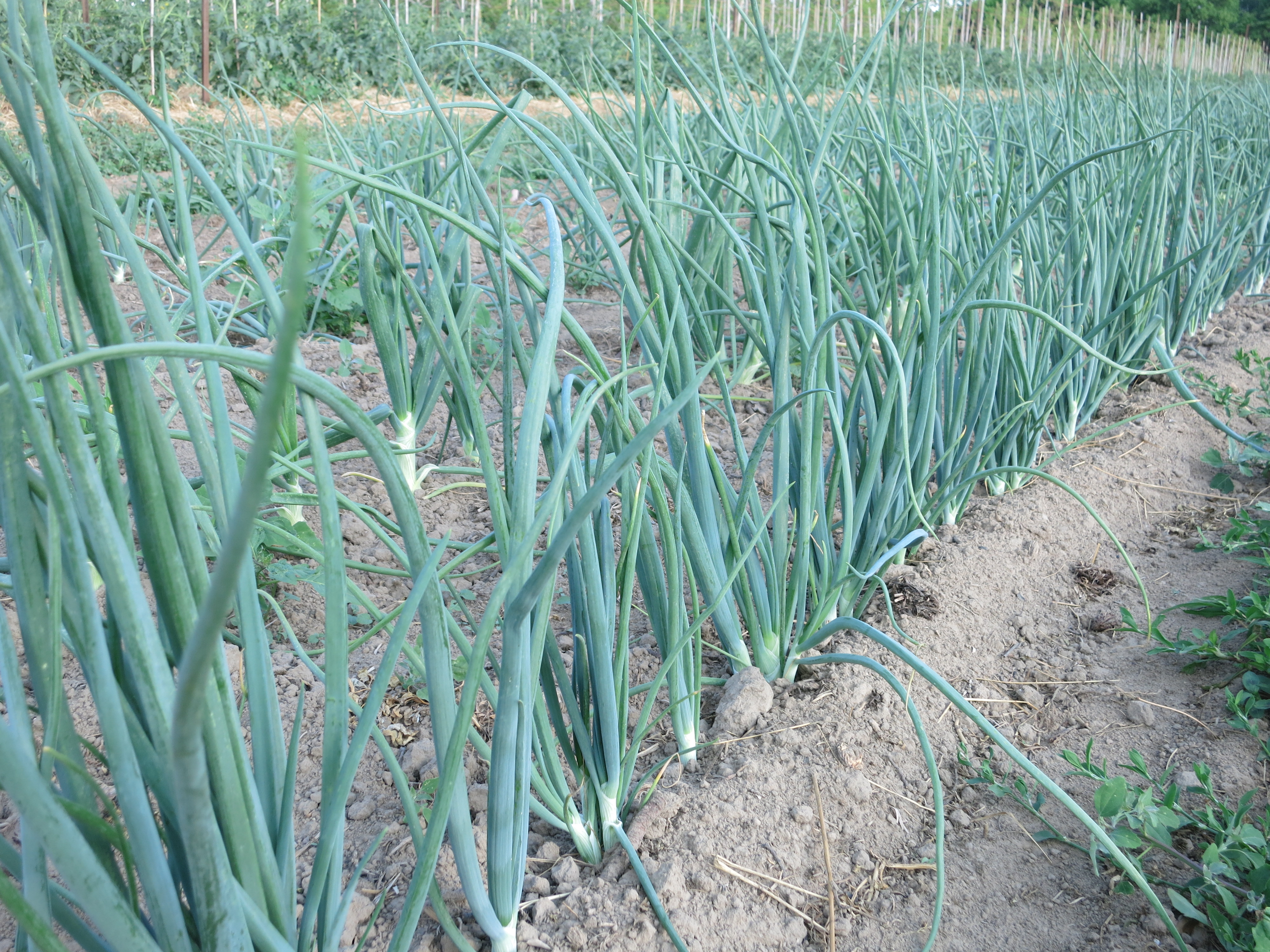
Other vegetables growing well now include green onions & sugar snap peas.
IMG_7374

IMG_7377

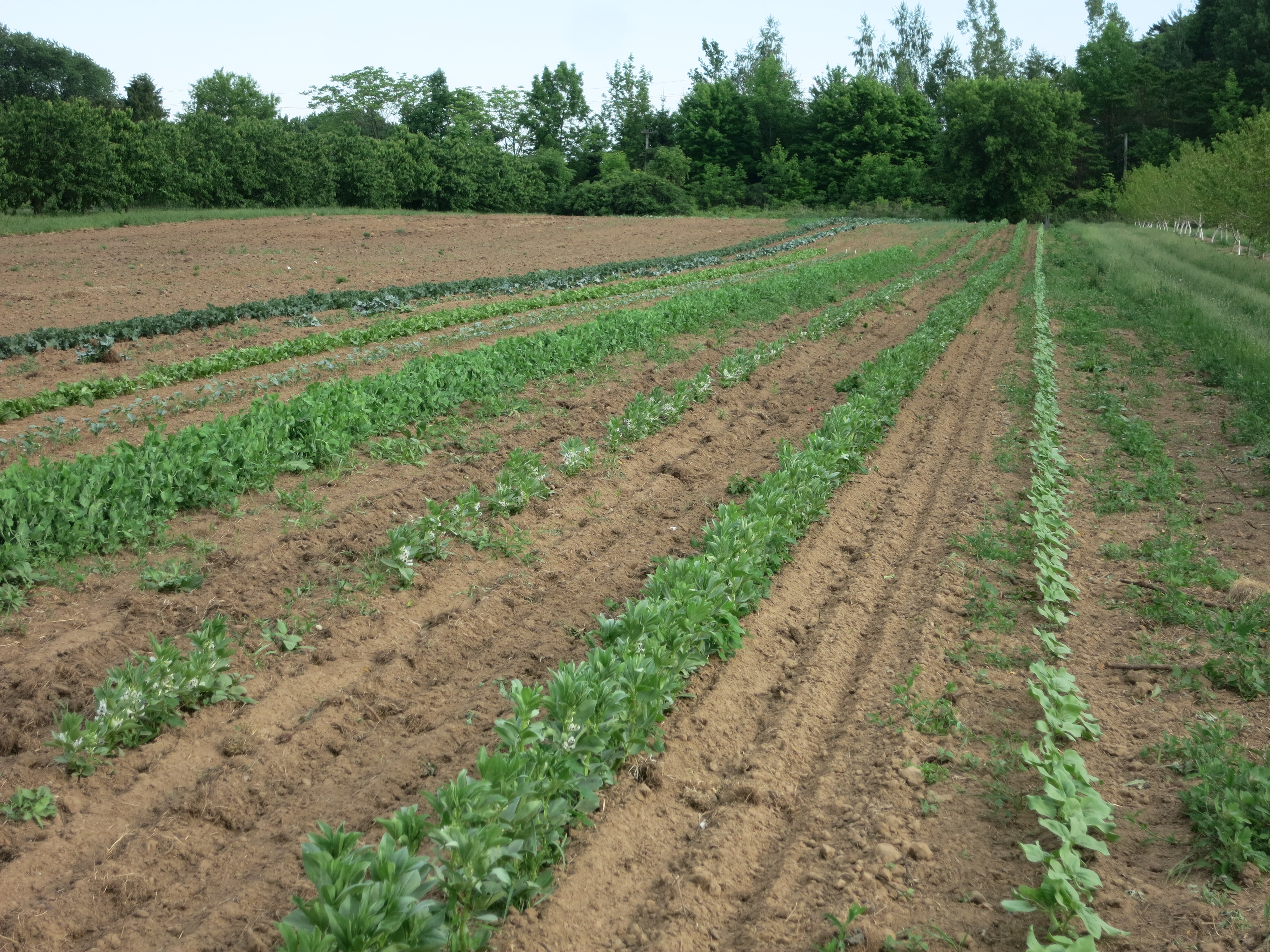
Our fava beans got off to a good start & customers at our markets have been waiting anxiously for them. But without the needed rain, many of the bean pods are drying up & even the plants are wilting & drying.

IMG_7379

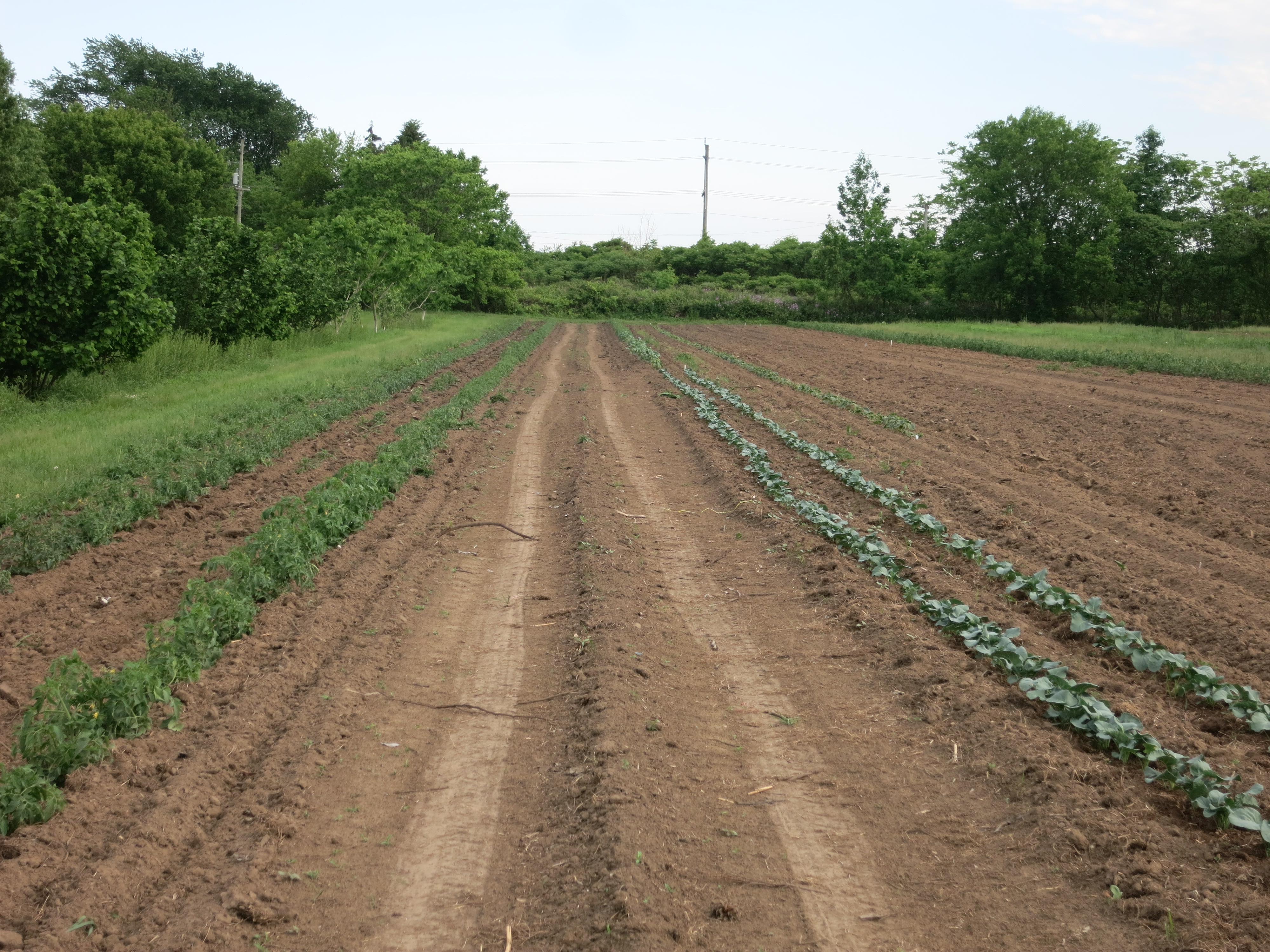
The zucchini plants are beginning to produce zucchini, but the bugs – many of which thrive in hot & dry weather – are feasting on the leaves & blossoms.

IMG_7372

It is becoming a challenging season & we desperately require rain. There have been brief showers in the area, but we seem to have missed them. What is needed now is at least an all-day (or night) rain & preferably several days of steady precipitation in order to bring moisture levels back up.

What’s in the box?

Peas, garlic scapes, green onions, beets, zucchini, kohlrabi, salad turnips, lettuce mix.

  • Peas are a good news/bad news story. Good news – the snow peas in your box last week tasted great! Bad news – while we can usually pick a patch of peas for 2 weeks, the snow peas lasted only 1 week, due to the drought. Good news – we have more rows of peas coming. Your share this week will include more delicious peas. They might be snow peas, or shelling peas or even sugar snap peas. What’s the difference? With snow peas you eat the whole thing, pod and all. Shell peas have to be opened & only the round little peas inside are eaten – the pods are tough & stringy. Sugar snap peas are the best of both. You eat everything like a snow pea, but the peas inside are bigger, almost like a shelling pea.
  • Garlic scapes are a favourite for many. They are the top of the garlic plant. We cut them off so the garlic puts all it’s energy into forming a nice big bulb underground. Leaving the scapes to grow would produce flowers & seeds instead, which we don’t need or want. Use them wherever garlic bulbs are used – raw or cooked. Their flavour is a bit milder than garlic.
  • The first onions of the season are green onions, also called bunching onions or scallions. Use the whole thing – the green leaves & the small, bottom white bulb.
  • Beets – one of our favourite vegetables. We prefer them roasted in a slow oven, either alone or with some of the other vegetables from the box. They are also good raw, shredded into a salad or grilled on the barbecue.
  • Ugly or misshapen vegetables are a big thing in some of the grocery stores now. Of course on the farm we’ve been selling blemished produce or 2nds for years. This week’s zucchini might have some odd shapes & sizes. The first picking of zucchini is often like that. Still tastes great though!
  • How did you enjoy the kohlrabi last week? Our favourite way to prepare it (other than raw in slices) turned out to be sautéed in butter & garlic (or garlic scapes) for just a few minutes. Then add just a dash of nutmeg. Delicious!
  • This week’s share will include lettuce mix & salad turnips again. There should be lettuce for several weeks yet – or until the hot weather turns it bitter.

A reminder that we still have CSA pick-up this Friday – Canada Day!
IMG_7399

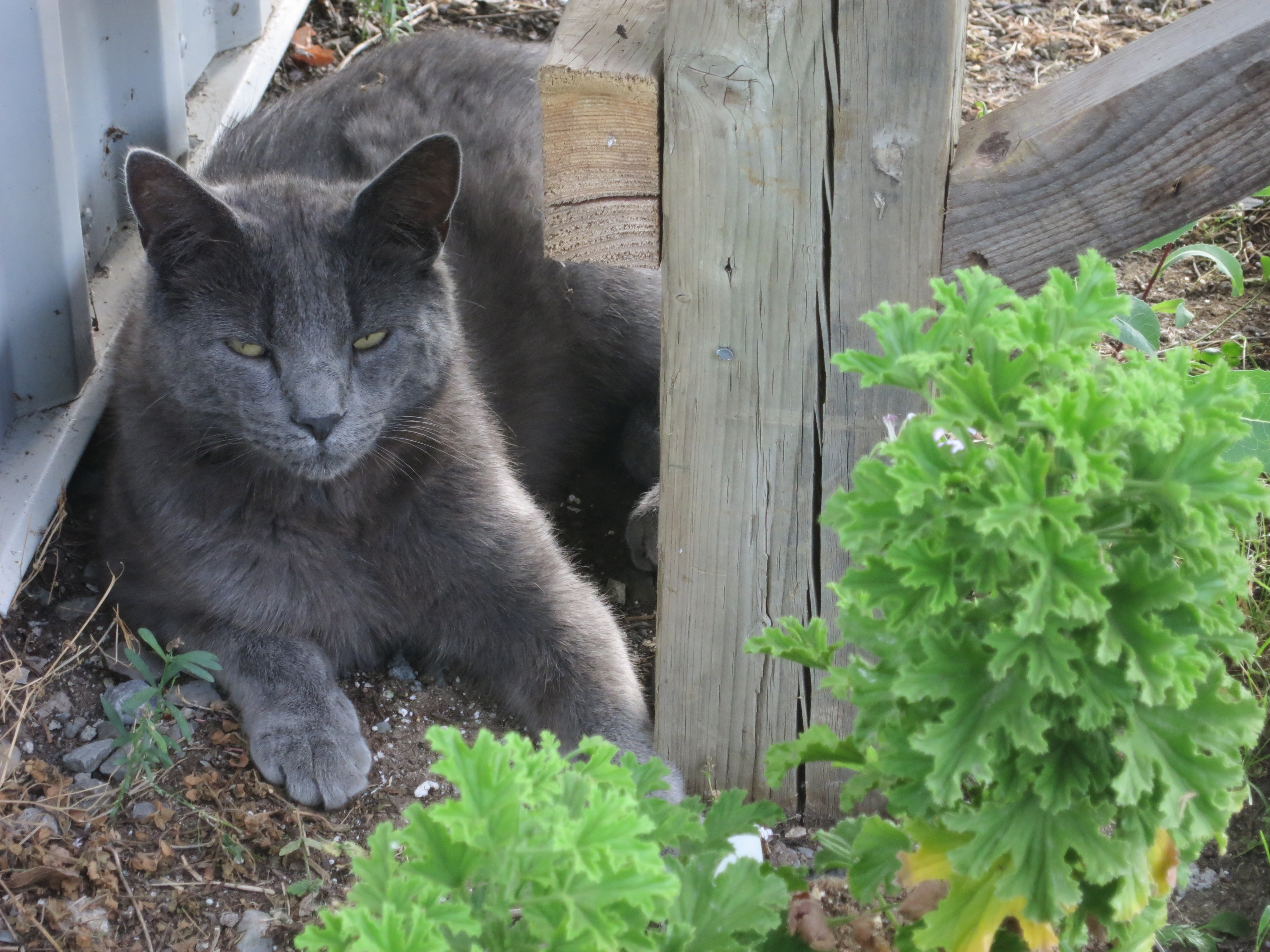
Flynn looking a little lazy on a hot afternoon.


1 Comment

CSA 2016 – week 3

IMG_7333

IMG_7341

Just behind our small greenhouse, tucked between the rows of rhubarb, is a little square of garden – wild garden – that is one of my favourite areas on the farm right now. Mostly, I like it because I haven’t done anything with it this season. No seeding or planting, no weeding, no watering – nothing. Yet it has yielded abundant crops of parsley, cilantro, dill & chamomile. I planted all those things here last season & then left them to go to seed. As I had hoped, they all returned this year, growing lush & strong. Since early spring we have enjoyed our scrambled eggs with dill, added cilantro & parsley to our salads – all without any effort or work on our part. Now we have let it go to flower again & the blossoms are full of bees & other pollinating insects. Shortly, I’ll mow it all down & the crops will regrow again. The only downside is the weeds mixed in that are also going to seed & will return with a vengeance.

If only the whole farm were so easy!

IMG_7327

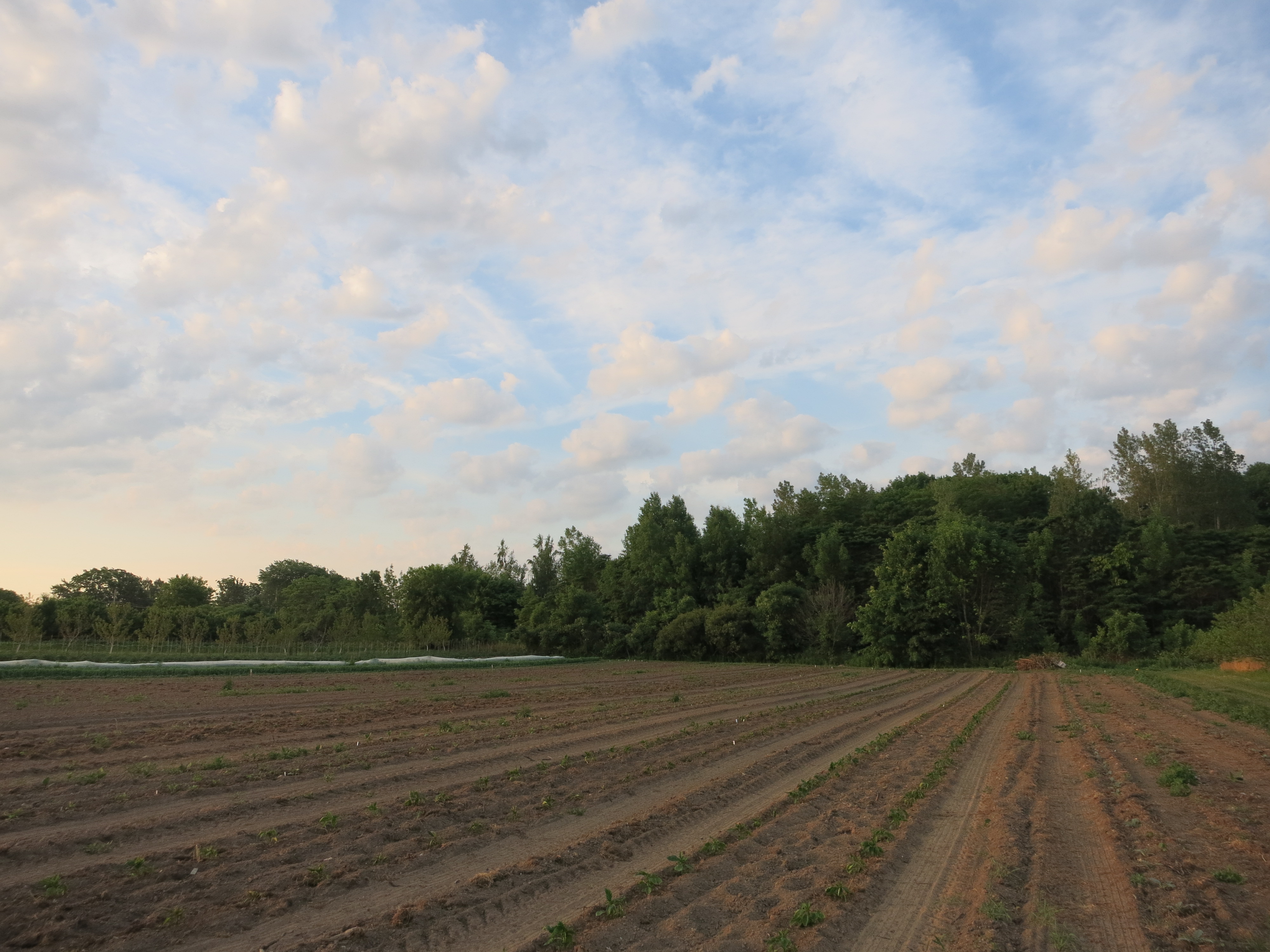
The sky early this morning was beautiful – but we knew it was to be a scorcher! While we wilted in the heat, we managed to accomplish a lot. But the plants are also wilting in the heat & shriveling in the drying winds. No rain in sight!

Our usually rich, dark soil has become very dry & dusty. Plants that we recently transplanted into the fields are struggling to survive.

IMG_7329

Those that were established earlier continue to do well, though growth is slow & some are showing signs of suffering.

IMG_7321

What’s in the box?

Kohlrabi, snow peas, lettuce, radishes & salad turnips.

  • We have not offered kohlrabi in our CSA shares for several seasons – but not for lack of trying. We just have had difficulty getting it to grow properly. This season, on the advice of more experienced growers, we started it in the greenhouse & transplanted it to the field – with much success! Many people are not familiar with kohlrabi, so here’s a quick tutorial.

IMG_7350

IMG_7353

Kohlrabi is a strange-looking vegetable – sort of like a cross between a little cabbage and a turnip. It is usually considered a root vegetable, though the edible round globe grows above ground.

Kohlrabi is usually eaten raw – just peeled & sliced. The taste & texture resembles fresh, crunchy broccoli stems, with a bit of radish thrown in. Use on raw vegetable platters and serve with a creamy dip.               Grated kohlrabi can be added to slaws.

Kohlrabi can also be steamed or boiled but don’t peel until after they are cooked. When the bulbs are tender, peel skin, and season with butter, salt, and pepper, a cheese sauce, or just enjoy plain.                     They are good for mashing with other vegetables – parsnips, carrots or potatoes.                                             Kohlrabi absorbs the flavour of other ingredients making it ideal to add to soup, stew and stir-fries.

If the leaves attached to the kohlrabi bulb are fresh and green, they can be enjoyed as a cooked green. Wash the leaves and remove the ribs. Blanch in boiling water until just wilted, 3 to 5 minutes. Drain and squeeze excess water from leaves. Chop leaves, then sauté in a little olive oil or butter. Season with salt and pepper. Add a splash of vinegar or squeeze of fresh lemon juice.

The bulbs should be stored, unwashed, in a plastic bag in the fridge. They will hold for about a week.

Here is a link to a recipe using kohlrabi & radishes – http://pin.it/WXElbey

  • Snow peas are always a favourite for our CSA members. Steam, saute, or stir fry them. Enjoy them raw in salads or just as a snack.
  • Lettuce, radishes & salad turnips make repeat appearances in the CSA box again this week.


…  a few pictures of pick-up day for our CSA last week.

IMG_7310

IMG_7307

IMG_7304


1 Comment

CSA 2016 – week 2

Our farmers’ markets (North York & downtown Georgetown) have been going for a couple of weeks now, and it’s great to be back. It’s always good to see familiar faces & old friends again.

But I will admit that we began this market season with a lot of uncertainty & some trepidation. We knew that one of the first questions most people ask is, “How are the crops. Did the fruit trees come through the winter ok?” And then we have to tell them that we are no longer in the fruit-growing business. Reactions are usually similar – disbelief & confusion, along with disappointment (and occasionally even some anger), followed by the question “Why?” We have our standard answer, which is basically a shortened version of our blog post from last fall (https://thiessenfarms.com/2015/11/11/changes). It is not entirely a satisfactory answer for many customers and they leave our market stall unsure of what to think. But most have also assured us of their continued support & patronage, as they anticipate our vegetables & berries. For this we are grateful.

This is our 2nd week of CSA. We are not getting the same questions & reactions as at the market because our CSA members already knew. Most read our blog & saw the news last fall, or saw in our 2016 CSA information that fruit would no longer be a part of the program. While many responded by not joining us again, others are giving us a chance to fill their weekly boxes with a greater selection of fresh vegetables & berries.

Another question we commonly get is, “How are things growing?” or, “Getting enough rain?”

Answer – The crops continue to grow despite the lack of precipitation. We have not had a good rainfall since … I don’t remember. But this is when we see the benefits of our soil building efforts through the years. All the manure, compost & mulch that we regularly add has built up the organic matter and improved the soil’s ability to hold moisture. While it is extremely dry on the surface, there is still some ( not enough) below. Seeds that are sown now have to be well watered in order to germinate. Then the roots head down, down searching for moisture. Most continue to grow – slowly. Transplants that we set out now also need to be watered in, usually several times. Even then they struggle and are not thriving as we would like to see. But it could be much worse …

We prefer to mulch the vegetables after a rain when the ground is wet. The mulch will then keep the soil from drying out & hold the moisture. But since that isn’t going to happen this year, we mulched the tomatoes today as the plants are getting large. Then we began to stake & tie them.

IMG_7297

IMG_7301

The zucchini also got mulched.

IMG_7299

Onions got weeded …

IMG_7298

along with the fava beans & sunflowers.

IMG_7296

What’s in the box?

Salad turnips, lettuce, spinach, radishes, Asian greens, plants.

  • Salad turnips are small, round, white turnips that resemble radishes – but without the bite. Mild in flavour, crisp, and quite tender, they are best eaten raw – simply wash, cut off the tops and enjoy! They can also be stir fried, sautéed, or steamed – both the turnips & the green tops.
  • Lettuce mix (or perhaps single varieties of lettuce), spinach, radishes – it’s fresh salad time.
  • The Asian greens are delicious to eat but frustrating to grow. While they come on quickly, which is a good thing, they also finish quickly. Some our plantings bolted (which means blooming & going to seed) before we could even harvest them. But they sure look beautiful in the field, and the bees & other pollinating insects love them! See the picture below.
  • We know many of our CSA members enjoy having their own gardens too. This week choose a tomato, pepper, or eggplant plant to grow. While you can expect to get plenty of all of these vegetables in your boxes this summer you may still want the pleasure & satisfaction of growing & picking some of your own produce.


IMG_7302


Leave a comment

CSA 2016 – week 1

IMG_7176

This picture pretty well sums up the last few weeks here on the farm.

We have been planting, transplanting and watering. Throw in some weeding and an average day is complete.

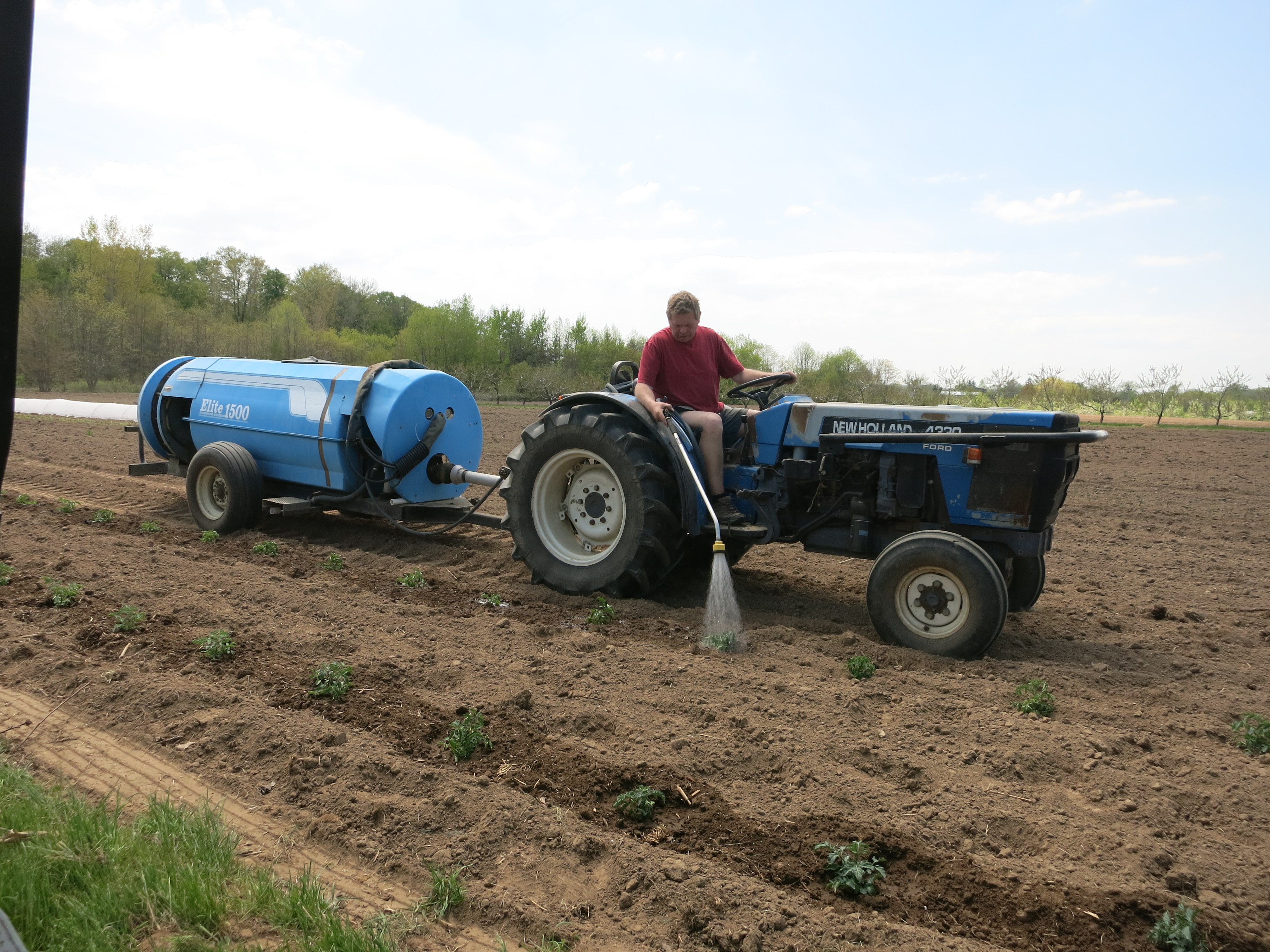
Many of our vegetables are started in the greenhouse & then transplanted into the field at the appropriate time. In the picture above, (taken 2 weeks ago) we have just finished transplanting tomatoes and I am watering them in. We always water the transplants – it helps to get them off to a good start.

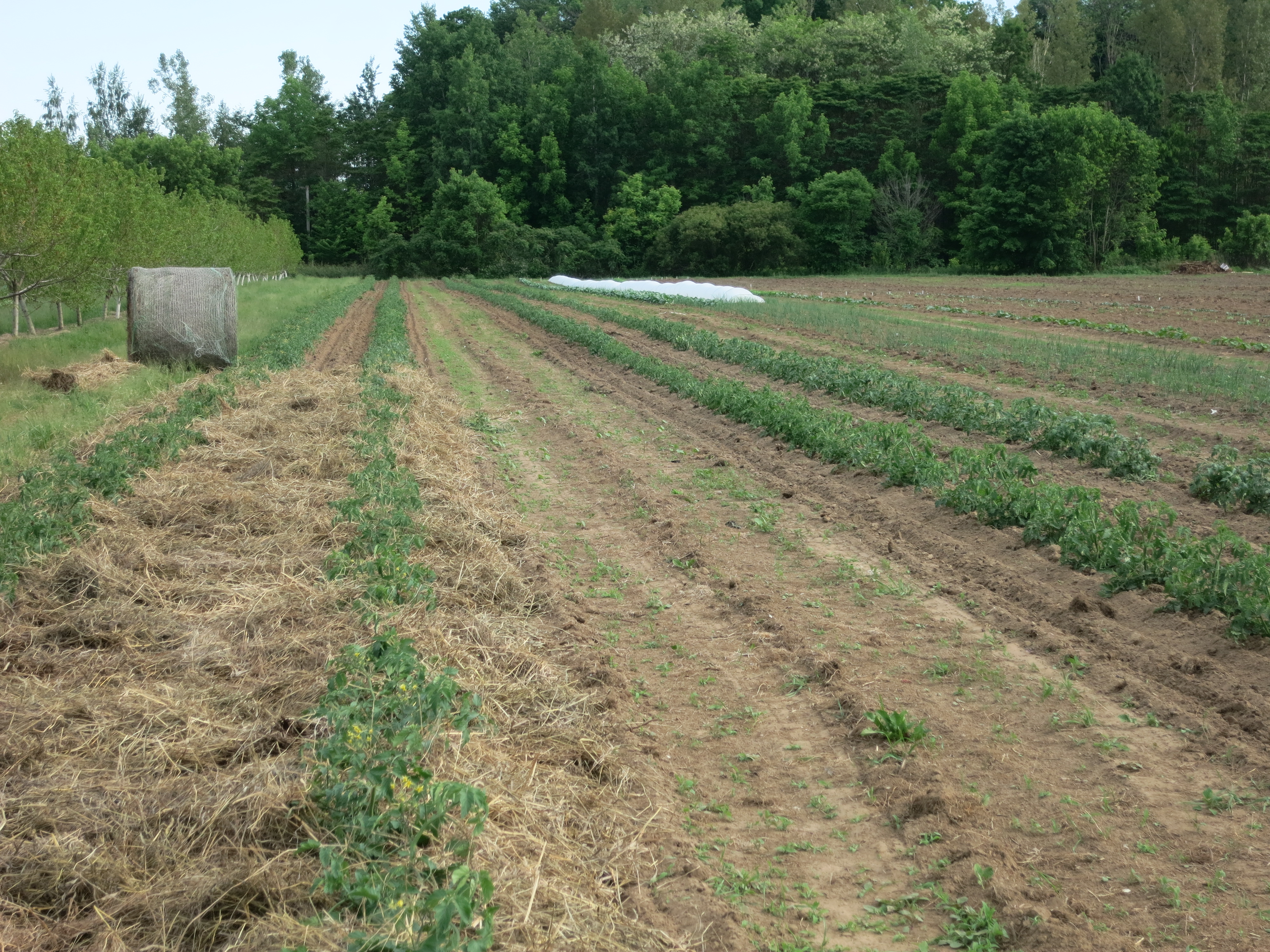
Here are the same tomatoes 2 weeks later – big enough to be mulched. After mulching we will stake them, then sucker (prune) and tie them. Already there are lots of little tomatoes on the plants. It won’t be long …

IMG_7281 - Copy

Usually that initial watering at transplanting time is enough. After that the vegetable plants are on there own, relying on the rain to keep them watered. But because the precipitation has been scarce lately, we have taken to watering them several times, just to ensure a good start.

The vegetables have been enjoying the warm temperatures, but the lack of regular rain has slowed down their growth.

On the weekend we received some small rains – not a lot, but enough to refresh the plants & the soil and really perk things up. Of course the weeds were also beneficiaries and are responding vigorously!

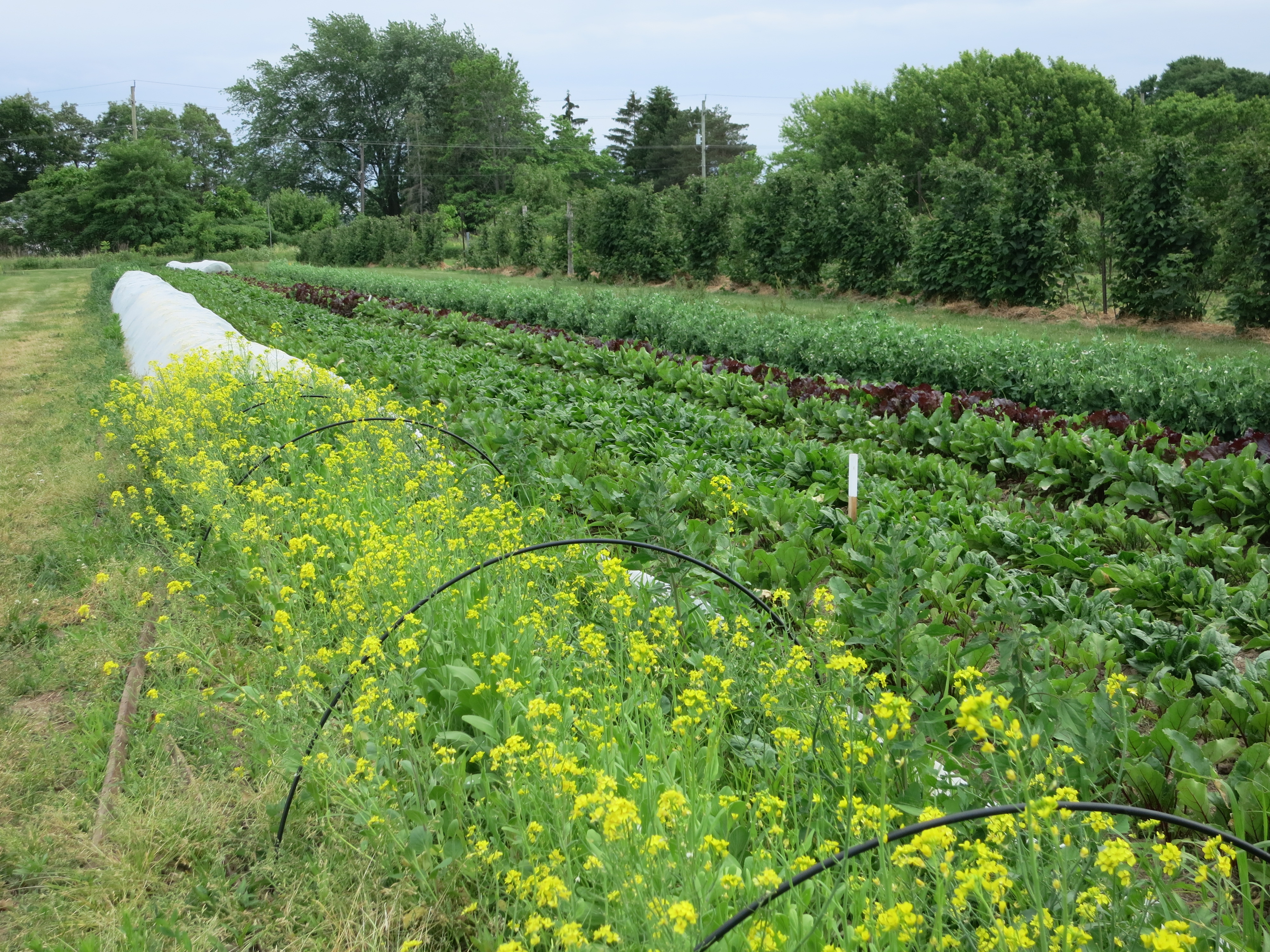
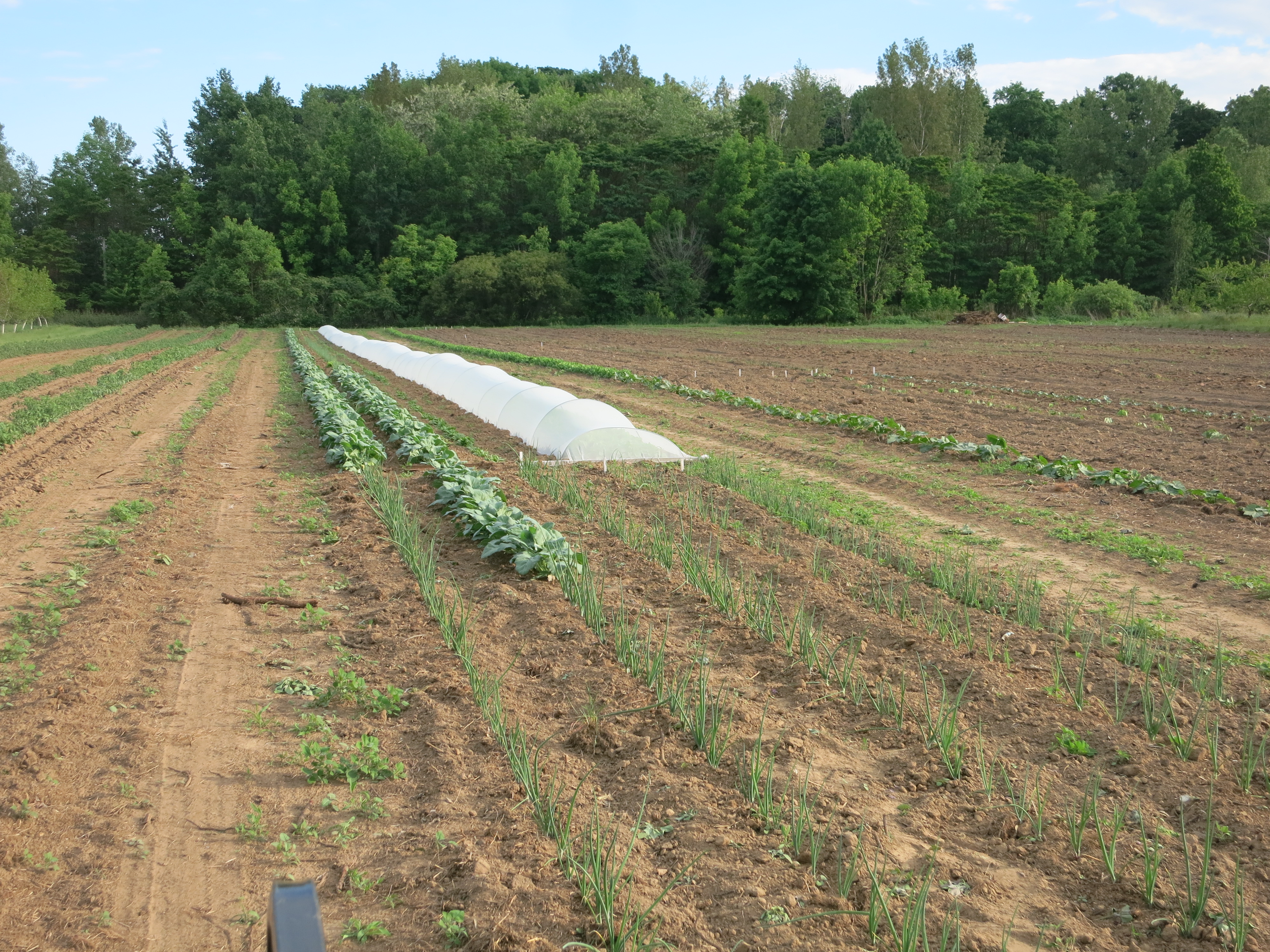
Here’s a look at some of the crops today …

IMG_7279 - Copy

IMG_7282 - Copy

IMG_7284 - Copy

The colourful lettuce mix & spinach seen below will be part of the CSA boxes this week.

IMG_7287 - Copy

IMG_7288 - Copy

What’s in the box?

lettuce mix, spinach, misc. greens, radishes, pea shoots & rhubarb.

  • The lettuce mix & spinach & greens have been rinsed once to remove some of the field dirt. You will want to wash them more thoroughly, then bag them & keep them refrigerated.
  • We grow an assortment of greens – this week most of them are baby pak choy. We prefer to eat it stir fried with a bit of sesame oil. Heat it very briefly so it retains the bright colour & crispness.
  • The first radishes of spring are always a sharp treat. The degree of heat depends a lot on the growing temperatures. Based on that, they should pack quite a punch after the hot weather last week. They will store well in a bag in the fridge – remove the leaves first. If they lose their crunch, soaking them in ice water for 20 minutes will restore crispness (it will also make them milder tasting though).
  • Pea shoots – excellent in salads or stir fries. Just place the box outside in partial shade or inside near a window. Keep them well watered & use as needed. Cut them about half way down, leaving stem & some leaves. They will grow back – slowly – and you can harvest them again. Cutting them all the way down at soil level gives a larger harvest – but only once.
  • Your CSA box this week will contain a few stalks of rhubarb. There should be enough to make a pie – for those who bake. We like to make a rhubarb crisp. It’s easier, quicker, and perhaps a bit healthier? Here’s the recipe we use …

Aunt Elvira’s Fruit Crisp

Cut up rhubarb (or any fruit) and half fill a pie plate.

Mix together …

½ cup brown sugar

¼ cup flour

¼ cup rolled oats

½ tsp cinnamon

3 TB butter

(adjust the amounts to suit your preferences)

Cover fruit with this mixture.

Bake for approx.. 12 minutes in the microwave.

We are excited to be starting CSA for another season.

Looking forward to seeing everyone at pick-up this week!


Leave a comment

CSA 2015 – Final Week!

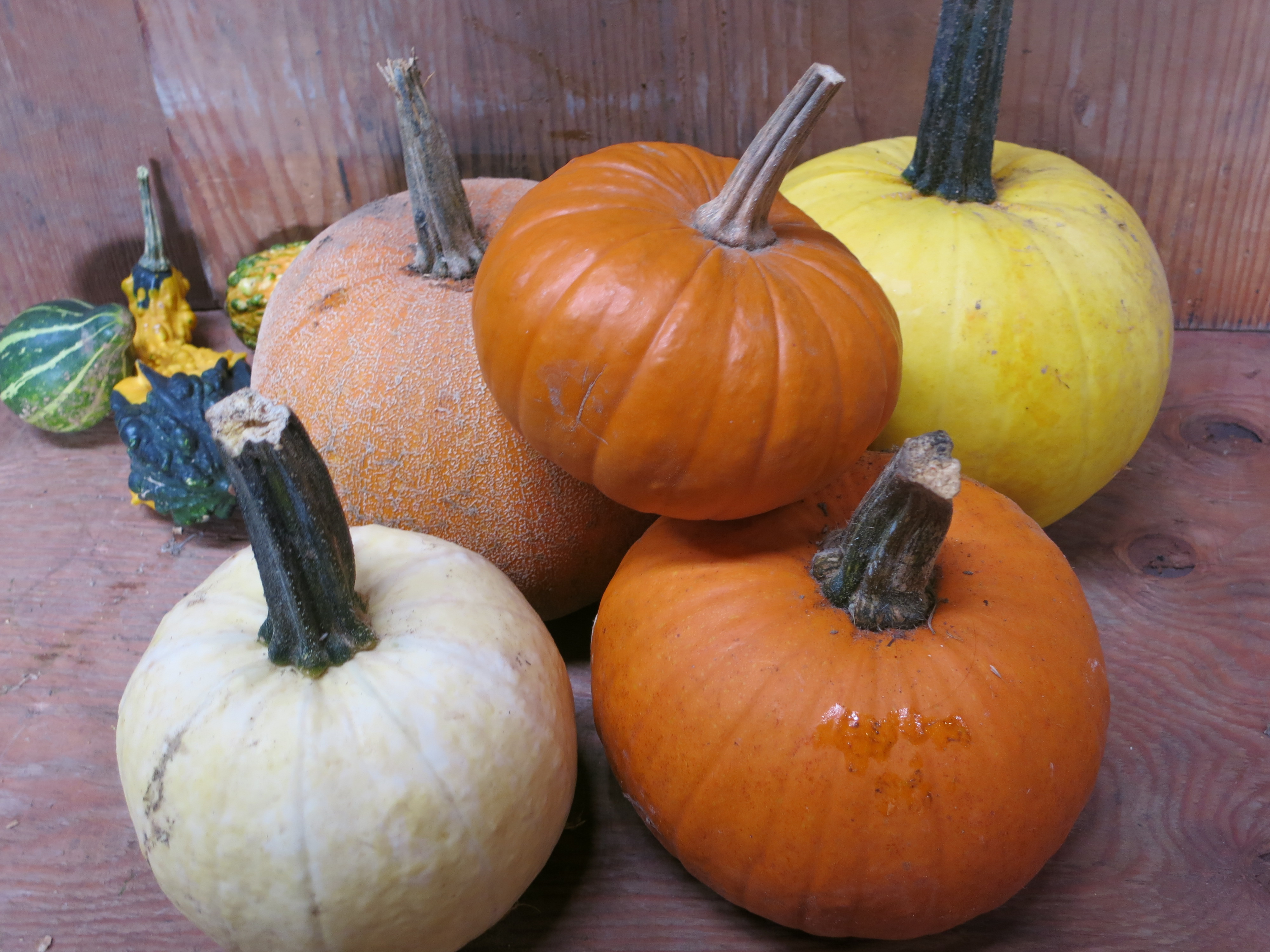
Our last big crop of the season is squash & pumpkins. Most of them are now in bins in the barn & ready for selling – and eating!

109

111

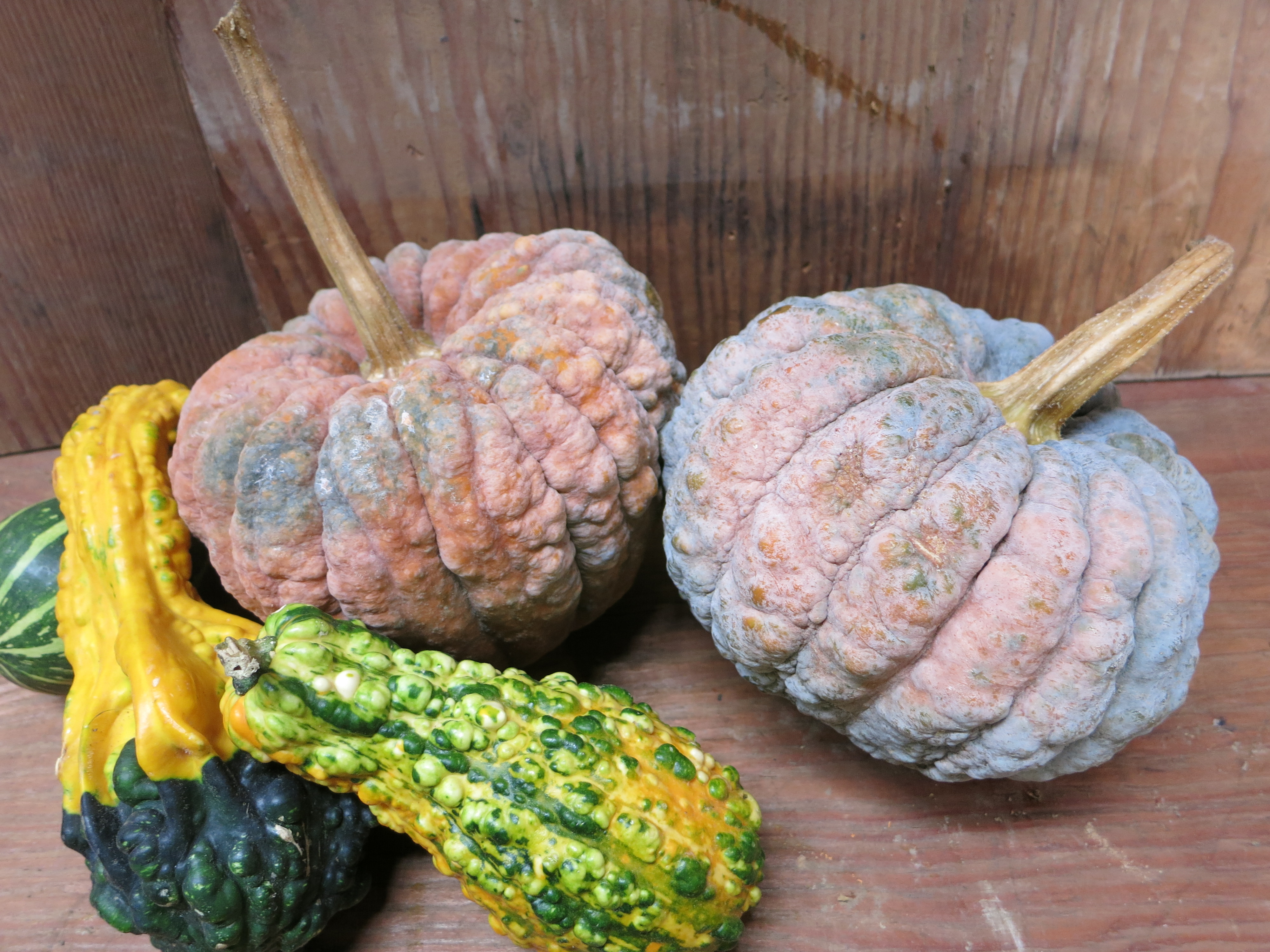
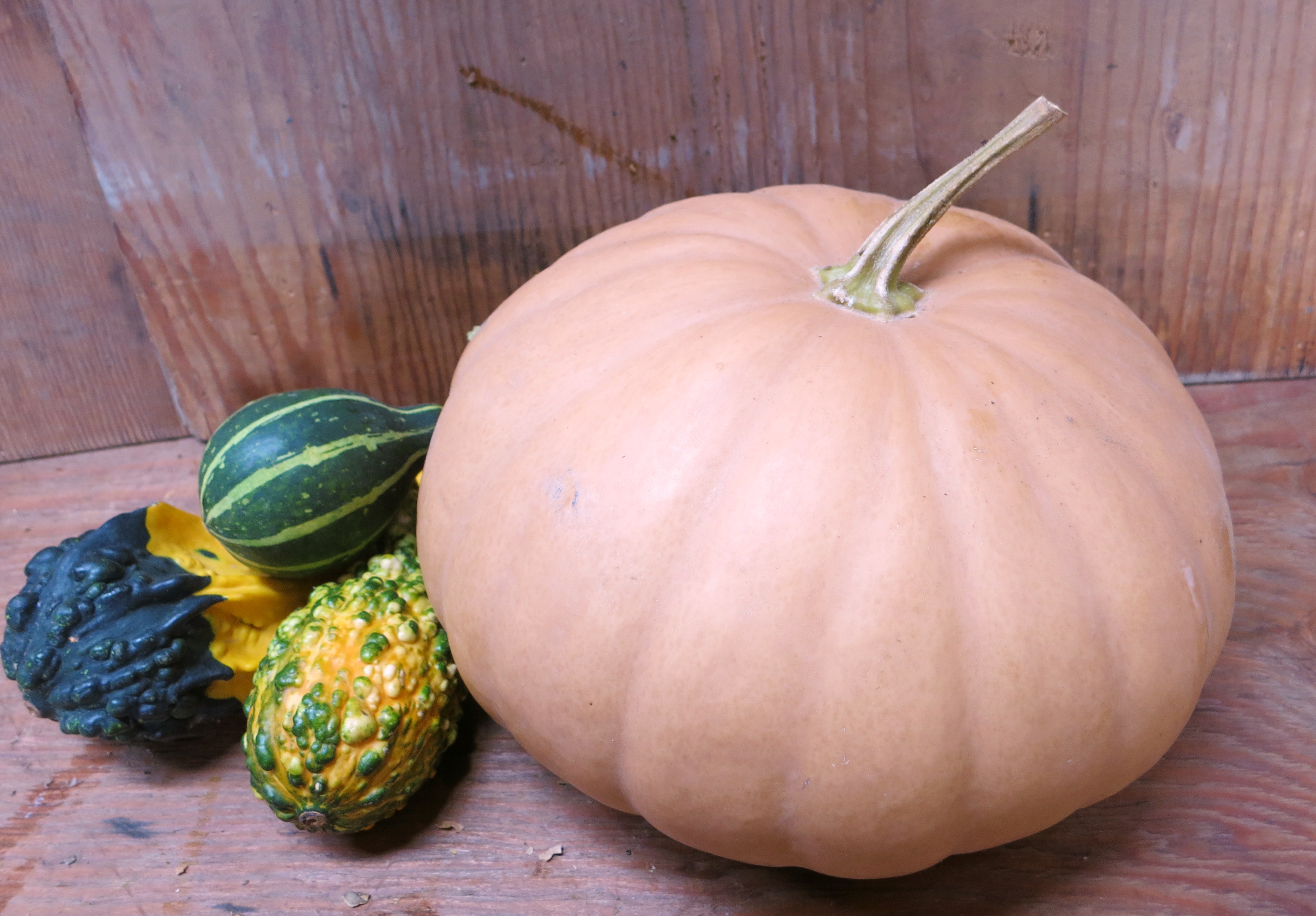
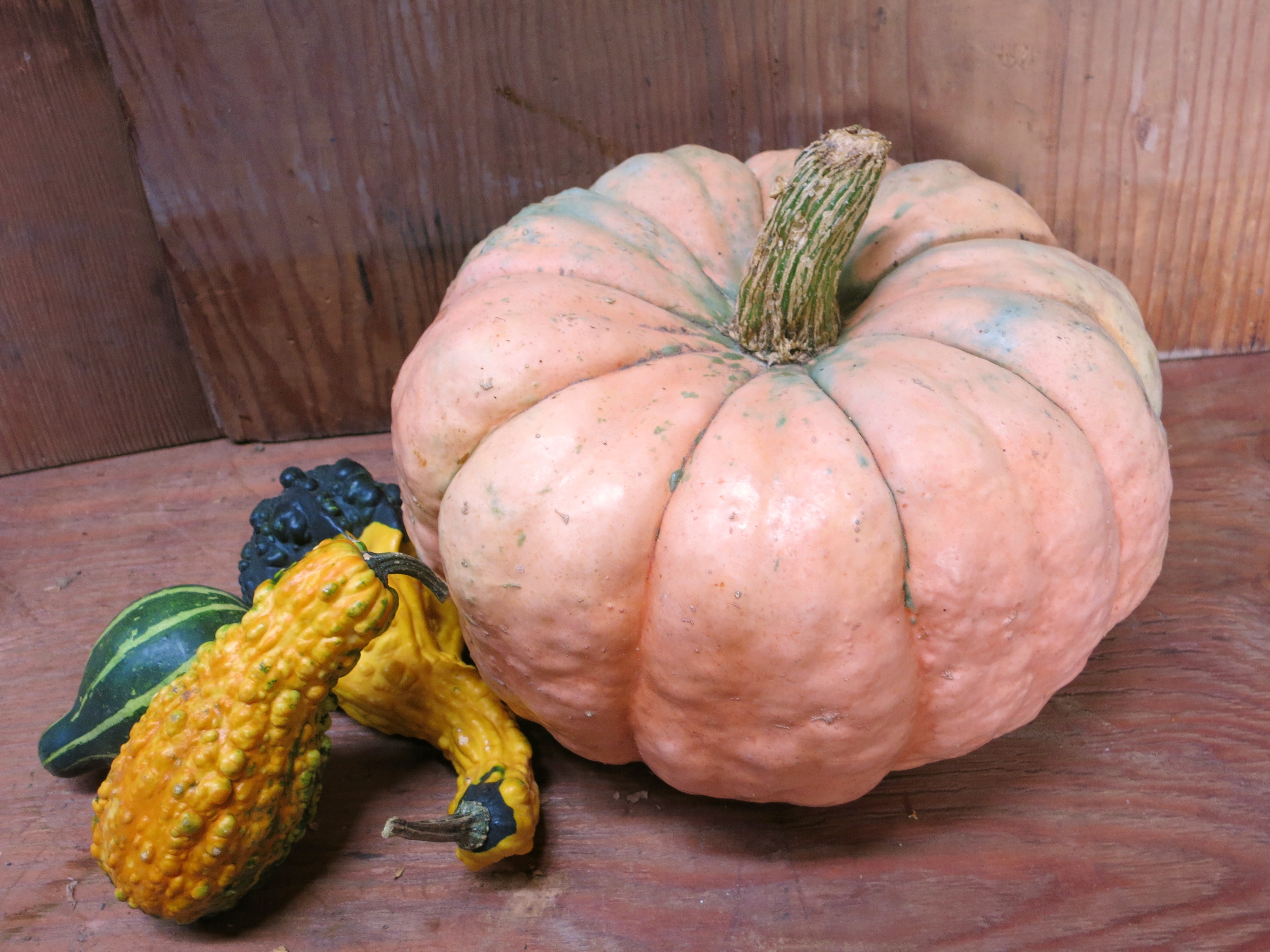
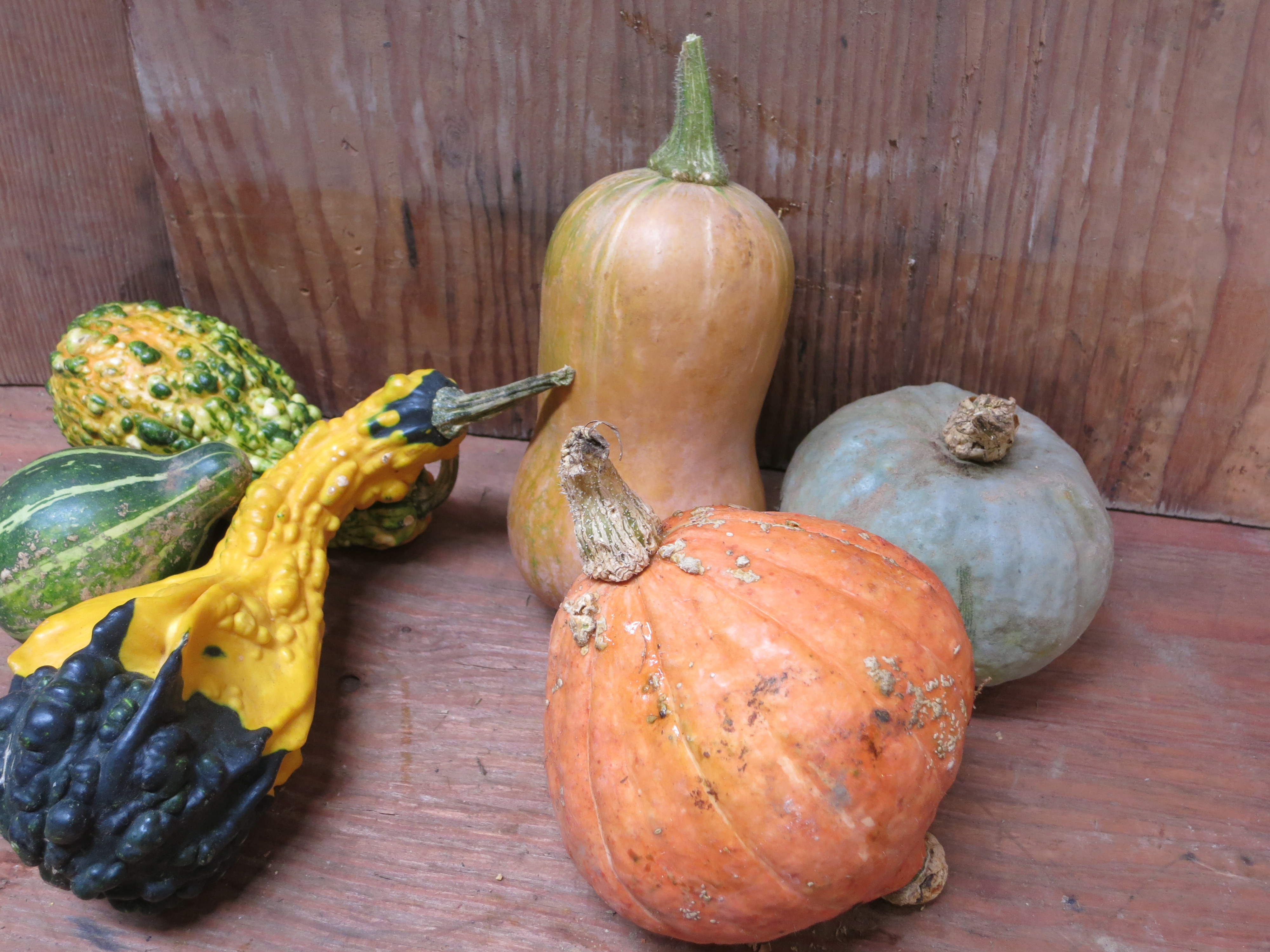
This year we grew about 30 varieties of squash & pumpkins. We choose as many colours & shapes as possible to make for an eye-catching display at market. And of course flavour is very important! There isn’t enough space on our farm to grow a lot of any of these – just enough for CSA & our farmers’ markets.

Here are pictures & descriptions of most of them. (The same gourds are in each picture to give some idea of the relative size of each squash.)

Butternut – everyone’s favourite squash. Rich orange flesh with a nutty flavour. We grew 5 different kinds of butternut – various sizes.

072

Black Futsu -bright orange flesh with the flavour of hazelnuts.

055

Sunshine – a beautiful, bright orange squash (inside & out) with a sweet & somewhat dry texture. Sunshine are great for pies, baking & mashing.

035

Blue Hubbard (heirloom) – an old variety that is large, yellow-fleshed, somewhat dry, and not too sweet.

067

Thelma Sanders Sweet Potato (heirloom) – a small, sweet, tasty, acorn squash.

090

Jarrahdale (heirloom) – a beautiful, slate-grey, high quality, delicious pumpkin.

034

Long Island Cheese (heirloom) – tasty pumpkin that looks like a wheel of cheese.

058

Boston Marrow (heirloom) – large, dry & sweet, with good flavour.

051

North Georgia Candy Roaster (heirloom) – a long, banana shaped squash with sweet, orange flesh.

045

Moranga (heirloom) – a pink to salmon coloured squash from Brazil used to make a traditional “camaraona moranga” or shrimp in a squash.

042

Tetsukabuto – deep yellow flesh with a sweet, nutty flavour & smooth texture.

091

Stripetti – a spaghetti/sweet potato cross. The flesh is stringy like spaghetti! More flavour than a plain spaghetti squash.

095

Australian Butter (heirloom) – beautiful, peach coloured squash from Australia with good flavour.

080

Musquee de Provence (French heirloom) – The flesh is deep orange, rich & moderately sweet. The outside turns a rich brown colour as it ages.

088

Red Warty Thing or Victor (heirloom) – gorgeous, red-orange, large squash covered in bumps.

085

Galeux d’Eysines (heirloom) – commonly called “peanut” squash. A pale pink squash covered in warts or peanuts, & used for soup in France.

082

Porcelain Doll – a pink pumpkin used for pies, soups …

076

Sweet Dumpling – small, individual sized squash with very sweet, moist, yellow flesh.

102

Mini-squashHoneynut (mini butternut), Gold Nugget (mini orange hubbard) & Shokichi Shiro (mini kabocha).

093

Assorted small pumpkins

103

What’s in the box?

Squash, Bosc pears, tomatoes, sweet peppers.

extras – hot peppers & Bartlett pears.

  • Your choice of a few squashes this week! Not all the varieties listed above will be available – but there will be a good selection! Squash can be stored for a few weeks & up to several months for some kinds. It is important to keep them dry & cool. The easiest method (& our favourite way) to prepare squash is to slice it in half, scoop out the seeds and bake it – usually at 350 C. until it is soft when poked with a fork (approx. 45 minutes to an hour depending on size). Bake it cut side up or cut side down – it really doesn’t matter. Then scrape the flesh out of the skin, mash & enjoy. You can add brown sugar or maple syrup if you prefer a sweeter squash, or just salt & pepper.
  • The Bosc pears in your box are still very hard & green. They will take more than a week or 2 to ripen. Bosc are at their peak for eating when they begin to turn a golden brown colour. If kept refrigerated, they will last until Christmas.
  • Tomatoes & sweet peppers are coming to an end along with the CSA. Enjoy the last of them!
  • There are still hot peppers available.
  • So many of you have said how delicious the Bartlett pears are. Grab another basket if you want more. Eat them now while you wait for your Bosc pears to ripen.

This is the final week of our CSA for this season!

Thank you to all our members for being a part of this adventure in fresh eating! We hope you enjoyed all the vegetables & fruit. 

See you next year! 


Leave a comment

CSA 2015 – Week 17

The season is coming to an end.

The orchards are empty – all the trees are picked.

Many of the vegetables fields are empty too.

Our last workers are leaving this week – one going home to Mexico, and one going to work at a greenhouse operation for a few months.

Our CSA program is wrapping up – only 1 more week after this one.

But the season is not completely finished.

While the orchards are empty, the cold storage is full of pears to be packed.

051

We are still picking some vegetables – tomatoes (mostly just some small cherries), eggplant (though the plants are going downhill fast), kale (still going strong), peppers (both sweet & hot continue to slowly ripen), and maybe some lettuce (here’s hoping the last planting will mature in time & still taste good). But our ambition & enthusiasm for harvesting is fading as fast (or faster) than the plants.

The squash & pumpkins are picked, but mostly still curing out in the fields & waiting to be hauled into the barn.

021

024

We washed the last of the gourds today – it’s time for fall decorating! Our market displays are very colourful this time of the year.

047

Although the CSA is finishing, but the farmers’ markets continue – one closes after Thanksgiving & the other goes right until the end of October.

Our days begin a little later now as the sun is slower to rise in the morning. It sure was beautiful this morning!

014

What’s in the box?

Squash, tomatoes, sweet peppers, garlic, kale, Bartlett pears.

extras – hot peppers.

  • The first taste of squash will be in your box this week. Next week’s newsletter will have pictures & descriptions of the many kinds we grow. Some will be familiar & others are less common.
  • The cooler weather on the weekend immediately slowed down the ripening of the tomatoes & peppers. Enjoy them, as they are coming to an end.
  • Another garlic bulb is part of your share this week. We have all the garlic trimmed & cleaned. Now we have to count out enough for planting & then we can see if there will be more for CSA next week or not?
  • Kale is one crop that likes the cooler fall weather. It gets sweeter as the weather gets colder!
  • Can you guess that there is an abundance of Bartlett pears this year! Your box will include another basket this week. They will be greener & will last longer – especially if stored in the fridge.
  • A selection of hot peppers will again be available for those who enjoy them.

Here are a few pictures of last week’s CSA pick-up …

001

003

005

Only 1 more week left for CSA 2015!


1 Comment

CSA 2015 – Week 16

The rain on the weekend was very welcome!

Things were quite dry on our farm, and the trees & vegetables were looking a bit weary after the heat of the previous weeks. However, 2 days of rain perked them up & freshened up the entire farm (including weeds).

026

But it certainly looks like fall here.

Many of our tomatoes – especially the heirlooms – are brown & dying back. Other, like these cherry tomatoes are growing wild & unruly and still pumping out the fruit.

027

046

025

There is only 1 row of peaches yet to be harvested.

031

Some years when it is cool, these later peaches have little colour, and a dry texture. This season thanks to all that warmth we have had, they are colourful & flavourful – sweet & juicy!

029

The Bosc pears are still on the trees & will be picked this week.

050

049

A new planting of kale ready to be cut.

036


What’s in the box?

Green beans, cabbage, sweet peppers, tomatoes, Bartlett pears, Seckel pears.

Extras – peaches, hot peppers.

  • A late summer planting has produced a bounty of beautiful green beans. We had some at dinner today & they taste wonderful!
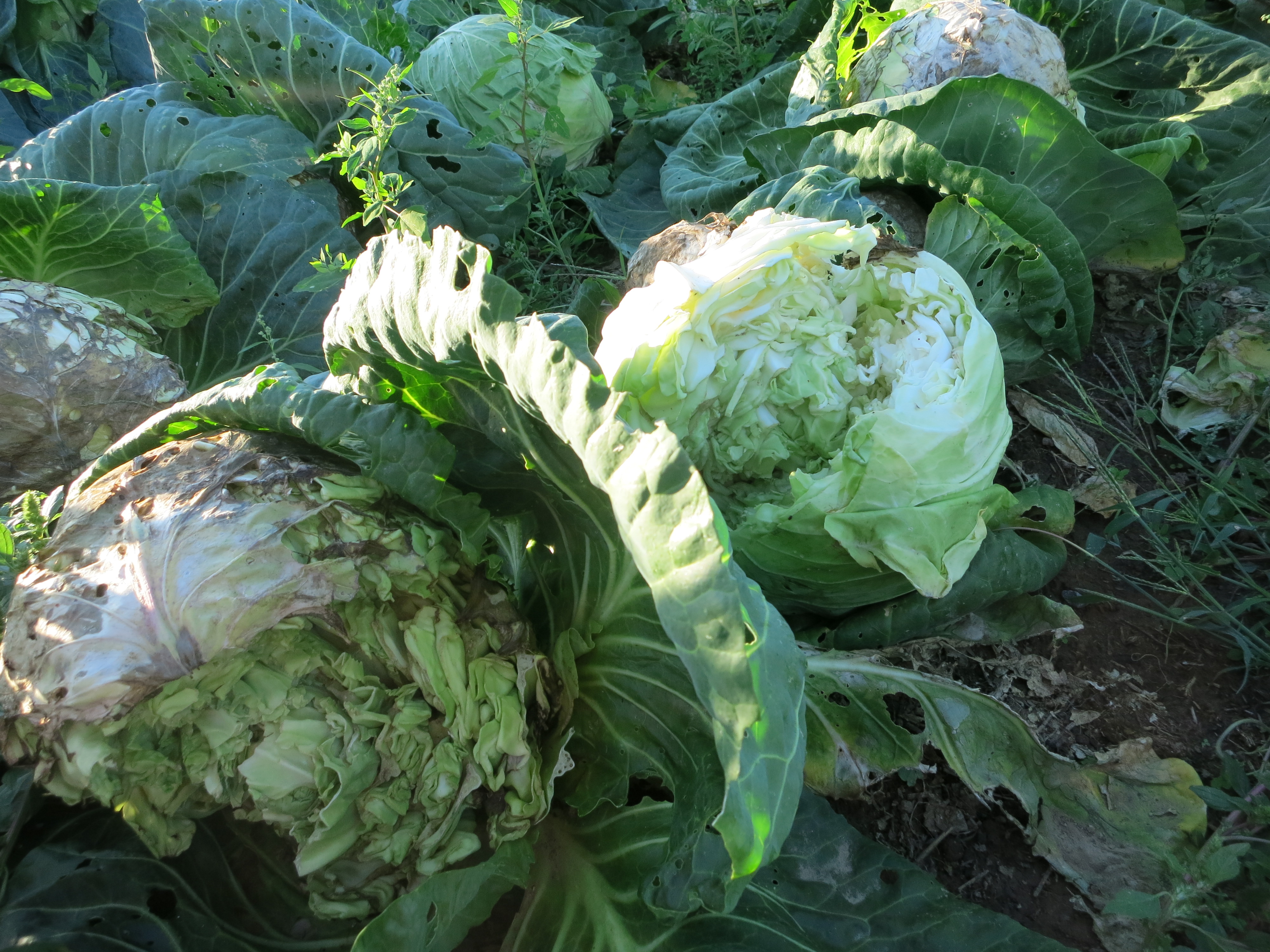
  • The cabbage that looked so good the other week is being eaten rapidly by … ? Good thing we planted lots – there will be enough for our CSA boxes this week!

038

It may be the light green, tender, early cabbage that we had a few weeks ago, or the darker green, more robust late cabbage. Then there are some “conehead” cabbages – something new for us this season – that are round at the bottom & pointy on top.

041

  • Sweet peppers & tomatoes continue to be a part of your share, though perhaps in smaller quantities.
  • It’s fall – pear season! This week there will again be 2 kinds of pears – Bartletts & the little Seckel “lunchbox” pears. A reminder again that pears can change from almost ripe to overripe very quickly. Store them in the fridge. One way to use very ripe pears is to make pear sauce – just like applesauce, but made with pears! Peel, chop, cook, add some sugar & mush them up. It’s easy & delicious!
  • An extra this week – peaches. There will be some #2 grade peaches available for those who want that final taste of summer!

After this week, there will be 2 more weeks in our CSA program for 2015!

Here’s what to expect in your box these final 2 weeks – garlic, pears, squash, sweet peppers, tomatoes, kale …


Leave a comment

CSA 2015 – Week 15

Today was labour day, and we certainly laboured – in the heat & humidity!

The last of the Bartlett pears were picked today. It was a good crop so there are lots of pears for our CSA shares, and to sell at the markets.

003

The Seckel pears are also picked. These are a very small pear compared to a Bartlett.

024

Pears are always picked rather green & hard, and then ripened once picked. A Bartlett will get sweeter & sweeter as it softens & turns yellow. A Seckel stays firm (it will never get soft), but tastes sweet – but probably not as sweet as the Bartlett.

I continued to cut down sweet cherry trees today. Once the trees are gone it gives the farm a whole new look – one that takes a bit of getting used to!

004

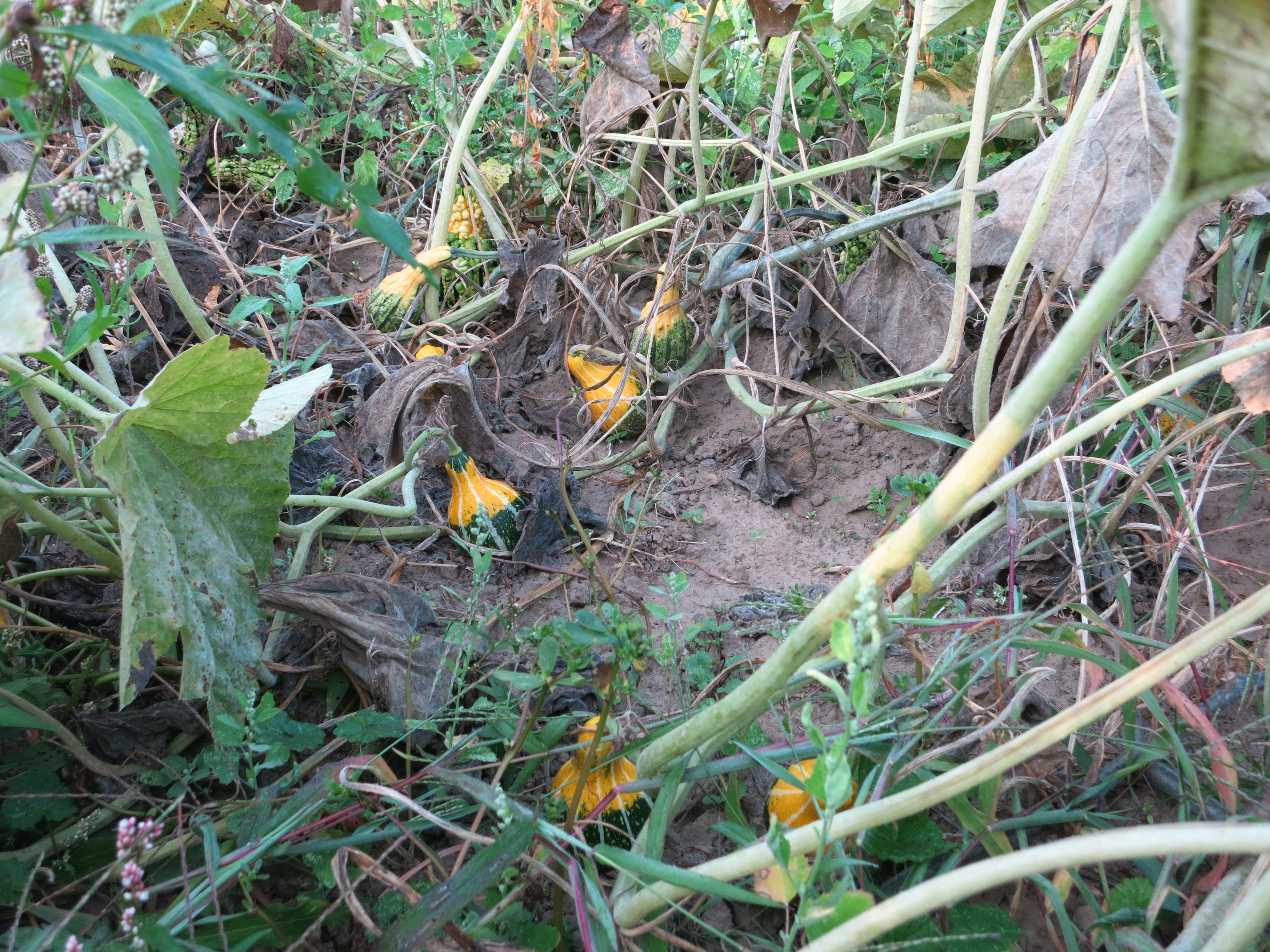
The heat & humidity cause an increase in mildew on the squash, gourds & pumpkin plants. As their leaves get diseased and then dry up the squash is revealed, and we finally see what sort of crop there is. We will begin harvest in a week or so.

009008008011

What’s in the box?

Seckel pears, Bartlett pears, Damson plums, tomatoes, sweet peppers, garlic.

extras – hot peppers …

  • Seckel pears (see brief description & picture above) are the perfect fruit for lunch boxes! Small, firm & tasty, they take up little room, are not easily bruised, and taste great!
  • Bartlett pears are a favourite pear for many people! They are great for eating fresh, baking, cooking, jam, sauce … The pears in your box this week have been ripening in the barn for about a week already. Some will still be a bit firm while others are beginning to soften. We recommend you check them over. If you prefer a firm pear, store them in the fridge immediately. If a soft & yellow pear is your choice, let them sit out on the counter for a day or so – but keep your eye on them. Pears change from almost ripe to over-ripe very quickly! It may be better to keep them refrigerated & bring them out a day or so before you will eat them.
  • The only plum variety that had much of a crop this season was the Damsons. In fact we’ve never had so many Damsons! They are a small, round, somewhat tart plum – especially amazing in jam or baking! But let them get slightly soft & they sweeten up & taste great. There will be some damsons in your CSA share this week. Give them a try & see how you like them!
  • Along with the fruit, your box will also contain tomatoes, sweet peppers & a bulb of fresh garlic. The garlic is dried, so store it at room temperature in a dry place. It is not necessary to keep garlic in the fridge.
  • Hot peppers are an extra again this week.

Here is a Damson plum recipe that a customer from market recommended. She also brought us a sample – it was great!!

(http://cooking.nytimes.com/recipes/3783-original-plum-torte)

Original Plum Torte

  • Time1 hour 15 minutes
  • Yield 8 servings

TIMES CLASSIC

Andrew Scrivani for The New York Times

INGREDIENTS

  • ¾ cup sugar
  • ½ cup unsalted butter
  • 1 cup unbleached flour, sifted
  • 1 teaspoon baking powder
  • Pinch of salt (optional)
  • 2 eggs
  • 24 halves pitted purple plums
  • Sugar, lemon juice and cinnamonfor topping

PREPARATION

  1. Heat oven to 350 degrees.
  2. Cream the sugar and butter in a bowl. Add the flour, baking powder, salt and eggs and beat well.
  3. Spoon the batter into a spring form of 8, 9 or 10 inches. Place the plum halves skin side up on top of the batter. Sprinkle lightly with sugar and lemon juice, depending on the sweetness of the fruit. Sprinkle with (about) 1 teaspoon of cinnamon, depending on how much you like cinnamon.
  4. Bake one hour, approximately. Remove and cool; refrigerate or freeze if desired. Or cool to lukewarm and serve plain or with whipped cream.
  5. To serve a torte that was frozen, defrost and reheat it briefly at 300 degrees.

Tip

  • To freeze, double-wrap the tortes in foil, place in a plastic bag and seal.


                                                                                   ___________________________________

Not everyone was labouring today!

007

013004


Leave a comment

CSA 2015 – Week 14

Today I’m feeling both happy and sad.

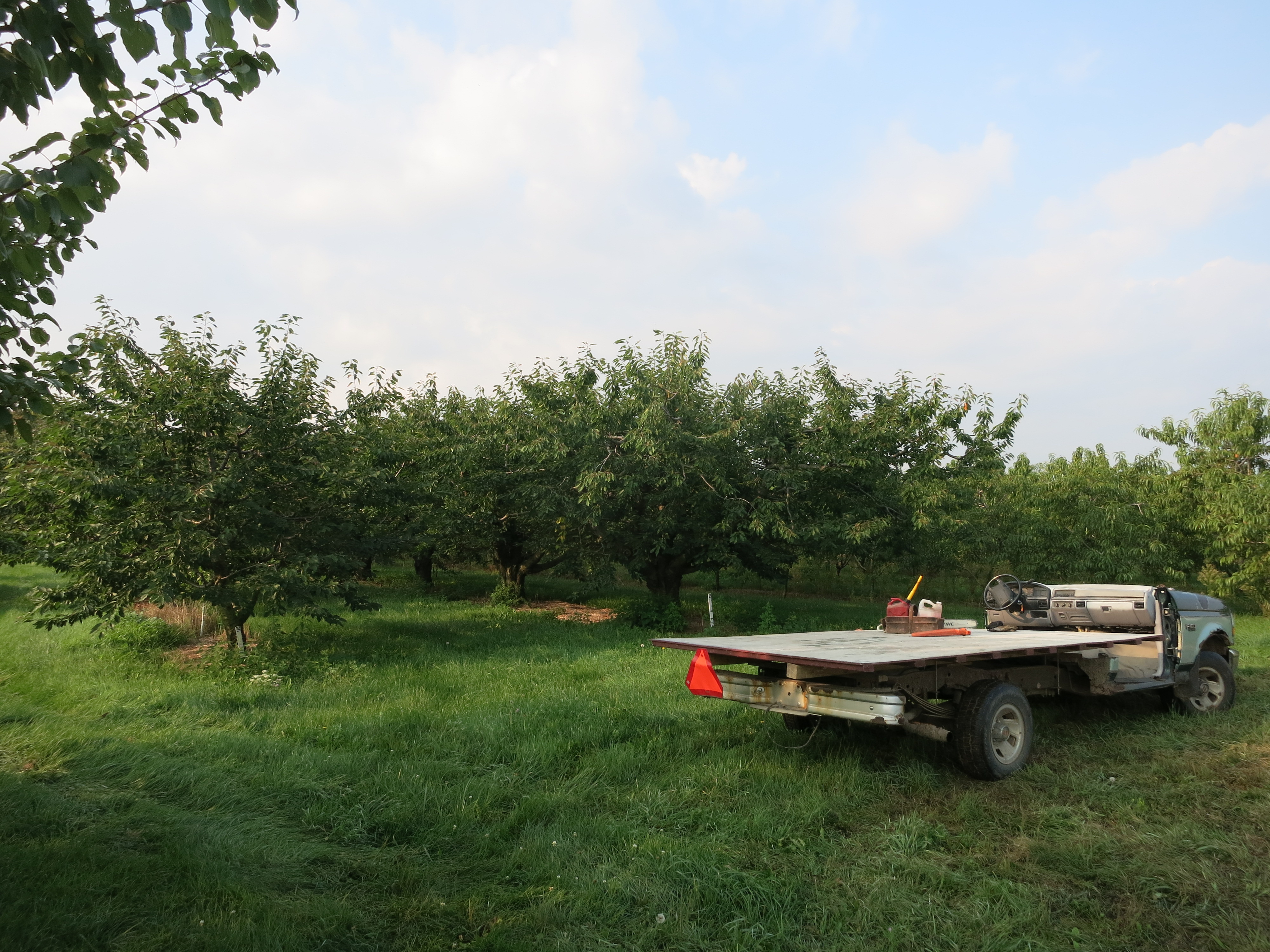
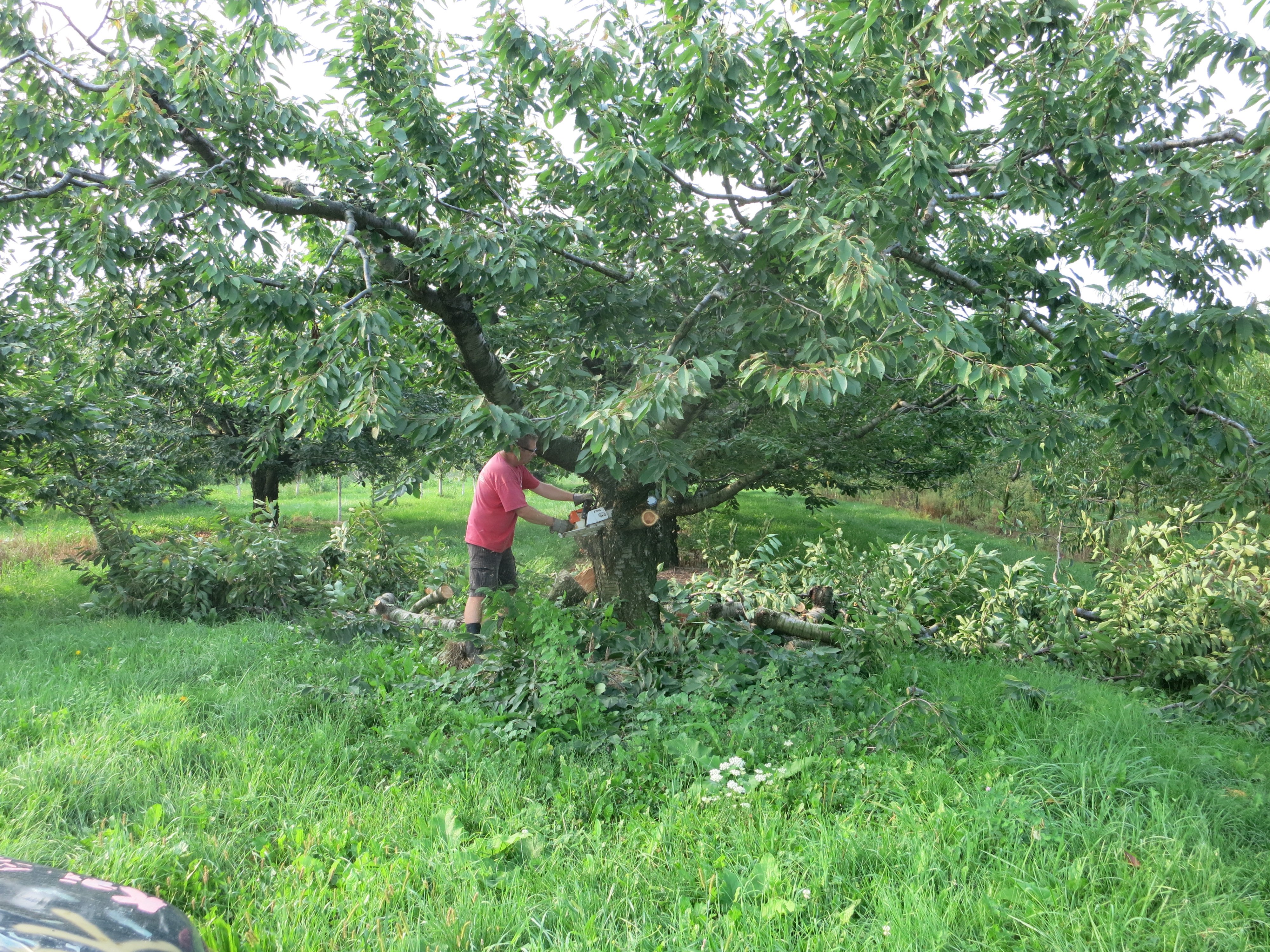
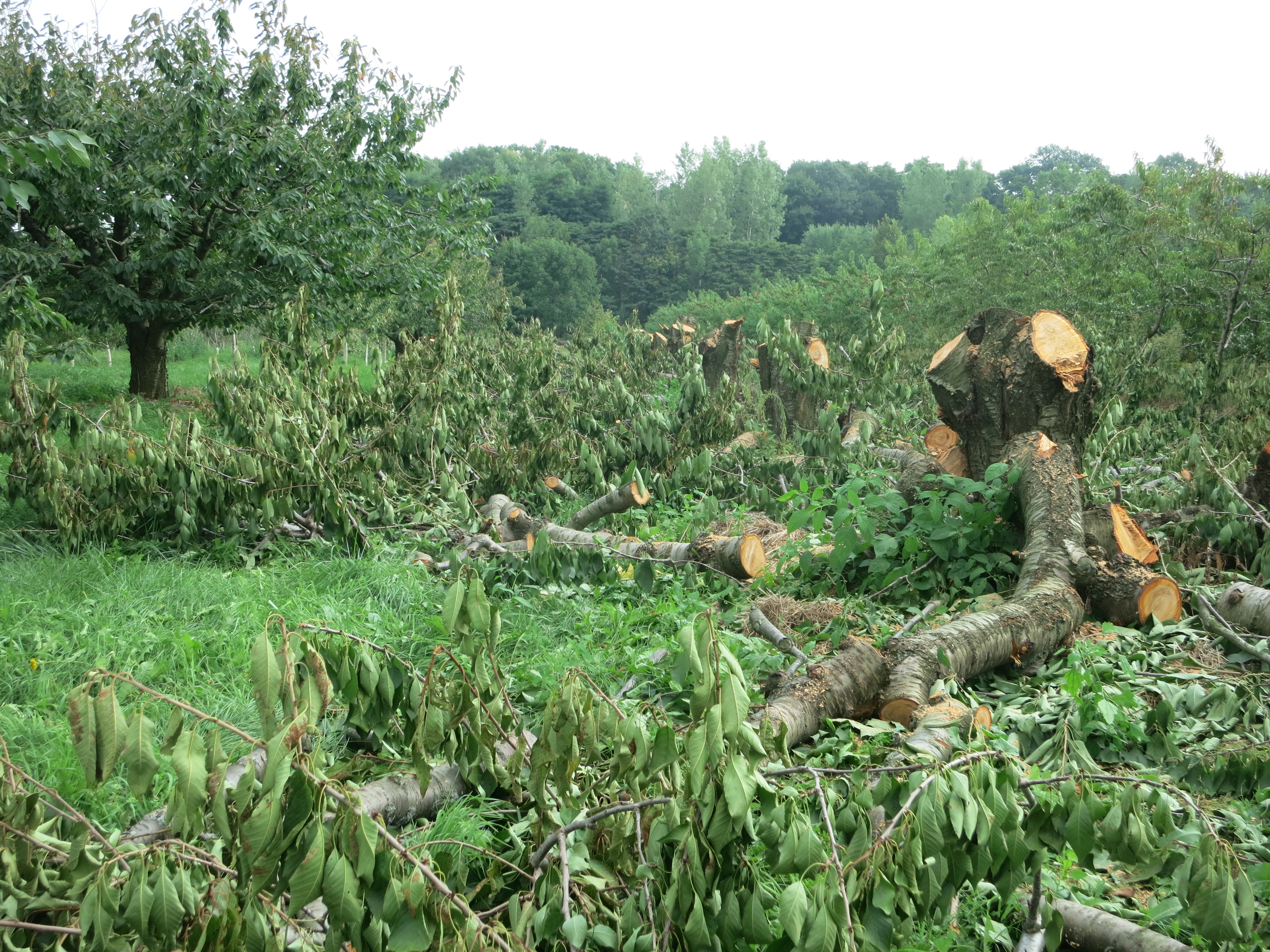
Today I began to cut down our sweet cherry trees – all of them!

We talk about it every year, but this time we are really doing it. All our cherry trees are coming down (except for the few trees in front of the barn – the ones that provide a screen between us & the road).

But certainly all the rest of the cherry trees are going to be history.

It’s sad because they do have a lot of history. Most were planted by my father years ago. Many of them are older than me. I know each tree because I’m the one who has pruned them each spring for more than 30 years. I picked the cherries on these trees when I was a boy. I know which trees ripen their cherries first, which ones always have a heavy crop & where the sweetest fruit can be found. I know where to duck my head when driving through the orchard to avoid the low branches – without even looking ..

I’m happy, very happy because we won’t have the stress of cherry season anymore. “Expect a good crop 1 out of 5 years” is what the old-timers used to say. I say that’s pretty optimistic. It seems that almost every year either the crop is poor, or we get rain at the wrong time & the cherries crack & rot, or the market is slow, or prices are low, or we can’t find people to pick … No, we definitely won’t miss cherry season & all it entails.

I will miss eating cherries ripe off the tree though!

009

007

010

016

Anyone need some good firewood?

What’s in the box?

Garlic, shallots, kale, tomatoes, sweet peppers, peaches.

extras – eggplant, hot peppers

  • The first of the garlic is finally dry & ready – and it tastes great!
  • This is the first time we have grown shallots & we’re a bit surprised by their large size and beautiful colour. Good Housekeeping says that shallots are similar to an onion, “their flavor is richer, sweeter, yet more potent. Like garlic, they grow in clusters, with several bulbs attached at the base. You’ll recognize them by their coppery skins and their off-white flesh, which is usually tinged with magenta. Shallots add a great depth of flavor to pan sautés, soups, sauces, and stews, and pair especially well with chicken and fish. To substitute one for the other in recipes, use half the amount of shallot that you would onion”. Try our shallots & let us know how you like them.
  • Your green this week is kale. Enjoy it raw in a salad, sautéed with your shallot, or blended in your morning smoothie.
  • Tomatoes continue – in abundance. Our go-to lunch these days includes tomatoes, onion, eggplant & garlic sauteed together & eaten on toast – quick, easy & delicious! Enjoy the different colours, & sizes & shapes in your box this week!
  • There will be another sweet pepper in your share. But the plants are hanging full of peppers & sooner or later there will be more.
  • Peaches! The season is winding down & we only have a few varieties of peaches left to harvest. This may be the final week that peaches are part of your CSA. For anyone thinking of purchasing extra peaches to can or freeze – this is the week to do it!
  • extras – more eggplant along with hot peppers. We are growing about 25 kinds of hot peppers this season. The first of them are ready & will be available for those who want them. They will be the milder Hungarian hot wax peppers and jalapenos. The hotter varieties won’t be ripe for a few weeks yet.


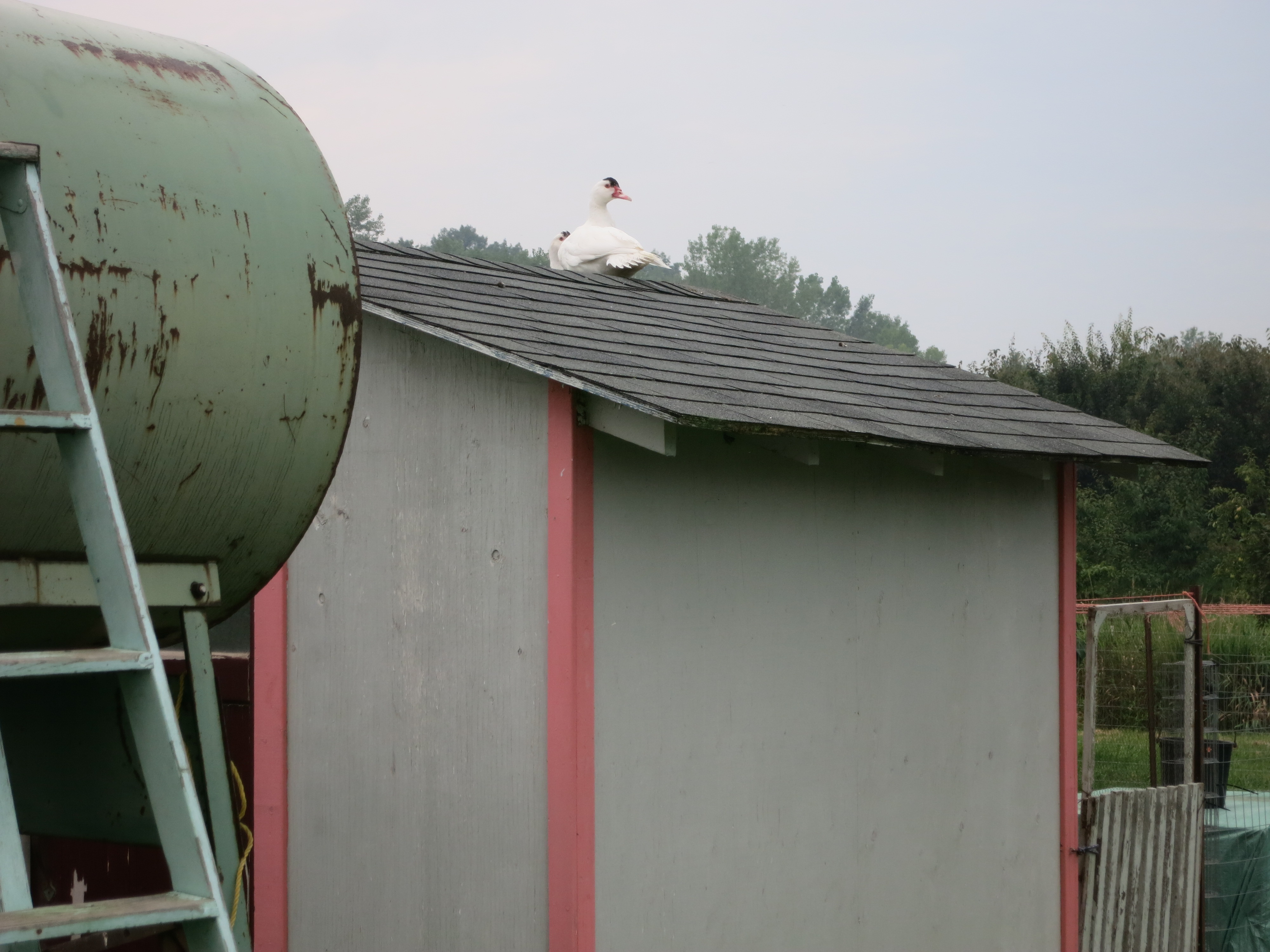
This week our ducks found their wings & are enjoying the wonders of flight. They like to see things from a higher vantage point!

001

002


2 Comments

CSA 2015 – Week 13

It’s the same every year.

And every year I mutter & whine about it – how messy & disheveled the farm looks at this point in the season.

Harvest is a busy time and always take priority over other work, especially farm maintenance and just making things look nice. So the weeds grow, the wild areas become a little wilder and we pretend we don’t see it.

Or rather, we try to look beyond the mess & find beauty anyways – ignoring the big picture & focusing in on the details.

030

023

031

018

In the peach orchard there are now more empty trees, than trees with fruit.

045

046

Many of the vegetable fields are mowed down or worked up and ready for a cover crop to be planted, with only a row here & there of vegetables waiting to be harvested.

033

049

But there is beauty here too!

053

064

050

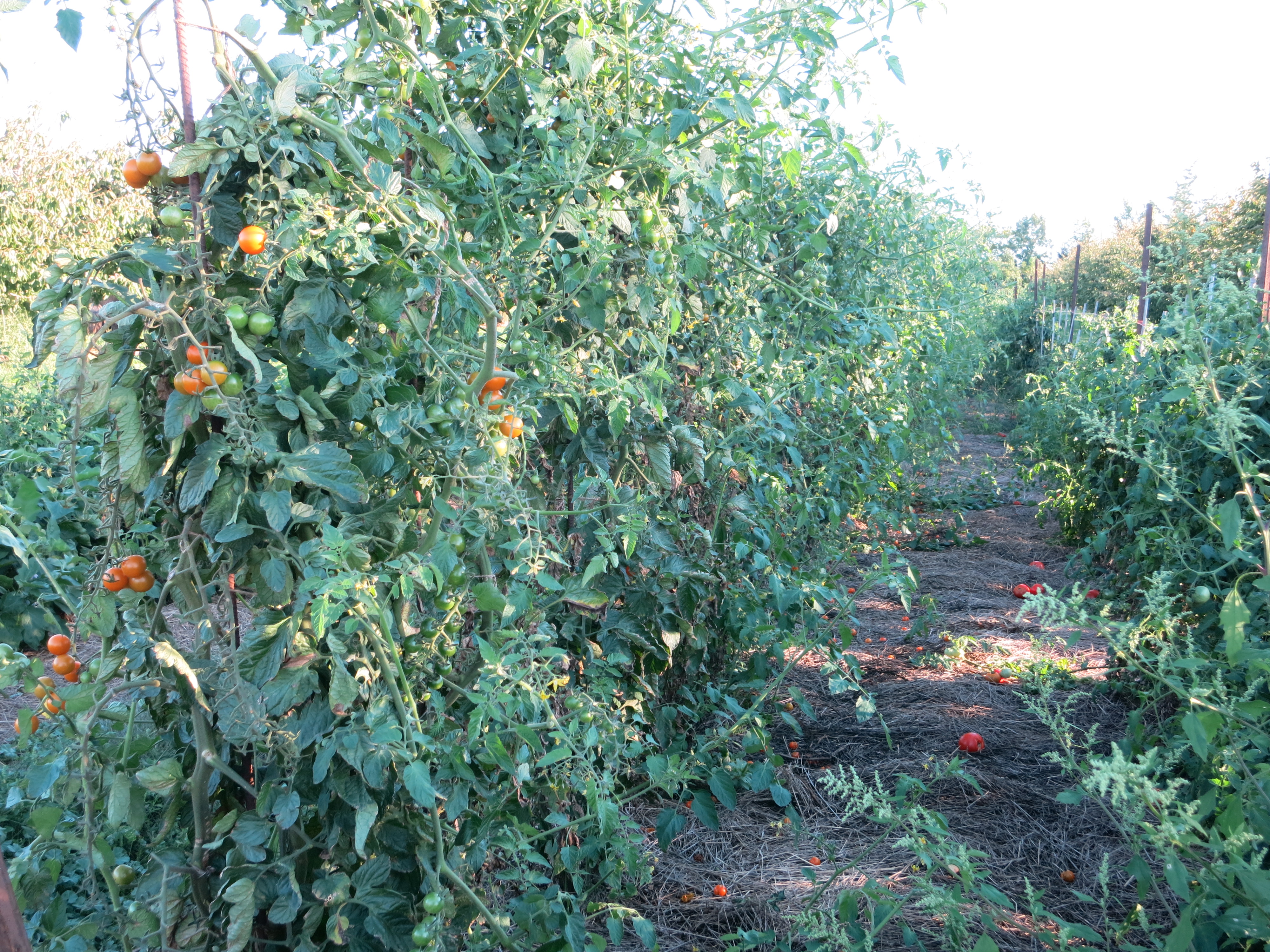
The tomato patch has become a jungle – a jungle producing an abundance of amazing fruit!

038

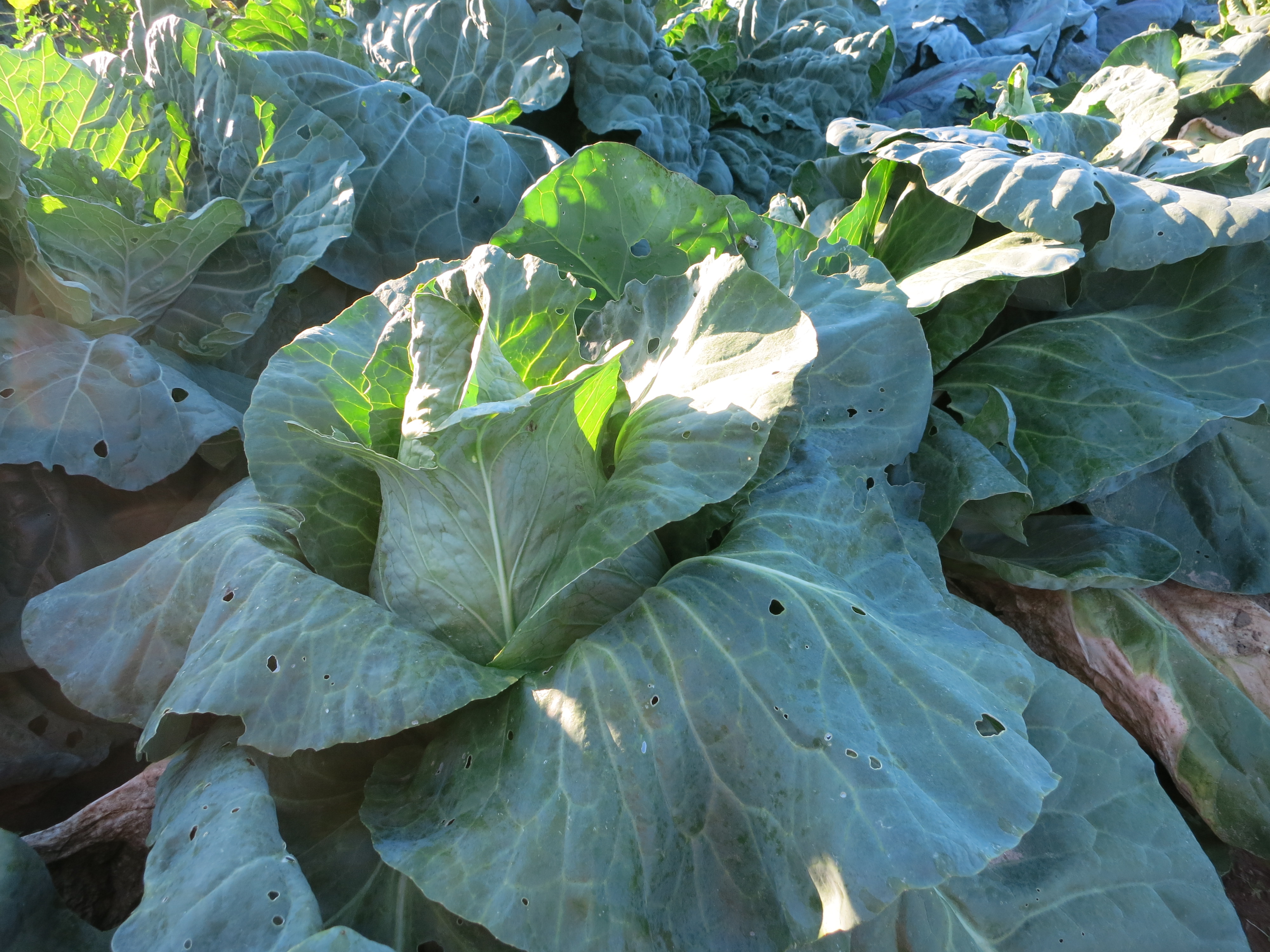
The cabbage is forming nice, firm heads.

042

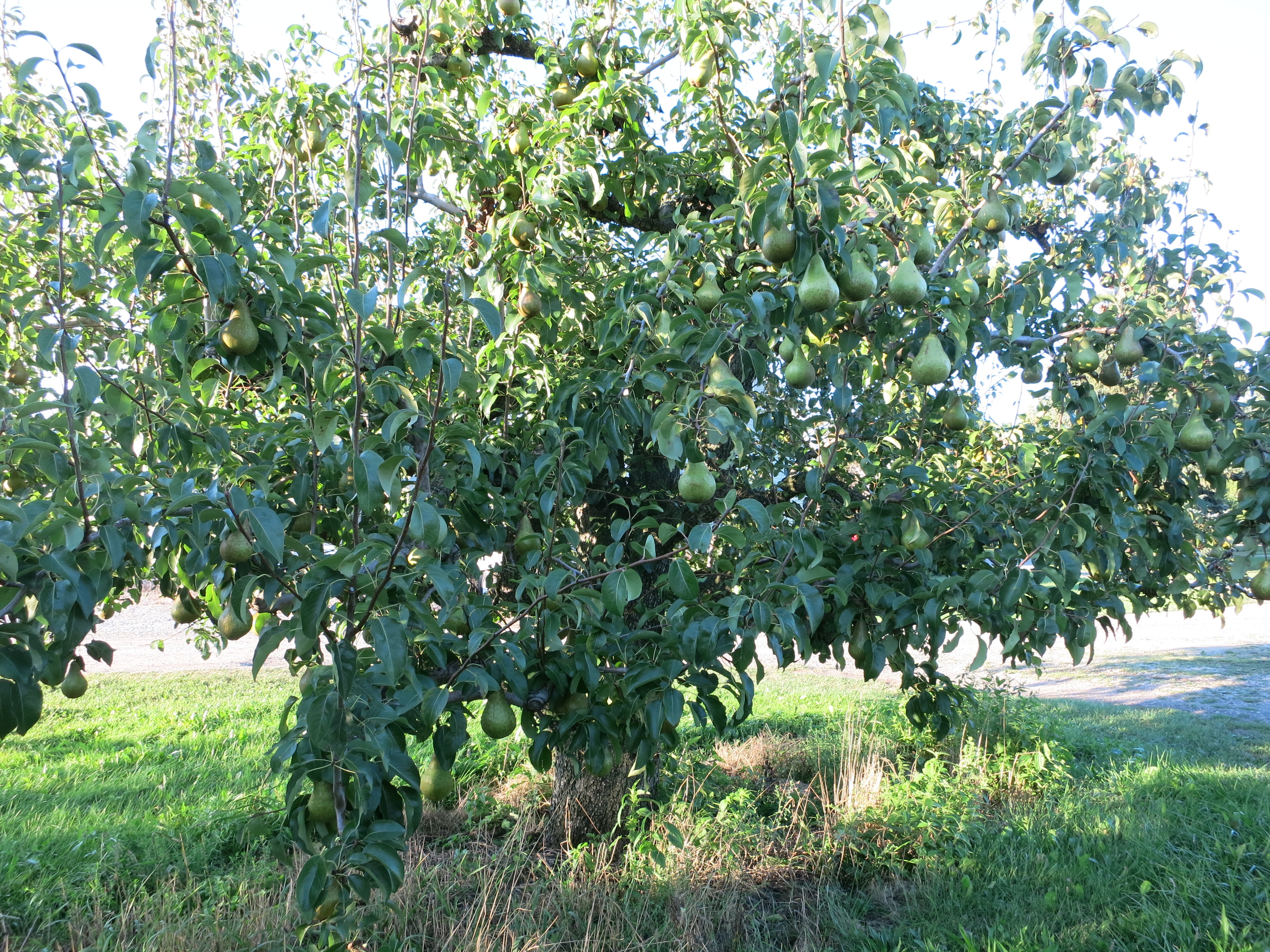
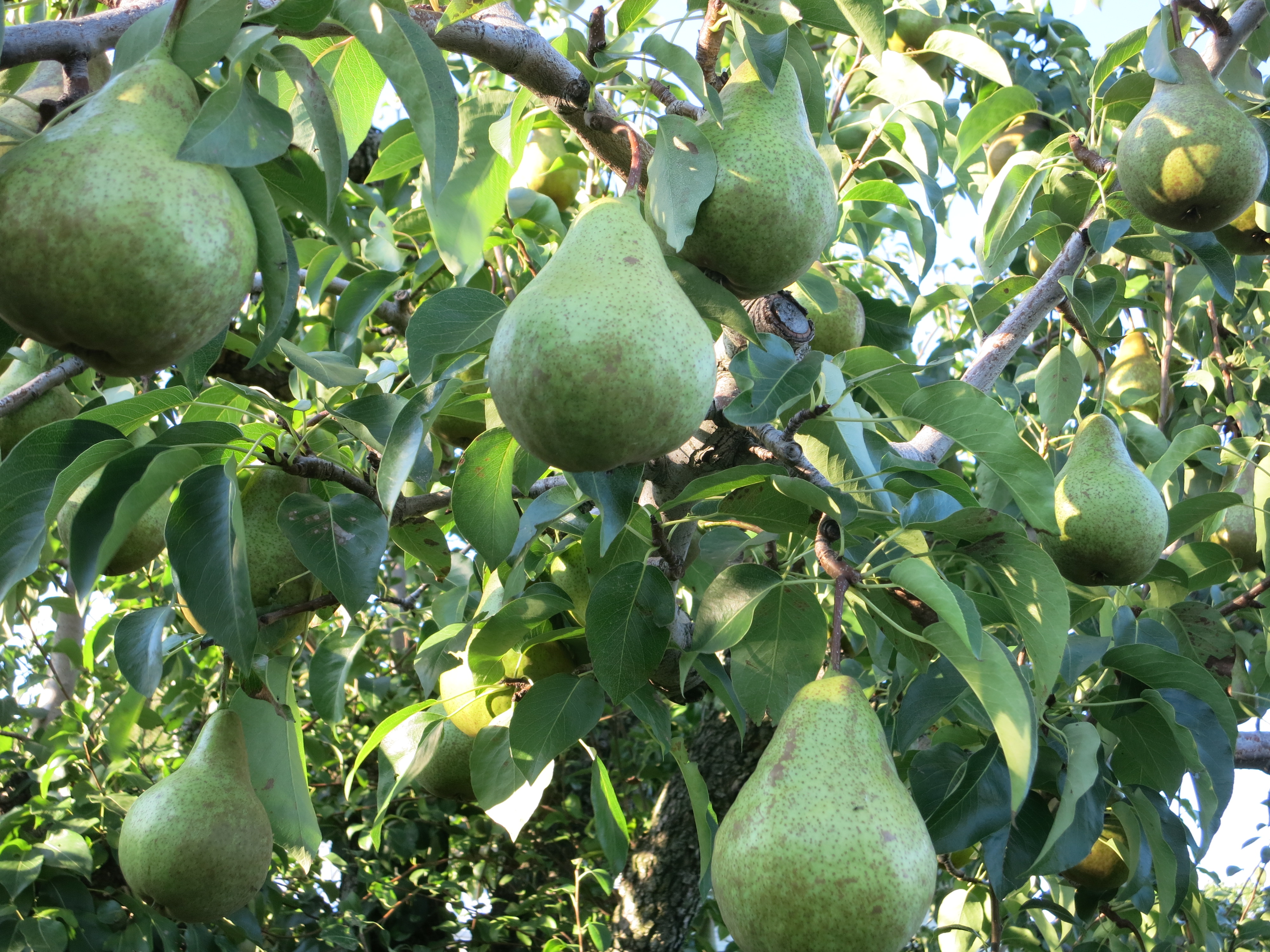
And the Bartlett pears are making their final growth spurt before harvest.

007

005

What’s in the box?

Cabbage, sweet peppers, tomatoes, collards, pears, peaches. 

Extras – white peaches, eggplant.

  • The first of the cabbage is in your box this week – a mini head called Tiara. The seed catalogue describes it as a lettuce-like cabbage called “lettage” – good tasting, tender, crisp & juicy, excellent for coleslaw or salads. We’ll see if it is an accurate description.
  • Sweet peppers are in short supply – thanks to the mice that keep nibbling on them as they ripen! But there will be at least 1 for every share.
  • Tomatoes on the other hand are plentiful! The possibilities are endless – tomato sandwiches, roasted tomatoes, tomato soup, tomato salad … Our favourite tomato salad includes lots of chopped up tomatoes, some onion, a drizzle of vinegar, a sprinkling of sugar, and lots of dill.
  • Another bunch of collards is part of this week’s share. We have included a recipe below for collard greens with pears.
  • This week’s pears are called Harrow Delight. Similar to the pears in last week’s box, they are sweet & tasty now – don’t wait for them to turn yellow & get soft. They are best eaten while still firm.
  • Peaches! There will be another basket of peaches in your box this week. For some there can never be enough peaches, but others are telling us that they are getting “peached out”! How about peach smoothies on a hot day, or peach cobbler for dessert? Grilled peaches are a favourite of ours (just cut the peach in half and put it on the grill cut side down until soft. Then flip it over until warmed through). Surplus peaches can be sliced, laid out on a baking sheet & frozen overnight. Then bag up the frozen peaches & use them throughout the winter for smoothies, on oatmeal, cereal or yogurt …

Extras …

  • White flesh peaches might be new to some of you. Like the name suggests, they are white inside, instead of yellow. They have almost a floral fragrance, and are very sweet & juicy. We will have some #2 grade white peaches ready for you to try.
  • An assortment of eggplant will also be available.

*** We are pleased to offer extra fruit or vegetables  for our shareholders when available. However we ask that you only take enough for your own family’s use – not for other relatives or friends.


Collard greens with spiced pears 
2Tb unsalted butter
1/8 tsp cinnamon
Pinch of cayenne
Pinch ground cloves
1-2 pears – peeled, seeded, and cut lengthwise into thin slices
kosher salt
1/4 cup thinly sliced shallot or onion
2Tb olive oil
1 bunch (or up to 8 cups) collard greens – trim & cut crosswise into 1/2 inch strips
freshly ground pepper
Melt butter in a small saucepan and stir in cinnamon, cayenne, and cloves
In a medium bowl, gently toss the pear with the spiced butter mixture and 1/4 tsp salt.
Arrange the pear slices in a single layer in a 12″ skillet and sprinkle the shallots in the spaces between. Cook undisturbed over medium-low heat until the pears are golden on one side, 3-5 minutes.
Gently turn over the pears and stir the shallots. Cook until golden brown, 3-5 minutes. Gently transfer pears to plate, leaving the shallots in the pan. Add 1/3 cup water to the pan and stir, scraping the bottom of the pan. Transfer the shallots and any liquid to a small bowl.
Heat the oil in skillet over medium heat and add half of the green, quickly stirring and turning with tongs. Once the greens have just started wilting, add the remaining greens. Pour the shallots and liquid over the greens. Reduce the heat to a gentle simmer and cover with a tight lid. Braise until the collards are tender, about 5 min. Season to taste with salt and pepper and stir in the pears.
Sprinkle with nuts if desired.

(adapted from fine Cooking magazine)

034

Oliver out to save the crops from marauding mice!