Keep updated on all that is happening around Thiessen Farms!


1 Comment

CSA 2016 – week 3

IMG_7333

IMG_7341

Just behind our small greenhouse, tucked between the rows of rhubarb, is a little square of garden – wild garden – that is one of my favourite areas on the farm right now. Mostly, I like it because I haven’t done anything with it this season. No seeding or planting, no weeding, no watering – nothing. Yet it has yielded abundant crops of parsley, cilantro, dill & chamomile. I planted all those things here last season & then left them to go to seed. As I had hoped, they all returned this year, growing lush & strong. Since early spring we have enjoyed our scrambled eggs with dill, added cilantro & parsley to our salads – all without any effort or work on our part. Now we have let it go to flower again & the blossoms are full of bees & other pollinating insects. Shortly, I’ll mow it all down & the crops will regrow again. The only downside is the weeds mixed in that are also going to seed & will return with a vengeance.

If only the whole farm were so easy!

IMG_7327

The sky early this morning was beautiful – but we knew it was to be a scorcher! While we wilted in the heat, we managed to accomplish a lot. But the plants are also wilting in the heat & shriveling in the drying winds. No rain in sight!

Our usually rich, dark soil has become very dry & dusty. Plants that we recently transplanted into the fields are struggling to survive.

IMG_7329

Those that were established earlier continue to do well, though growth is slow & some are showing signs of suffering.

IMG_7321

What’s in the box?

Kohlrabi, snow peas, lettuce, radishes & salad turnips.

  • We have not offered kohlrabi in our CSA shares for several seasons – but not for lack of trying. We just have had difficulty getting it to grow properly. This season, on the advice of more experienced growers, we started it in the greenhouse & transplanted it to the field – with much success! Many people are not familiar with kohlrabi, so here’s a quick tutorial.

IMG_7350

IMG_7353

Kohlrabi is a strange-looking vegetable – sort of like a cross between a little cabbage and a turnip. It is usually considered a root vegetable, though the edible round globe grows above ground.

Kohlrabi is usually eaten raw – just peeled & sliced. The taste & texture resembles fresh, crunchy broccoli stems, with a bit of radish thrown in. Use on raw vegetable platters and serve with a creamy dip.               Grated kohlrabi can be added to slaws.

Kohlrabi can also be steamed or boiled but don’t peel until after they are cooked. When the bulbs are tender, peel skin, and season with butter, salt, and pepper, a cheese sauce, or just enjoy plain.                     They are good for mashing with other vegetables – parsnips, carrots or potatoes.                                             Kohlrabi absorbs the flavour of other ingredients making it ideal to add to soup, stew and stir-fries.

If the leaves attached to the kohlrabi bulb are fresh and green, they can be enjoyed as a cooked green. Wash the leaves and remove the ribs. Blanch in boiling water until just wilted, 3 to 5 minutes. Drain and squeeze excess water from leaves. Chop leaves, then sauté in a little olive oil or butter. Season with salt and pepper. Add a splash of vinegar or squeeze of fresh lemon juice.

The bulbs should be stored, unwashed, in a plastic bag in the fridge. They will hold for about a week.

Here is a link to a recipe using kohlrabi & radishes – http://pin.it/WXElbey

  • Snow peas are always a favourite for our CSA members. Steam, saute, or stir fry them. Enjoy them raw in salads or just as a snack.
  • Lettuce, radishes & salad turnips make repeat appearances in the CSA box again this week.
 

…  a few pictures of pick-up day for our CSA last week.

IMG_7310

IMG_7307

IMG_7304


1 Comment

CSA 2016 – week 2

Our farmers’ markets (North York & downtown Georgetown) have been going for a couple of weeks now, and it’s great to be back. It’s always good to see familiar faces & old friends again.

But I will admit that we began this market season with a lot of uncertainty & some trepidation. We knew that one of the first questions most people ask is, “How are the crops. Did the fruit trees come through the winter ok?” And then we have to tell them that we are no longer in the fruit-growing business. Reactions are usually similar – disbelief & confusion, along with disappointment (and occasionally even some anger), followed by the question “Why?” We have our standard answer, which is basically a shortened version of our blog post from last fall (https://thiessenfarms.com/2015/11/11/changes). It is not entirely a satisfactory answer for many customers and they leave our market stall unsure of what to think. But most have also assured us of their continued support & patronage, as they anticipate our vegetables & berries. For this we are grateful.

This is our 2nd week of CSA. We are not getting the same questions & reactions as at the market because our CSA members already knew. Most read our blog & saw the news last fall, or saw in our 2016 CSA information that fruit would no longer be a part of the program. While many responded by not joining us again, others are giving us a chance to fill their weekly boxes with a greater selection of fresh vegetables & berries.

Another question we commonly get is, “How are things growing?” or, “Getting enough rain?”

Answer – The crops continue to grow despite the lack of precipitation. We have not had a good rainfall since … I don’t remember. But this is when we see the benefits of our soil building efforts through the years. All the manure, compost & mulch that we regularly add has built up the organic matter and improved the soil’s ability to hold moisture. While it is extremely dry on the surface, there is still some ( not enough) below. Seeds that are sown now have to be well watered in order to germinate. Then the roots head down, down searching for moisture. Most continue to grow – slowly. Transplants that we set out now also need to be watered in, usually several times. Even then they struggle and are not thriving as we would like to see. But it could be much worse …

We prefer to mulch the vegetables after a rain when the ground is wet. The mulch will then keep the soil from drying out & hold the moisture. But since that isn’t going to happen this year, we mulched the tomatoes today as the plants are getting large. Then we began to stake & tie them.

IMG_7297

IMG_7301

The zucchini also got mulched.

IMG_7299

Onions got weeded …

IMG_7298

along with the fava beans & sunflowers.

IMG_7296

What’s in the box?

Salad turnips, lettuce, spinach, radishes, Asian greens, plants.

  • Salad turnips are small, round, white turnips that resemble radishes – but without the bite. Mild in flavour, crisp, and quite tender, they are best eaten raw – simply wash, cut off the tops and enjoy! They can also be stir fried, sautéed, or steamed – both the turnips & the green tops.
  • Lettuce mix (or perhaps single varieties of lettuce), spinach, radishes – it’s fresh salad time.
  • The Asian greens are delicious to eat but frustrating to grow. While they come on quickly, which is a good thing, they also finish quickly. Some our plantings bolted (which means blooming & going to seed) before we could even harvest them. But they sure look beautiful in the field, and the bees & other pollinating insects love them! See the picture below.
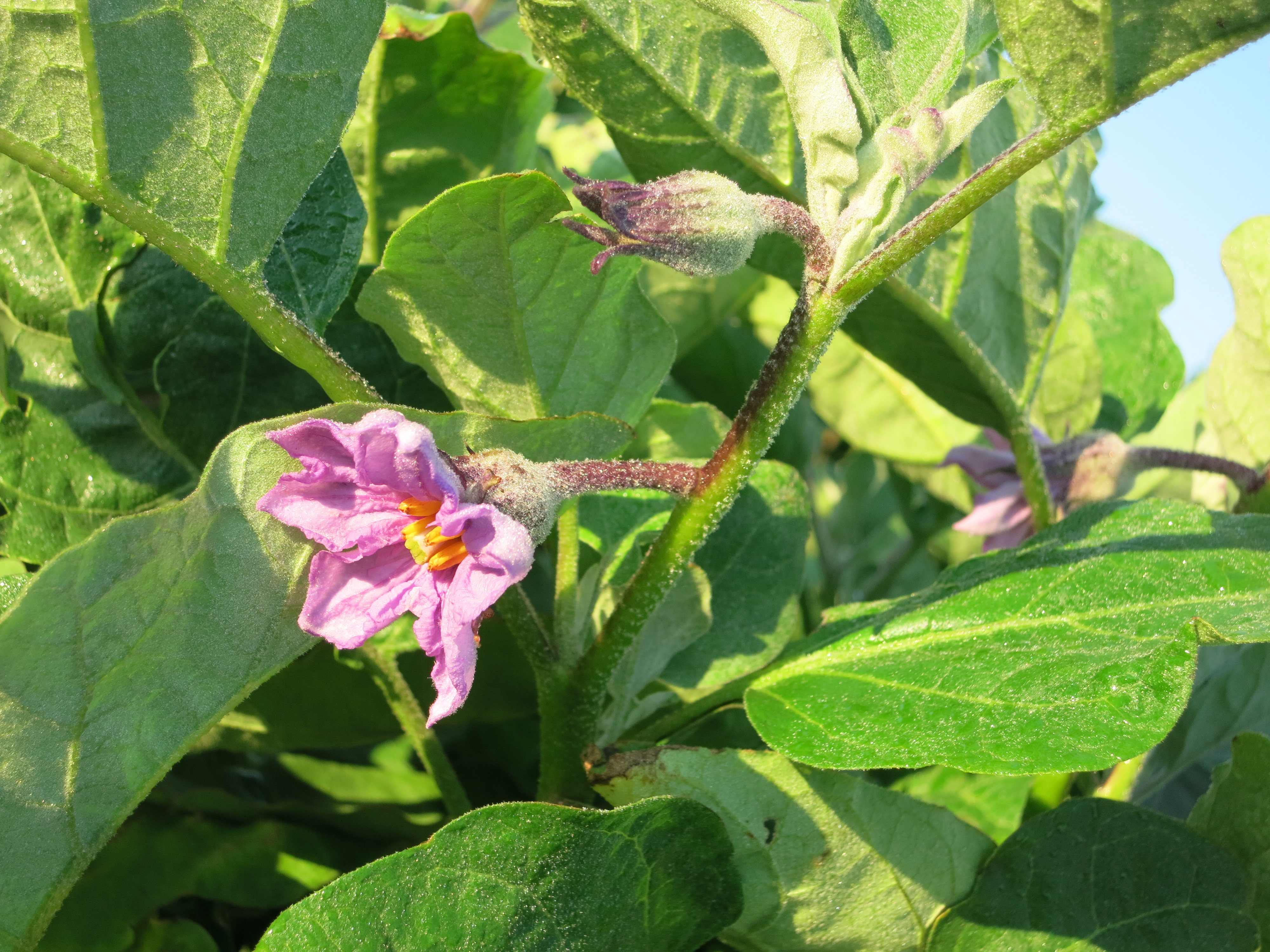
  • We know many of our CSA members enjoy having their own gardens too. This week choose a tomato, pepper, or eggplant plant to grow. While you can expect to get plenty of all of these vegetables in your boxes this summer you may still want the pleasure & satisfaction of growing & picking some of your own produce.


IMG_7302


Leave a comment

CSA 2016 – week 1

IMG_7176

This picture pretty well sums up the last few weeks here on the farm.

We have been planting, transplanting and watering. Throw in some weeding and an average day is complete.

Many of our vegetables are started in the greenhouse & then transplanted into the field at the appropriate time. In the picture above, (taken 2 weeks ago) we have just finished transplanting tomatoes and I am watering them in. We always water the transplants – it helps to get them off to a good start.

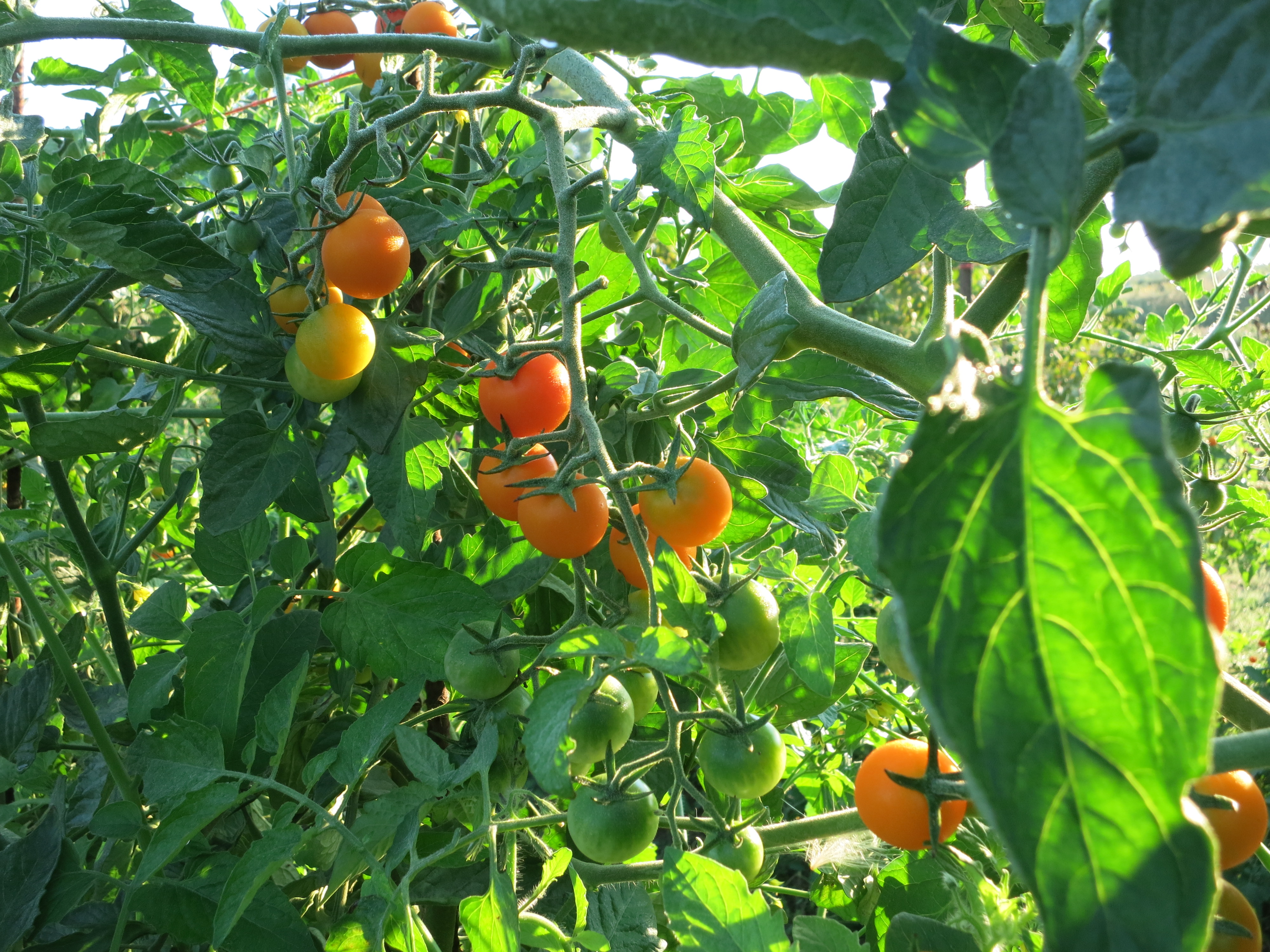
Here are the same tomatoes 2 weeks later – big enough to be mulched. After mulching we will stake them, then sucker (prune) and tie them. Already there are lots of little tomatoes on the plants. It won’t be long …

IMG_7281 - Copy

Usually that initial watering at transplanting time is enough. After that the vegetable plants are on there own, relying on the rain to keep them watered. But because the precipitation has been scarce lately, we have taken to watering them several times, just to ensure a good start.

The vegetables have been enjoying the warm temperatures, but the lack of regular rain has slowed down their growth.

On the weekend we received some small rains – not a lot, but enough to refresh the plants & the soil and really perk things up. Of course the weeds were also beneficiaries and are responding vigorously!

Here’s a look at some of the crops today …

IMG_7279 - Copy

IMG_7282 - Copy

IMG_7284 - Copy

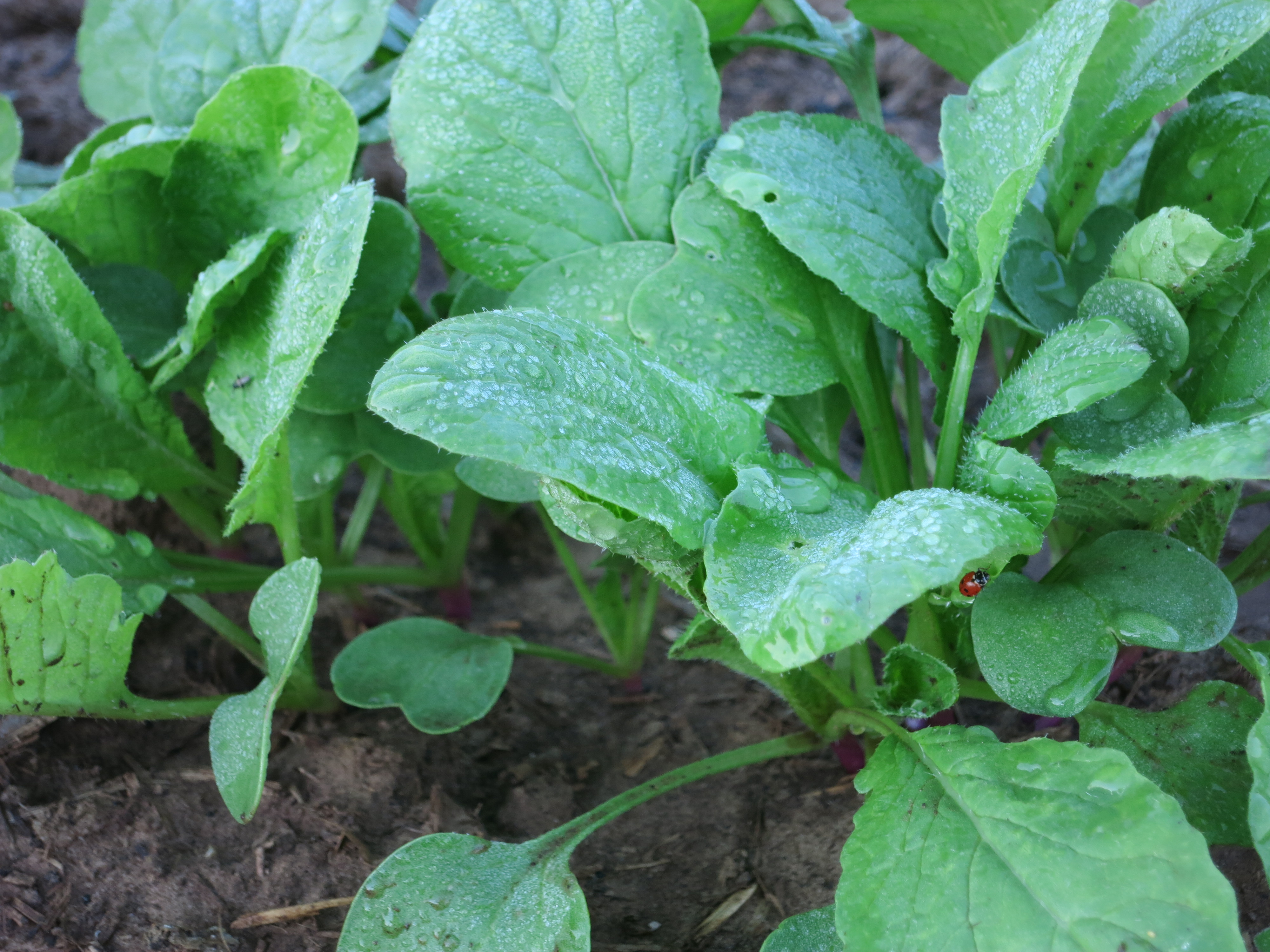
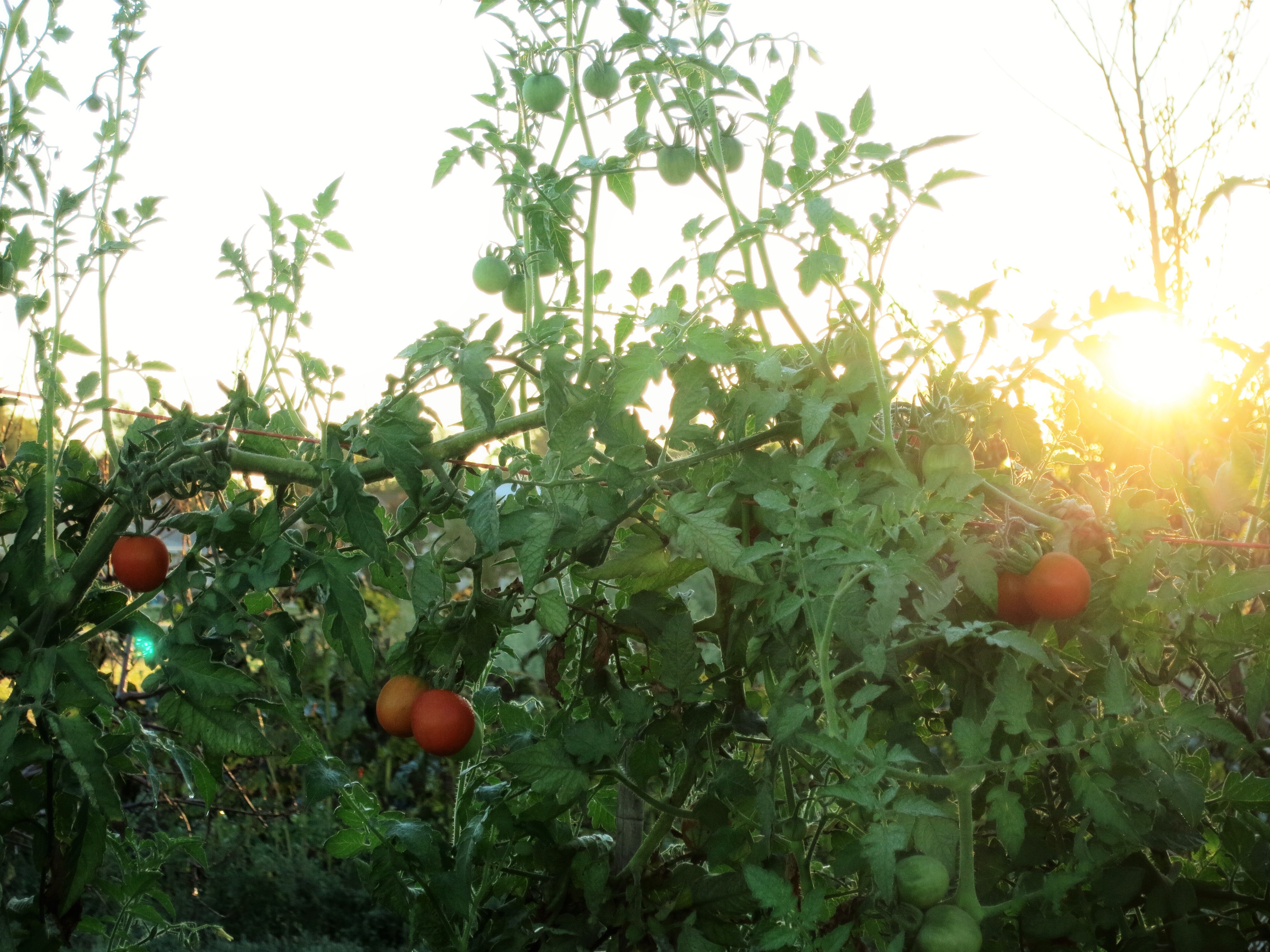
The colourful lettuce mix & spinach seen below will be part of the CSA boxes this week.
IMG_7287 - Copy

IMG_7288 - Copy

What’s in the box?

lettuce mix, spinach, misc. greens, radishes, pea shoots & rhubarb.

  • The lettuce mix & spinach & greens have been rinsed once to remove some of the field dirt. You will want to wash them more thoroughly, then bag them & keep them refrigerated.
  • We grow an assortment of greens – this week most of them are baby pak choy. We prefer to eat it stir fried with a bit of sesame oil. Heat it very briefly so it retains the bright colour & crispness.
  • The first radishes of spring are always a sharp treat. The degree of heat depends a lot on the growing temperatures. Based on that, they should pack quite a punch after the hot weather last week. They will store well in a bag in the fridge – remove the leaves first. If they lose their crunch, soaking them in ice water for 20 minutes will restore crispness (it will also make them milder tasting though).
  • Pea shoots – excellent in salads or stir fries. Just place the box outside in partial shade or inside near a window. Keep them well watered & use as needed. Cut them about half way down, leaving stem & some leaves. They will grow back – slowly – and you can harvest them again. Cutting them all the way down at soil level gives a larger harvest – but only once.
  • Your CSA box this week will contain a few stalks of rhubarb. There should be enough to make a pie – for those who bake. We like to make a rhubarb crisp. It’s easier, quicker, and perhaps a bit healthier? Here’s the recipe we use …

Aunt Elvira’s Fruit Crisp

Cut up rhubarb (or any fruit) and half fill a pie plate.

Mix together …

½ cup brown sugar

¼ cup flour

¼ cup rolled oats

½ tsp cinnamon

3 TB butter

(adjust the amounts to suit your preferences)

Cover fruit with this mixture.

Bake for approx.. 12 minutes in the microwave.

We are excited to be starting CSA for another season.

Looking forward to seeing everyone at pick-up this week!


1 Comment

Still Growing

Sometimes, if I wake up during the night I can hear the coyotes singing. It’s a good sound, and comforting to know they are there. Coyotes are an important part of the farm, helping to keep the mouse & rabbit populations under control. In fact I wish we had more of them!

Already we are experiencing damage from the rabbits. The first planting of broccoli – meant for human consumption  – was feasted upon shortly after being transplanted to the field (sorry CSA members & farmers’ market customers!).

IMG_7152

We replanted & put a fence up around part of the field – the end at the railroad tracks where all the wildlife lives. A few nights later they hit the broccoli again. We better secured the fence but had no more seedlings to replant. Since then there has been no more damage. We’re keeping our fingers crossed!

Other than that, things are looking good on the farm. Everyday we are seeding or transplanting vegetables into the fields.

IMG_7123

IMG_7121

We continue to seed in the greenhouse as well and it seems to always be full, even though we’re bringing plants out to harden off & get used to being outside in the weather.

IMG_7165

IMG_7162

The temperatures overall are staying cool, so while the vegetables are growing well, they are also growing slowly. Our first plantings which have been in the ground for about a month remain quite small.

IMG_7133

However the colours are amazing and it is a pleasure to watch them grow & develop.

IMG_7129

Not just the rabbits causing damage!

IMG_7057


2 Comments

What’s Growing?

Most mornings I go for a walk around the farm. It is a good way to begin the day – exercise, fresh air, and a chance to look things over & see how the crops are growing.

This time of year, I can see growth almost every day. While sunshine has been lacking these last few days, we have had plenty of precipitation, and it is slowly (too slowly?) warming up. Many of the early spring crops prefer cooler temperatures anyway & are thriving.

I usually carry the camera along on my morning walks. Pictures are an easy way to record crop growth & conditions, for future reference & comparison. After all, a picture’s worth a thousand words!

Here’s the garlic patch last week …

IMG_6870

… and today.

IMG_6966

Last week the first vegetables were just becoming visible.

IMG_6913

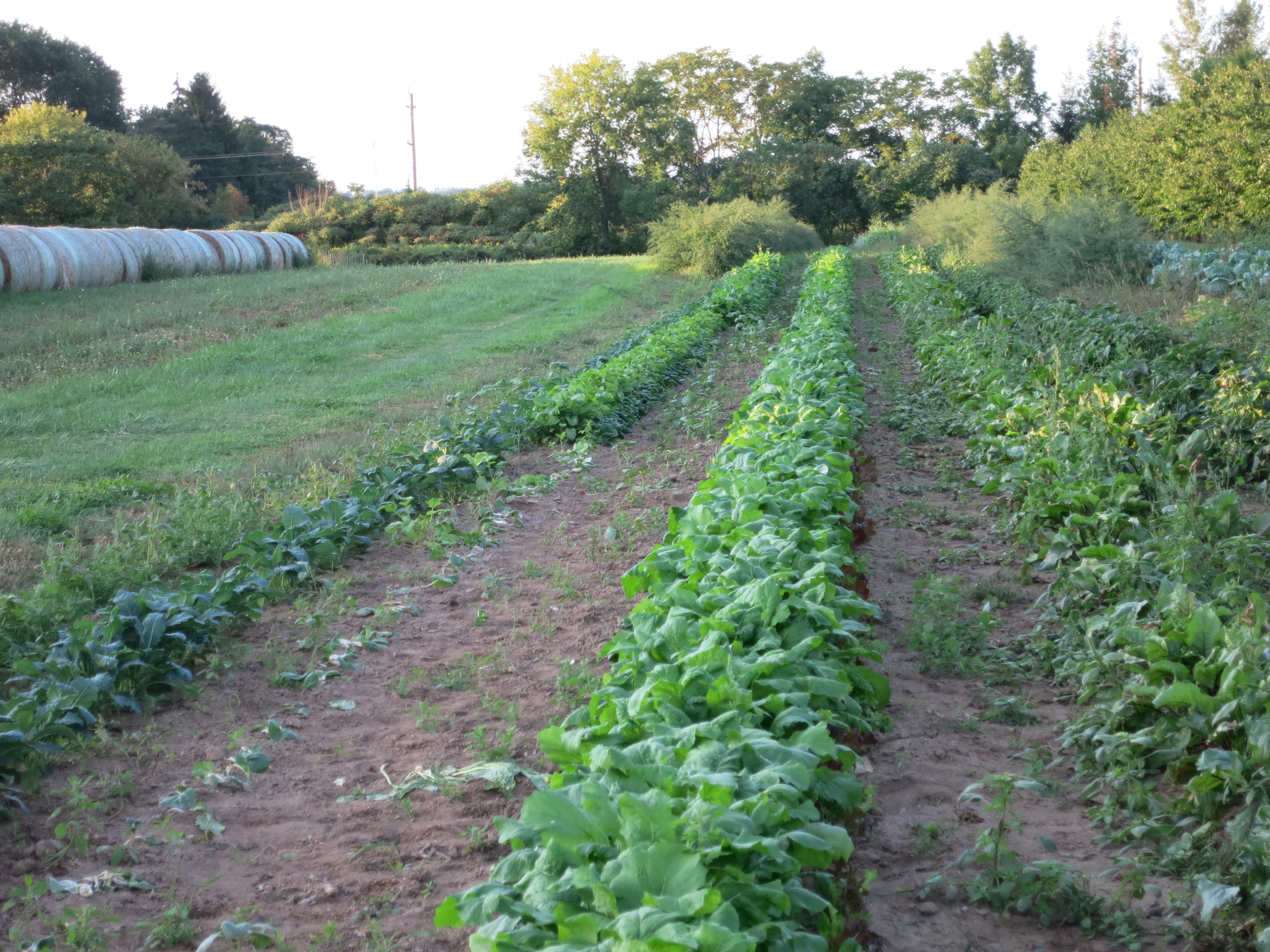
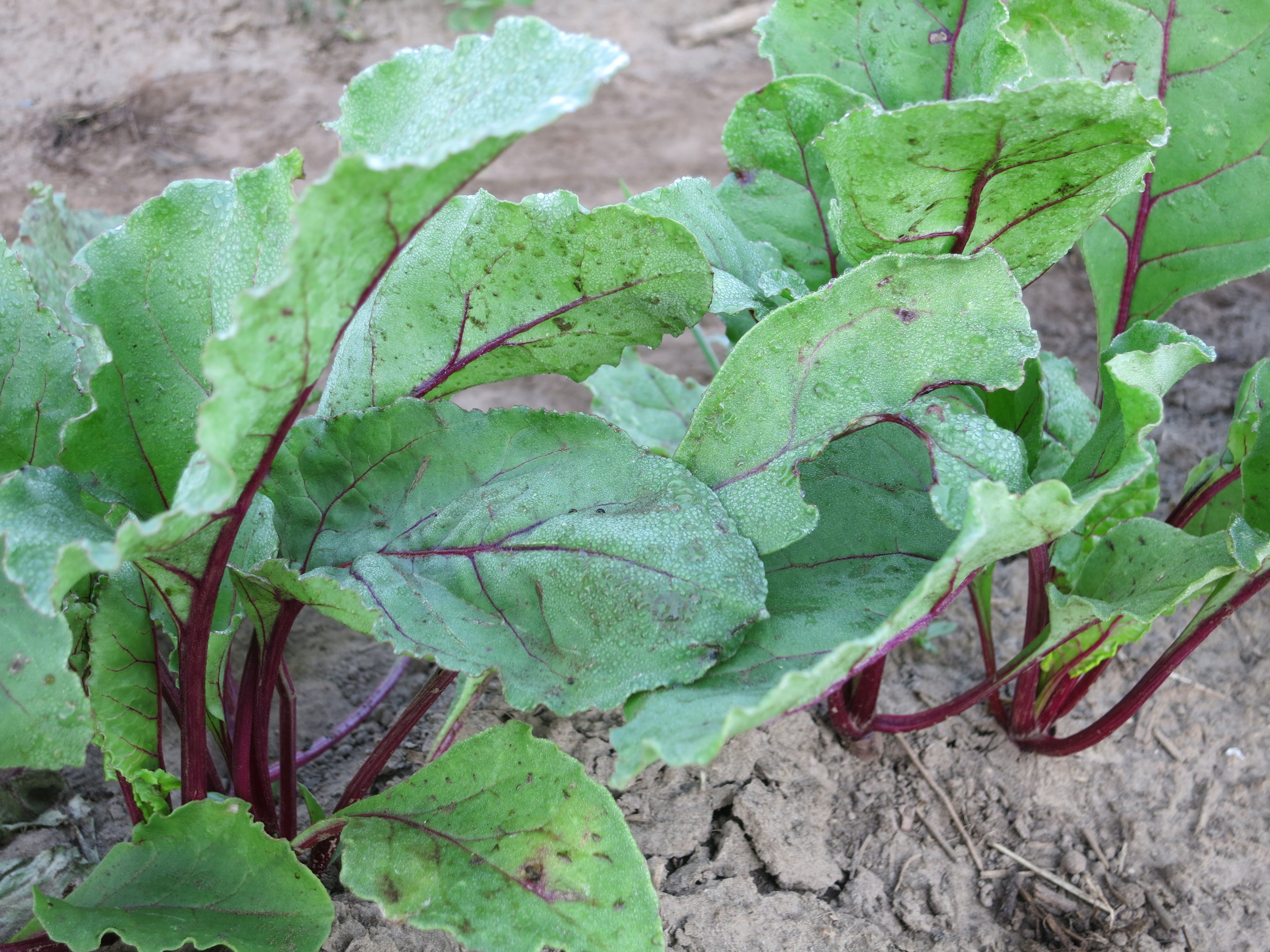
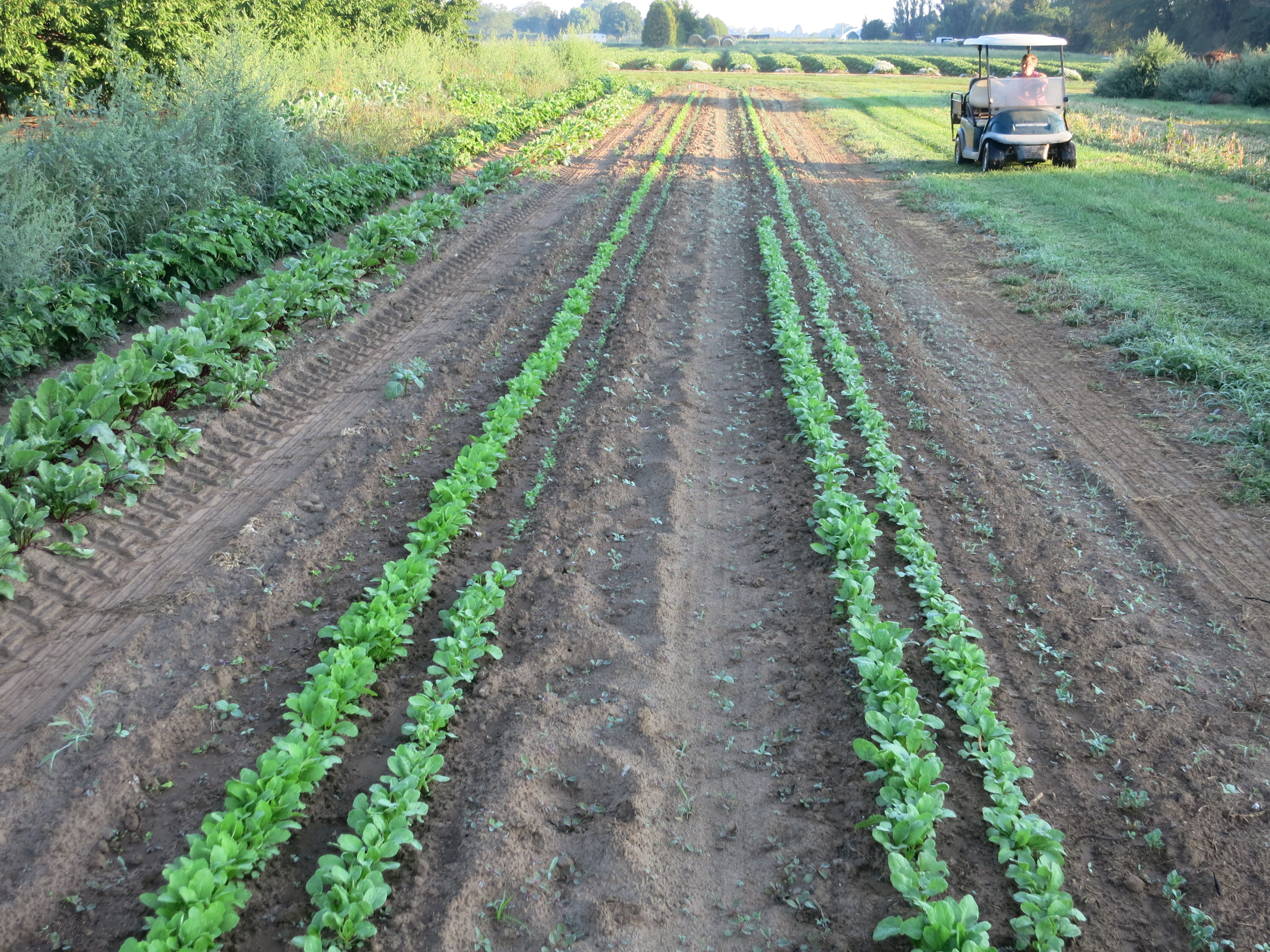
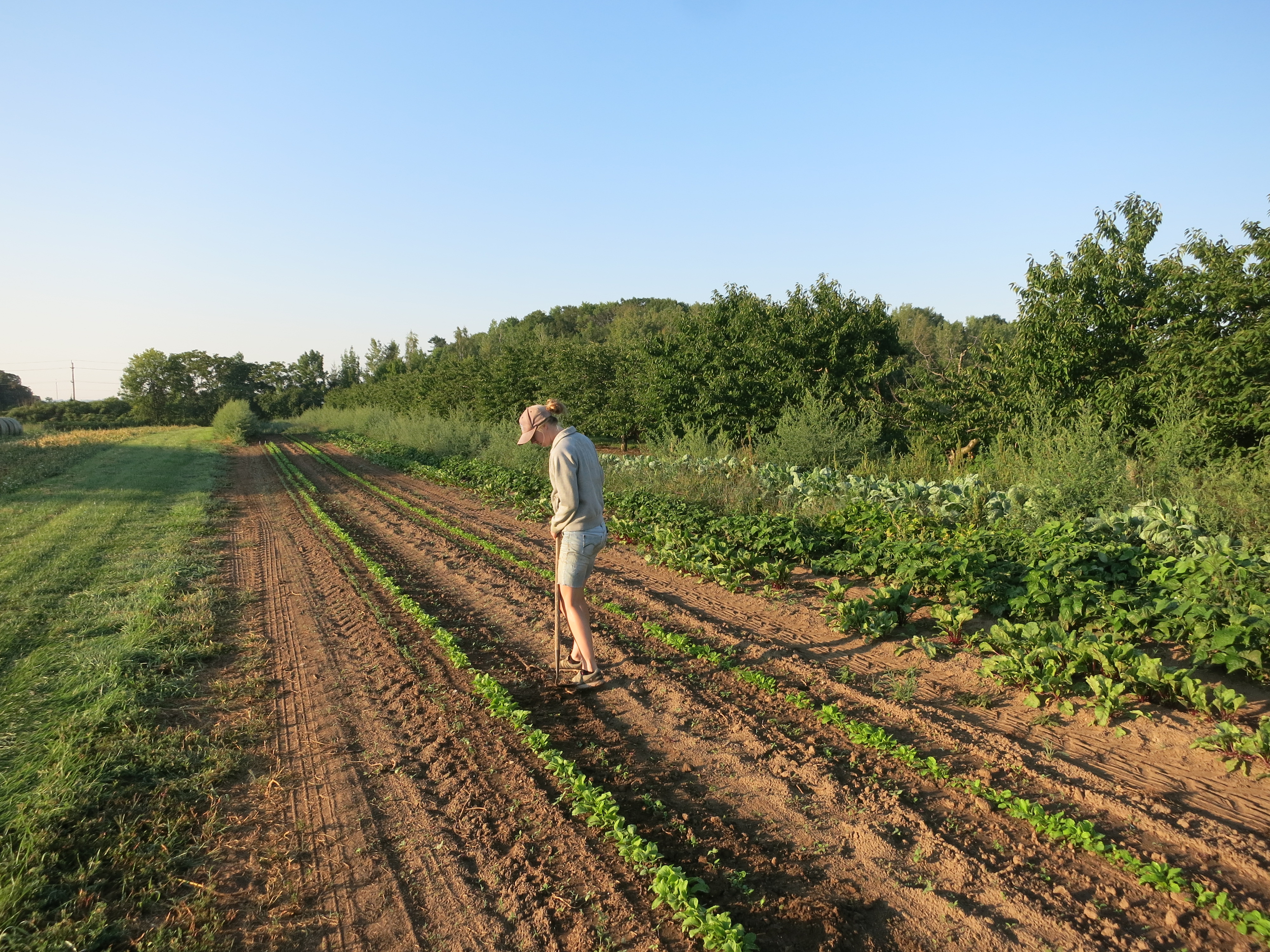
Today the rows can be clearly seen – snow peas on the left, spinach to the right. In between are beets, lettuce mix & of course weeds. Radishes & various greens are hidden under the white tunnels. These tunnels are made of a fine netting material that keeps bugs out – bugs that would love to chew on the tender leaves & turn these greens into unappetizing lace.

IMG_6992

What else is growing?

The raspberry canes are coming to life.

IMG_6971

IMG_6999

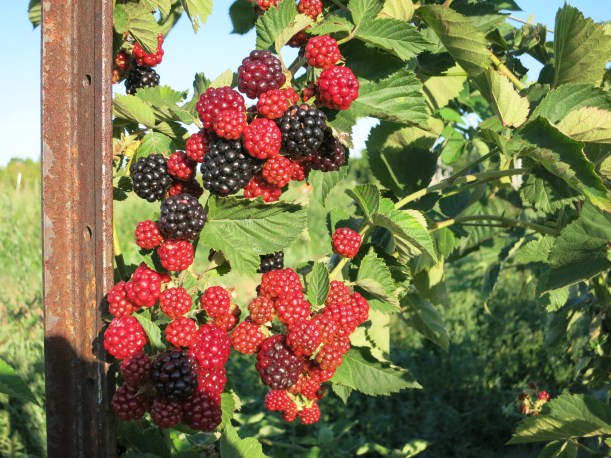
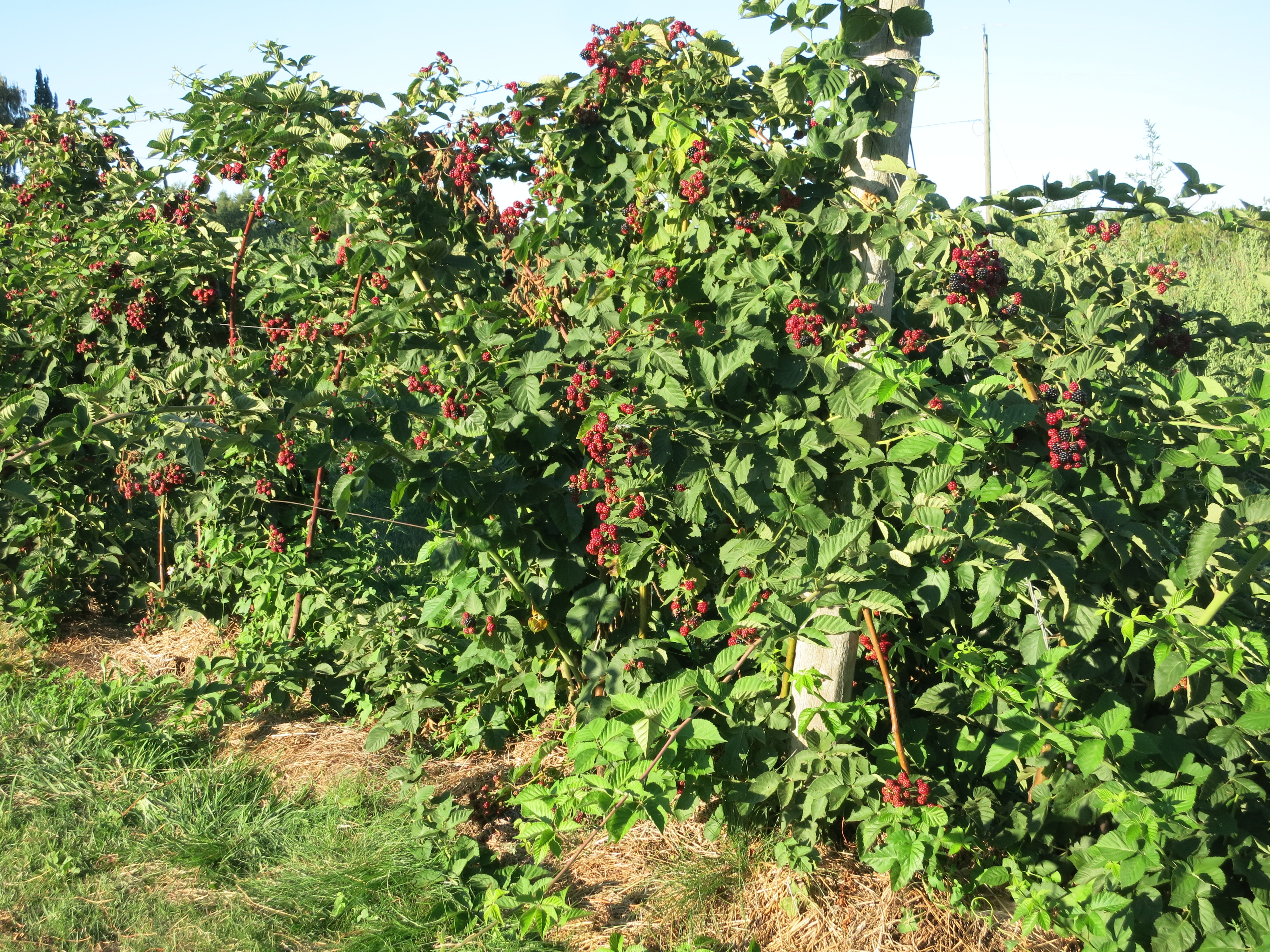
We are especially excited to see the leaves popping on the blackberry canes. There has been no blackberry crop for 2 years due to winter damage. This past winter was milder & the blackberries are looking great. We anticipate a good crop! The plants are all pruned, & tied, and mulched. The straw helps keep the weed pressure down & preserves moisture.

IMG_6969

The new growth is beautiful – fresh & green with vibrant red.

IMG_7003

The big job on the farm these days is transplanting. Tomatoes, peppers, eggplant, herbs …  All those tiny seedlings that were crammed in the small greenhouse earlier have outgrown their trays & need to be put into individual pots. These will be planted in the fields in the next few weeks, and many will be sold at our farmers’ markets for customers to plant in their own gardens.

IMG_6972

Another day or two and our larger greenhouse will be full to overflowing.

IMG_7015

Watching the farm come to life in spring is an exciting time. And a busy time – at least for most of us …

IMG_6981


Leave a comment

Spring

Spring can be a season of surprises.

Mostly about the weather.

Last week we were out pruning raspberries, in our T-shirts.

This week we were out shovelling snow, in full winter attire (and still feeling cold!). There was too much snow to prune raspberries.

IMG_6790

The heavy rains last week caused the water level in the pond & ditches to rise.

IMG_6781

This week …

IMG_6799

While it’s not unusual to get snow in April, it is disappointing. The warmer spring weather that was slowly approaching was so welcome. The grass was turning green, the crocuses & daffodils were blooming …

The garlic was starting to pop up through the straw mulch.

IMG_6779

IMG_6778

And the rhubarb too.

IMG_6700

Our smaller greenhouse is totally full of young seedlings, eager for sunshine & warmth. Yesterday’s bright sunshine was wonderful for them, but today it is back to clouds & flurries & showers. Many of the plants are ready to be transplanted into bigger pots, but until the nights stay consistently warmer, we dare not move them into the big greenhouse.

IMG_6805

IMG_6808

Yet we keep seeding, even though we are out of space.

IMG_6801

We are anxious to begin seeding outside as well. Vegetables that can handle cold soil & air temperatures include peas, fava beans, radishes, spinach & beets. If our CSA program is to begin in late May, then it’s time to be planting these. But not until the snow has melted & the ground is drier …

Another surprise of spring – as unwelcome as the snow!

IMG_6770

Do you see it up there on the roof?

IMG_6774

Both young cats have been on the roof of the shop once. How do they get up there? By climbing up the greenhouse plastic – it’s easy enough to do with claws. The results for the plastic are not pretty. I have strongly encouraged them to refrain from such practices! We’ll see how well they obey.

Here’s hoping for warmer weather & sunshine to brighten up our spring!


Growing seeds

4 Comments

This is where most of the work is happening on our farm now – in our smaller greenhouse.

IMG_6755

This is where we start our seeds, the ones that need to be started early indoors – tomatoes, sweet & hot peppers, eggplant, onions, most herbs, broccoli …

The seeds are planted in plastic trays and put on the germination bed.

IMG_6762

The germination bed has heating cables running through a layer of sand and surrounded by styrofoam. For seeds to sprout & grow, the temperature of the soil is important – more important than the air temperature. These heating cables warm the sand which warms the trays, and the seeds germinate usually in a few days. Light is not as important at this stage, so the trays are stacked up on each other until the seedlings start to poke through the soil.

Over the germination bed there are wire hoops holding up a layer of row cover which keeps the heat in. This in turn is covered with plastic. It really is a greenhouse within a greenhouse within a greenhouse …

IMG_6760

IMG_6759

Once the plants are growing, the air needs to be warmer. Sunny days provide enough heat but when the days are cloudy & colder, and during the night, a small space heater blow warmth onto the growing seedlings.

Once the seedlings are big enough the trays are moved to the next area, a similar set-up but without the heating cables – more greenhouses within the greenhouse …

IMG_6766

IMG_6765

Each layer provides a few degrees of  additional protection from the cold. If the nights get really cold, we bring the trays into the barn just to be sure.

IMG_6768

It’s a simple, primitive, low-tech set-up, but it works for us. Because we rely mostly on the sun we have less control over the temperature, and the plants experience a wide variation. Perhaps they grow slower & take longer, but I think they end up sturdier & hardier.

IMG_6764

IMG_6715

IMG_6750

IMG_6752

IMG_6705

Now that the greenhouse is being used to grow plants, the big losers are the cats. All winter they enjoyed sunning & sleeping in the warmth.

IMG_6680

Now, the young ones are banished due to a lack of respect for the tender seedlings. Only Oliver is allowed in. He has claimed a spot under the bench where he spends his days … dreaming & being lazy.

IMG_6726


4 Comments

Lost on the farm

It was way back in the early 1950’s when my father set out his first pear orchard. He laid out the rows alongside the drainage ditch that ran through the farm. Where the ditch curved, his measurements were off and the rows narrowed & ended up being too close to each other. Ever since then it has been a challenge to drive equipment between those pear rows – especially the tractor & mower. It is a testimony to the rootedness & strength of those Bartletts that they have withstood being banged, barked, & shook by careless driving (mine) & still flourished.

Now those pears trees are gone – removed with the rest of the orchards, and after 60+ years we can finally drive along the ditch without care.

I’m still trying to get used to the farm without trees. Not only does it look different, but it also feels different.

IMG_6605

IMG_6495


Until now, our farm has been defined by the orchards. When we talk about the farm, it’s always in relation to the trees – “the middle cherry orchard”, or “the young pears at the back” … Giving directions was easy as all the rows were numbered. “Go pick peaches, rows 32 & 33”. Even lately when we were growing more vegetables we referred back to the trees – “the tomatoes where the Garnet Beauty were”, “the squash patch right after the row of White Lady peaches” …

Now I don’t know how to describe the farm, or talk about it. In a way I am lost on my own farm.

Some things – like our narrow pear rows – don’t really matter anymore. They are just a bit of nostalgia, one happy memory among many  …

  • Remember that big, low hanging branch in the old Viva cherries, in the 3rd tree from the train tracks – a joy to pick, but a pain (literally) to drive under.
  • No more pie from the cherries off that last remaining sour cherry tree from the long row that stretched the whole length of the farm back when I was a kid.

Others are more important …

  • There’s that bad patch of bindweed that we need to keep on top of. It was in row 10 – Loring peaches. I should plant squash or pumpkins there this season, something that will grow fast & perhaps shade out the bindweed – except I don’t know where it is. Where exactly was row 10?
  • Now that the plums are gone I could fill in that low spot between the first & second rows of the back orchard. If we have a wet spring, we may find it the hard way – by getting stuck.

I guess there are the few rows of trees I left standing, as windbreaks. I can use them as landmarks & for directions – “go to the 3rd row of lettuce, the one after the snow peas that are just before the 2nd windbreak”. Awkward, but it may work. But again, it’s the trees that provide the context. It’s going to take a while to get used to this & work it out.

IMG_6685

IMG_6549

Meanwhile, I walk around the farm, trying to get the feel of the land. From anywhere on the farm, I can now see the barns & the yard.

022

IMG_6663

I can see the next road & the village of Jordan Station.

IMG_6684

I try to picture how the farm will look this summer all planted out in vegetables. It’s exciting to have enough land to grow all the vegetables we want. We are full of ideas & plans.

Spring can’t come soon enough!


Leave a comment

The joy of seeds!

They’re just 4 plastic bins, stacked up, and shoved against the wall in our barn.

But these bins represent much of our focus, our work, & our income for the coming season.

IMG_6672

Inside these bins are seeds – a lot of seeds! Vegetables, herbs & flowers.

IMG_6660

I love seeds & everything about them …

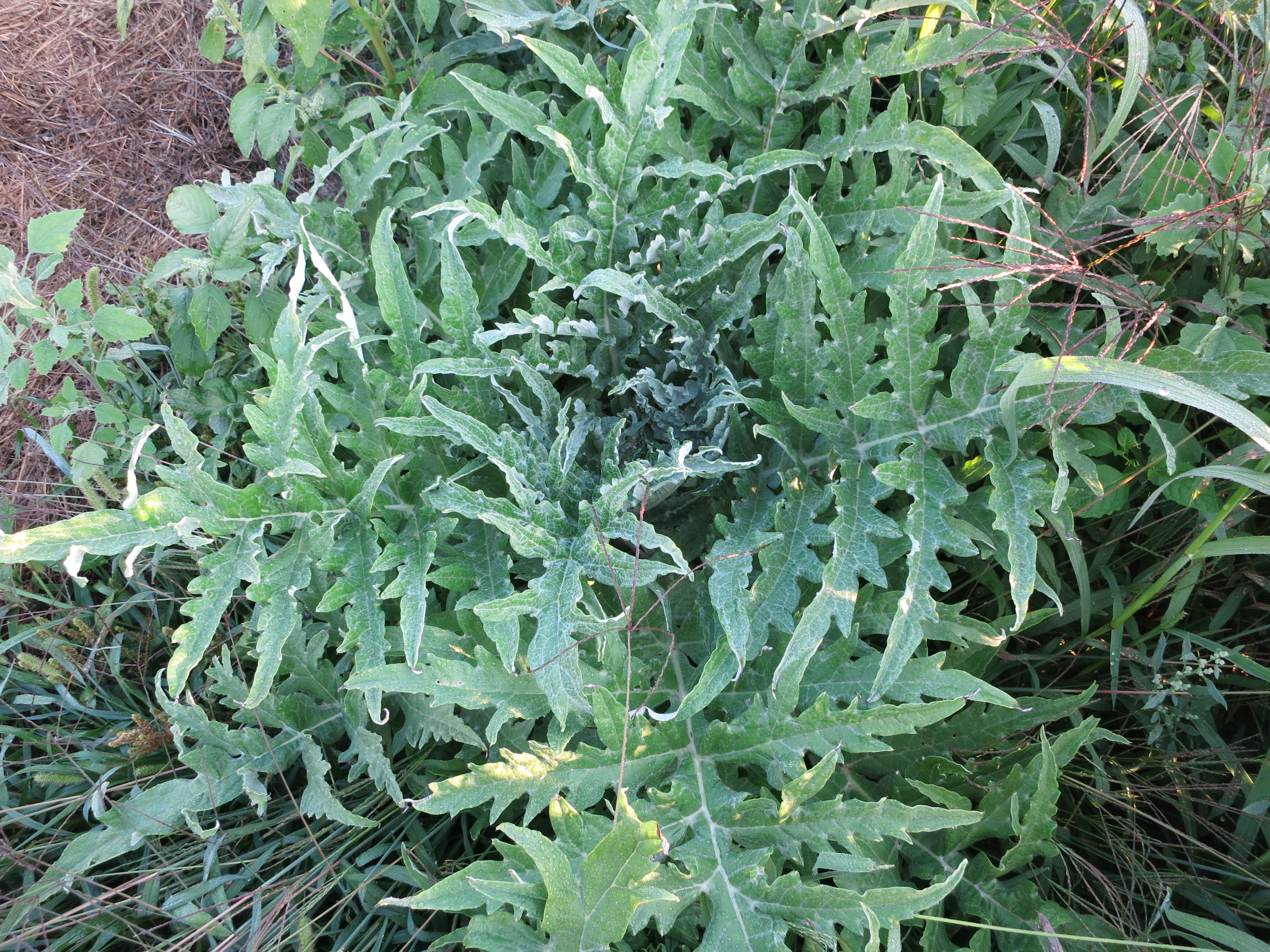
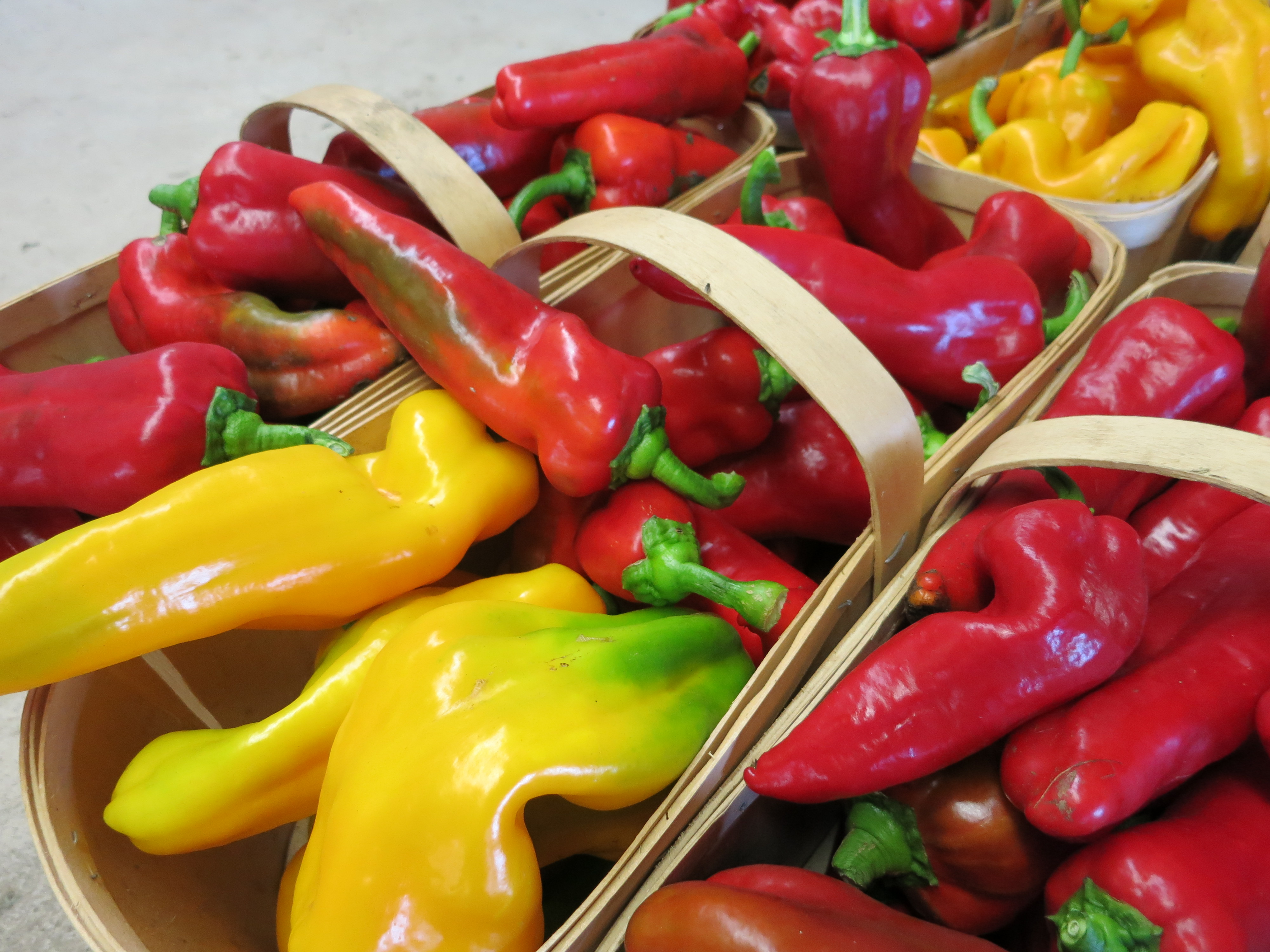
  • I love the early winter task of searching through the seed catalogues & choosing what seeds that we will grow. There are always the tried & true – the ones we can depend on, and so we grow them every year including Big Beef tomatoes, Provider green beans, Ailsa Craig onions … And each year we try new varieties & new crops too. This season it’s a green bean that promises to be easier to pick – but how will it taste? Who can resist tomatoes with names like Lucid Gem, Cosmic Eclipse & Chestnut Chocolate? Customers have asked for Brussels sprouts, bitter melons … and maybe we’ll have better success with artichokes this time around. In total we will be growing close to 400 varieties of more than 40 vegetables, and around 40 herbs. Perhaps I got carried away?
  • Sowing the seeds – the first ones indoors in the greenhouse, and later directly into the soil outside – is one of my favourite jobs on the entire farm. Onions & a few of the herbs are the first to hit the dirt, maybe this coming week. After that we’ll be seeding every week – probably right through until September. Some seeds are easy to germinate, while others take some effort. I like the challenge of growing Angelica for example. It’s a beautiful herb that we will seed this week in trays & put outside in the winter weather for 6 weeks. Then it’s brought into the greenhouse where it waits another few weeks until it decides to sprout. Eventually it becomes a beautiful 6′ tall plant with greenish-white flowers.
124

  • It’s exciting to wait & watch for the seeds to germinate & poke up through the soil, and then grow into plants that yield vegetables & fruit.
  • Lately I’ve put more effort into saving our own seeds. Some of the older varieties that we really like can disappear from the seed catalogues with no warning. Better to have our own seed to ensure we can continue to grow them. Plus, it’s a lot of fun! We’ve been saving Jarrahdale squash seed for a while now and selecting for a smaller & more consistent size with some success. Many years ago a customer from market brought us Scotch Bonnet pepper seeds from his family in the Caribbean. We continue to save the seed & grow these deliciously hot peppers each season.

034


IMG_6668

Flynn & Oliver are in no hurry for us to begin seeding. They have claimed the greenhouse benches for their naps on sunny days!

IMG_6653


4 Comments

Cauliflower is big news!

I have never been a fan of cauliflower.

There are enough other vegetables that both look better & taste better, that I will gladly skip the cauliflower in favour of … almost anything. (though as an excuse to enjoy a rich, creamy, delicious cheese sauce, it is acceptable!)

So the ridiculously high price of cauliflower in the grocery stores this winter does not affect me. I would not be purchasing it anyways. A combination of the low Canadian dollar & a shortage due to difficult weather conditions in the southern US where it is grown have resulted in heads of cauliflower costing up to $8. And while other vegetables & fruit have also increased in price, cauliflower is the one that’s making the news. It seems every news source in the country has been talking about it. Even the New York Times had an article on the high price of cauliflower in Canada.

I have never been a fan of cauliflower – and so we have never grown it.

Then last summer I decided to give it a try. While not my vegetable of choice, many of our CSA customers have requested it, and since we like to try something new each season … It was almost a success. The plants, which we grew from seed, started off great. Then frost got most of them, and we sort of ignored the few that remained. Later, when we searched through the weeds, we found some very nice heads of cauliflower – small but clean & white. And they tasted great!

001

This season we’ll be growing cauliflower again – enough for our CSA, and enough for me too.

I’m now a fan of cauliflower!

What else will we be growing for our CSA program? Here’s a reminder from last season …

001

 We are now accepting applications for CSA 2016.