Keep updated on all that is happening around Thiessen Farms!


Leave a comment

CSA 2018 – week 3

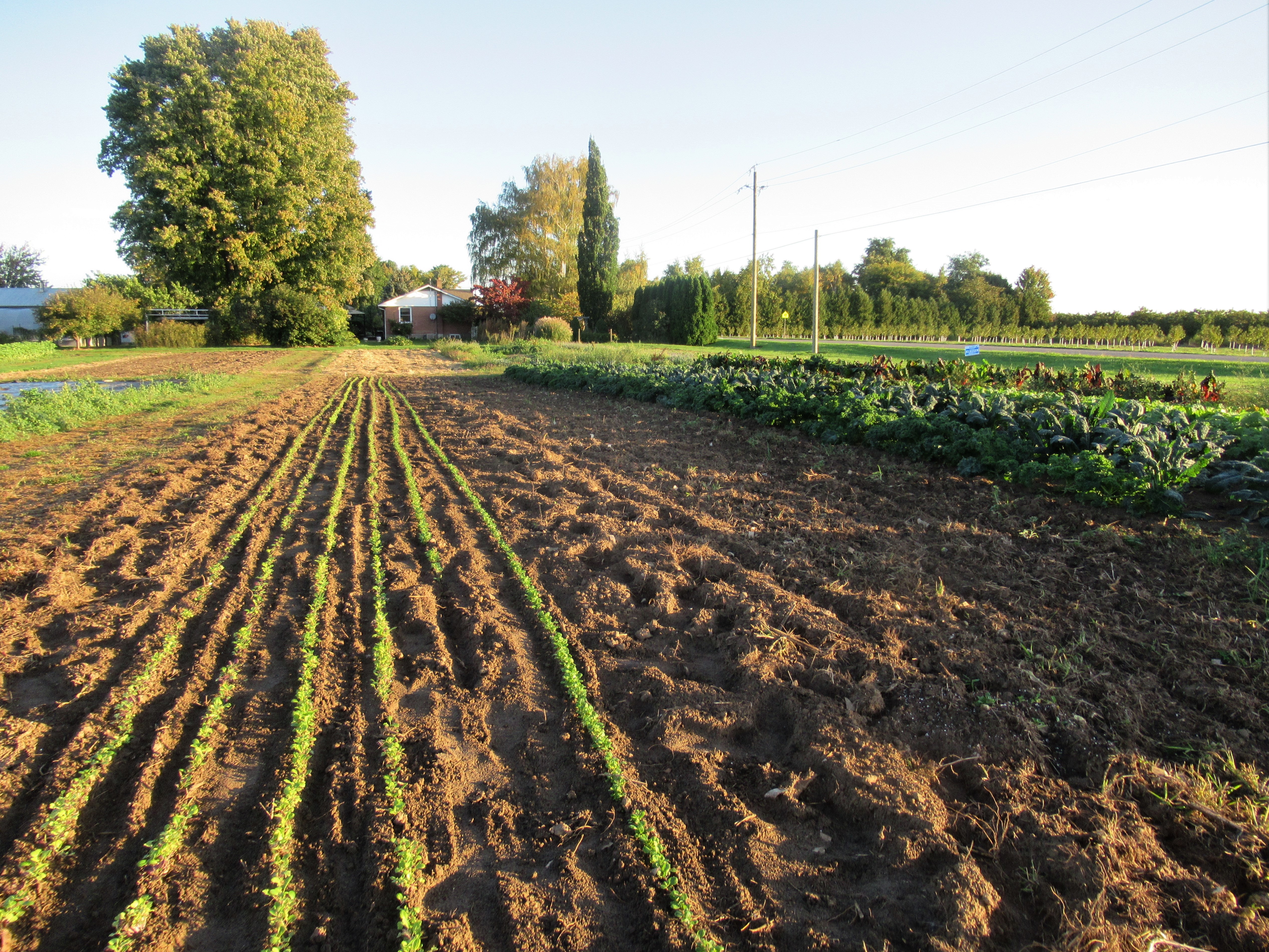
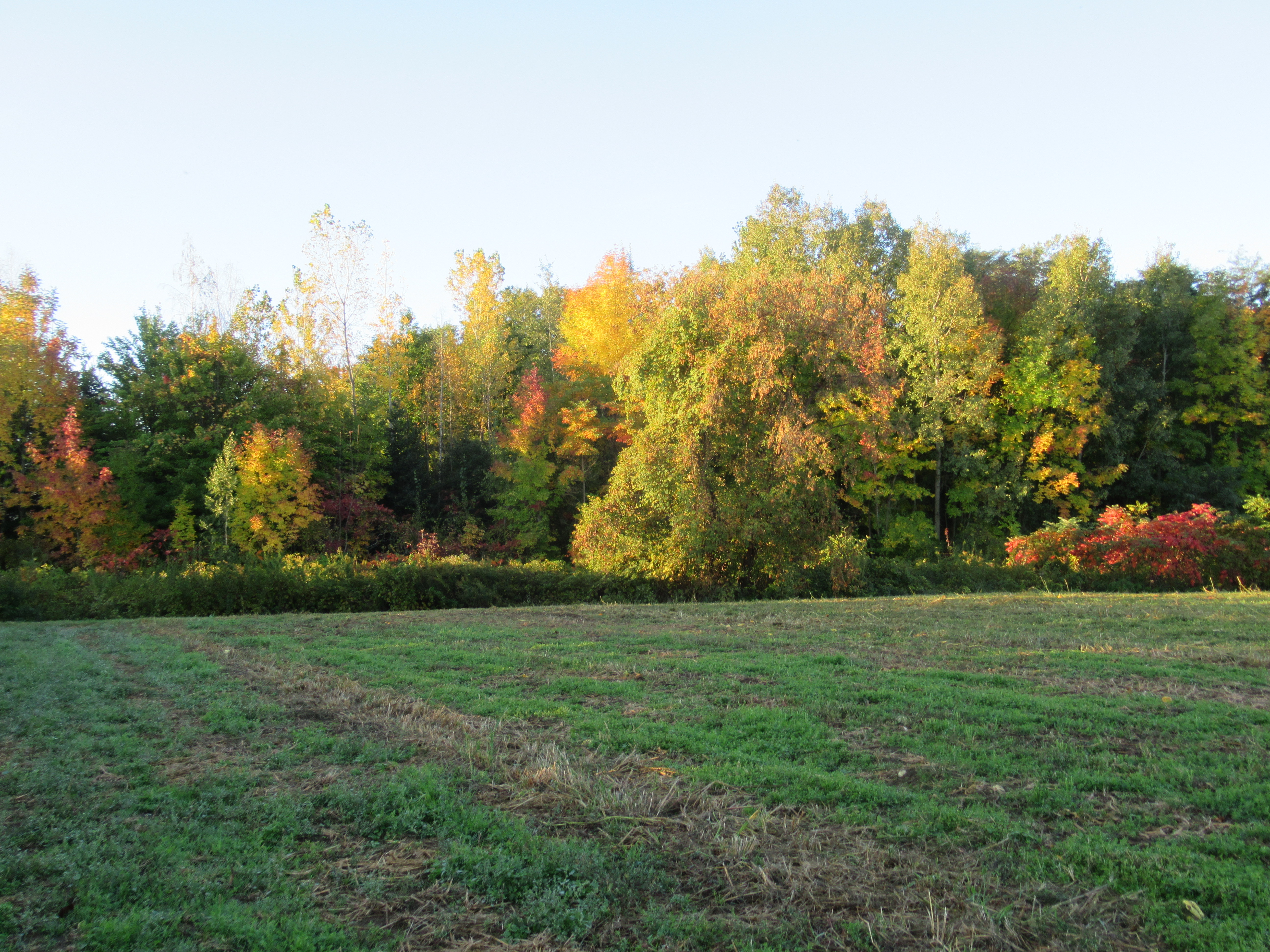
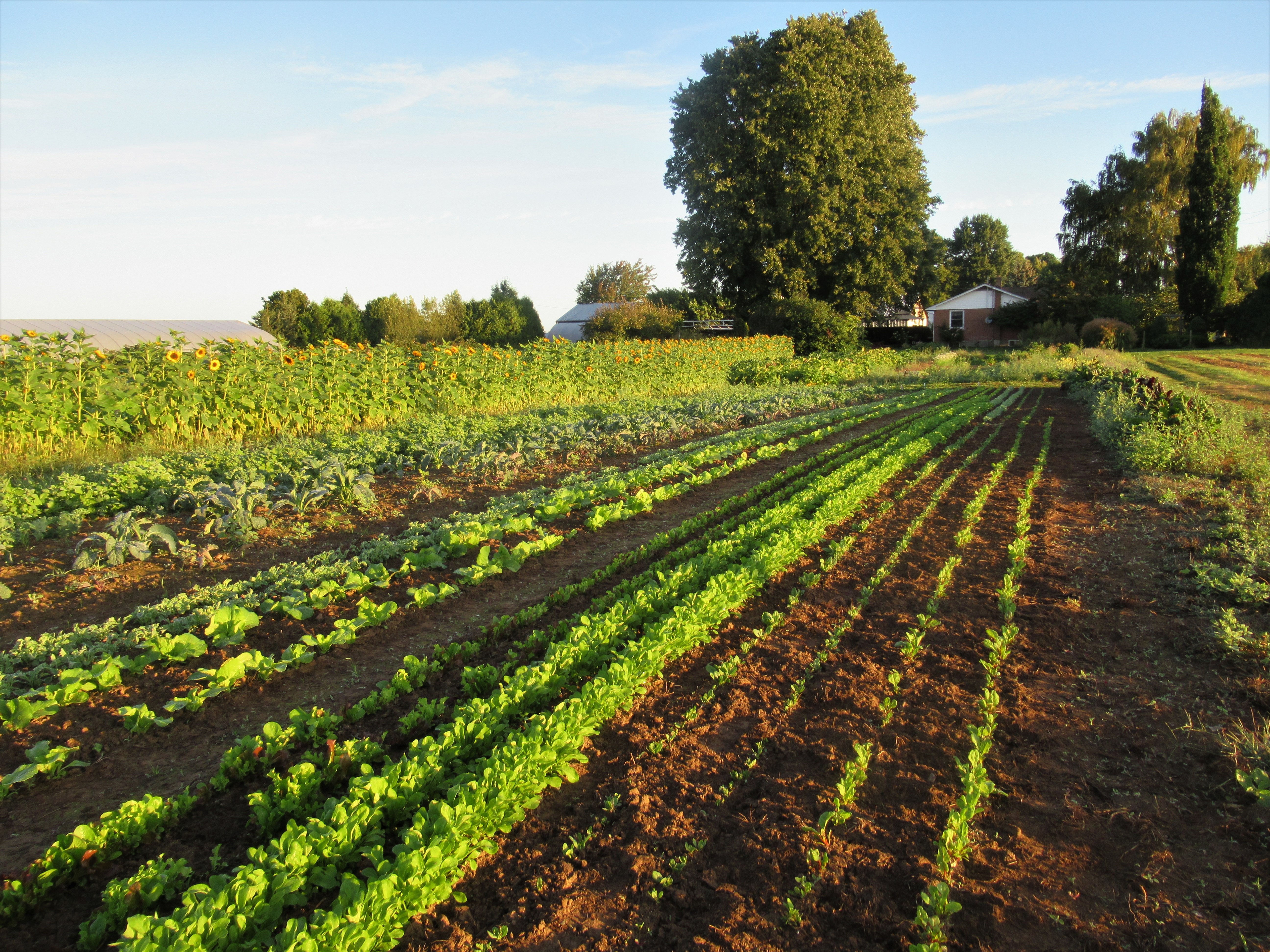
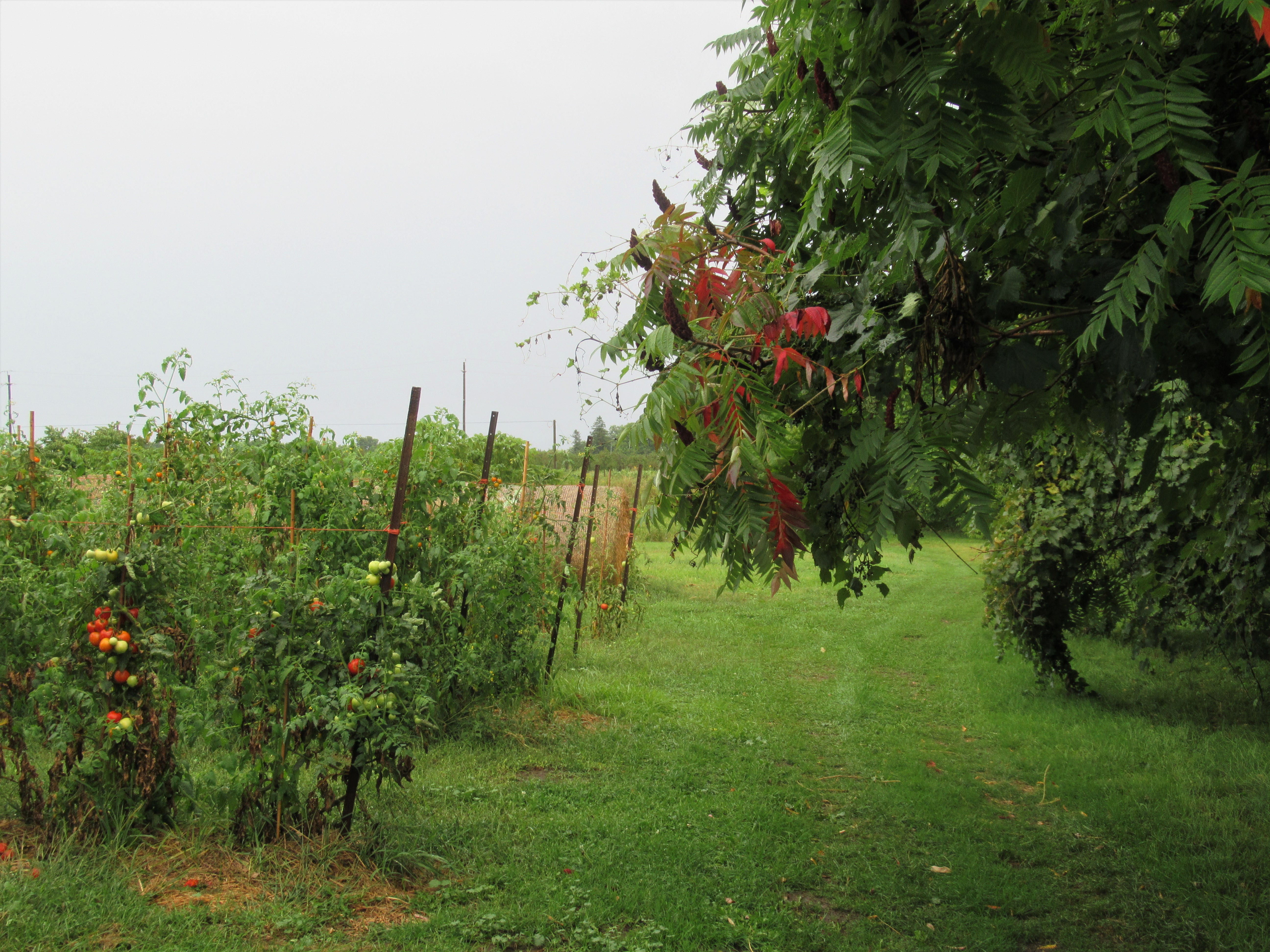
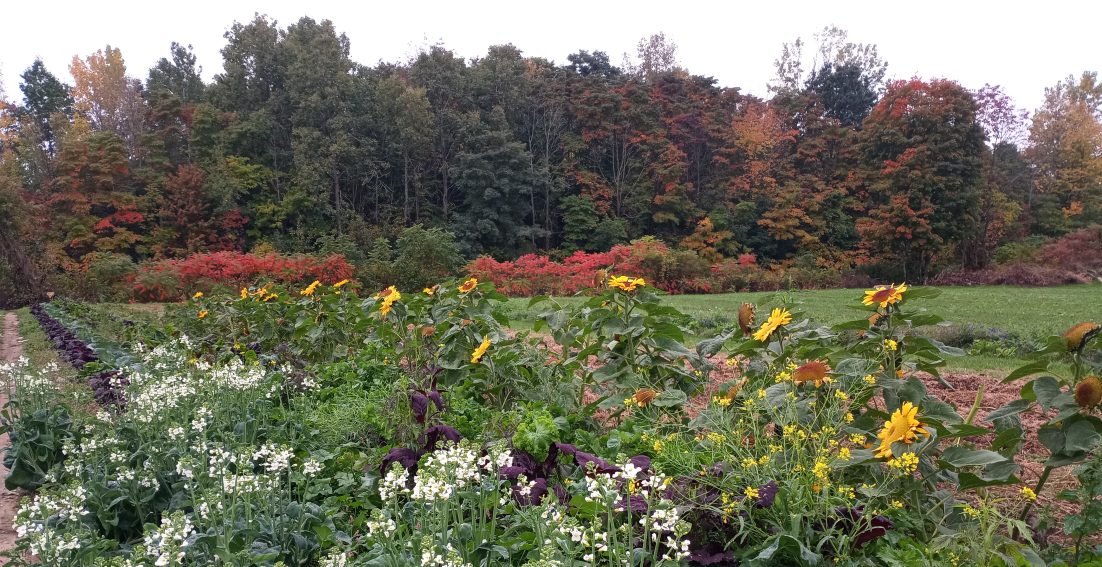
The view from our farm is pretty spectacular these days!

Our neighbours seeded a cover crop of mustard earlier this spring, and now it is in full bloom.

Mustard is an excellent cover crop. It will suppress weeds, provide habitat for bees & insects when in bloom, and when it is mowed down it will provide organic matter for the soil. But probably one of mustard’s most interesting & potentially beneficial properties is that it works as a biofumigant. This means that when it is worked into the soil it releases compounds that are harmful to bacteria, fungi, insects, nematodes, and weeds. All of this will benefit the strawberries that will be planted in these fields this fall.

But right now we are surrounded by all this beauty!

We also seed cover crops on our farm. Different crops & mixtures of crops are used depending on what we hope to achieve.

This is crimson clover which we had blooming last month. Clover provides a habitat for bees & other insects,  fixes nitrogen in the soil (thus reducing the need for fertilizer), and it adds organic matter.

These purple blooms are hairy vetch that we had growing along with rye & other crops over the winter. Not all of it winter killed and now some is blooming beside the garlic patch. Vetch also fixes nitrogen in the soil, improves tilth & provides some weed control.

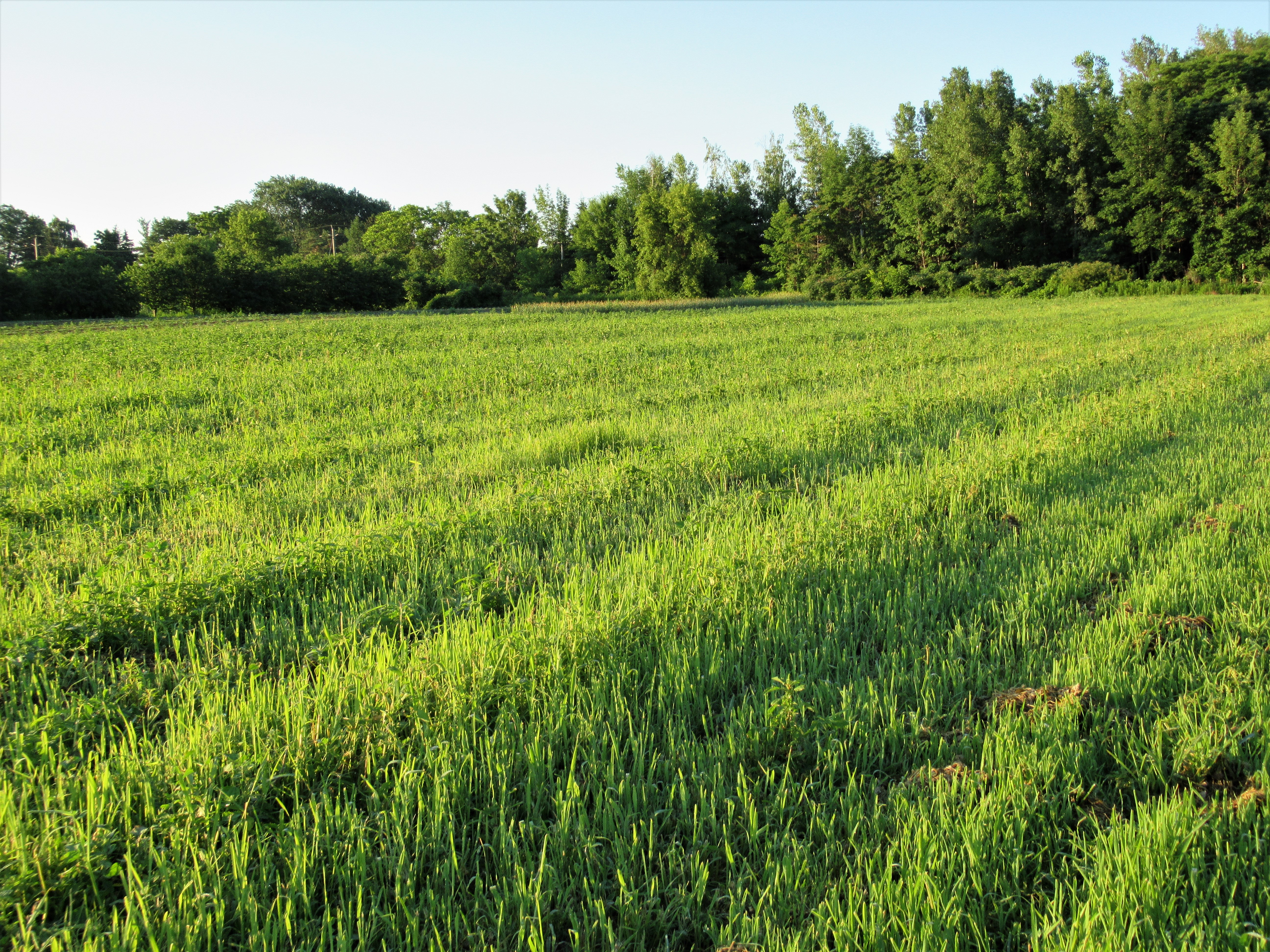
Areas of our farm that we will not be planting to vegetables until later this summer have been seeded to cover crops as well. The main reason to plant them now is to help keep the weeds from taking over.

Speaking of weeds … we have had some success in reclaiming vegetables from the weeds. Remember the pictures we posted last week? Things are looking better again.

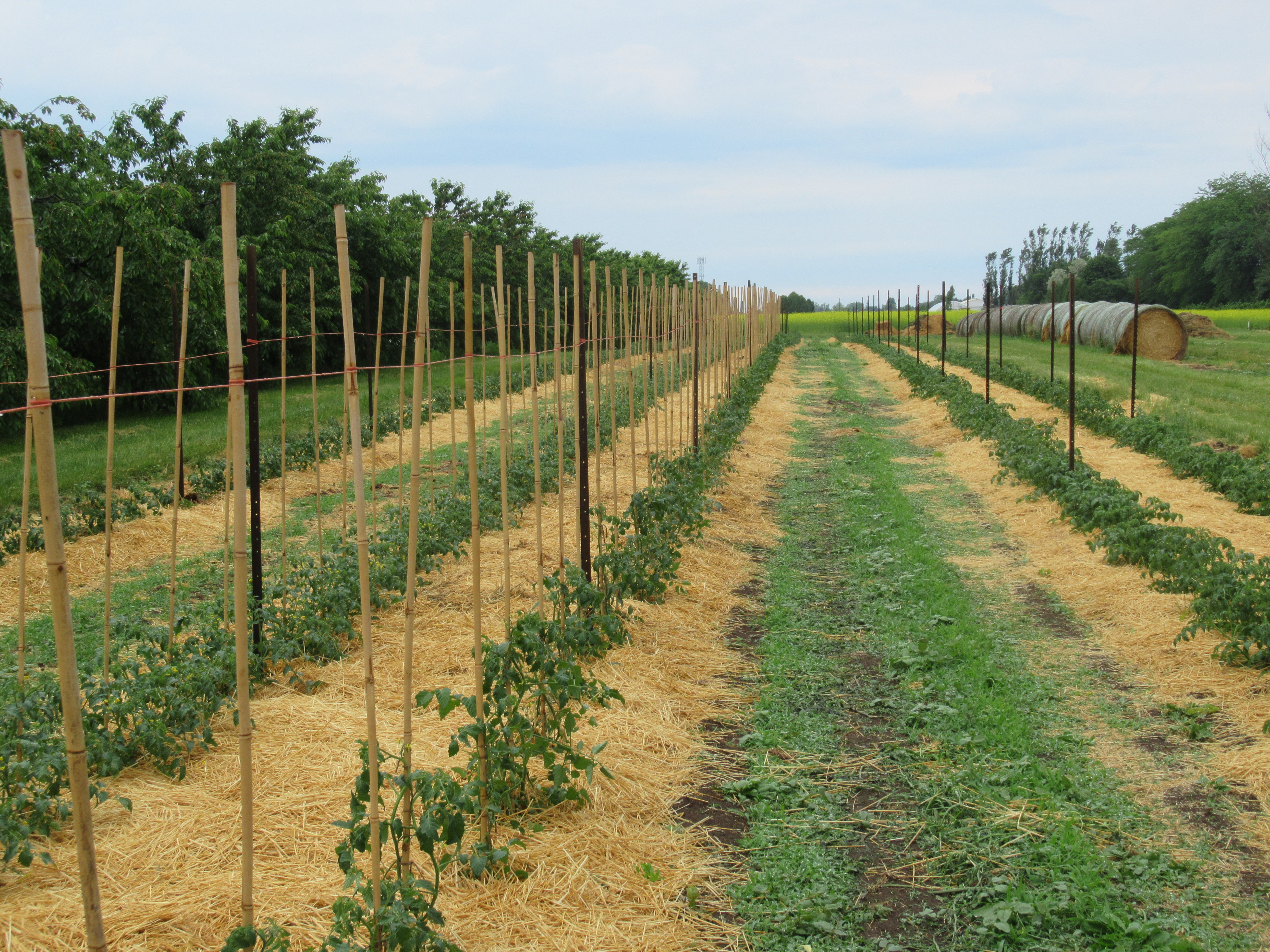
As well, all the tomatoes have been mulched with straw, and the zucchini, tomatilloes & bitter melons. At least we won’t have to deal with weeds in these crops!

What’s in the box?

Salad turnips, kale, green onions, lettuce or lettuce mix, spinach.

  • Salad turnips are small, round, white turnips that resemble radishes, but without the bite – usually! Mild in flavour, crisp, and quite tender, they are best eaten raw – simply wash, cut off the tops and enjoy! They can also be stir fried, sautéed, or steamed – both the turnips & the green tops.

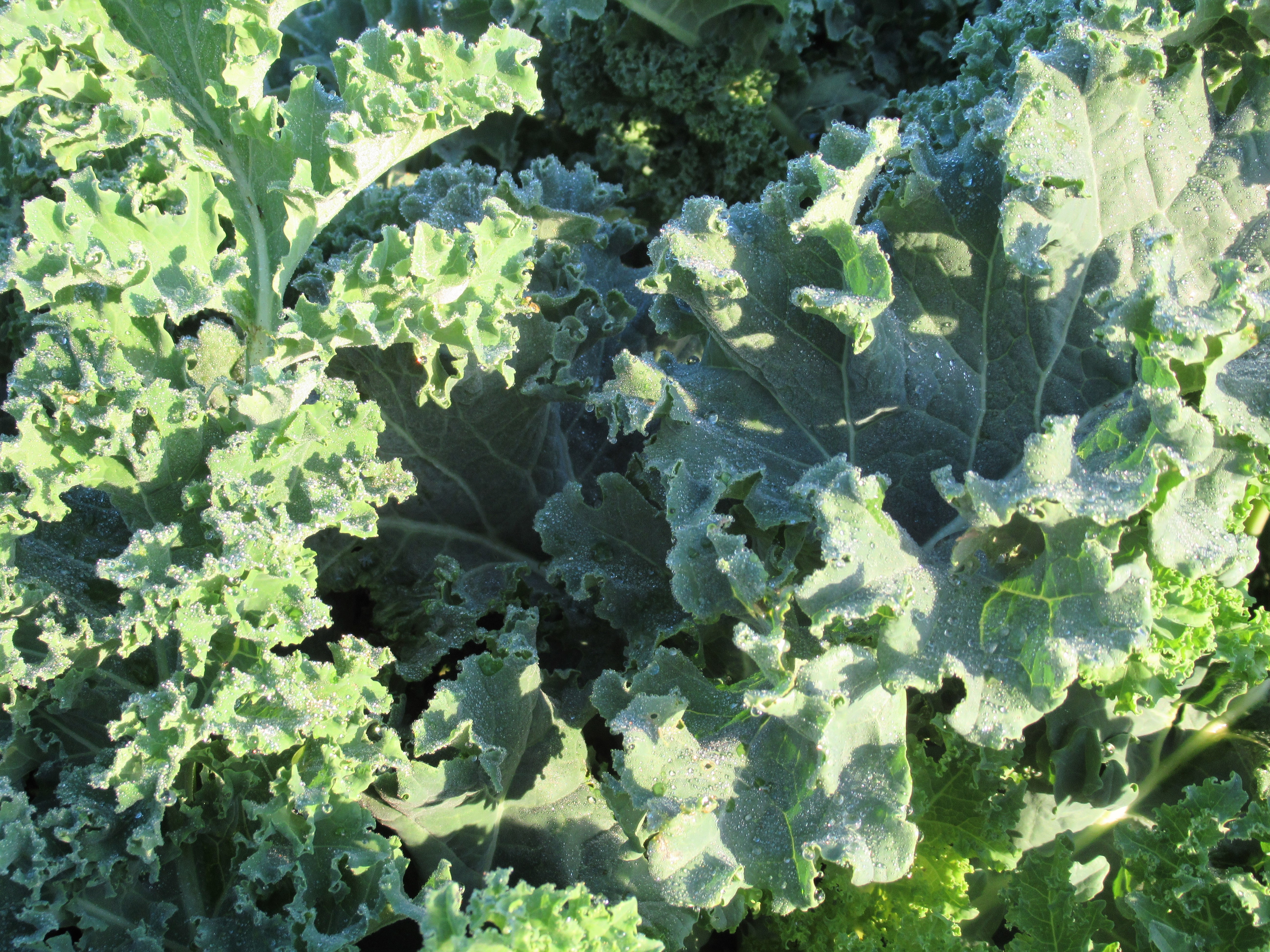
  • I usually consider kale to be a fall vegetable – but it grows well in spring too! It also can be eaten raw, in a salad, or cooked – steamed, sautéed, stir-fried. We have 2 kinds of kale now – the curly kale, and black kale also called dinosaur kale. They look different but taste similar.
  • Green onions, lettuce & spinach will be included in your box again this week. The green onions are growing a bit bigger, but will still be tender & tasty. The lettuce may be the same mix as previous weeks or heads of green or red lettuce.
  • Snow peas were supposed to be the star of the week! We picked them for the first time this morning, anticipating an abundance for the shares this week. Unfortunately we were rushing them, so no snow peas for Tuesday pick-up – but there should be snow peas by Friday. Here’s hoping!

There’s been no rain to fill the bird bath – but it still gets used!

And another view of the yellow mustard fields.


1 Comment

CSA 2018 – week 2

What happened?

Last week Thiessen Farms had fields of clean, neat and (relatively) weed-free vegetables.

This week … it’s weeds, weeds, weeds!

Here are 2 examples of last week vs today. And this is despite time & effort spent hoeing & weeding.

The increase of weeds is not surprising. Last week’s heat & humidity together with the few showers we received encouraged not only the vegetables to grow, but especially the weeds.

While weeding is my happy place (it really is), I surely can’t handle this much happiness!

Of all the crops, onions are particularly hampered by weeds. Their shallow root system cannot compete with weeds. Plus, onion leaves are small & narrow and don’t shade out any weeds (like zucchini can for example) which means they get weedy quickly. We grow a lot of onions, and try hard to keep them weed-free. Weedy onions = small onions!

Sometimes we are successful …

Other onion patches are a work in progress.

Because onions – especially green onions – are in the ground for only a short period of time, hoeing and hand weeding are the best ways to look after them. Other crops – like tomatoes or peppers – that are around for the full season and would compete with weeds right through the fall, get mulched with straw rather. The straw prevents most weeds from growing & eliminates the need for weeding.

All of our tomatoes are planted in the fields now, and we have started to mulch them.

What’s in the box?

Radishes, green onions, lettuce, spinach, bok choy.

  • The first radishes are ready – crisp & spicy & zesty! Enjoy them raw as a snack, or add them to your salads.
  • The first onions of the season are green onions, also called bunching onions or scallions. Eat all the onion- the green leaves & the small, bottom white bulb.
  • It’s salad time! enjoy the fresh flavour & texture of lettuce & spinach.
  • Bok choy usually goes to flower when the heat & humidity rise. But I guess last week’s temperatures were not enough to cause them to bolt yet. Use bok choy in your favourite stir-fry recipe – alone or with the green onions & radishes … We have included a bok choy recipe that we tried & enjoyed this week – quick & easy with great flavours!

GARLIC AND GINGER BOK CHOY   (from https://lydiasflexitariankitchen.com)

INGREDIENTS
  • 2 teaspoons sesame oil
  • 1 teaspoon grated fresh ginger
  • 2 garlic cloves, sliced thinly (or green garlic)
  • 2 tablespoons soy sauce (or tamari)
  • 4 baby bok choy, cut in half lengthwise, root and leaves trimmed – I used a whole bag
  • ¼ cup water (plus more as needed)
  • 1 tablespoon cornstarch or tapioca starch
  • sesame seeds for garnish
METHOD
  1. Heat the sesame oil in a wok or large skillet or dutch oven
  2. Add the ginger and garlic and cook for a couple minutes, taking care the garlic doesn’t burn
  3. Add the tamari, then the bok choy, turning to coat in the oil and seasoning.
  4. Add ¼ cup of water and cover the pan with a lid. Steam the bok choy until the stem end is tender, about 4 or 5 minutes. Add more water if necessary.
  5. Make a slurry of the cornstarch with some water. Push the bok choy to the sides and pour the slurry into the center, stirring to make a sauce. It should thicken and become glossy.
  6. Remove the bok choy to a platter, pour the sauce over top and garnish with the sesame seeds.


Perhaps next week we can again show pictures of clean, neat and (relatively) weed-free vegetables?

Probably not!


Leave a comment

CSA 2018 – week 1- Surprise!

I don’t go out to the fields on Sunday.

I try not to even look at the vegetables that day.

It’s not so much that I might be tempted to pull a few weeds (true), or that I’ll get stressed when I see all that needs to be done (maybe), or even that Sunday is our day of rest (for sure!) …

Rather, I don’t check the crops on Sunday because I want to be surprised on Monday.

All week we’re out in the fields – planting, weeding, mulching, harvesting … always working with the crops. Seeing them so much, we don’t readily notice the changes, and how things are growing. Simply skipping a day ensures we’ll be surprised when we return on Monday.

(It’s just like Sage. We know she’s growing. But when did she go from this …

… to this – 50 lbs at today’s weigh in.)

Certainly the farm surprised us this morning! Everything is growing so fast now!

I will admit we were already surprised last Friday. While I was still planning to send out an email giving a heads-up that CSA would start in a week or even 2, we realized there were enough vegetables ready that CSA could begin this week. Surprise!

We will harvest the lovely lettuce mix …

Spinach …

And bok choy.

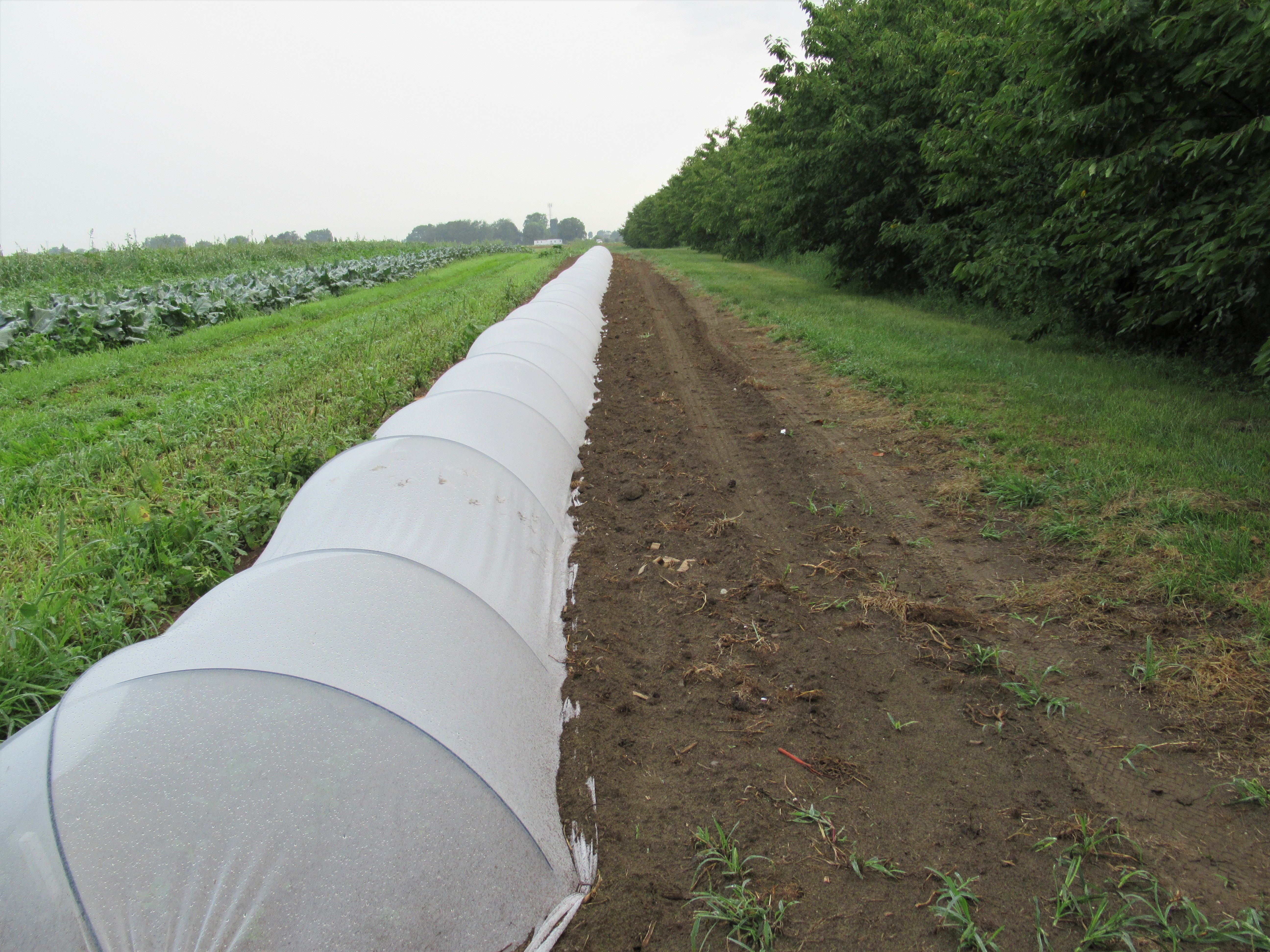
Notice that the white netting which covers the bok choy and prevents insects from chewing on the leaves isn’t quite long enough to cover the entire row.

Here’s the result. The covered bok choy has almost perfect leaves.

The plants that were not protected look like this …

It won’t affect the flavour – but they sure don’t look as appealing or appetizing!

What’s in the box?

Lettuce mix, spinach, bok choy, green garlic, rhubarb.

  • The lettuce mix, spinach & bok choy have all been rinsed once to remove any field dirt. You will probably want to wash them again before eating. Store them in the plastic bag in the refrigerator. They will usually last about a week.
  • Bok choy is a great Asian vegetable. It can be added to your salad and eaten raw, but most often is sautéed or stir fried. We like to cook some garlic or chopped green garlic in a bit of oil (olive or sesame) for a couple of minutes, then add the bok choy and continue cooking until it is wilted & still bright green – around 5 minutes or less.
  • Green garlic is a fresh garlic plant. At this time of year the bulb has not yet formed below ground, and the green top is still tender enough to eat, like a scallion or green onion. Green garlic is milder than fall garlic bulbs. Use them raw (eg. sliced into salads or mashed with goat cheese for a spread) or cooked (sautéed with scrambled eggs)  anywhere you would use garlic. They are also delicious coated with olive oil & tossed whole on the barbecue. Store green garlic in the fridge.
  • There should be enough rhubarb in your box to make a pie. Or almost as good, and way easier & faster, make a rhubarb crisp or crumble. As usual we have included our favourite recipe below. It’s quick, easy, and delicious. We also enjoy stewed rhubarb. Chop rhubarb and cook in a saucepan with a bit of water until tender. Add sweetener (sugar, honey, maple syrup) to taste. We sometimes add apples or other fruit to cut the tartness of the rhubarb. Delicious on it’s own or poured over ice cream, pudding or custard.

Aunt Elvira’s Fruit Crisp

Cut up enough rhubarb (or any fruit) to half fill a pie plate.

Mix together …

½ cup brown sugar

¼ cup flour

¼ cup rolled oats

½ tsp cinnamon

3 TB butter

(Adjust the amounts to suit your preferences & taste.)

Cover fruit with this mixture.

Bake for approx. 12 minutes in the microwave.

We usually bake it in the oven rather – 350 F for approx. 30 minutes. The topping gets crispier & browner.

We are looking forward to seeing everyone at CSA pick up this week!


2 Comments

The beauty of May

Everything seems to be moving fast on the farm these days … including us!

Seeding, transplanting, planting, weeding, cultivating, mulching, preparing ground for crops, and many other jobs are keeping us on the go. There’s no shortage of things to do this time of year!

The crops are moving fast too. I took pictures around the farm last week for an update, but didn’t get the chance to post them. By the weekend the vegetables had grown so much I needed new pictures. Again I did not post them. Now it is Wednesday – new pictures again …

Onions, broccoli & kale.

Two plantings of snow peas – but the second has about caught up with the first.

Spinach, onions, broccoli, beets, lettuce …

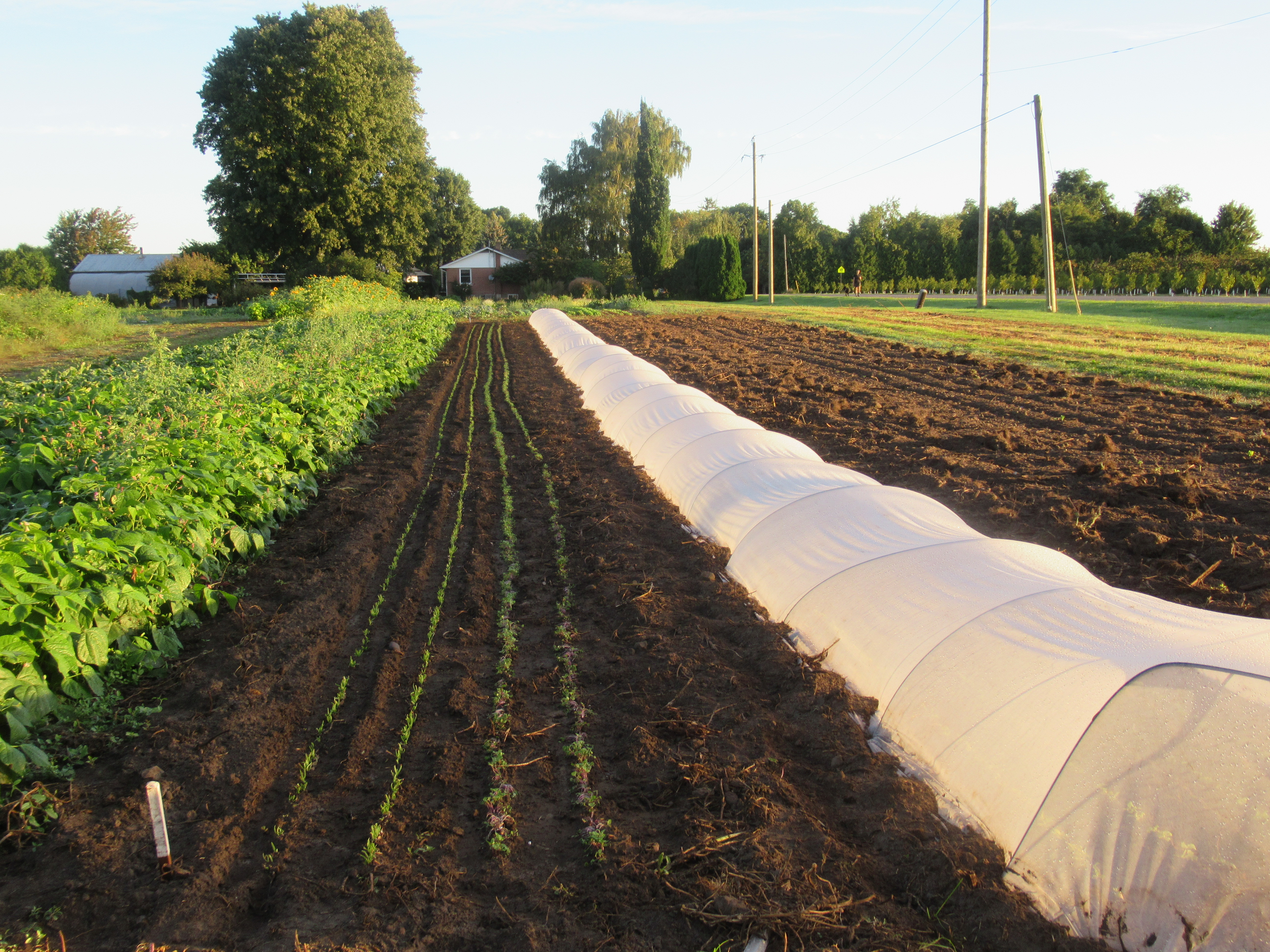
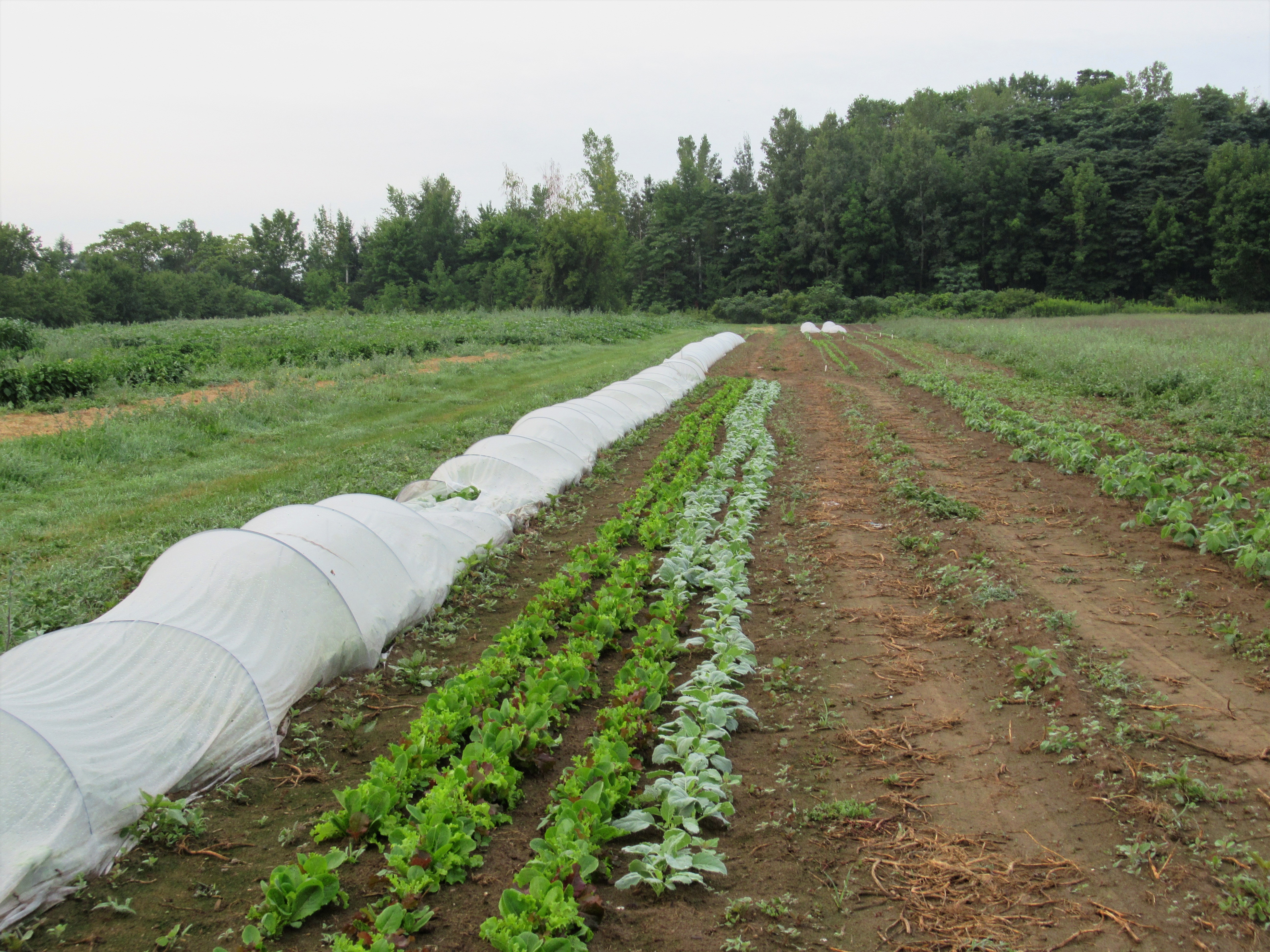
The white row covering is insect netting which blocks the bugs. The aim is worm-free radishes & salad turnips, and pak choy leaves without holes.

The garlic is all up now.

There’s a competition between the rhubarb & the weeds to see which one can grow the fastest!

The winter was hard on our blackberries – a lot of canes died from the cold temperatures & winds or were damaged by mice & rabbits. Now that the leaves are showing we can see that a lot more canes are not alive. There will be blackberries – but not the big amount we had last year.

Both greenhouses are still full of plants – even though we have moved many outside on trailers.

Our large hoophouse suffered damage in that strong windstorm we experienced a few weeks ago. Like most hoophouses (or greenhouses), our is covered with a double layer of plastic. A small fan constantly blows air between the 2 layers, inflating them slightly to provide extra insulation. The outer plastic sheet on ours was ripped off leaving only 1 layer. The endwalls were also torn allowing cold air to enter the house. Fortunately no plants were damaged – just covered in dust & dirt – and it happened in late spring, not in the cold of winter. On chilly nights, we spread the white cover over the plants which is like a blanket to help keep them warm. Once the greenhouse is empty in a few weeks we will remove all the plastic, let the soil soak up the rains all summer, and install new plastic in fall. Growers who use their greenhouses year round replace the plastic every 4 or 5 years. Our plastic is at least 8 years old making it more brittle which is why it ripped in the wind. It owes us nothing!

It is a pleasure to be on the farm this beautiful time of year!

But I stand corrected – not everything on the farm is moving fast … or even moving!


1 Comment

Spring growth

April showers bring … April flowers!

And snow peas! They are finally up!

The garlic rows can be seen poking through the straw.

The rhubarb seems to be almost doubling in size daily (rhubarb pie soon?).

Various herbs are growing …

In the greenhouse trays of seedlings are waiting to be planted outside – onions, spinach, broccoli, bok choy … Maybe next week?

We spend a lot of time in the greenhouse these days, transplanting. The seedlings are growing well, but are still behind where they should be for the end of April.

Everyone likes to hang out in the greenhouse, especially on the cool mornings.

Plants are not the only things growing on the farm these days. Sage also continues to grow … and grow …

She plays hard and sleeps hard. She has her freedom at times, but is often on the leash as she remains a flight risk. Sage loves the chase, whether it be cars, tractors, trains, cats, Canada geese …


Leave a comment

Springing to life

It feels great to be outside working again!

Okay, maybe not when it’s raining … or snowing … or blowing … or cold …

We’ve experienced all of these this week. But we have also had some beautiful weather recently, and it is good to be outside, getting some work done.

We had 5 dump truck loads of manure delivered in March. Usually it is delivered in the fall so we can spread it on the fields before winter and then leave it to decompose. Once the weather warms up in spring, we work it in and plant our vegetables in the re-energized soil. Manure is very beneficial, adding organic matter, feeding the microbial life in the soil and providing nutrients for the crops.

Receiving our manure in spring means it was too late to spread it on most of the farm. To ensure food safety, there should be 120 days between the time manure is spread and when vegetables are harvested. I was able to spread some in a field we won’t be planting until early fall.

But most of the manure I mixed with straw and leaves (that I stockpiled from last fall) then ran through the spreader to mix it and put it in a long windrow. By this fall it will be beautiful compost which I will then spread over the fields.

The fresh, hot manure really steams on a cold morning.

While the weather was nice, we pruned the raspberries. We used to spend a lot of time gathering all the canes we cut out and removing them from the raspberry patch – both to keep it looking clean, and to eliminate any diseases. Then we learned that some of our native bees nest in these hollow canes, so now we are far less fussy about cleaning them all up. We rely on the bees to pollinate our crops.

The first of the snow peas have been planted! Will they germinate in these cold temperatures? No! But the seeds will patiently wait for some warmth and then sprout. We seed them early – mostly for our own well-being. Planting the first seeds into the cold, spring soil boosts our spirits, & gives us confidence that spring is sure to come – sooner rather than later we hope.

Certainly the snow today was not a confidence booster!

It does feel spring-like in our greenhouse. Seeds are being planted and seeds are sprouting daily.

Here’s hoping for warm weather soon, so we can plant them out in the fields!

______________

Sage update.

Sage now weighs in at a healthy 31 lbs – and growing!

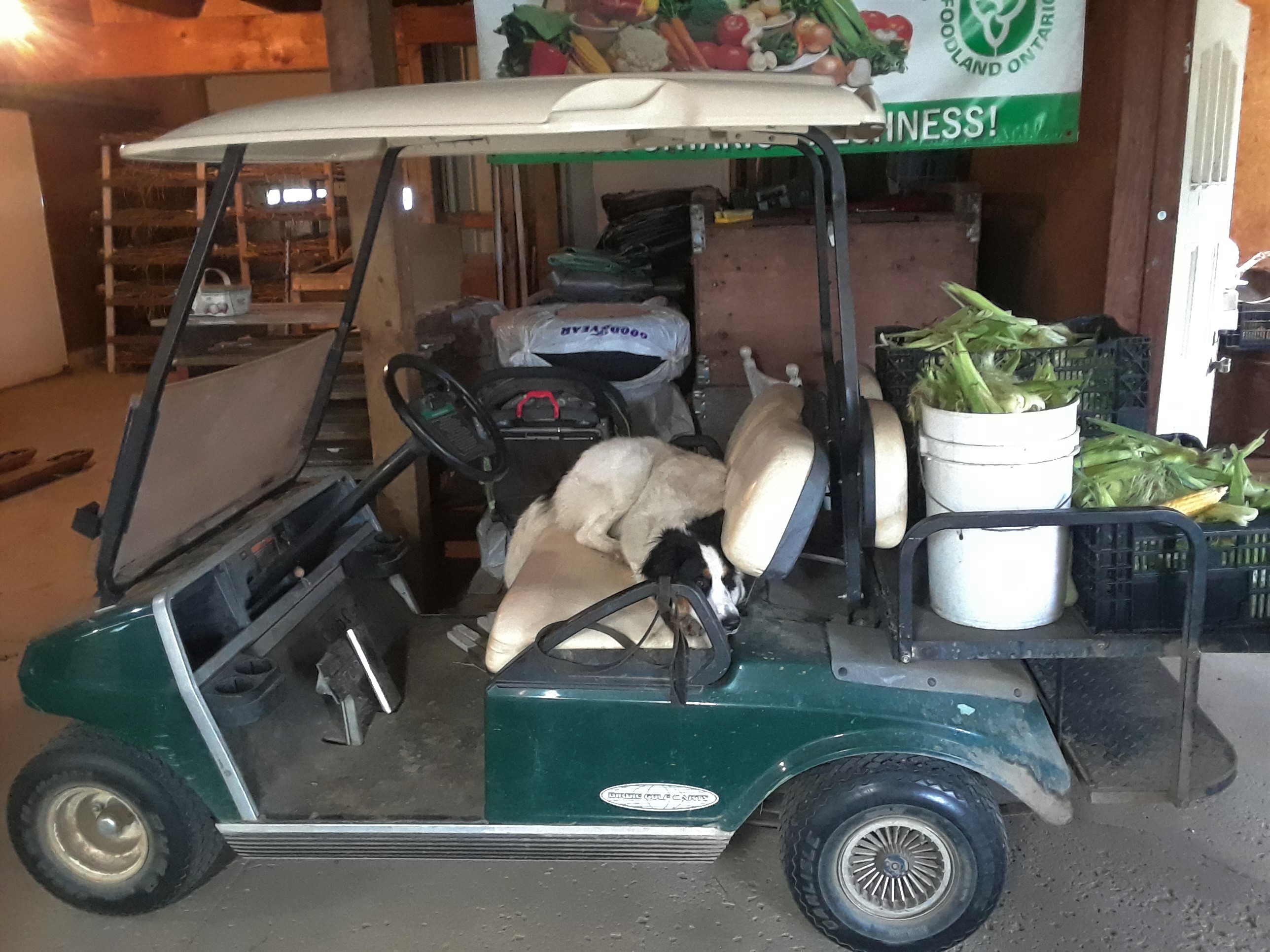
She has decided she likes riding on the golf carts – even if it means waiting …

She plays outside until she’s exhausted and then sleeps in the barn while we work.


3 Comments

What’s new?

What looks like a prehistoric cucumber or something … has seeds inside that turn a shocking bright red colour … and tastes really, really bitter?

Bitter melons!

I’m often asked, “What new vegetables are you growing this season?” People know we like trying different things and are always growing something new.

Last year it was bitter melons. Rather uncommon & perhaps even unknown to many Canadians, bitter melons are a popular vegetable in many cultures. At the North York Farmers’ Market where the majority of our customers have an Asian background they sold very well. And our customers willingly taught us when to pick them, how to prepare & eat them, and about the many health benefits of bitter melons. Turns out they are especially good for the heart & regulating blood sugar for diabetics.

We found it difficult to germinate the seeds, but then the plants grew well & produced a lot of fruit for many weeks. This year we’ll be growing them again.  We’re trying 10 different varieties (3 last year) to see what grows & produces the best, and what our customers prefer. Look for our bitter melons in August.

What else is new this year?

  • Radicchio isn’t something our family usually eats. But it is a beautiful, leafy vegetable resembling lettuce & cabbage in looks & usage, with a slightly bitter flavour. We grew some last year for the 1st time but got them in the ground too late to mature. We’ll start our seeds sooner this season.

Here’s what radicchio should look like (pictures from West Coast Seeds catalogue).

  • We haven’t grown parsnips for many years (don’t really remember why) but we’ve been buying & eating them this winter. They are so delicious that we have to grow them again!
  • Similarly popcorn returns to the list.
  • Fennel – another favourite of mine – has been unsuccessful for us recently. Maybe this is the year?
  • We’re trying to grow more Asian vegetables to meet the demand. Edamame, Chinese cabbage, pak choy, & winter radishes have been grown on our farm for a few years but we’re always trialing new varieties – looking for ones that grow reliably in our conditions, produce well, and taste great! We will add some other Asian greens to the list as well – tatsoi, choy sum, komatsuna, yokatta-na
  • And we are continually trying new varieties of crops we already grow. The list for 2018 includes 35 varieties of hot peppers, 38 different winter squash, 39 kinds of eggplant and 60+ varieties of tomatoes. This includes the tried & true, the old favourites and some new ones too.

That should be enough to keep things interesting!

*Here’s the disclaimer … It’s easy to get carried away in the winter and dream & make all these plans. No doubt not everything will get seeded or planted. Not everything that gets planted will grow well & produce a crop. We make no promises! But we will certainly try! And we’ll have fun doing it!
Look for these vegetables and more at our farmers’ markets or in your CSA shares this summer.

_______________________________

Sage update.

While Sage continues her quest to make new friends, Kahleese will have none of it.

Enjoying the last bit of snow.


Leave a comment

CSA 2018

We have been accepting applications for our CSA 2018 for a few weeks now. Response has been good!

For those wondering …

Here are some examples of half share boxes from last year …

CSA pick-up day in our barn …

And some pictures of the farm & the crops …

CSA applications & more information is available on this site, or email us at thefarm@thiessenfarms.com.


3 Comments

Winter reading

I’m not ready to let winter go.

Certainly the sunshine & warmer temperatures of the last few days have felt amazing …

And the forecast of a potentially large snowfall later this week is rather unwelcome. I am so over snow plowing, piling on the clothes just to go outside to do chores, and constantly stoking the wood stove in the shop to keep the temperatures above freezing …

But winter is my time to read. Stretching out on the recliner with a cup of coffee, the cat on my lap, and a good book – a great way to spend a cold winter’s day!

Among the top books from my winter reading was The Third Plate – field notes on the future of food” by Dan Barber. This optimistic book looks at where our food system should be going and is going, from a chef’s perspective. Another good one is In Search of the Perfect Loaf – a home baker’s odyssey” by Samuel Fromartz. The author goes on a worldwide quest to learn about baking the best bread. Along with a lot of books, I enjoy reading magazines, and internet articles. Not surprisingly, many are about farming.

Now with spring approaching, the time for relaxing & reading is coming to an end. It’s time to take what I learned from my reading and apply it to our own farming practises. That’s exciting & challenging! We have lots of plans, lots of new ideas, and lots of optimism for this upcoming season!

I’m ready for spring … but a bit more winter weather would be okay too – I’ve still got a few more books to read!

__________________

Sage update.

Sage desperately wants to make friends with the Flynns. They’re warming up to her – slightly. Then she bounds after them …

Sage loves running on the bales …

… and digging in the pile of wood chips.

We are confident she will be a great dog – eventually!


4 Comments

Meet Sage …

Introducing Sage, the newest member of the team here at Thiessen Farms.

Sage came to the farm a couple of weeks ago and quickly stole our hearts! Technically she belongs to Amy which means Amy has all work & expense & time & trouble … of training her and ensuring that she grows up to become a useful member of the farm.

The rest of us get to simply enjoy her!

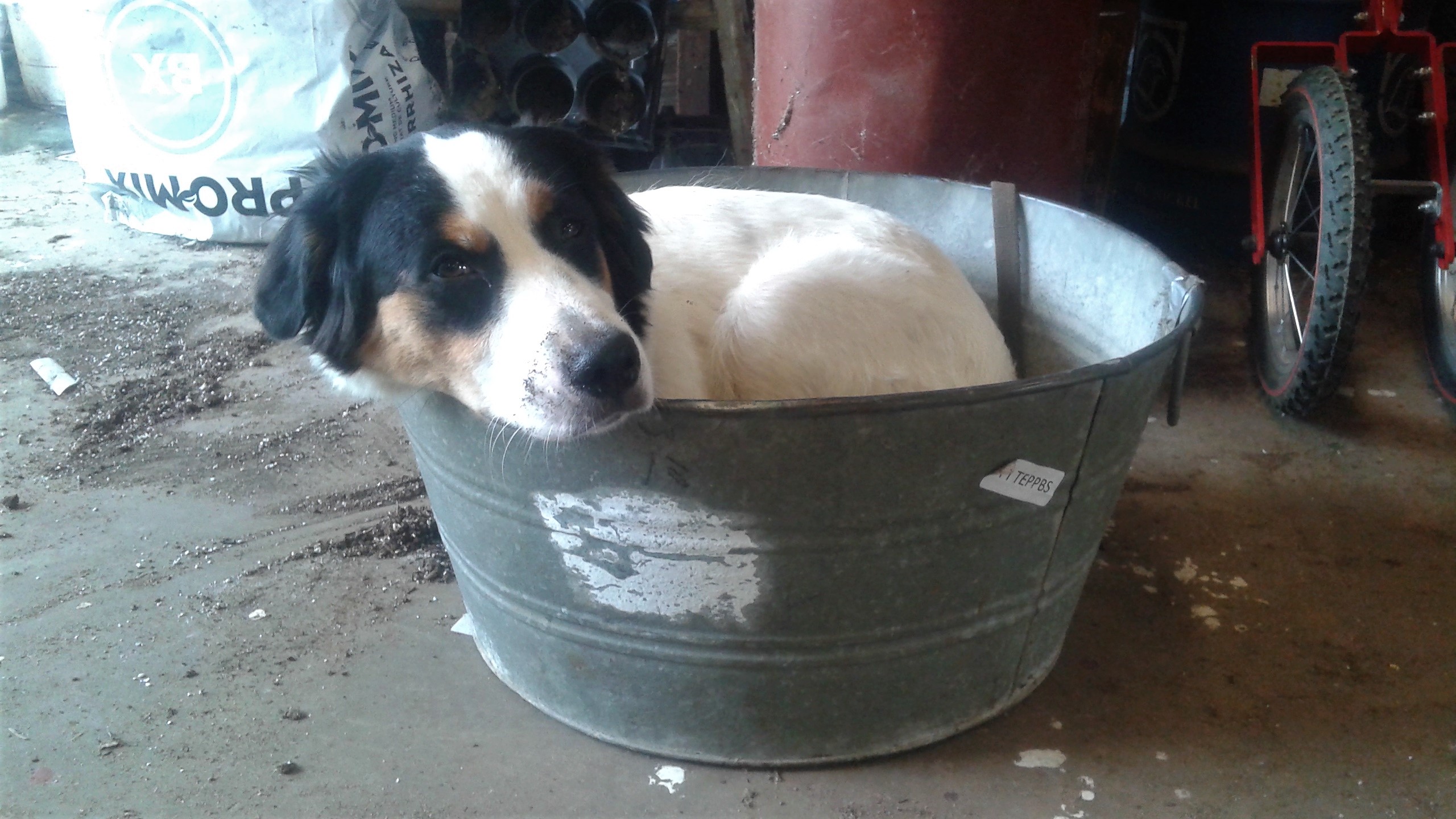
Sage’s mother is a Bernese Mountain dog and the father is unknown. Her paws indicate that she will likely be a good size dog. Sage appears to be quite intelligent and has easily learned basic commands. But being a puppy, she also obeys selectively and at her whim. She is loads of fun!

Good pictures are limited as Sage does not prefer to stay still.

She is excited to make friends with the cats. Oliver has reluctantly accepted her & mostly ignores her, but the 2 Flynns want nothing to do with her.

Sage loves the security of her porch. Here she sits and watches the farmyard and all that’s happening.

Sage looks forward to meeting everyone when our CSA program begins later in spring!