Keep updated on all that is happening around Thiessen Farms!


1 Comment

CSA 2018 – week 13. Part 1 – water

We woke up one morning, a few weeks ago and discovered we had no water. Not one drop came out of our taps!

Our water comes from a well in our yard (about 125′ deep) and services our house, Amy’s house, both barns and the greenhouse. Not having any water is a big problem.

It was a CSA pick up day so there were lots of vegetables that needed to be washed & prepped. It was also the hottest week of the summer. Water was a necessity!

We formulated a plan. Friends who live one road over and have town water allowed us to wash our vegetables in their yard. My in-laws around the corner let us shower at their house, and my sister, who lives in the city brought us pails of water for drinking. It was awkward & inconvenient but it worked.

Water is something can be easily taken for granted – until it’s in short supply!

On our farm we are mostly dependant on the rains to provide enough moisture for the crops. While we have no control over the amount or rain that falls, there are steps we have taken to make the best use of the precipitation we receive.

The most important is to build up our soil.

By using manure & compost (instead of just chemical fertilizers) we increase not only fertility but also the soil’s organic matter which improves its ability to hold moisture. Because manure is increasingly difficult to source, we grow cover crops and green manures. These are non-vegetable producing plants that we grow for a season or part season and then work into the ground to add organic matter. A portion of our farm is always growing cover crop instead of vegetables. The next season we grow vegetables there and plant cover crop on another area.

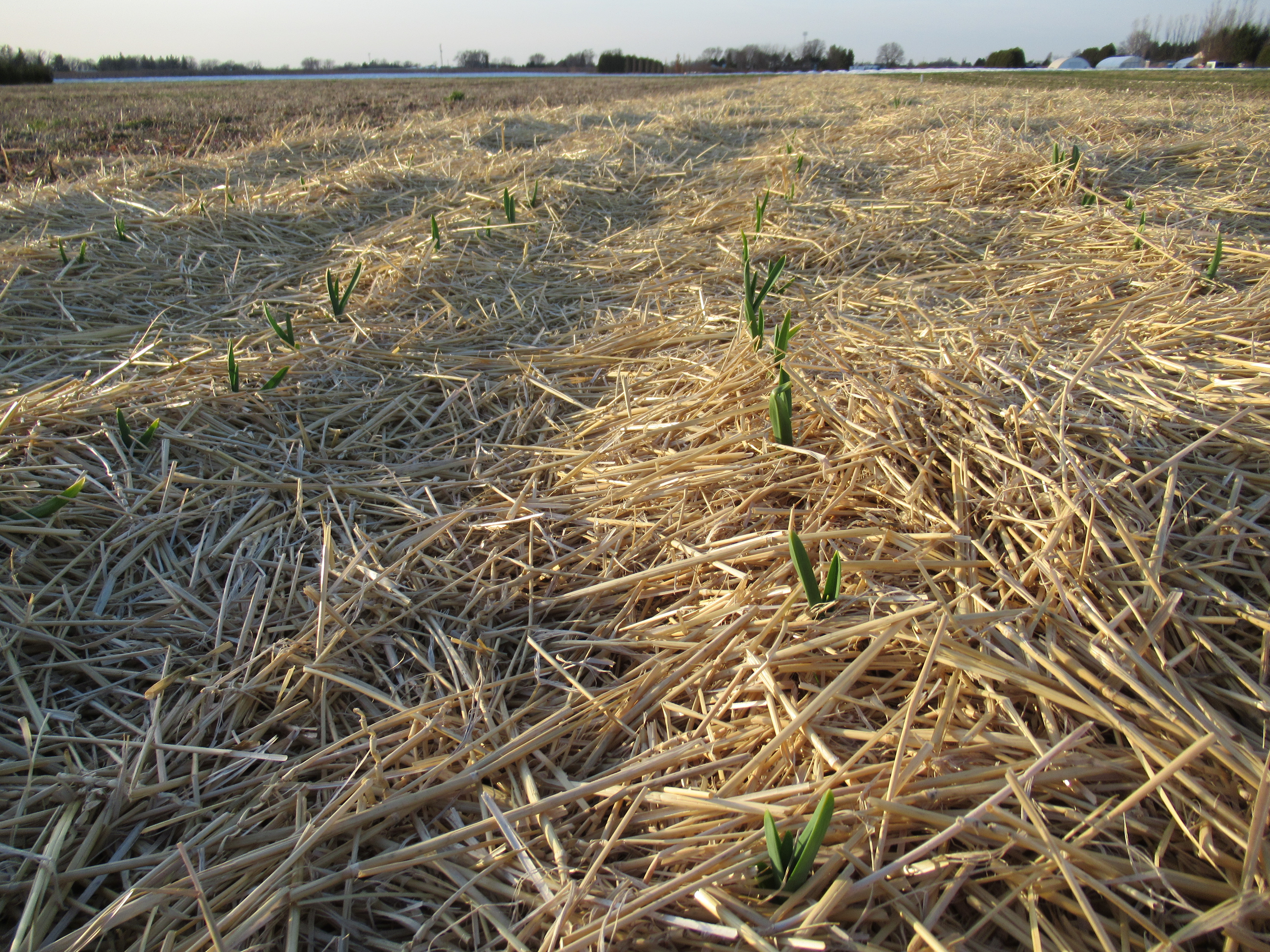
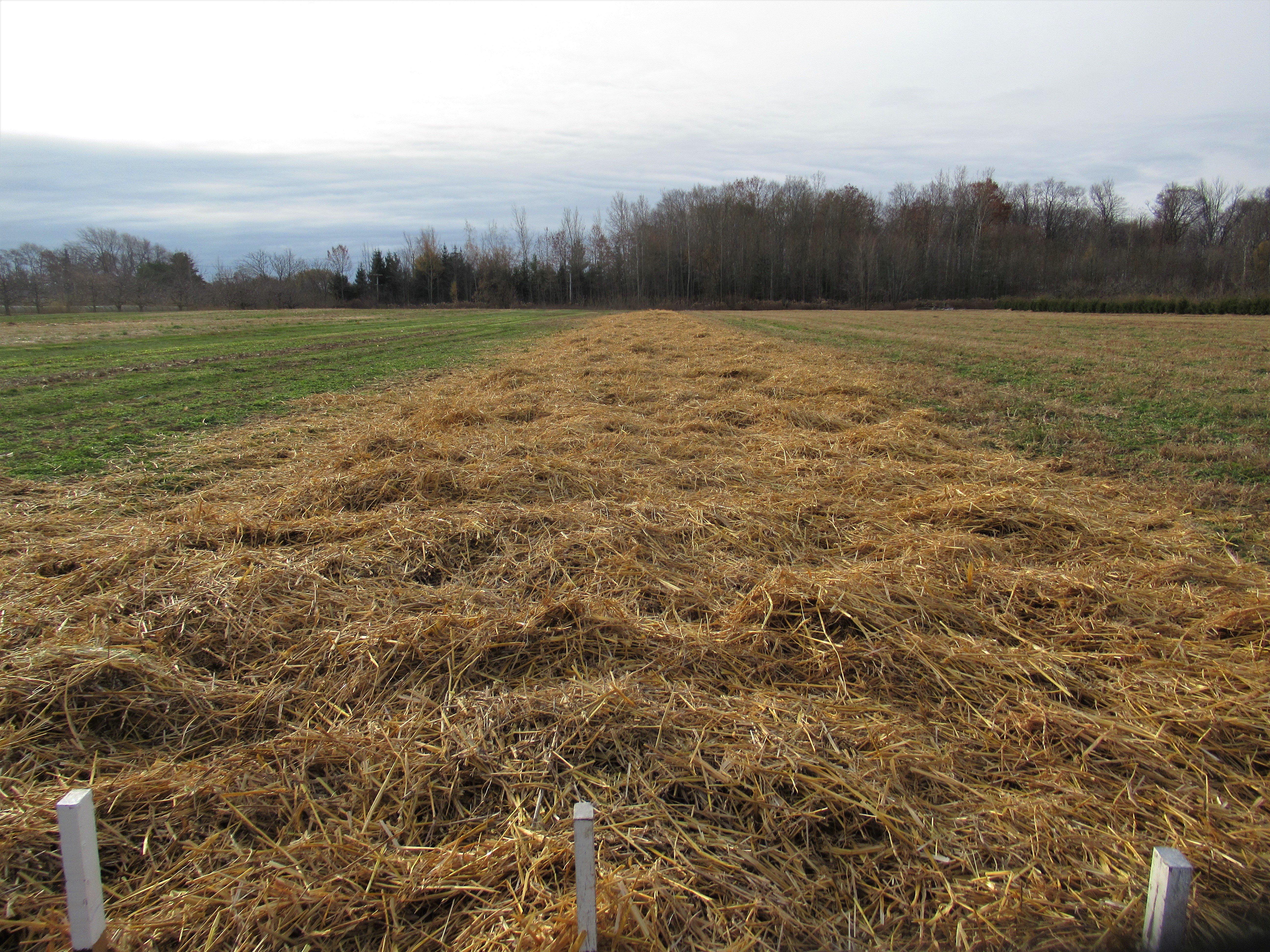
We also use a lot of straw mulch. This keeps the moisture in the soil and prevents it from evaporating and drying in the hot sun. In fall the straw is worked into the ground again providing organic matter & improving the soil.

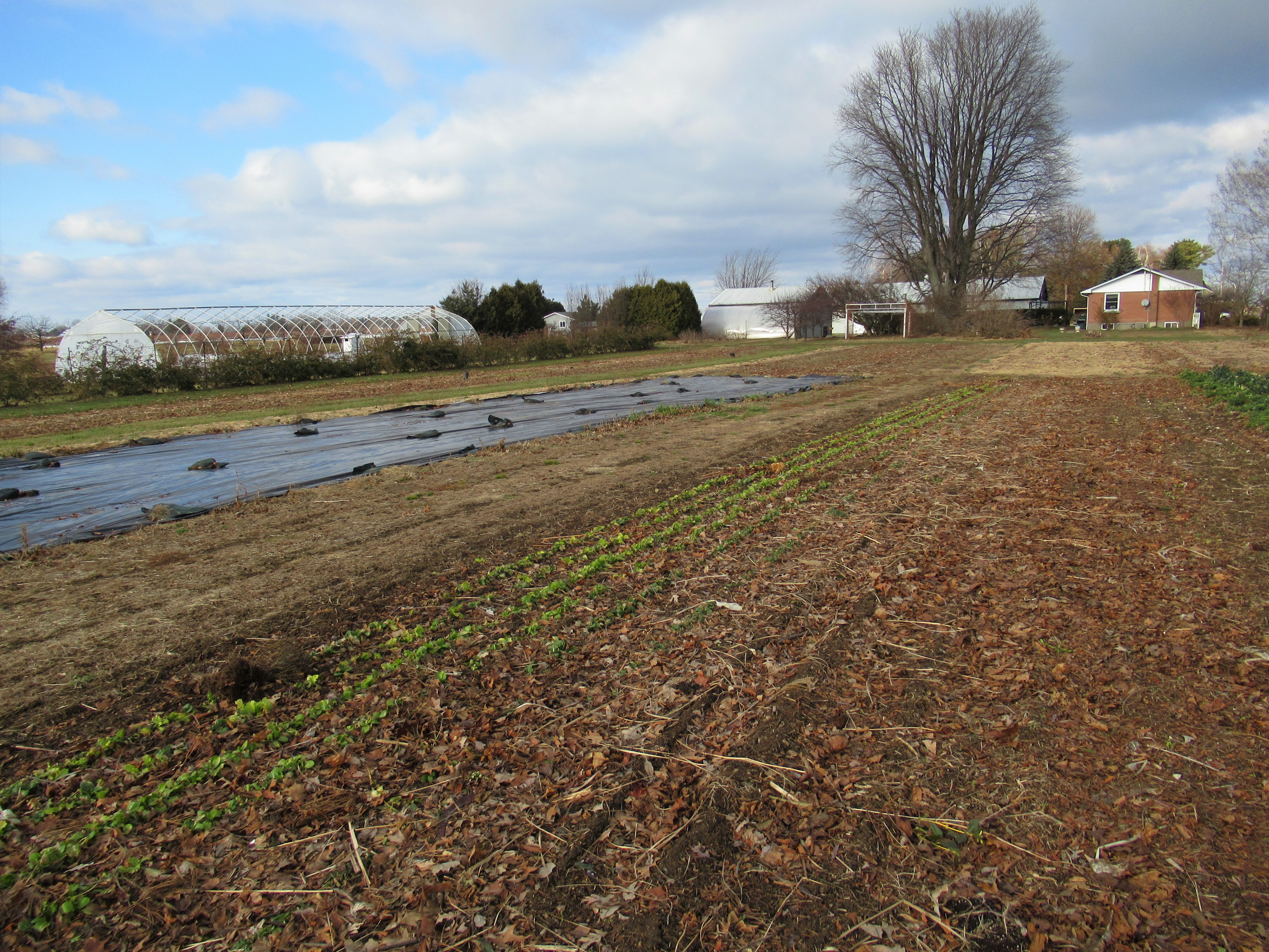
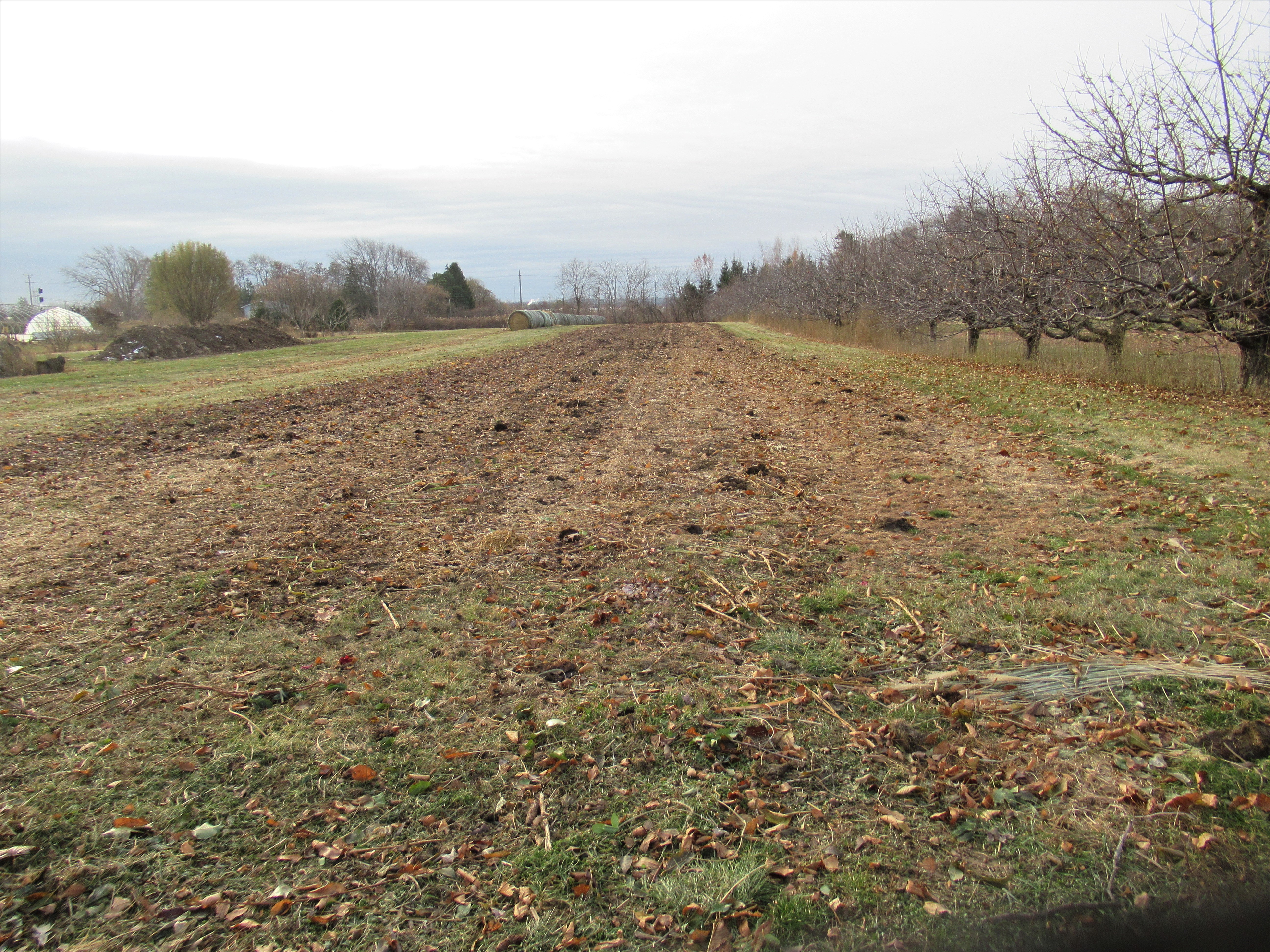
Cultivating or disturbing the soil is something we try to do less & less of. Keeping the ground covered with something – be it cover crop, vegetables or even weeds – keeps it from drying out. It doesn’t always make the farm look as nice as freshly worked dirt, but it’s healthier for the farm.

This summer has been quite dry overall and we can see how our soil improvements are helping to retain moisture and save our crops.

We collect water as well, so it is available when needed for watering vegetables & crops. Most of the rain that falls on our barn roofs is saved in cisterns – one at the end of each barn.

From there we pump it into a raised tank from which we can easily fill the sprayer/water tank and then water new transplants or other vegetables as needed.

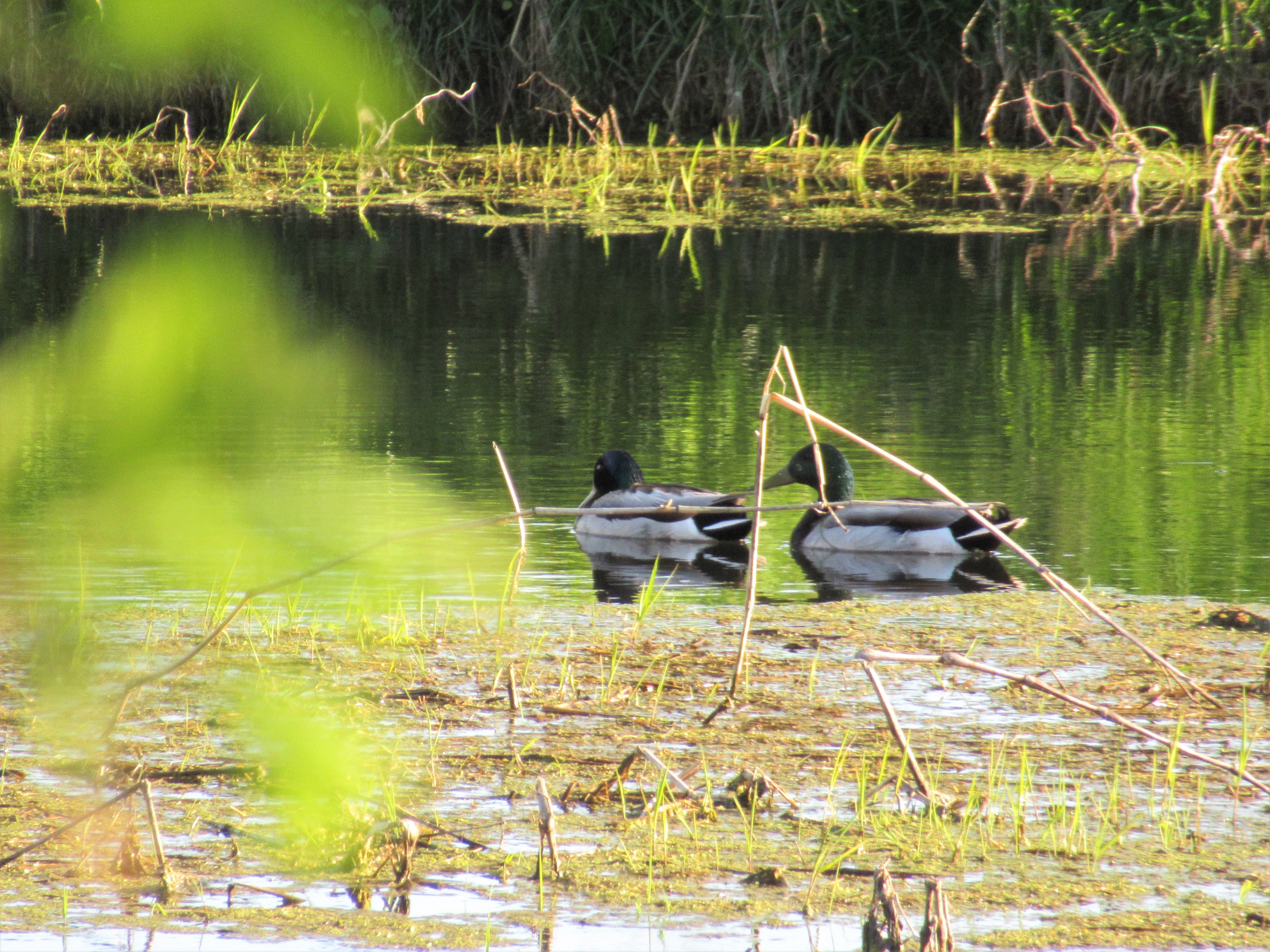
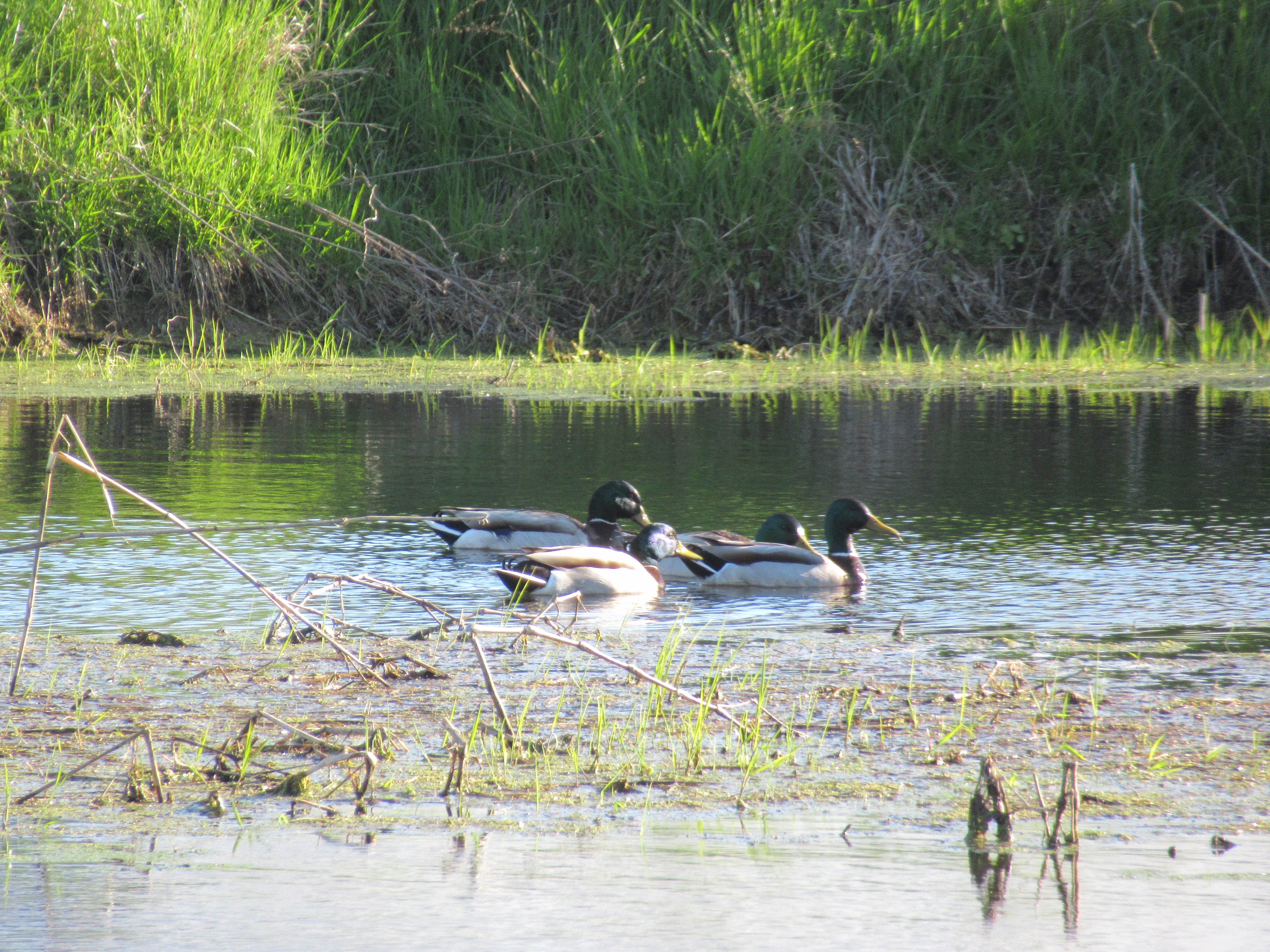
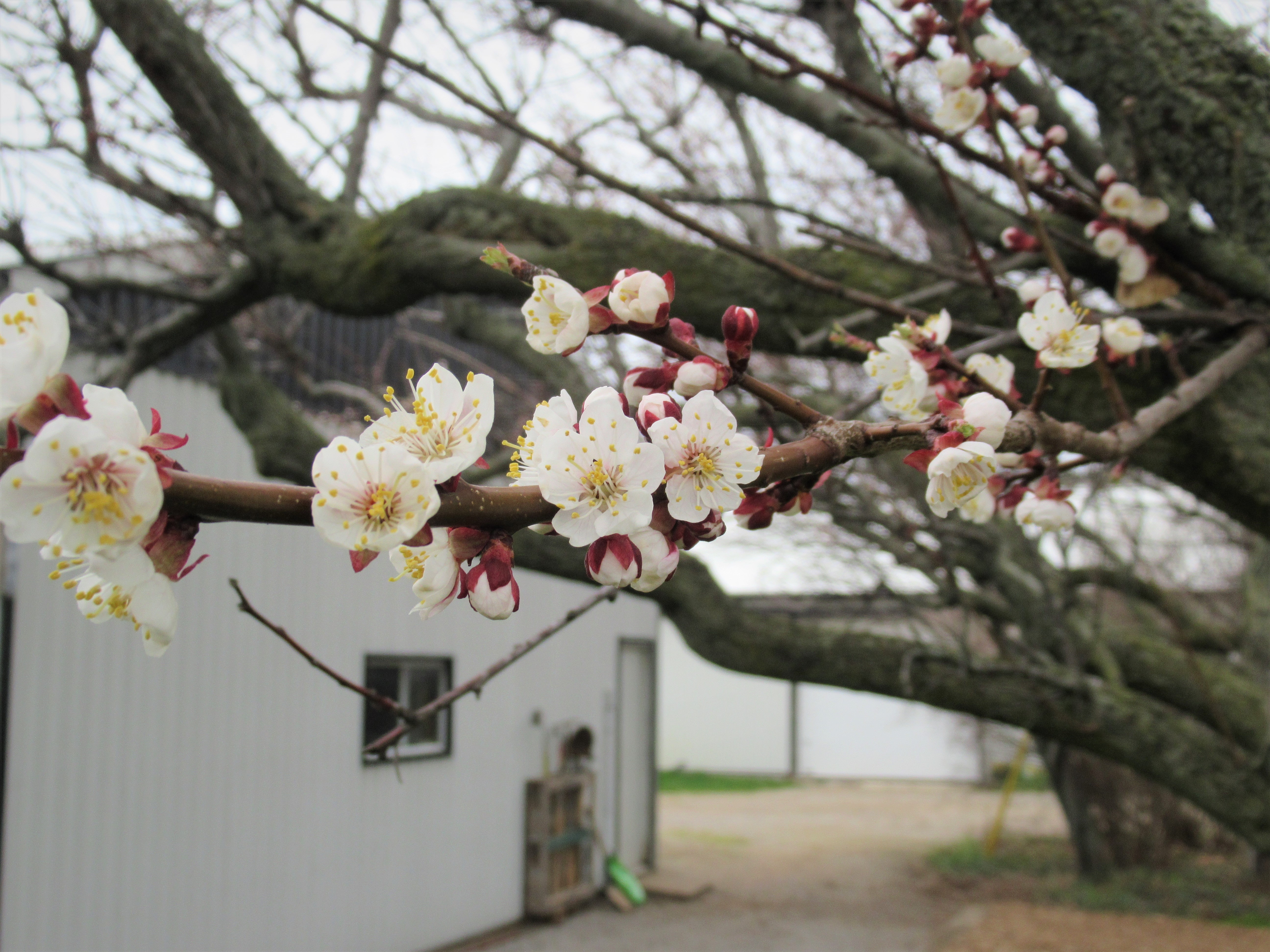
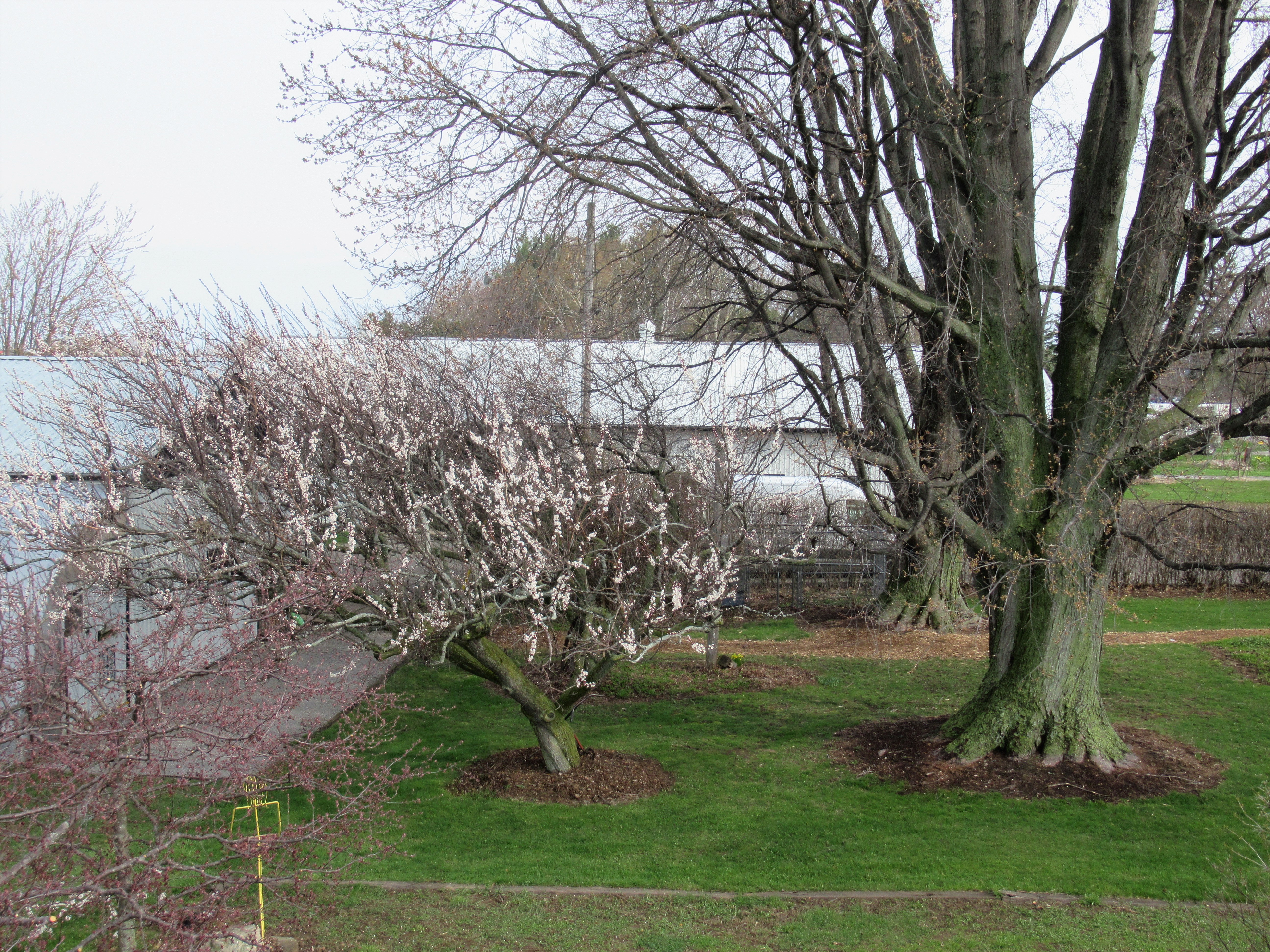
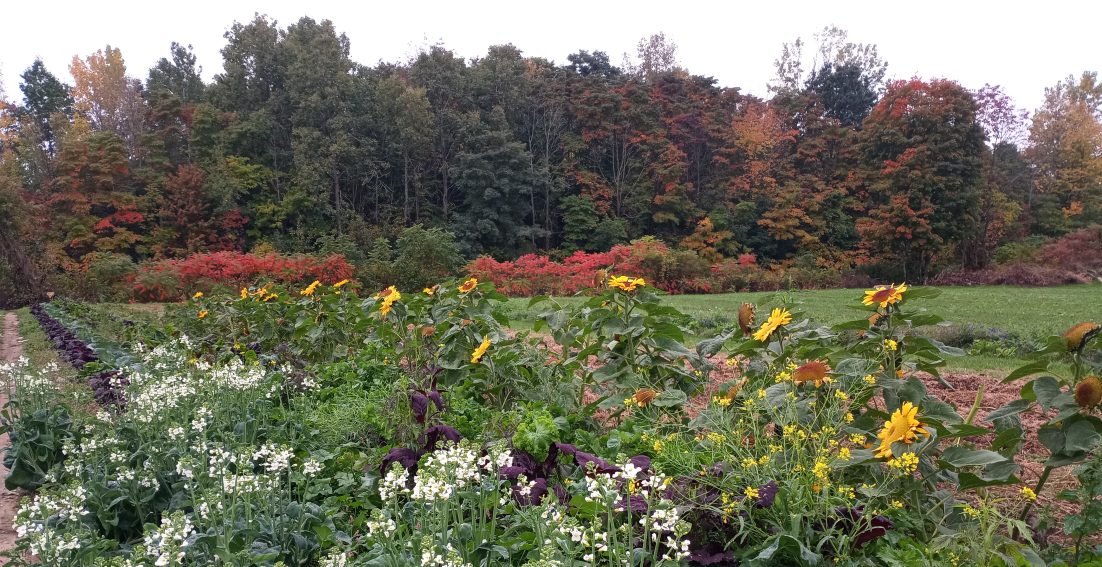
We wash all our vegetables outside, beside the barn (an indoor washing room is in the plans for the future). The dirty water is sent to our water garden – a sunken area filled with moisture-loving native plants that use all this waste water and thrive!
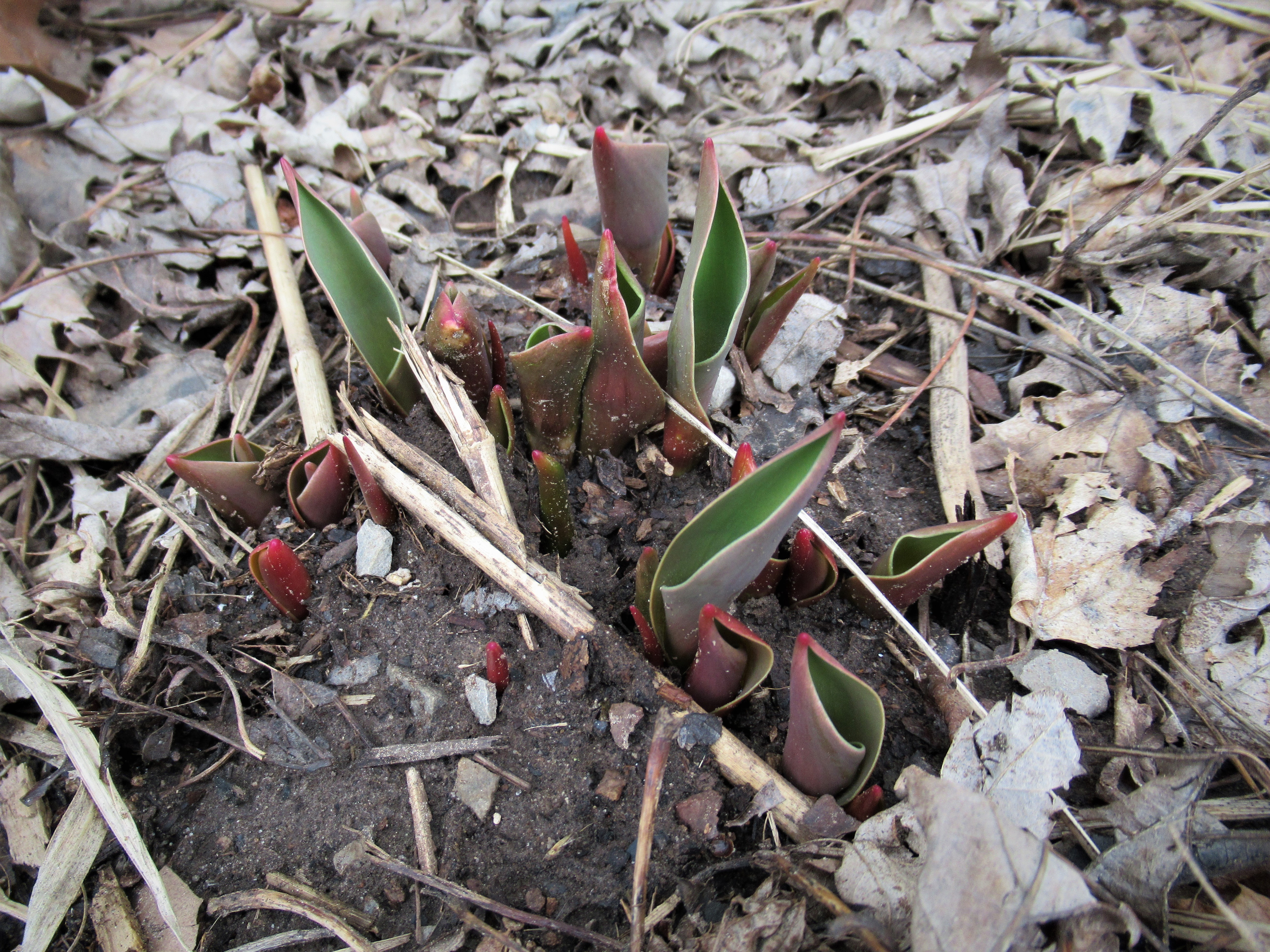
Beautiful in early spring too!
Our well was not fixed (new pump) until later the following day. We were 2 days without running water, and still marvel each time we turn the tap and water flows out!


Leave a comment

CSA 2018 – week 12

What’s in the box?

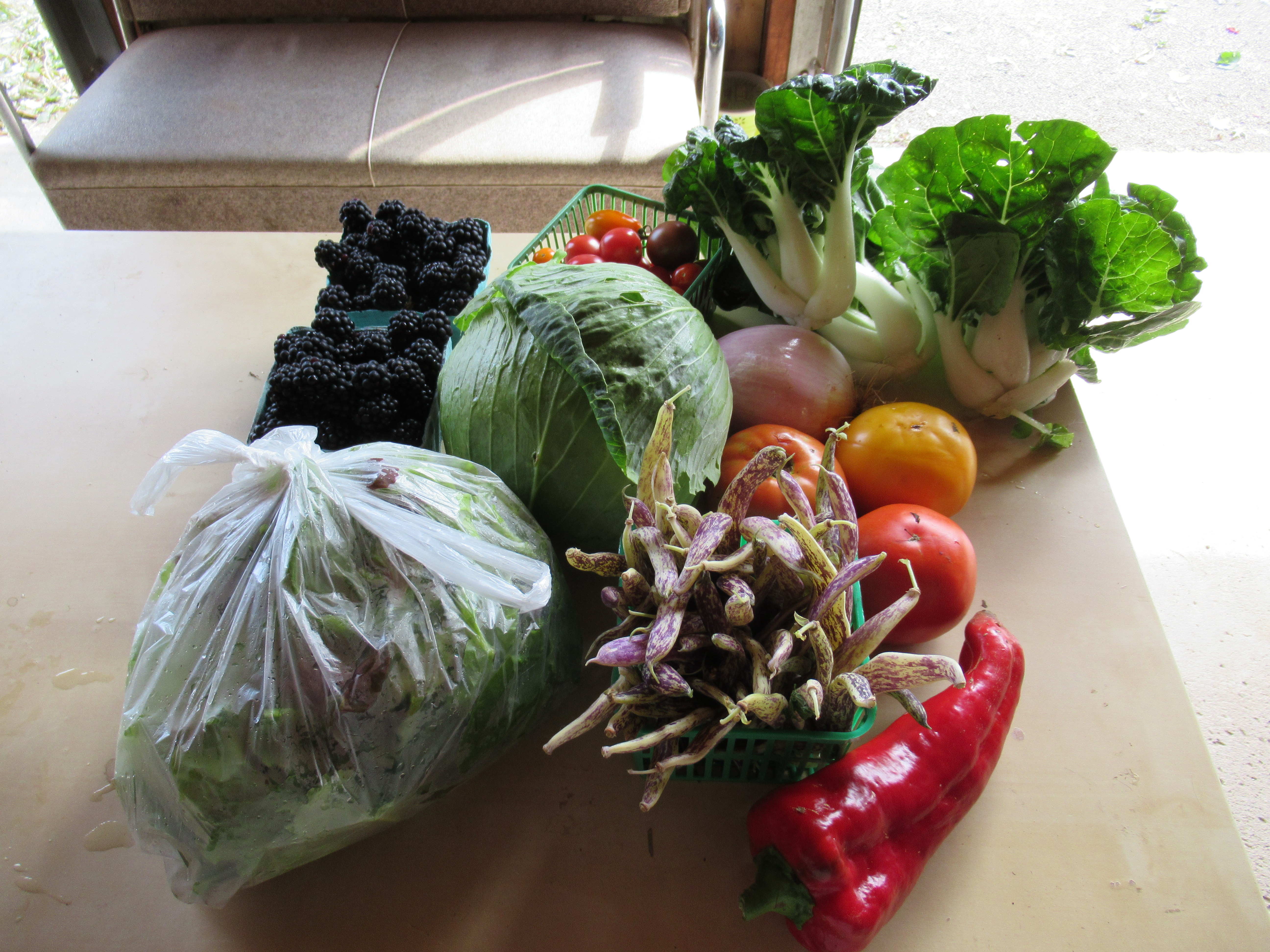
Blackberries, baby kale, cucumbers, tomatoes, green beans, garlic, onions. 

  • Blackberries are always a highlight of the summer. It seems almost everybody enjoys blackberries. Picked properly they are a little sweet & a little tart. If they aren’t quite ripe, they are sour. Too ripe and they are soft & mushy, but incredibly sweet. We try to pick them as ripe as possible, but while still firm. Unlike raspberries, blackberries are not hollow, but have a centre core which is soft & edible. The only way to eat a blackberry is to pop the whole thing in your mouth. Try to take a small bite, and you are covered in black, staining juice. Blackberries are best eaten fresh, but also make great jam, juice, sauce, ice cream …

  • Please note that we do use pesticides on our blackberries. For many years we did not. That was one of the good things about growing blackberries – no spraying necessary! Then along came the spotted wing drosophila. Spotted wing drosophila is an invasive vinegar fly that has the potential to cause extensive damage to many fruit crops (especially soft fruits like berries and dark coloured fruit like blackberries). In the last few years it has been found throughout much of southern Ontario along with most of the fruit-growing areas of North America. It has become a chronic pest in berry and tender fruit crops in Ontario. Effective biological controls are not yet available. There are cultural practices that we use to help reduce the insect populations, but the only effective control right now is chemical. And so we spray regularly to try to kill the spotted wing drosophila and protect our blackberries (and elderberries). We would rather not! But then again, we would rather not have worms in our blackberries!
  • Baby kale is great eaten fresh in salads. But it can certainly be used like the larger kale leaves and cooked in your favourite recipes too.
  • We have been receiving lots of positive feedback on the white cucumbers. Many people prefer them to the more common green ones. The plants continue to do well & are producing an abundance of delicious, crunchy, cucumbers. Of course we also have green cucumbers for the traditionalists!
  • Your share this week will contain a colourful assortment of tomatoes – both cherries & the larger beefsteak types.

  • Of all the vegetables we grow, green beans are probably my least favourite. The only way I really enjoy them is in the Thai Green Beans recipe. We have posted this recipe before, but here it is again (see below).
  • The new garlic isn’t quite so new anymore! It is quickly drying out, so it is maybe not as juicy, but it will keep better. If you are not using it up, leave it to dry out completely in an airy, dry area. Then it will last all winter.

  • I am still disappointed in the tiny onions we grew this season – I keep thinking of those huge ones we had the other year. But it turns out that many of you prefer the small, single serving size. That almost makes me feel better!!


Thai Green Beans (from Simply in Season cookbook)

2.5 cups green beans – steamed for 8-10 minutes or until bright green & lightly crunchy.

1/4 onion chopped 

1 Tablespoon fresh ginger – peeled & minced
1-2 cloves minced fresh garlic
In wok or frying pan, heat 1 tsp sesame oil and sauté about 5 min until onion is tender.

1.5 Tablespoons soy sauce
1 Tablespoon Thai sweet chilli sauce
Add to taste.

Add the steamed beans & stir to coat with the sauce.. Simmer over medium-low heat for 5 minutes. Serve over rice. Garnish with cashews, sesame seeds, or slivered almonds.

Thank you for remembering to return containers!


Leave a comment

CSA 2018 – week 11

The sky darkened, the thunder rumbled, the lightning flashed. A handful of raindrops fell.

And that was it!

The clouds moved out over the lake and today’s storm, with its promised rain was over.

I had spent a good part of the day seeding & transplanting vegetables into the field in anticipation of this rain. The soil is very dry & a good rain would have got the newly planted seedlings off to a great start, and encouraged the seeds to germinate quickly.

While there is more precipitation in the forecast for overnight & tomorrow, I chose not to count on it and I watered everything myself.

Here’s a crop update for this week …

The next few plantings of beans (& sunflowers) are growing well, as are the cucumbers.

Our squash patch is as healthy & lush – and mostly free of weeds – as it’s ever been.

There are lots of little squashes forming, and still so many blossoms too – most containing a bee or other pollinating insect. Passing by the field you can hear them all buzzing.

The new zucchini patch is all mulched and the zucchini plants are growing rapidly.

We have started to pick blackberries – not a lot yet, but they are coming! There should be enough for our CSA boxes within a week or two.

The blackberries would also benefit from some rain. Mostly they look great – but more canes than usual are shriveling up & dying, something we don’t like to see.

This was the week we planned to have bunches of fresh basil in the CSA shares. But the rainfall the other week – while so beneficial to most crops – caused the basil to turn dark & diseased. So unfortunately there will be no basil in the boxes.

What’s in the box?

Cucumbers, green beans, tomatoes, zucchini, onions & new garlic.

  • I hate growing cucumbers! Harsh words I realize, but true. The plants start off so well, but succumb to disease quickly, the cucumbers themselves are often deformed from insects, and they aren’t fun to pick. Every year I complain about them and threaten to stop growing them all together. But then every year I seed them again – mostly because they are my favourite vegetable to eat! This season the plants started off well – and are continuing to flourish. The first fruit was indeed a mess – but they are improving. Of course they are still a pain (literally) to pick! But I’m glad I grew them again! There could be up to 4 varieties in your share this week. Enjoy some longer green ones, shorter green ones, the super delicious white cucumbers and an old heirloom variety we tried this year called poona kheera. Here’s how the seed catalogue describes them –Creamy, light-green fruits; very delicious flesh, crisp, and juicy. Sweet and mild. Fruit shaped like a potato, with skin turning brown as they ripen. One of our best varieties that is disease resistant and very hardy. Vines produce early and the yield is very heavy. A wonderful heirloom from India that has become our most asked-for cucumber.
  • Green beans, tomatoes, zucchini, onions & garlic – all the making for delicious summer salads. Here’s a link to a zucchini salad we are enjoying this summer – https://www.wholesomeyum.com/recipes/zucchini-noodle-salad-recipe-with-bacon-tomatoes-low-carb-paleo/ . Please share some of your favourite summer salad recipes with us, and we’ll include them in this newsletter.

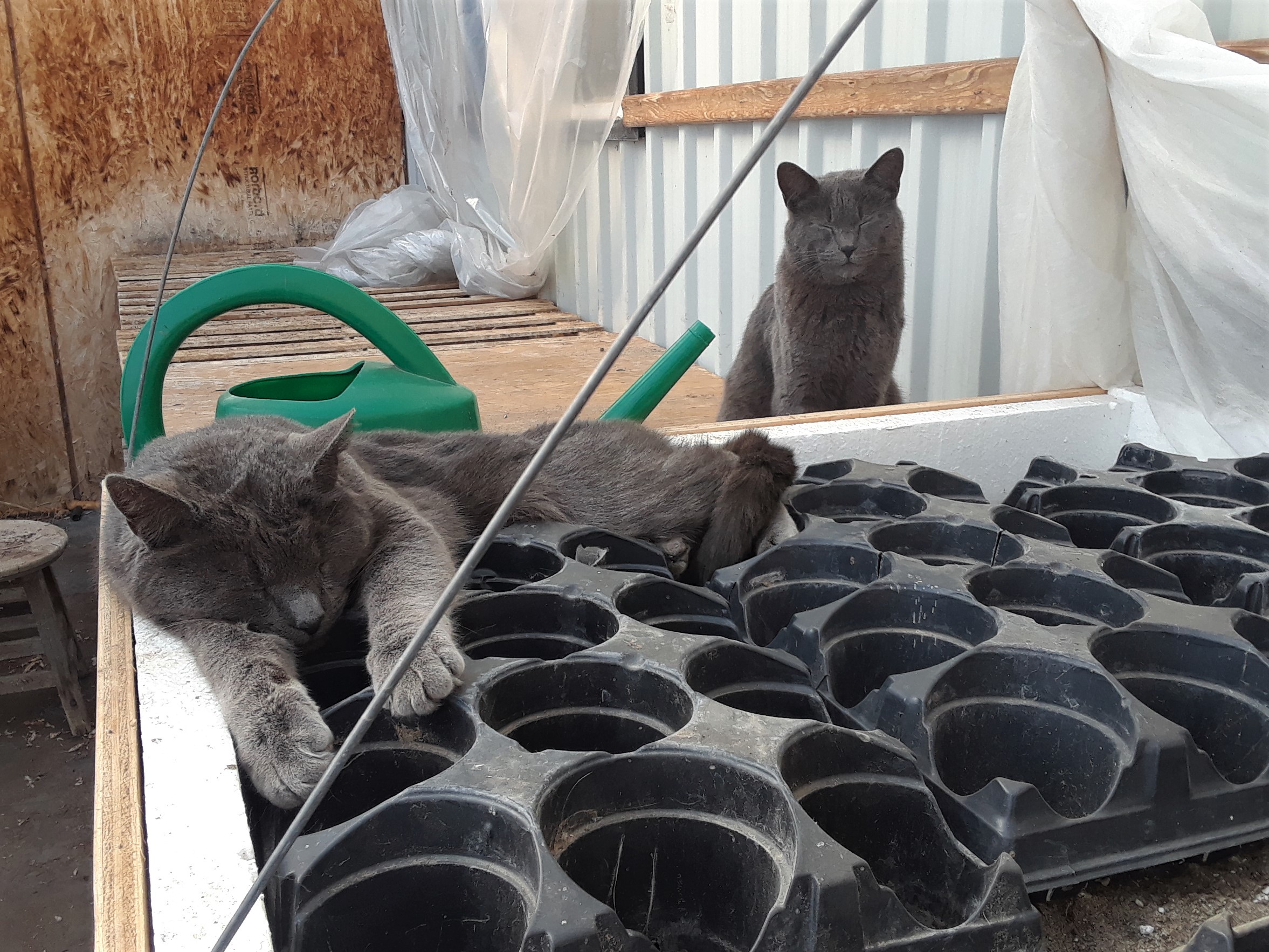
Sage hanging out inside the barn this afternoon, just in case the rains came!


1 Comment

CSA 2018 – week 10

Sunrise, as seen from the Burlington Skyway on a Saturday morning at about 5:30 AM back in June. I always try to snap a few photos from the bridge, on our way to market – though they rarely turn out, with the dirty van windows, the 100+ kmph speed and the fact I’m still half asleep.

But this week the calendar turns to August, and lately when we cross the bridge the sun has not yet made an appearance. So no more blurry pictures!

August also means we are about half way through …

… halfway through the summer, half way through our CSA program, halfway through our farmers’ market season (almost), halfway through our growing season … and halfway through our energy (just kidding!)

We are now getting into our summer crops – tomatoes, eggplant, cucumbers, peppers … Overall they are looking good!

But perhaps surprisingly, our CSA boxes might be a little smaller for the next few weeks. A very hot & dry July set us back. The vegetables slowed down their growth & size of harvest. We lost big plantings of carrots, fennel, cabbage, beets & greens … crops we should be harvesting now. So instead of an abundance, things will be lean. Thankfully we have had some moderation in temperatures & some very helpful rains. The vegetables are growing well again, and we’re able to keep planting. Abundance is just ahead!

What’s in the box?

Cucumbers, onions, tomatoes, beets, new garlic, zucchini.

green beans – Friday only.

  • The first of the cucumbers are ready – the white ones! Called silver slicer, we have been growing these for years. They’re great for eating (crunchy & delicious) and good to grow (dependable, early & high yielding). We are also starting to pick some heirloom varieties that are light coloured as well. For the traditionalists, the normal, common green cucumbers should be ready for harvest next week.
  • Those of you that have been a part of our CSA in previous years will remember the large, sweet heirloom onions we grow called Ailsa Craig. We have them again – sweet & delicious, but not big! In fact they are really small. I’d like to blame the lack of rain for their size, but much of the fault lies with us. They simply got too weedy and had too much competition from the weeds for the moisture that was available. The result is smallish onions. Maybe next year …
  • The remainder of your share this week is vegetables that have in the box already – tomatoes, beets, new garlic, & zucchini.
  • The next planting of green beans won’t quite be ready for Tuesday’s pick up, but there should be beans by Friday.

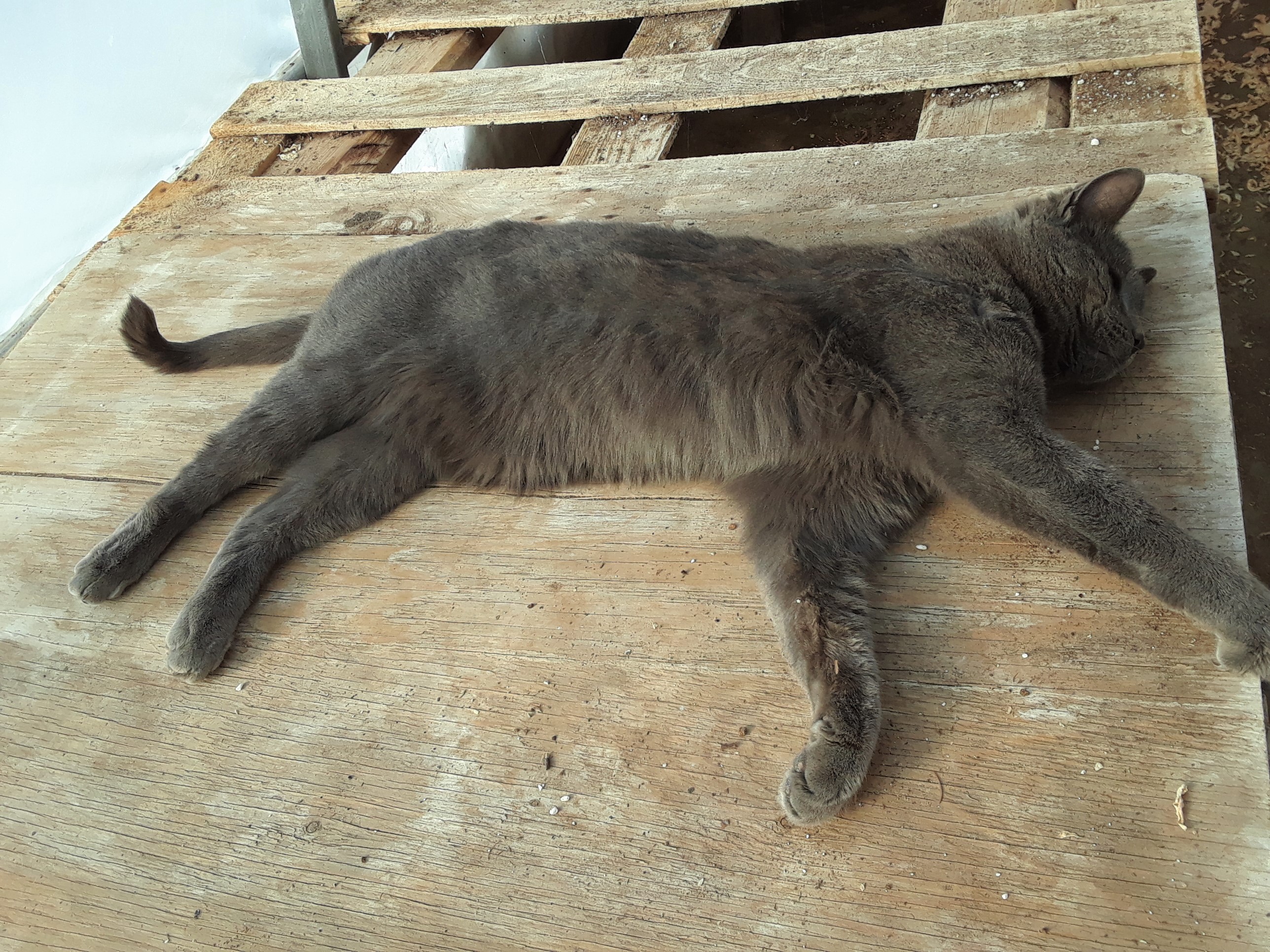
The start of August Anytime is a time for relaxing for these guys!


1 Comment

CSA 2018 – week 9

It was a very welcome rain that we received on the weekend!

The entire farm is looking & feeling refreshed. Vegetables, berries & trees, birds & animals – and us!

At least 35mm fell, and was immediately absorbed by the dry ground. The plants seemed to perk up and green up overnight.

A new planting of beans & sunflowers that I seeded about a week ago and watered & watered, popped up!

With the ground being moist, I was able to cultivate the squash & pumpkins. They are beginning to send out runners & spread so I won’t be able to get in again without damaging the plants. Then I seeded a cover crop over them. It will germinate & grow, together with the squash (& also the weeds). Later this fall after the squash is harvested there will hopefully be a nice green crop of vetch remaining. It will continue to grow until frost & then die over the winter, but provide cover & protection for the soil until spring. When we work it in it will provide nitrogen for the next vegetables.

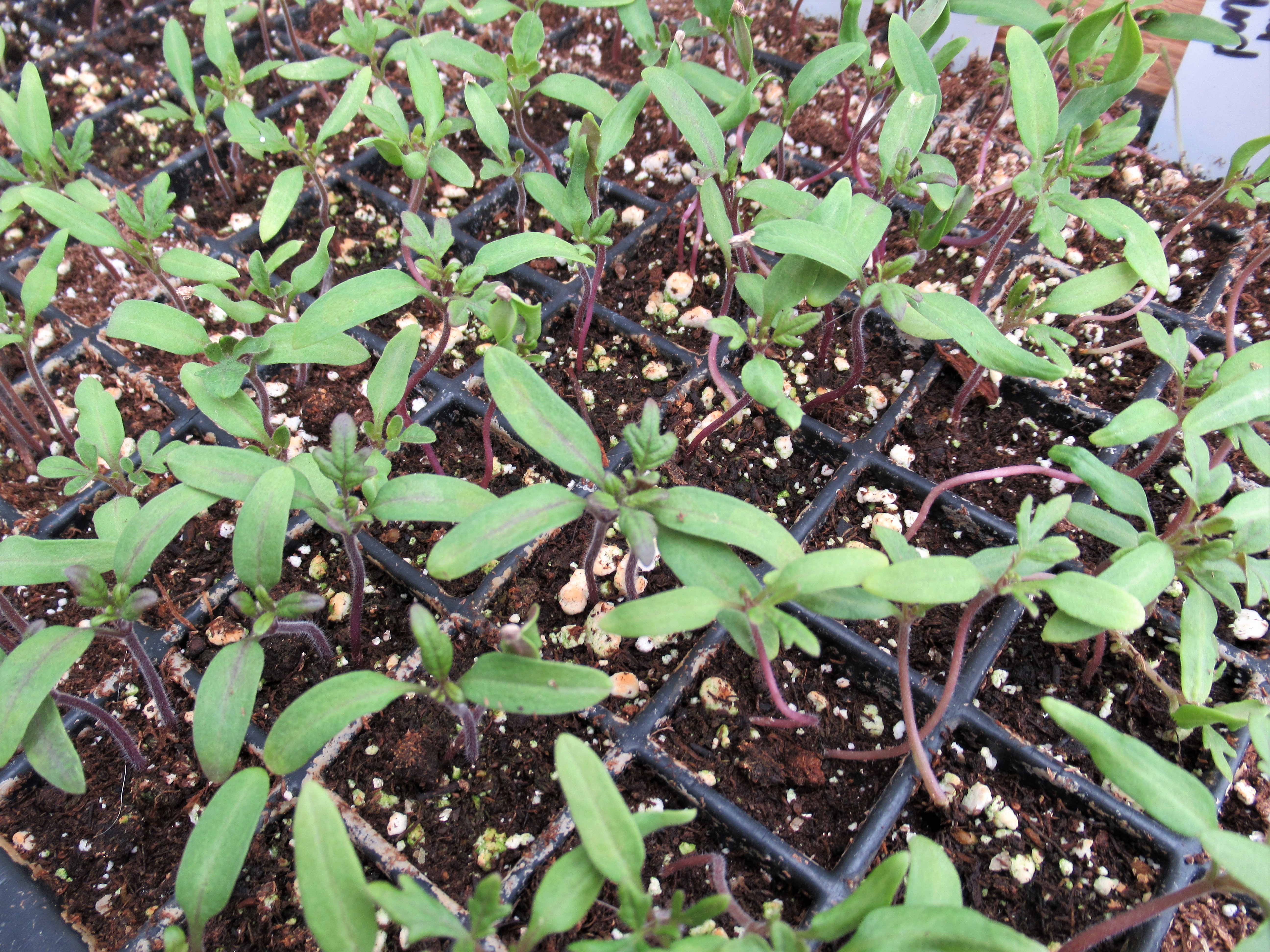
There are plenty of trays of seedlings growing and waiting for their time to be transplanted into the ground – lettuce, bok choy, assorted herbs, fall cabbages, green onions, beets …

Elsewhere on the farm, the garlic harvest has begun. The garlic plants have started to brown up which means it’s time to pull them.

They are brought into the barn & stacked on racks where they will dry for a few weeks. Then we’ll trim & clean them and the garlic will be ready to enjoy!

What’s in the box?

Tomatoes, baby kale, kohlrabi, green onions, lettuce, beets, new garlic,

green beans – Tuesday only. 

  • The tomato plants are outdoing themselves with blossoms & little tomatoes. And now we can see ripening fruit – on the larger tomatoes as well as the cherries & smaller ones. The rain will certainly give them a boost & production should increase rapidly! Last year at this time the plants were already showing disease & declining in vigor due to the hail we received. We’re excited that they are healthy & flourishing this season!
  • Baby kale is exactly that – kale that is picked young & small. This makes them more tender & mild and they can be used fresh & without cooking. We prefer them in a salad with kohlrabi & green onions. Add broccoli if you desire and dried cranberries & almonds and top with a poppyseed dressing. Delicious!
  • I had been watering the latest lettuce patch too, trying to keep it growing & renewing and tasting great. Of course the rain does a much better & more effective job than I ever could.
  • The beets will still see the effects of the dry weather. They continue to be small – but tasty!.
  • Enjoy the fresh garlic. Remember that it is not dried, so use it quickly once you break it open. Or let it air dry in the open, to be used later.
  • Our next planting of beans is behind due to the dry & hot weather. Lots of blossoms but no beans yet. Tuesday pick up will get the last of the old bean patch – but there will be none for Friday or our market CSA boxes on Thursday. But there will be something else instead. Maybe zucchini, or carrots or …


Those of you that visit the baby chicks when you pick up your share, will find them outside now – enjoying the grass & weeds and just being outdoors. Sage enjoys them too, spending a lot of her time “babysitting”.


Leave a comment

CSA 2018 – week 8

Tomato hands is what we call them!

It’s what our hands (or at least Amy’s) look like from pruning and tying tomatoes. They are not only coloured green, but that green is thick, sludgy & caked on and so difficult to remove. The best way is actually with a tomato – break it open, rub it all over your hands, working it in good and then finally wash everything off. But a green tinge and the tomato aroma linger …

Pruning tomatoes – or suckering as we call it – is the big job on the farm right now. We prefer to stake all our tomatoes, tying them to bamboo poles. Then we prune them, snapping out the suckers or shoots that grow from the joint of the main stem and the branches of the tomato plant. If we left these suckers, they would grow into branches with lots of leaves and eventually more fruit. Removing them leaves the tomato plant a little more tidy & less bushy. It allows air to move freely through the plant reducing the risk of disease. The tomatoes will grow & ripen faster and be larger as the plant is putting its energy into this fruit rather than growing more foliage. They will not be blocked from receiving the sunlight from lots of extra branches, so the fruit will be more colourful & sweeter.

We feel suckering & tying the tomato plants gives us superior fruit & is worth the added work. And it is a lot of work! It has to be done again & again … every week is ideal. In a perfect world we would keep up, but all the other jobs on the farm still have to be done and so we fall behind. Then it is major surgery to remove the suckers & tie up the twisted, falling stems – challenging & slow work, but satisfying when completed. Of course letting the suckers get so big & then cutting them off is hard on the plant too.

We usually try to keep the plants tidy & trimmed & tied until they grow to the top of the bamboo poles. By then we’re busy harvesting – and sick & tired of suckering & tying – so we let them go wild and be free!

Tomato plants overdue for suckering & tying.

The completed plants.

We usually leave 2 main stems on each tomato plant – sort of a compromise between pruning to get earlier, bigger fruit and getting more fruit from each plant. It works for us!

Our large beefsteak tomatoes – yes, they are turning colour! As usual we got some suckered & tied, while some will be left to sprawl over the ground. At least they are easier to pick than the cherry tomatoes!

What’s in the box?

Tomatoes, raspberries, new garlic, lettuce, arugula, zucchini, green onions.

Green beans – maybe?         extras – garlic scapes

  • The first tomatoes will be in your share this week – perhaps cherry tomatoes, or medium/salad size, or even a large juicy beefsteak tomato. We probably won’t have a big harvest, but it will be a taste of what’s to come!
  • We don’t have a lot of raspberry canes left on the farm, and even the new rows we planted this past year have disease and are doing poorly. That’s why we never even included raspberries in our list of possible crops you could expect in your CSA box this season. But there are some this week – a nice surprise!
  • Enjoy a fresh bulb of new garlic. Because it is just pulled and not dried, it should be kept someplace with good air circulation, and out of the sun. Do not put in plastic or in the fridge. Once the bulb has been started, try to finish using it within a few days.
  • We have been watering our next planting of lettuce to try to encourage it to grow! Now it’s ready! Enjoy a fresh salad again this week – perhaps with some spicy arugula to liven it up. Arugula is one of our most popular crops at our farmers’ markets. People absolutely love it! Some eat it alone as a salad (with strawberries, feta cheese & a drizzle of balsamic vinaigrette) while others mix it with lettuce or other greens. It’s also great in sandwiches.
  • Zucchini & green onions will be in your box again this week.
  • Green beans are a maybe for this week. The dry conditions are causing the first planting to yield less and the next planting to grow slowly. We’ll see what we are able to pick.
  • Garlic scapes will be available as an extra for those who want some.

Please remember to return all containers, so they can be reused!


Leave a comment

CSA 2018 – week 7

It’s early July, and there’s a subtle shift on the farm. The early crops have mostly been harvested and cleaned up. The ground is being prepared for the next plantings.

Our “big” crops – tomatoes, peppers, eggplant & squash – are all growing nicely now, and we’re impatiently waiting for them to ripen.

We don’t like to use a lot of plastic mulch on the farm. It’s difficult to lay done efficiently without the proper equipment, it requires irrigation and we don’t like the waste (it’s only good for 1 use). However we have used a plastic ground cover under our eggplant (just visible in the background). It’s a heavier woven material that can be reused for maybe 5 years? Because it’s woven, some of the rain can seep in and it’s relatively easy to install by hand. The holes for planting the eggplant are burned into the fabric. This material is under most of our eggplant and we used straw for the remainder. We’ll be able to compare and determine if there is a difference in how the plants grow & produce.

Other crops are mostly growing well, despite the lack of significant rainfall.

We left some of the bok choy that went to seed in last week’s heat. It’s now in flower and being enjoyed by the bees & other pollinators.

The blackberries are just finishing up their bloom and the tiny berries are forming. Look for them in August.

What’s in the box?

Your box this week mostly contains vegetables that have appeared before – only green beans are new this week. The drier conditions mean the lettuce isn’t bouncing back quickly for another cut. And the next plantings of lettuce, bok choy … are growing much slower without the timely rains.

Snow peas and/or green beans, carrots, beets, zucchini, green onions, kohlrabi, garlic scapes.

  • Our last seeding of snow peas is ready as is the first seeding of green beans. Your box will contain one or the other. The peas sure don’t like the heat & our being stingy with their production! And the beans are just starting. So we don’t have an abundant harvest of either!

Everyone seems to be feeling these dog days of summer!


1 Comment

CSA 2018 – week 6

It’s hot!

It’s really hot!

This isn’t news to anybody in this part of the country. Day after day of temperatures in the 30’s, but feeling like 40+ (not to mention the humidity)!

Not just people are feeling the effects of this heat. The farm is hugely affected too.

Some vegetables thrive in the heat …

The zucchini patch is growing by leaps & bounds. Zucchini really flourishes in this kind of weather. While best picked every other day, we skip the weekend which means a lot of large zucchini on Monday morning!

Hot weather also brings out the insects. (Generally hot weather brings more insect damage while wetter weather causes more disease issues.) Our zucchini plants were covered with cucumber beetles, a tiny black & yellow striped insect which eats leaves, blossoms & fruit and causes a lot of destruction. They also transmit diseases which can reduce yield, & eventually destroy the plants.

To combat the cucumber beetles I sprayed with kaolin clay an organic spray which covers the plants & fruit with a white powdery layer, making it unappealing to the bugs. It’s not a foolproof solution, but it does help and we find it preferable to using chemical pesticides.

The peppers that were struggling, are now thriving in these hot temperatures. After being buried under their blanket of straw mulch, we can finally see them (those that survived) poking through.

And the tomatoes are laden with a lot of ever-expanding fruit.

Other vegetables are suffering in the heat …

A patch of bok choy that we had just started to harvest went right to seed over the weekend. While the yellow flowers are bright & cheery, they signal the end of this harvest.

Similarly, the new rows of baby spinach have gone to seed before we could even begin to pick them. You may have found the radishes in last week’s box a little tough & woody – blame the weather! The snow peas were good last Monday but on Wednesday it rained & we couldn’t pick. By Friday they were oversized and no longer tender – that’s why there were no snow peas in Friday’s boxes. Less extreme temperatures would have allowed all these vegetables and others to be harvested for a longer time.

Disappointing? Yes. Discouraging? Perhaps a bit. But weather fluctuations & extremes are neither uncommon nor unexpected. There are more plantings of these vegetables (spinach, bok choy, snow peas) that will be ready soon. Hopefully we’ll reap a good harvest from them. And we’re excited to see the crops that are doing well right now.

There is still plenty of good stuff to pick for market & CSA this week!

What’s in the box?

Beets, zucchini, carrots, Chinese cabbage, kale, green onions, garlic scapes.

The kitchen does not beckon on these hot days! This week’s CSA box features vegetables that can be eaten uncooked or grilled on the BBQ. Enjoy some new vegetables and some favourites too!

  • The first beets are ready! Certainly they are a favourite vegetable of mine – and many of our CSA members too! We prefer them roasted , or on these hot days we eat them raw in salads, usually shredded or spiralized.
  • Zucchini – We have green, yellow, patty pan (round & scalloped), and striped (both light green & darker green ones). Basically they all taste quite similar and can all be used interchangeably. As mentioned above, they are a larger size overall, which makes them great for the BBQ. Cut into thick slices, brush with olive oil, season with salt & pepper and grill for a minute or two on each side. Zucchini is also good raw, in salads or slices for a snack.
  • Carrots grow slowly. Weeds grow fast. There’s always a conflict & the carrots rarely come out the winner! This season we have been starting our carrots in trays & then transplanting them into the field with our paperpot transplanter (see last weeks newsletter for a more detailed description – https://thiessenfarms.com/2018/06/25/csa-2018-week-5). They are growing well & we are better able to keep them weeded. However, we are not getting beautiful, long, straight carrots – shorter, weirder shapes seem to be the norm. This results in a bit more work to wash & prepare. But the flavour is great! Please tell us what you think!
  • You will find Chinese cabbage in your share this week instead of lettuce. It is mild & tender and can be used in salads, or coleslaws or as wraps.
  • Kale, green onions, and garlic scapes will also be in your box again this week.

We’ve saved the best news for last …

It won’t be long now!


2 Comments

CSA 2018 – week 5

Many of the vegetables we grow on our farm are transplanted. That means they are seeded into containers, usually in the greenhouse and when they reach a certain size we transplant or replant them out into the field.

There are several reasons for doing it this way. Starting seeds in the greenhouse means we get better germination & growth because we can somewhat control the temperature & water that the seeds receive. Giving the seedlings their ideal conditions means stronger, healthier plants. We can also start earlier in spring. And transplanted seedlings can better compete & hopefully outgrow weeds.

The challenge is that when the seedlings are ready, we have to get them planted out quickly. If they have to wait – due to bad weather or field conditions or until we have time – they can outgrow their pots, lose their vigor & then have difficulty getting established & growing well in the ground. Sometimes they never recover.

And transplanting is a lot of work! It’s hard on the back!

Enter the paperpot transplanter.

This is a new piece of equipment we purchased this season – and we LOVE IT!!

Developed in Japan for the sugar beet industry, it came to Canada a few years ago. I’ve had my eye on it ever since & now we have one. It saves an incredible amount of time & effort.

Seeds are grown in special paperpots that look like a honeycomb. Then this rather simple yet ingenious machine that we pull by hand (no noisy motor required!) makes a furrow, unwinds the paperpots, plants them, mounds soil around the seedlings and firms it down. You have to see it to believe it. Pictures are not enough. (check out a short video on our instagram account – instagram.com/thiessenfarms). What used to take us several hours of hard work can now be done in several minutes. It’s that fast!

We can use the paperpot transplanter for onions, spinach, lettuce, broccoli, bok choy, arugula & other herbs & greens … Bigger vegetables that must be spaced further apart like tomatoes, peppers, zucchini … are still transplanted by hand. It’s been fun learning how to use it and trying all sorts of different vegetables to discover what works & what doesn’t.

And our backs are thanking us!


What’s in the box?

Broccoli, garlic scapes, kohlrabi, kale, lettuce, green onions, radishes, snow peas.

  • The broccoli plants got in the ground early this year, and then grew well – and grew & grew. But the heads sure were slow to appear. Now finally, we have broccoli and it tastes great!
  • Garlic scapes are a favourite for many. They are the top of the garlic plant. We cut them off so the garlic puts all its energy into forming a nice big bulb underground. Leaving the scapes to grow would produce flowers & seeds instead, which we don’t need or want. Use them wherever garlic bulbs are used – raw or cooked. Their flavour is a bit milder. They are also great on the BBQ. Coat the whole garlic scape with olive oil, and sprinkle with salt & pepper. Grill for a few minutes on each side until well charred & tender. As usual we have included our recipe for garlic scape pesto below.
  • It seems that kohlrabi was something new for many of our CSA members. Did you like it? You will find another kohlrabi in your share this week. In addition to the serving suggestions we gave in last week’s newsletter, try it on the BBQ. We slice it about 1/4″ thick, brush with olive oil & grill it until it starts to be tender. Delicious! We have also included the link to a recipe for kohlrabi fritters which is always popular. http://honestcooking.com/kohlrabi-fritters-vermont-csa/.
  • We have included a bunch of kale in your box, either plain or curly. We enjoy kale raw in our salads, but it is good cooked too. Kale tastes great with olive oil and garlic, onions or leeks. Combine it with sweet vegetables like corn or carrots. Unless the kale leaves are very small & tender, remove the tougher stems before using. Store kale in a plastic bag in the refrigerator crisper for 3-4 days. But be aware – the longer it is stored, the stronger the flavour becomes.
  • Lettuce, green onions, radishes & snow peas all prefer cool temperatures over warm. We have had both this past week. The lettuce & green onions continue in good shape but the radishes are going to seed quickly. This means that while the radishes still taste good, the green tops might not look as good.  This 2nd planting of snow peas is winding down quickly. There will be snow peas this week – but not a lot. There is still 1 more planting that is 2 or 3 weeks away from picking right now. Something to look forward to!

Garlic Scape Pesto

Ingredients:

1 cup freshly grated Parmesan cheese

1-2 tbsp lemon juice (or lime)

1/4 pound roughly chopped scapes

1/2 cup olive oil

salt to taste

Directions:

Puree scapes, olive oil, & lemon juice in a blender or food processor until nearly smooth. Gently stir in cheese. Taste & adjust juice & salt to taste.

Serve as a spread on bread or crackers, a dip for vegetables, or on pasta or pizza.

Store in refrigerator for 2 -3 days. Pesto can be frozen for longer storage.

Thank you for all the comments & feedback on the CSA boxes so far. We appreciate hearing your response and suggestions.


Leave a comment

CSA 2018 – week 4

There were puddles on the driveway today – and on the farm – something we have not seen in quite a while. About 2 1/2 cm (1 inch) of rain fell this afternoon – rain that was very welcome and very much-needed.

The farm had been getting quite dry. Seeds we had sown were germinating slowly & poorly. Vegetables we had transplanted to the fields were suffering and shriveling, despite being watered.

Today’s rain will go a long way towards reviving, refreshing & renewing the crops. We are thankful!

Before the rain, the day started out hot – very hot! And humid too. And windy – hot winds, not refreshing winds! Actually, the last few Mondays have been similar.

Mondays are the day we usually do a lot of transplanting …

On the Monday we transplanted zucchini, tomatillos & bitter melons, the winds blew & the tender seedlings cowered & wilted in the hot, dry soil. We watered & watered. A lot didn’t make it (especially the tomatillos) but those that did are looking healthy & growing – finally!

The zucchini have blossoms & even little fruit showing. It won’t be long now …

It’s been a rough season for our peppers right from the start. Cold weather back in March when we seeded them in the greenhouse hindered germination. Continuing cold temperatures meant poor growth & higher than usual mortality. Then last Monday we transplanted the survivors into the field. Again the withering winds blew & the poor peppers struggled yet again.

Today we had a trailer full of eggplant to put out in the field, eggplant that are long overdue to be planted! But with a forecast calling for extreme heat, humidity & winds – we decided to wait.

Before the rains came today, we had started to mulch the peppers …

We were staking the tomatoes …

… and starting to sucker & tie the tomato plants.

The plants have many little tomatoes already!

What’s in the box?

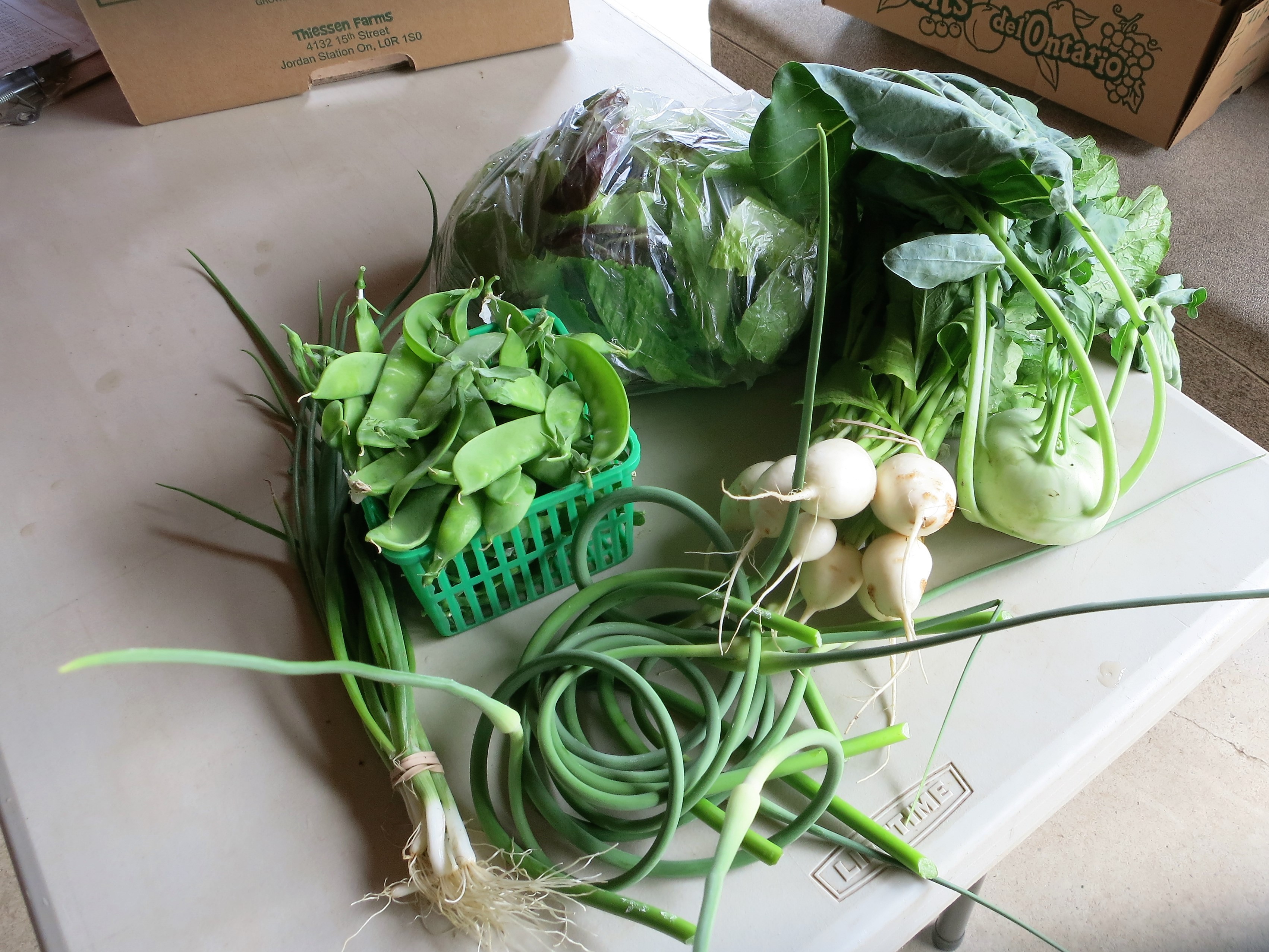
Snow peas, kohlrabi, radishes, salad turnips, lettuce, spinach, green onions.

  • Last Tuesday there were not quite enough snow peas for CSA. By Friday there were plenty. This week we are picking both the 1st and the 2nd planting – which means the season will go quickly. But enjoy the snow peas in your box this week, whether you prefer them raw as a snack or quickly blanched or stir-fried. They are delicious any way!

  • Kohlrabi is a strange-looking vegetable – sort of like a cross between a little cabbage and a turnip. It is usually considered a root vegetable, though the edible round globe grows above ground. Kohlrabi is usually eaten raw – just peeled & sliced. The taste & texture resembles fresh, crunchy broccoli stems, with a bit of radish thrown in. Use on raw vegetable platters and serve with a creamy dip. Grated kohlrabi can be added to slaws. Kohlrabi can also be steamed or boiled but don’t peel until after they are cooked. When the bulbs are tender, peel skin, and season with butter, salt, and pepper, a cheese sauce, or just enjoy plain. They are good for mashing with other vegetables – parsnips, carrots or potatoes. Kohlrabi absorbs the flavour of other ingredients making it ideal to add to soup, stew and stir-fries. If the leaves attached to the kohlrabi bulb are fresh and green, they can be enjoyed as a cooked green. Wash the leaves and remove the ribs. Blanch in boiling water until just wilted, 3 to 5 minutes. Drain and squeeze excess water from leaves. Chop leaves, then sauté in a little olive oil or butter. Season with salt and pepper. Add a splash of vinegar or squeeze of fresh lemon juice. The bulbs should be stored, unwashed, in a plastic bag in the fridge. They will hold for a week. Our favourite way to eat kohlrabi (other than raw in slices) is to sautée it in butter & garlic for just a few minutes. Then add just a dash of nutmeg. Delicious!

  • The next plantings of radishes are ready. There are several kinds – it will be a surprise what ends up in your share this week. The hotter temperatures have probably increased the heat of the radishes too!
  • Salad turnips, lettuce, spinach & green onions – all the makings for a fresh & delicious salad. The hot weather has pushed the spinach along & much of it is now going to seed. There should be enough for Tuesday’s box – probably none for Friday!

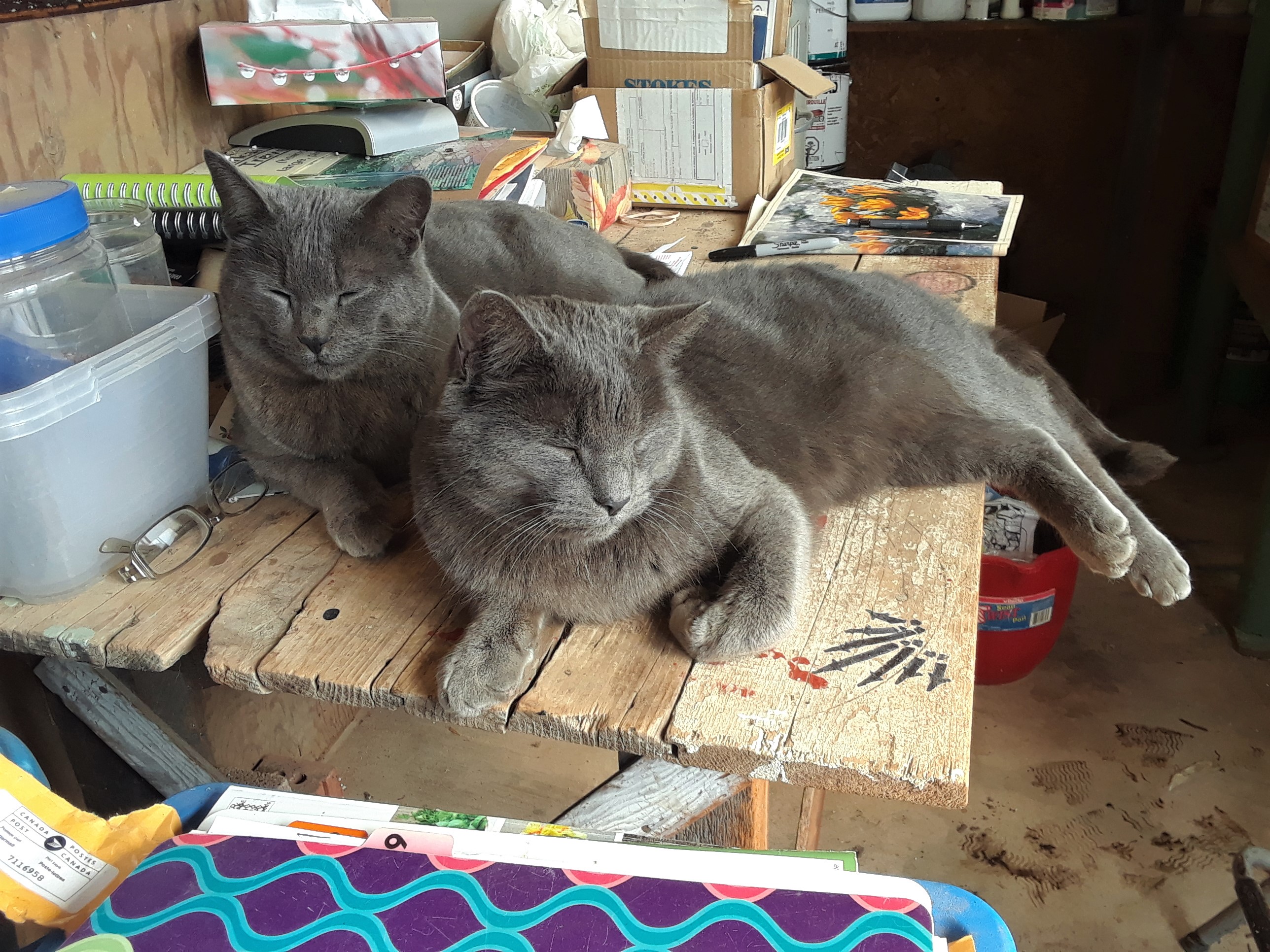
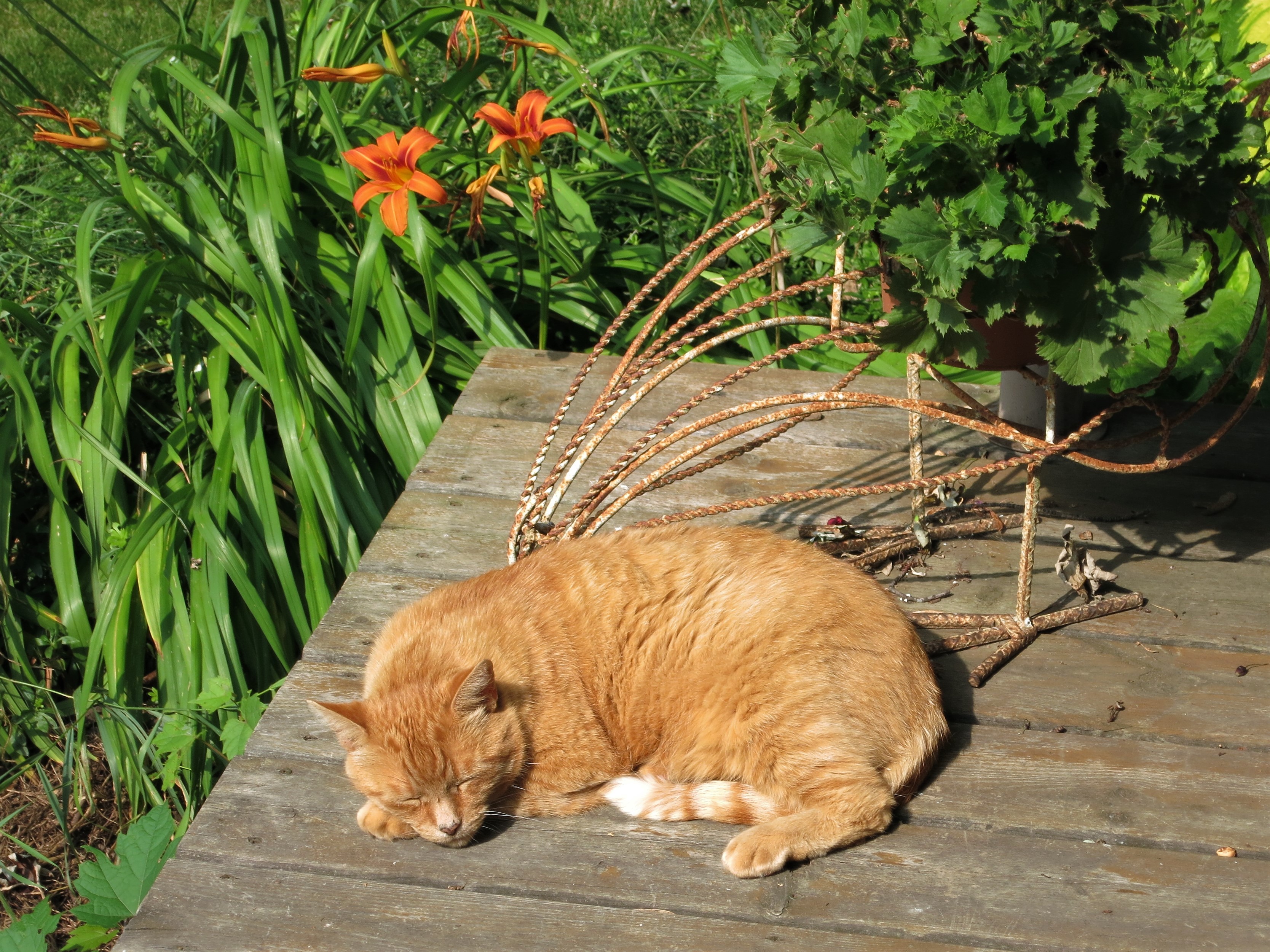
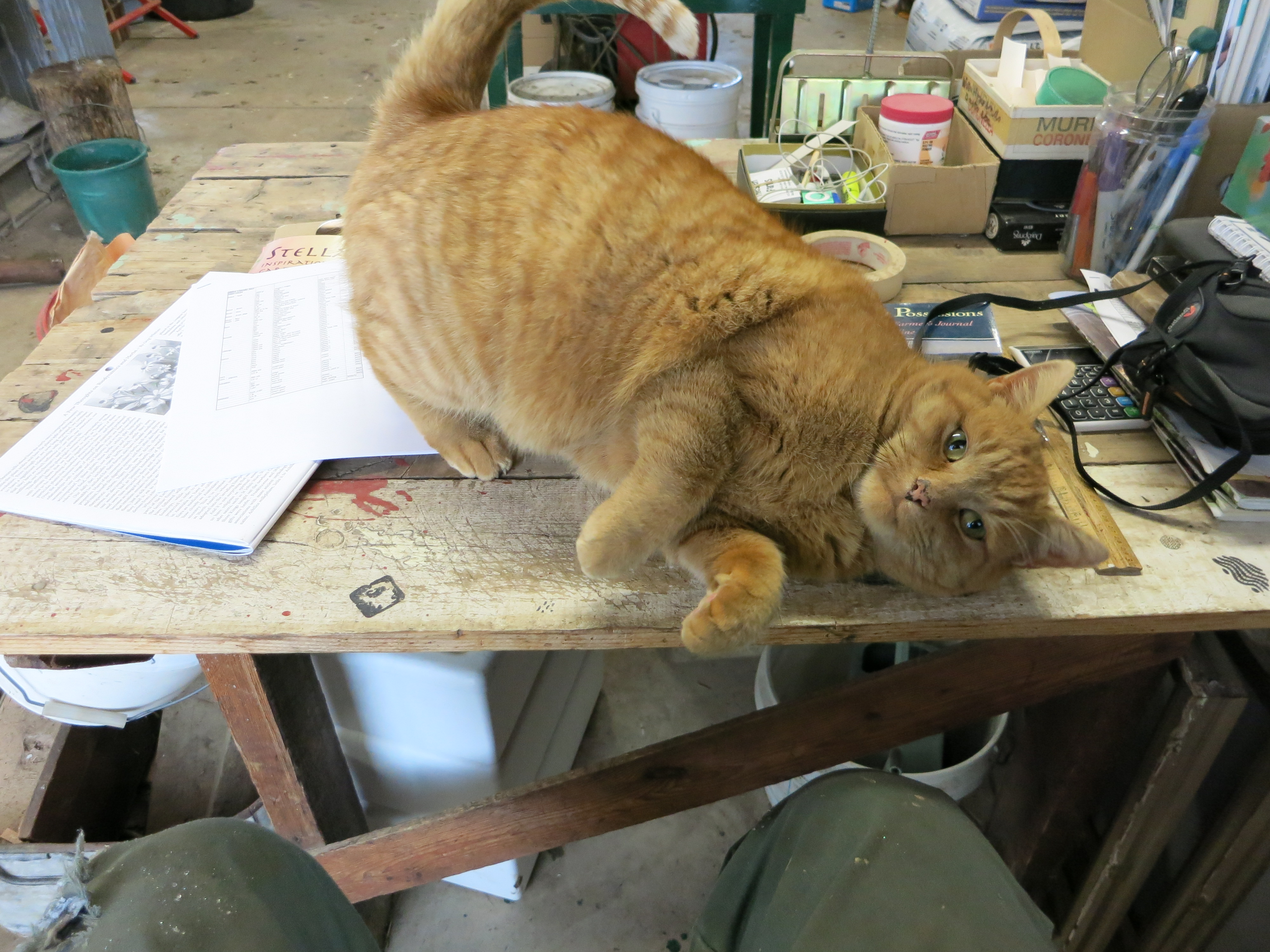
Enjoying a nap in the barn during the rain.

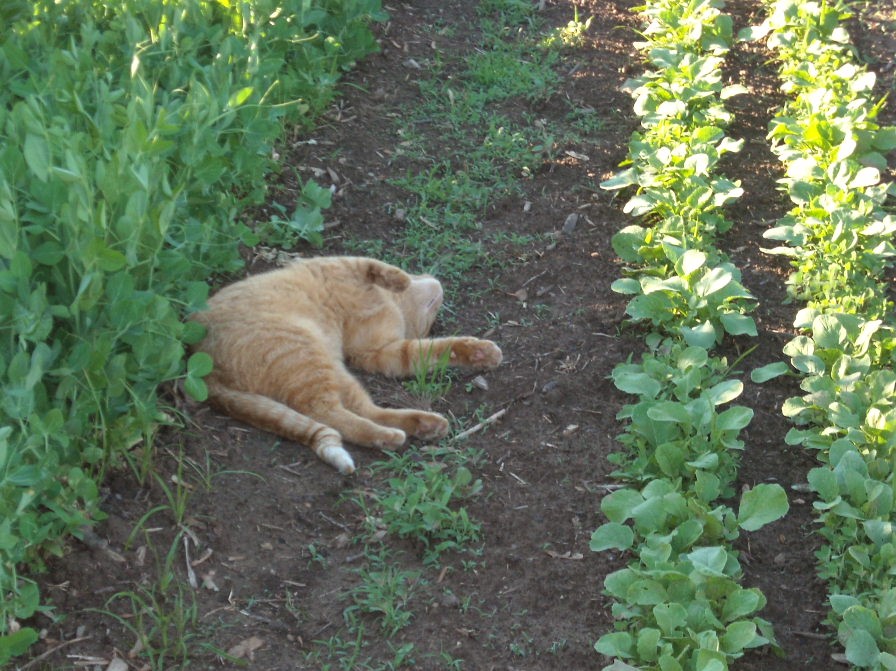
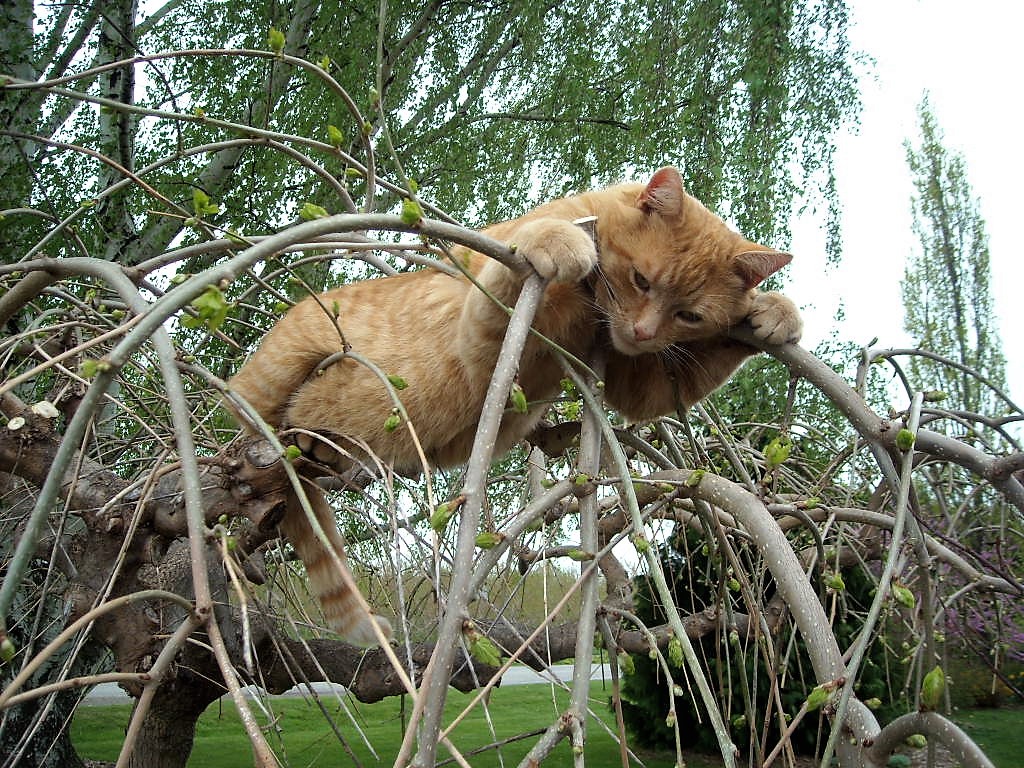
Enjoying a walk (and a rest) after the rain!