Green onions, head lettuce, tomatoes, zucchini, garlic, kohlrabi, green beans (Tuesday) and beets (Thursday & Saturday).
This week, head lettuce returns to the box after being absent for 5 weeks.
CSA members who pick up on Tuesday will get green beans while beets will be in the box on Thursday & Saturday. Last week it was the opposite. (By the way, we planted beets 16 times this season beginning in early May. They have been in the CSA box – or available as a choice – 7 times, approximately every other week. They are easily one of the most popular vegetables we grow.)
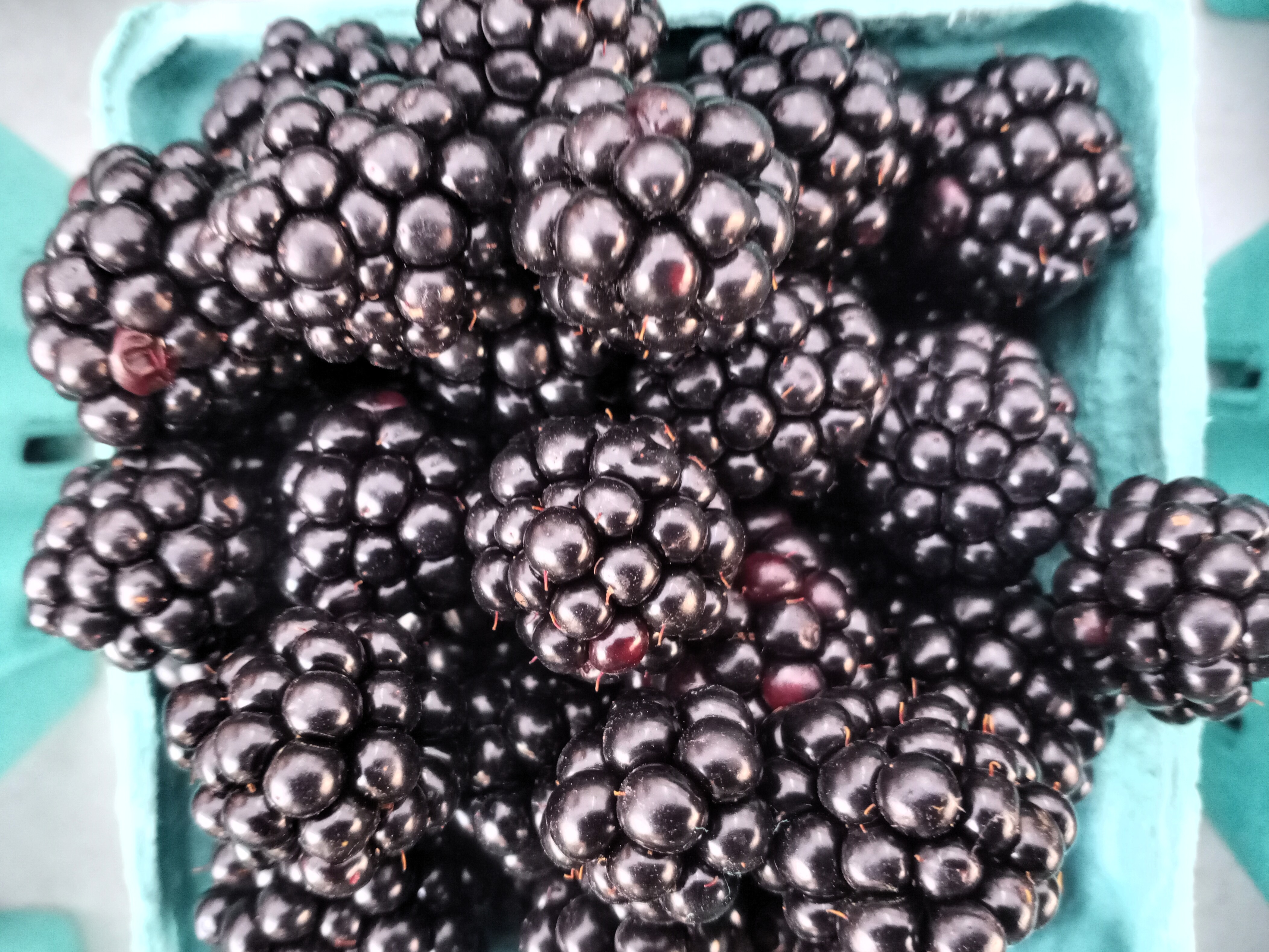
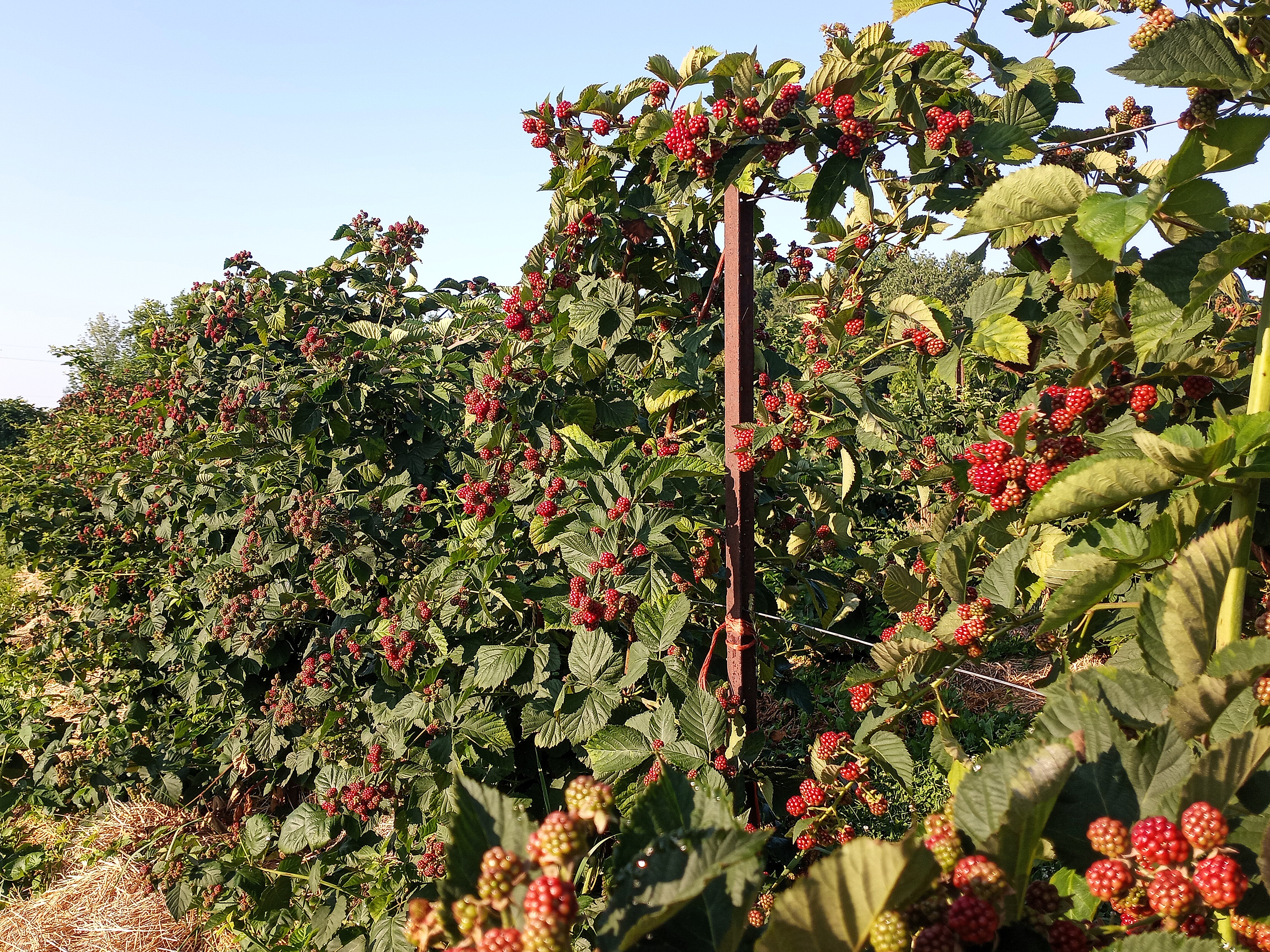
What is not in the box is blackberries. The harvest is finished. It lasted 5 weeks this year (6 weeks in 2024).
_________________________________________
We are well into September now, and the cooler temperatures are a welcome relief after our hot summer months – for humans & vegetables alike! Plus we received 1 inch of much needed rain last week, our biggest rainfall in several months.
But the effects of the hot, dry summer are still being felt …
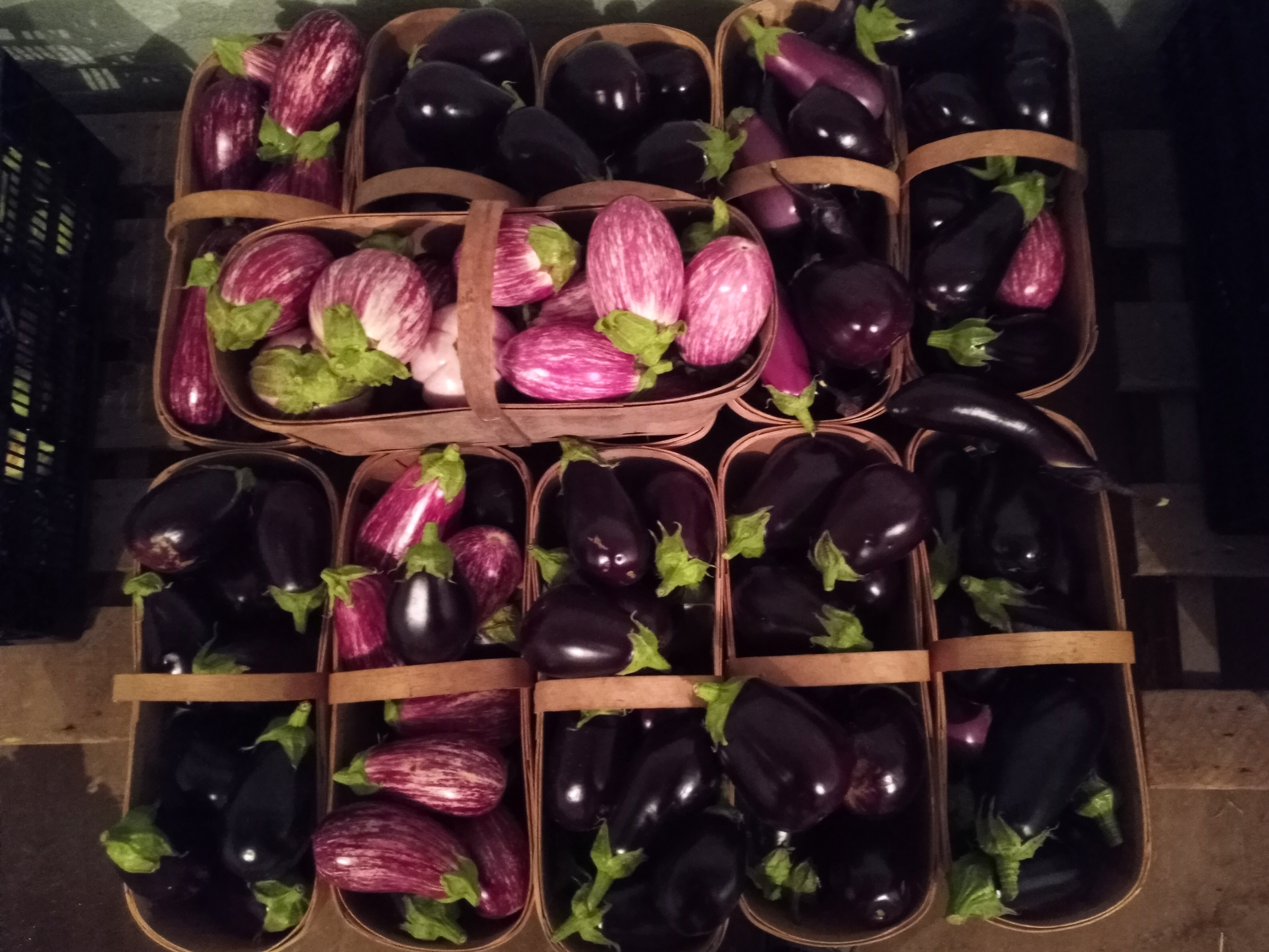
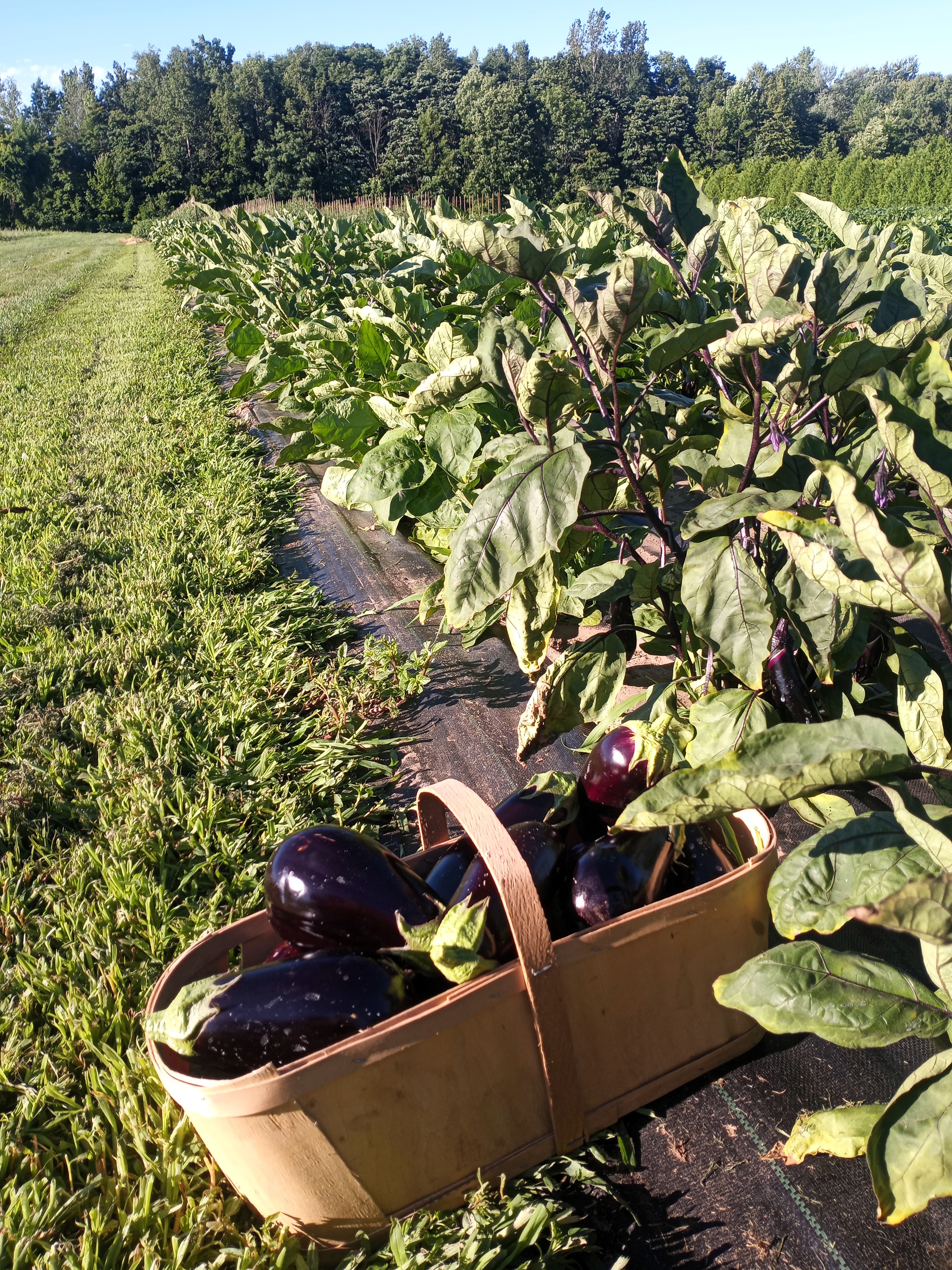
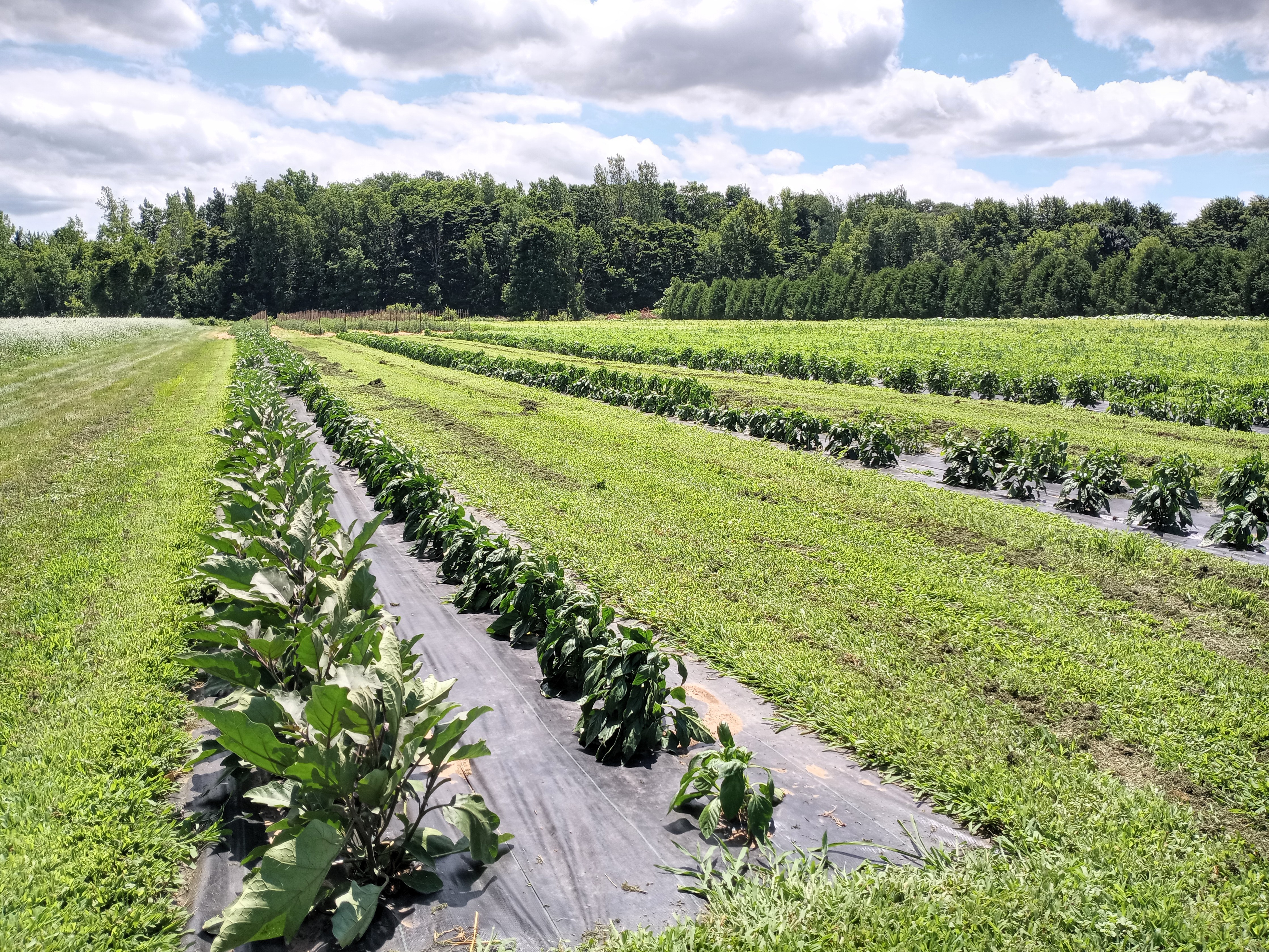
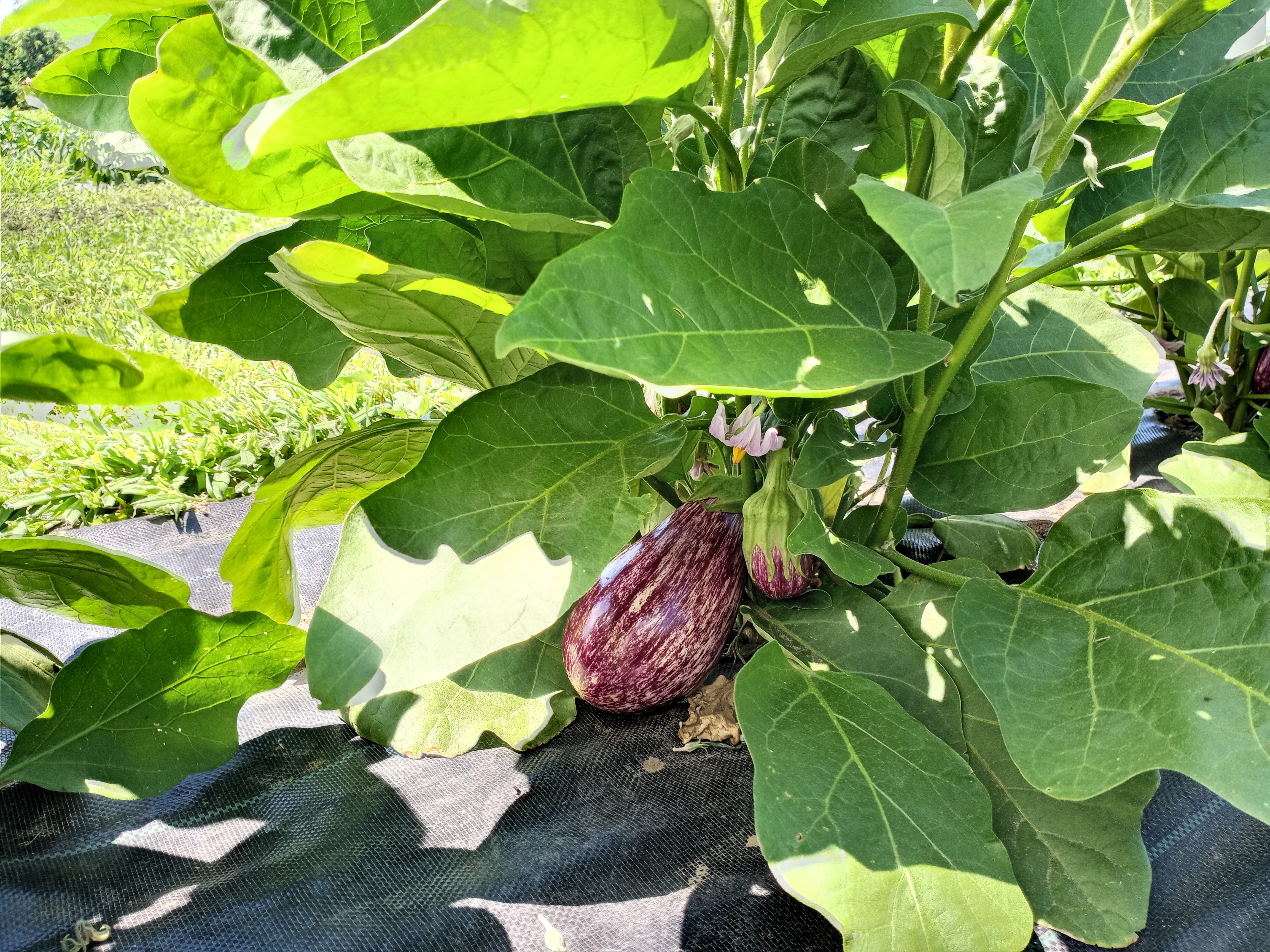
Eggplant needs warm conditions to grow, but it was too hot in July and August, causing the blossoms to drop off instead of producing fruit. That’s why we haven’t had eggplant for two weeks. Once the earlier fruit was harvested, the plants were empty. There are some blossoms now, but we’re unsure if they will produce fruit in these cooler temperatures. The plants look great though!
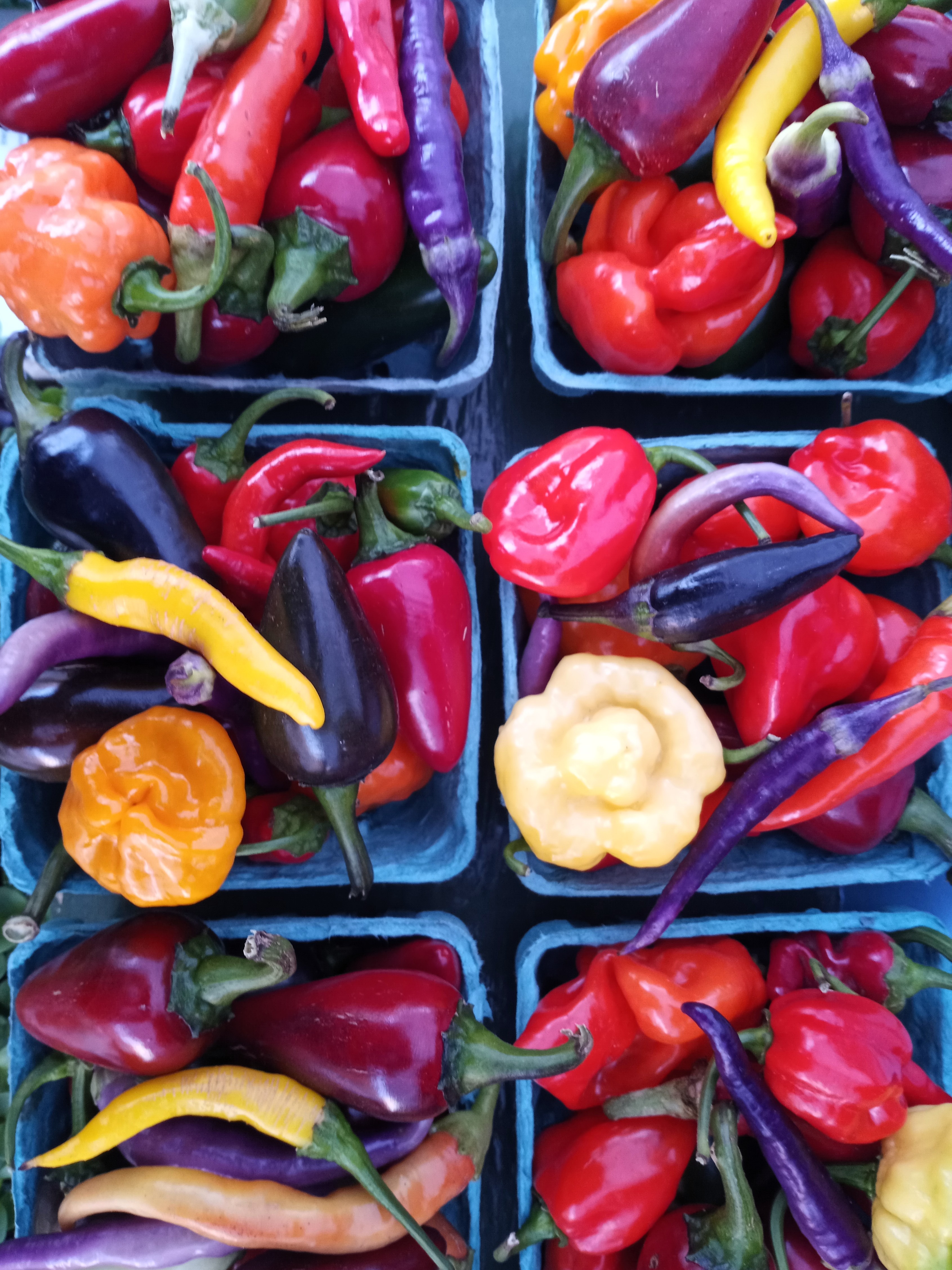
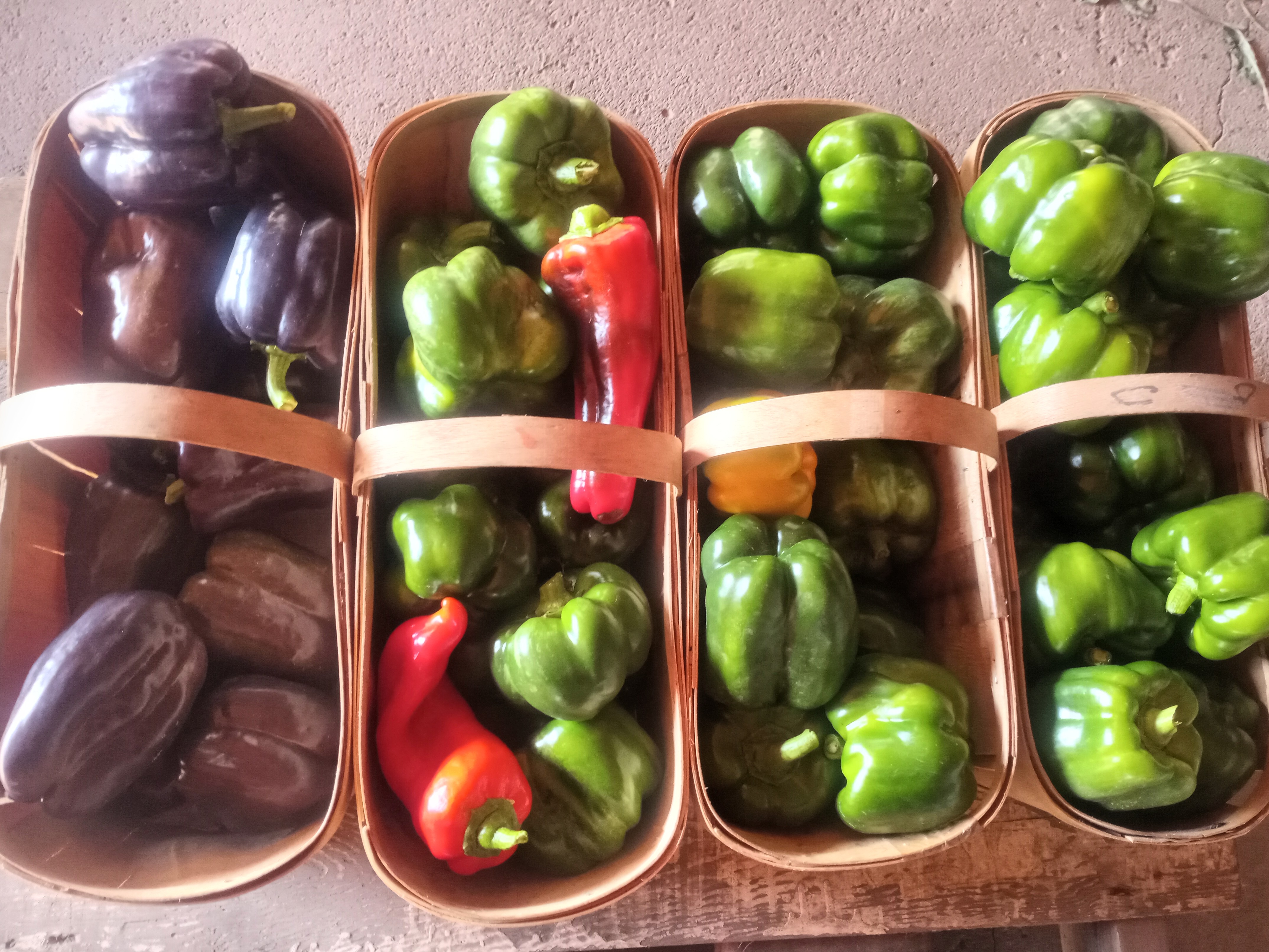
Similarly, sweet peppers dropped many of their flowers, reducing the crop. Hot peppers fared better – they are just maturing later than expected.
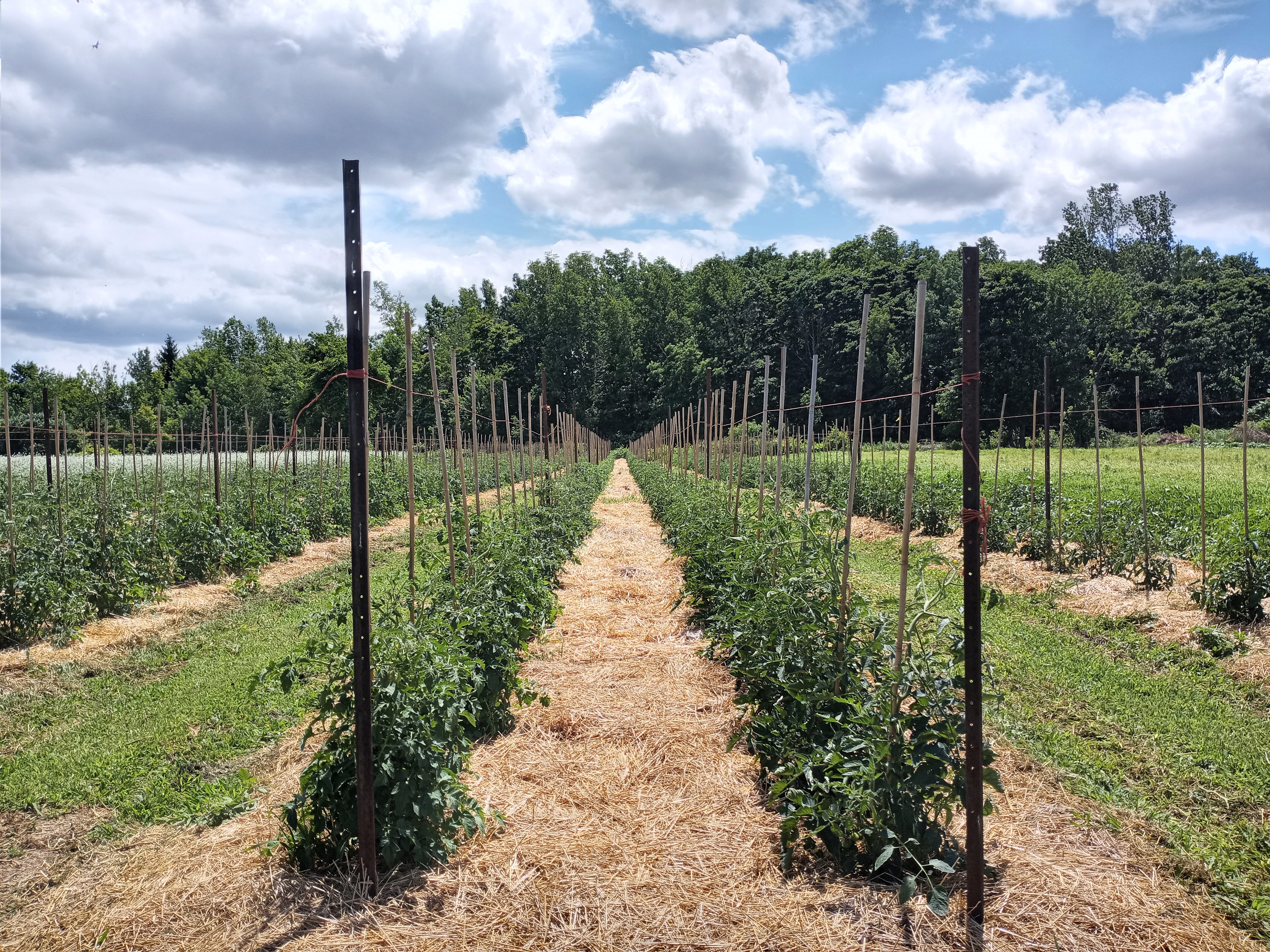
Our tomato plants however are much healthier than usual for this time of year and most (not all) varieties continue to produce quality fruit.
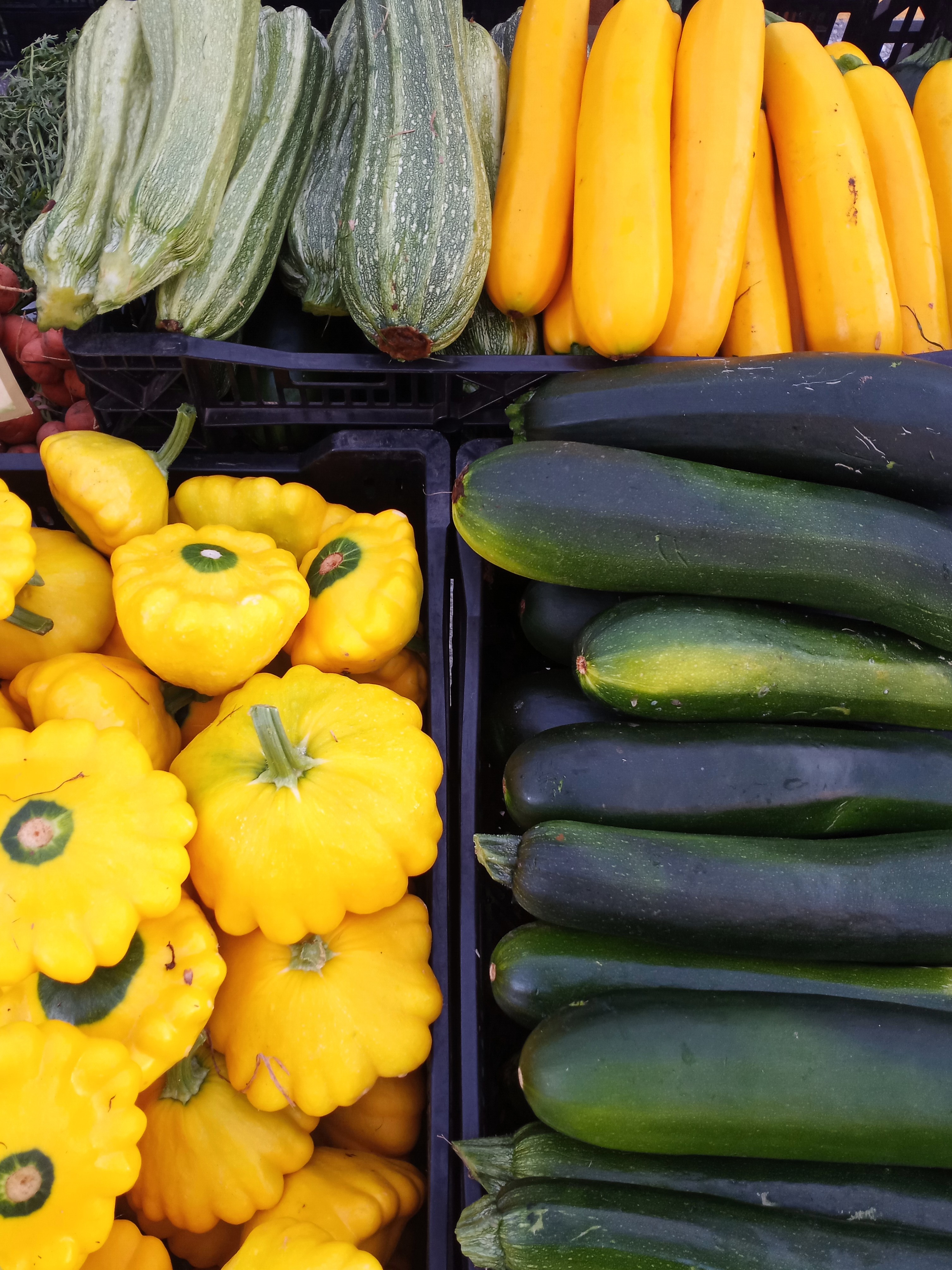
Zucchini season is also longer this season with the final patch still thriving & disease free and turning out lovely zucchini.
_____________________________________________
Around the farm this week …
CSA pick up on Thursday.
Georgetown Farmers’ Market on Saturday.
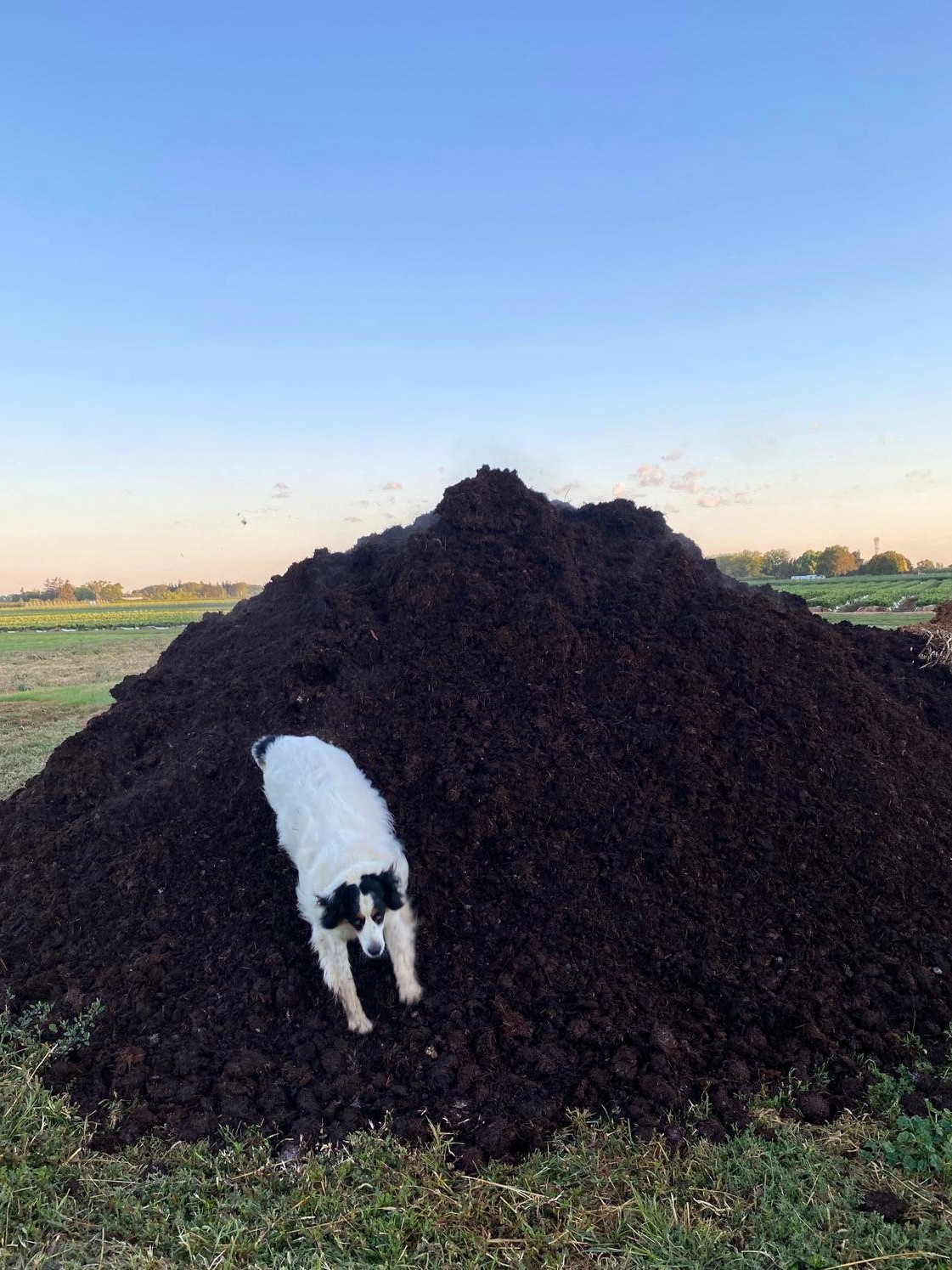
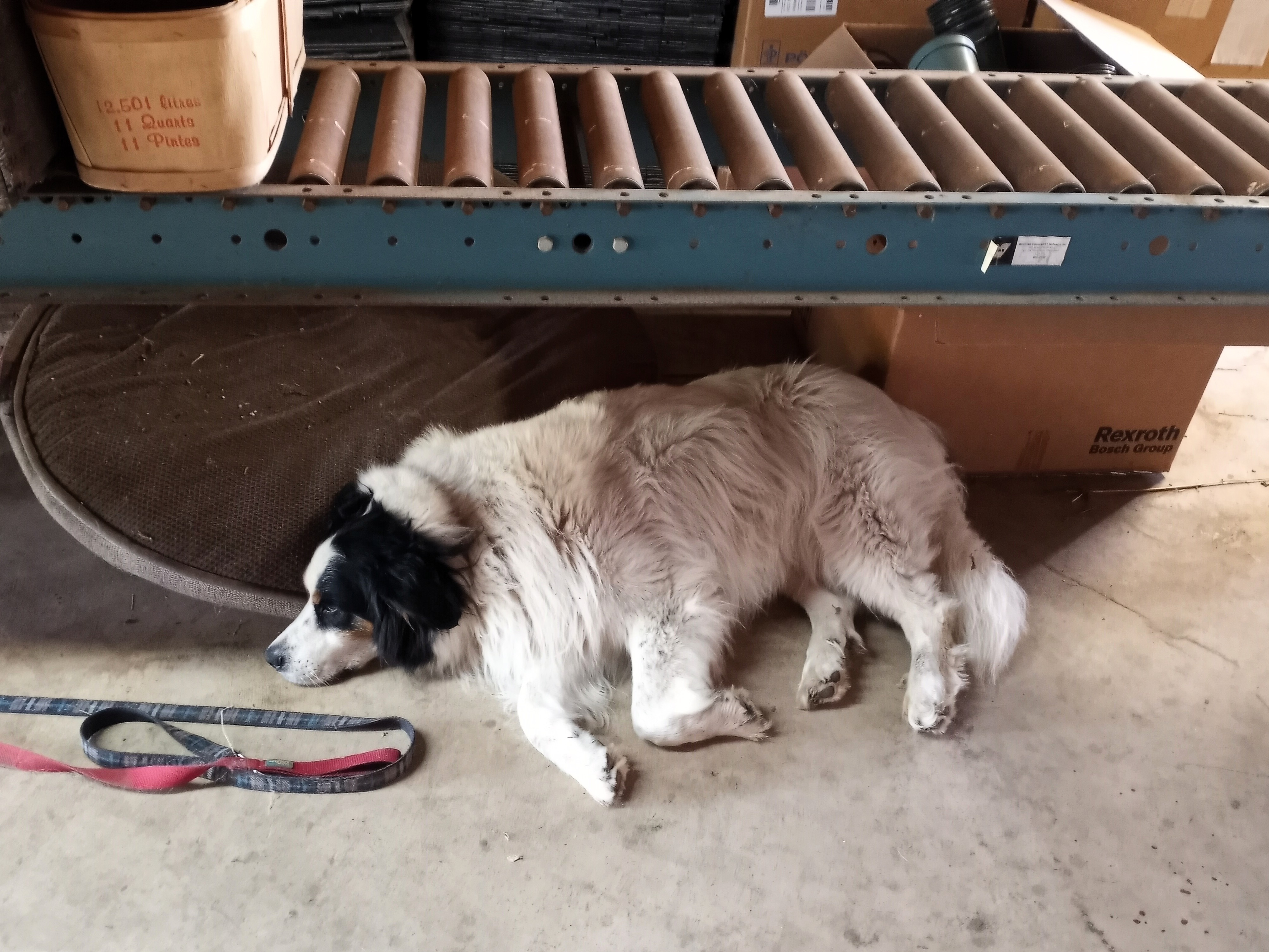
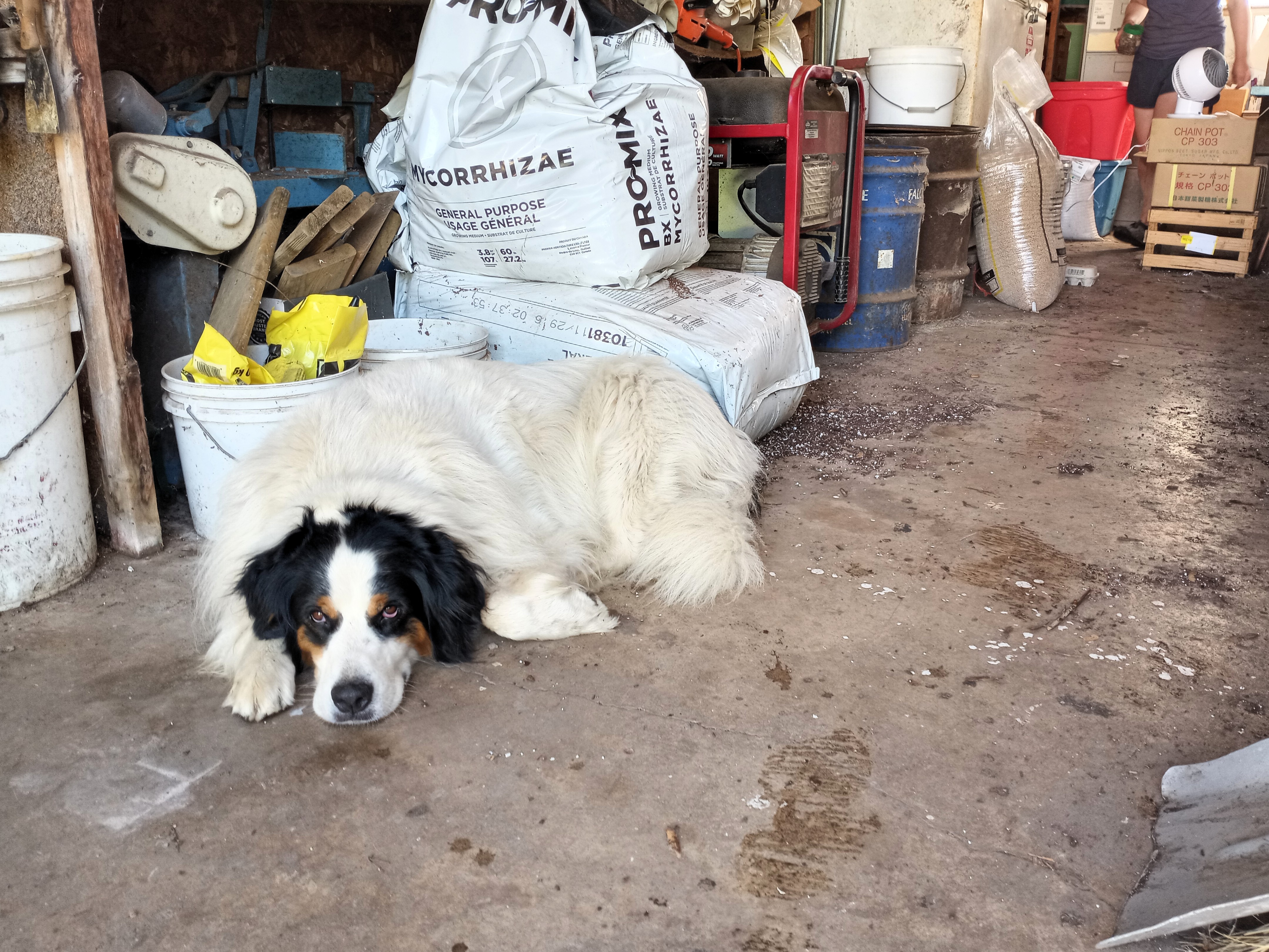
A huge load of mushroom compost was delivered – much to Sage’s delight!
Please consider the list to be rather fluid this week. There could be other vegetables added to the box or perhaps different vegetables than what is listed. It’s Labour Day which means most of our workers have returned to school, leaving us shorthanded. We didn’t get to everything today – so there could be changes surprises.
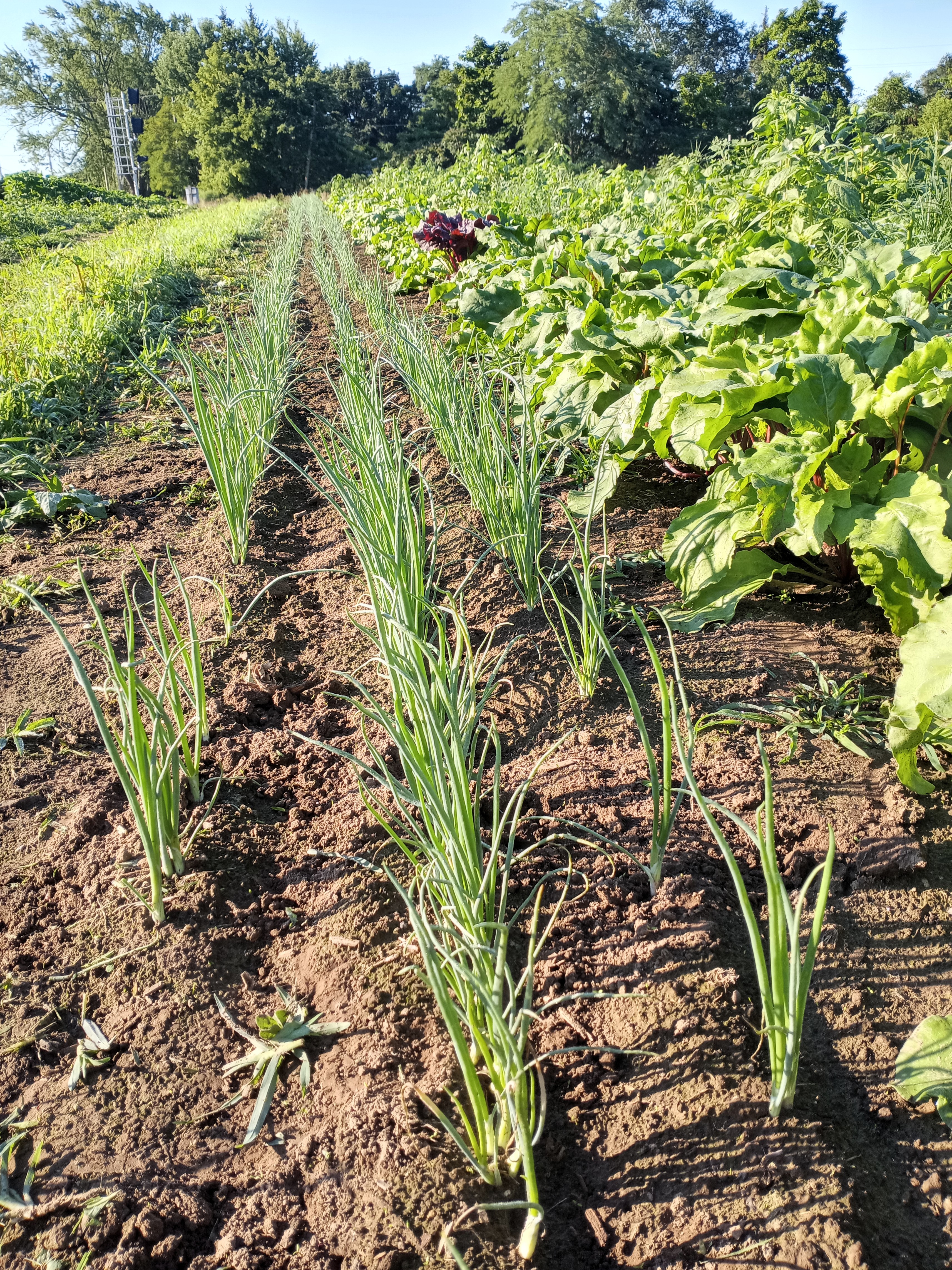
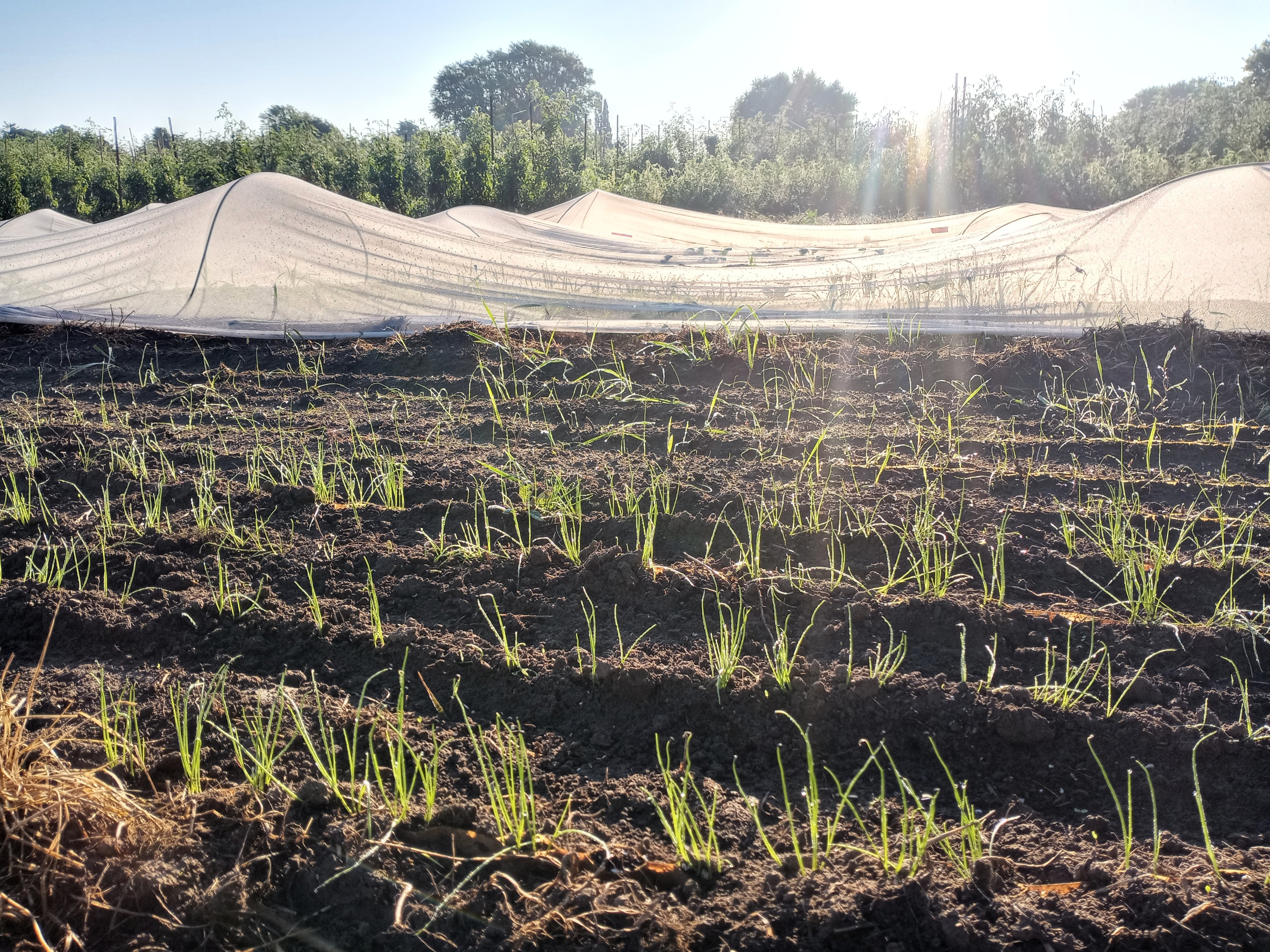
Green onions – it’s been a while! While we have planted these weekly, many of them dried up during that intense heat and drought this summer or simply stopped growing. With conditions improving, we are seeing renewed growth.
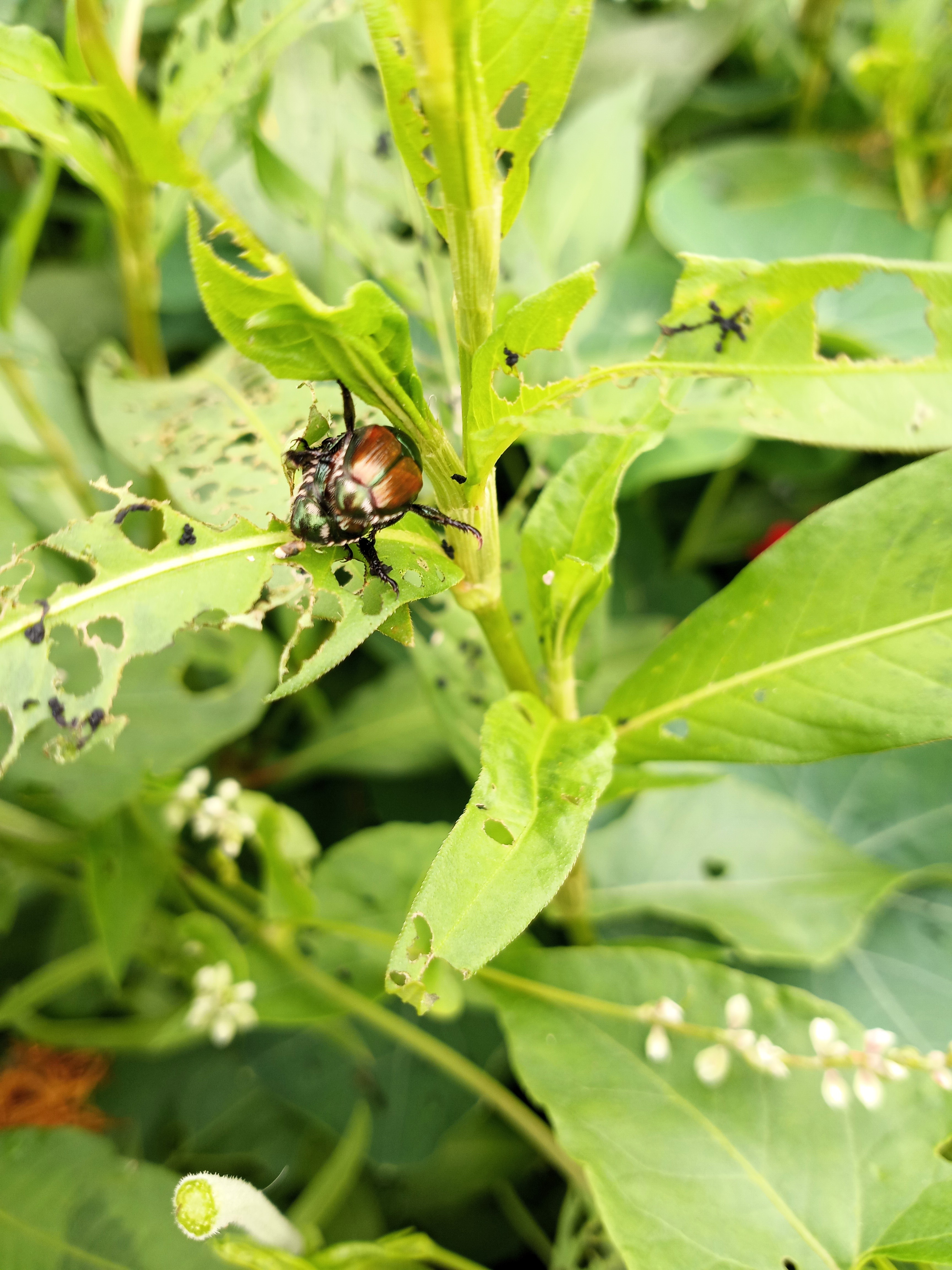
If ever a vegetable deserves a pat on the back or a hearty handshake, it is this planting of edamame. Transplanted to the field back in mid-June, it grew vigorously. But being next to the train tracks and the overgrown edges where the rabbits live, it was a bunny buffet waiting to happen. They chewed off about 1/4 of the rows, right down to the ground. Then the Japanese beetles came and turned many of the leaves into lace. They needed moisture when the pods were forming – and received none. Still the plants persisted and we harvested some lovely edamame beans – just not as many as anticipated!
Nothing smells better than fennel bulbs when we are harvesting! They have a beautiful licorice scent – and flavour. The bulbs this week are small and tender – perfect for grating into a salad or slaw. The taste is so light and refreshing. Roasting or sautéing fennel results in a milder and very delicious flavor.
This could be the final week for blackberries. We are picking less & less berries and the quality is diminishing. They still taste great though! Enjoy them while they last.
Tomatoes, zucchini, a salad green & garlic finish the box.
_________________________________________
Around the farm this week …
Today’s planting included cabbage & Chinese cabbage, spinach, arugula, bok choy and romaine lettuces.
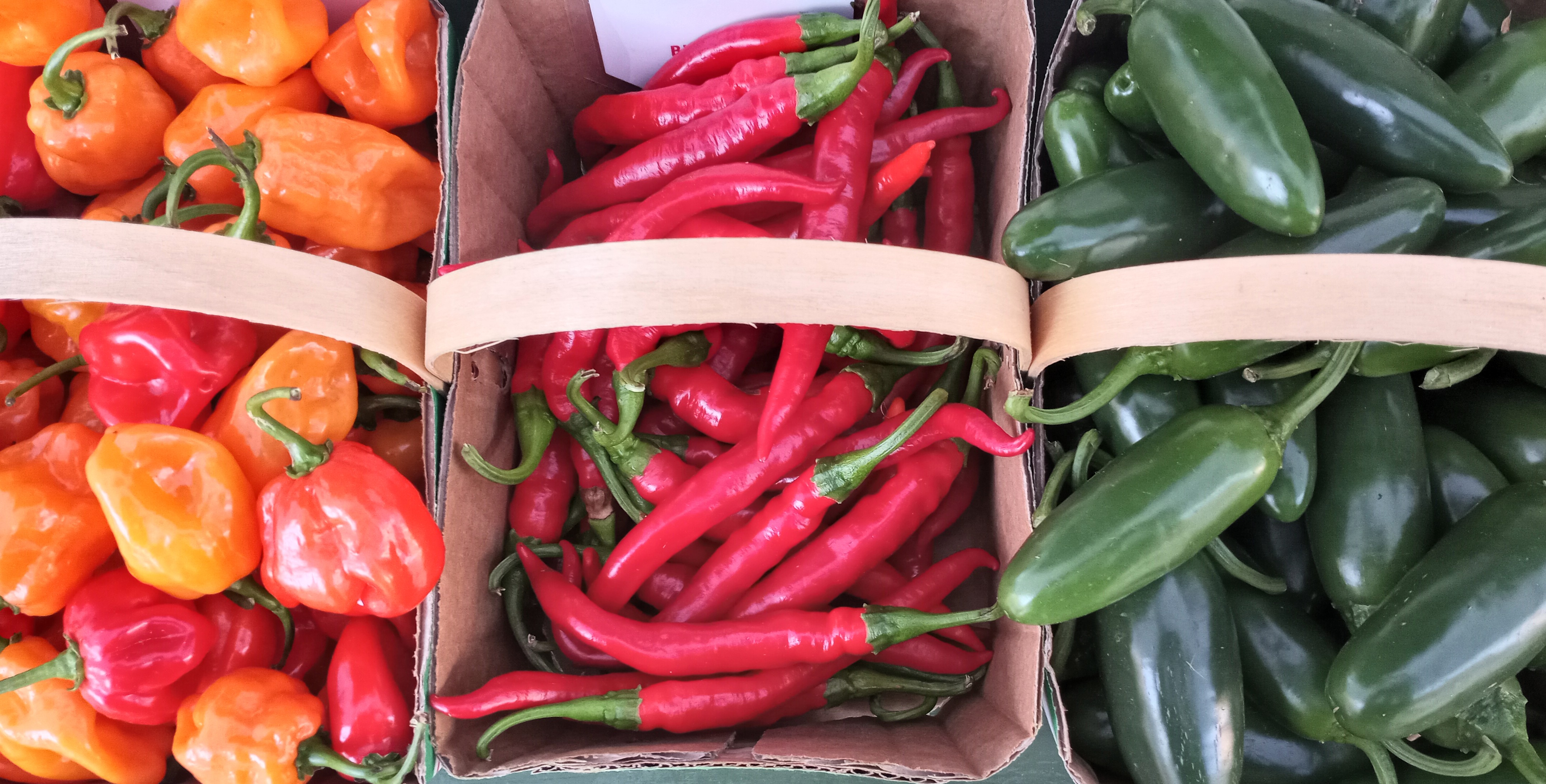
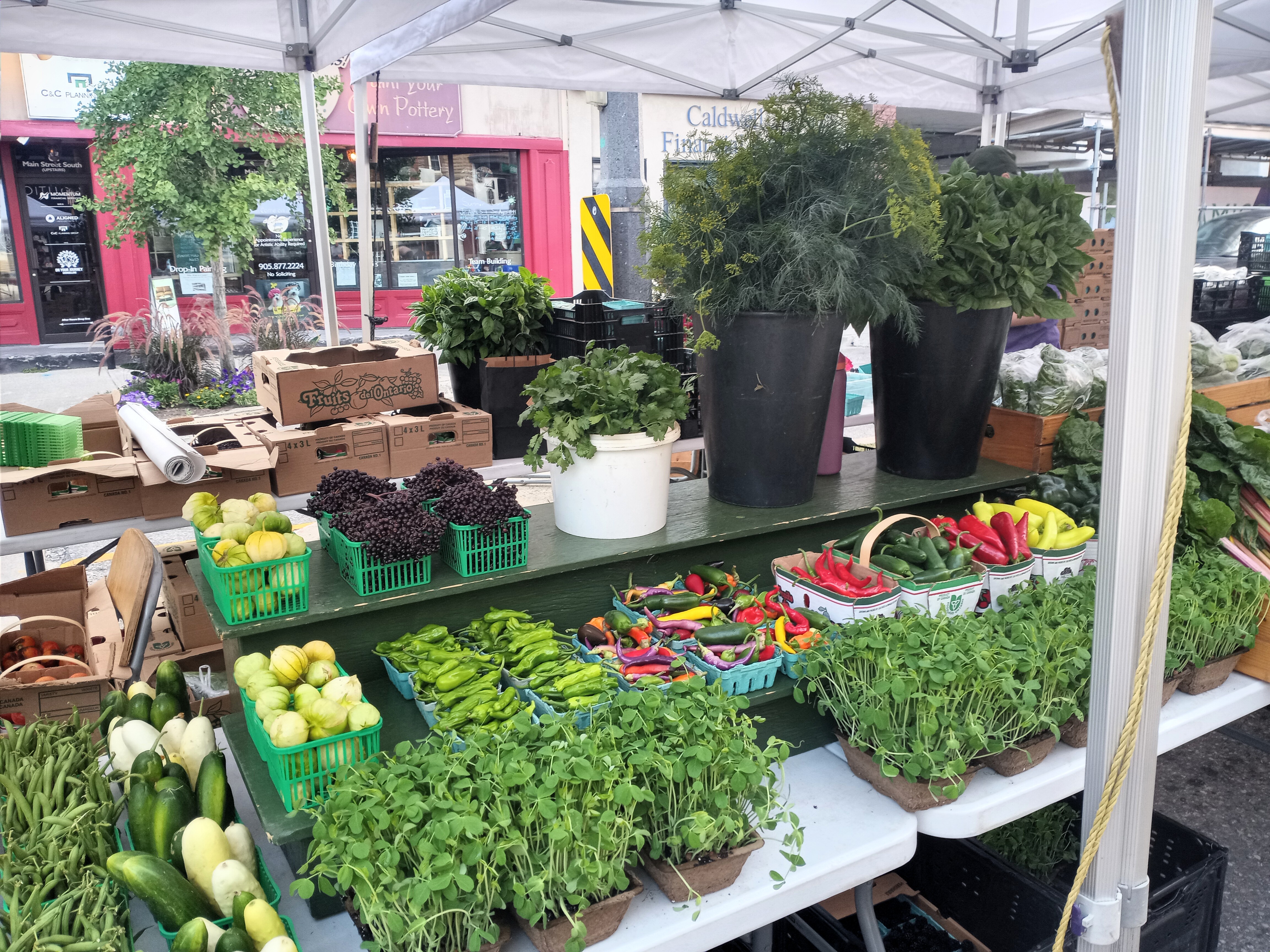
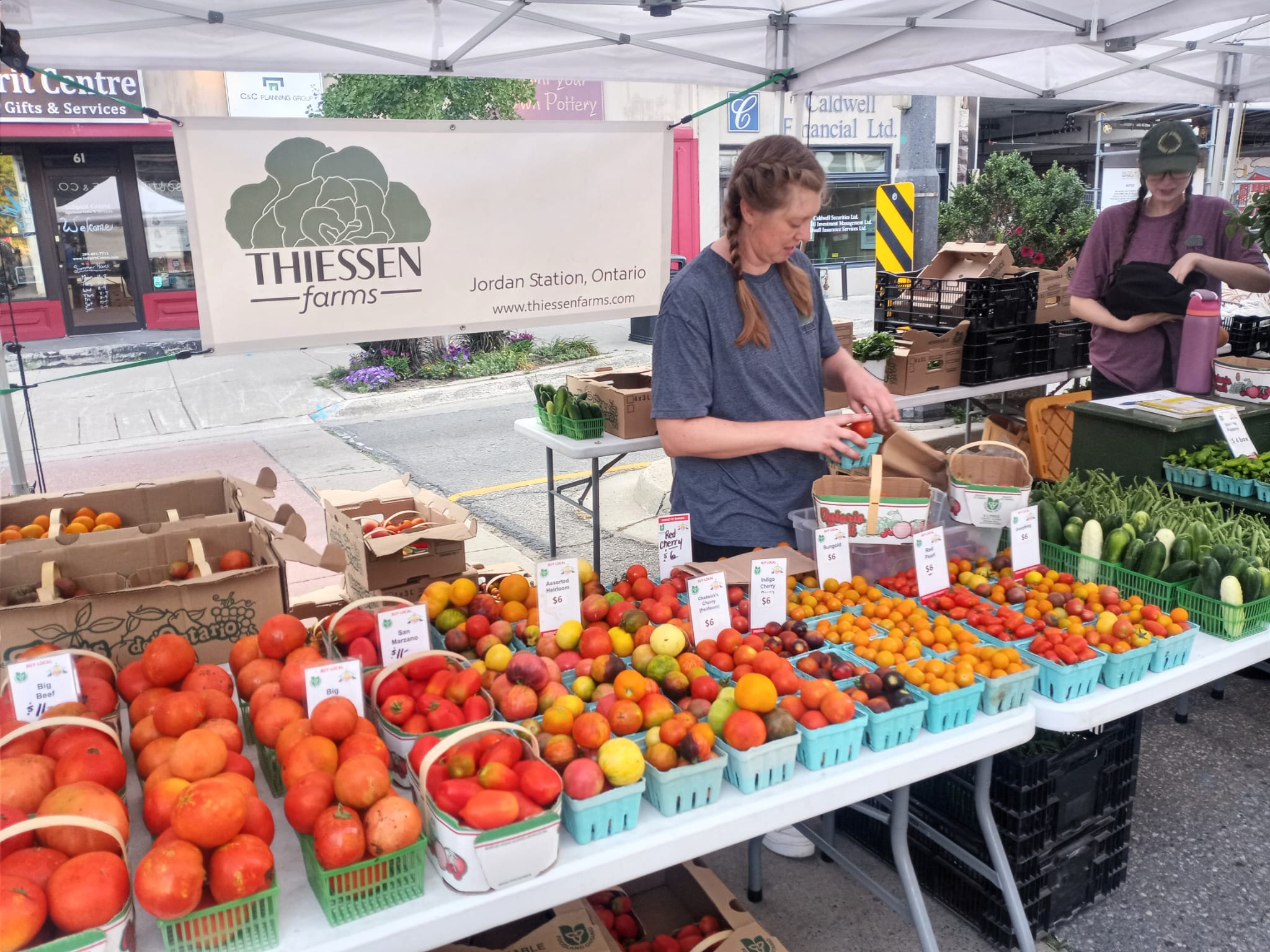
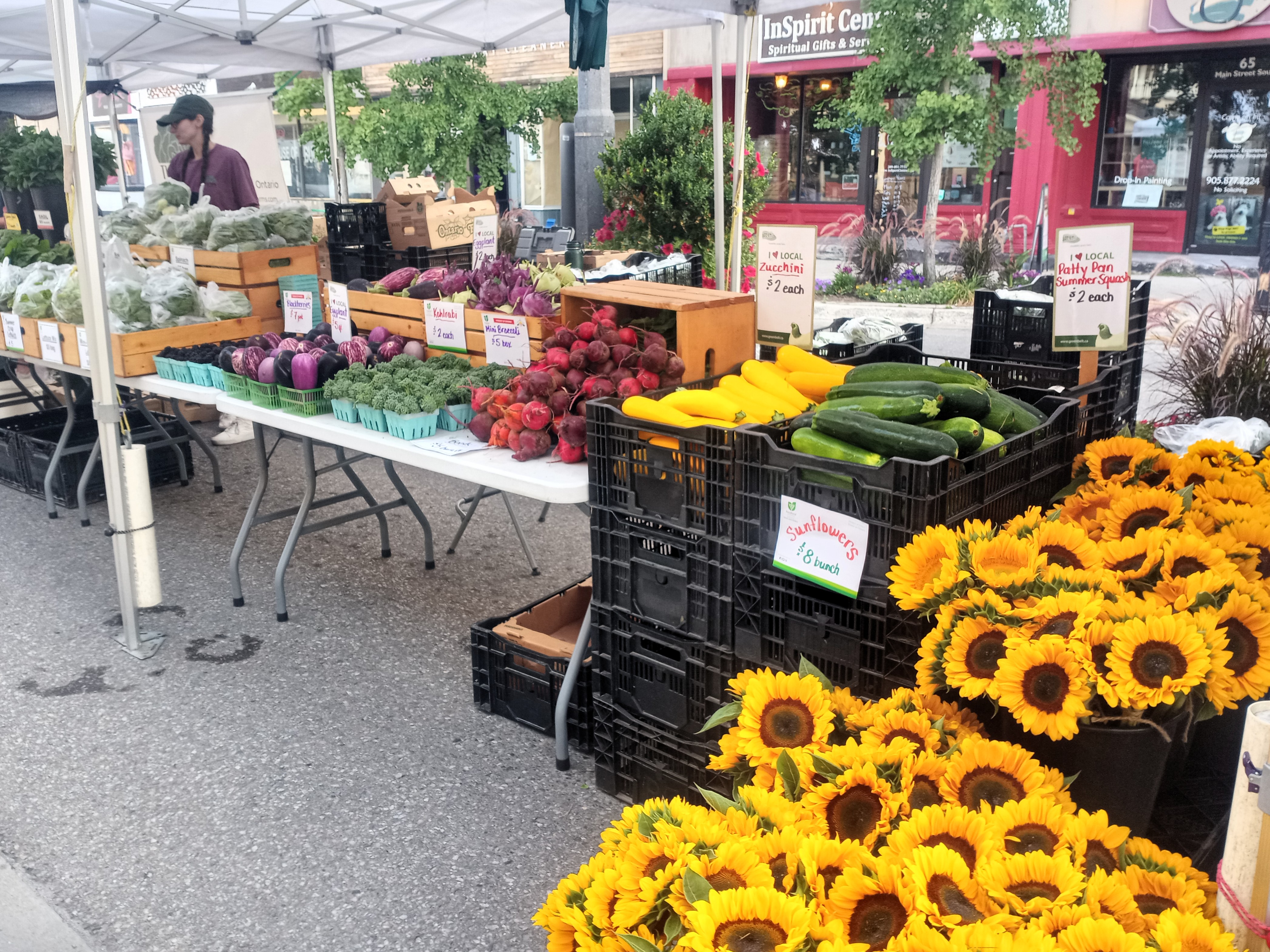
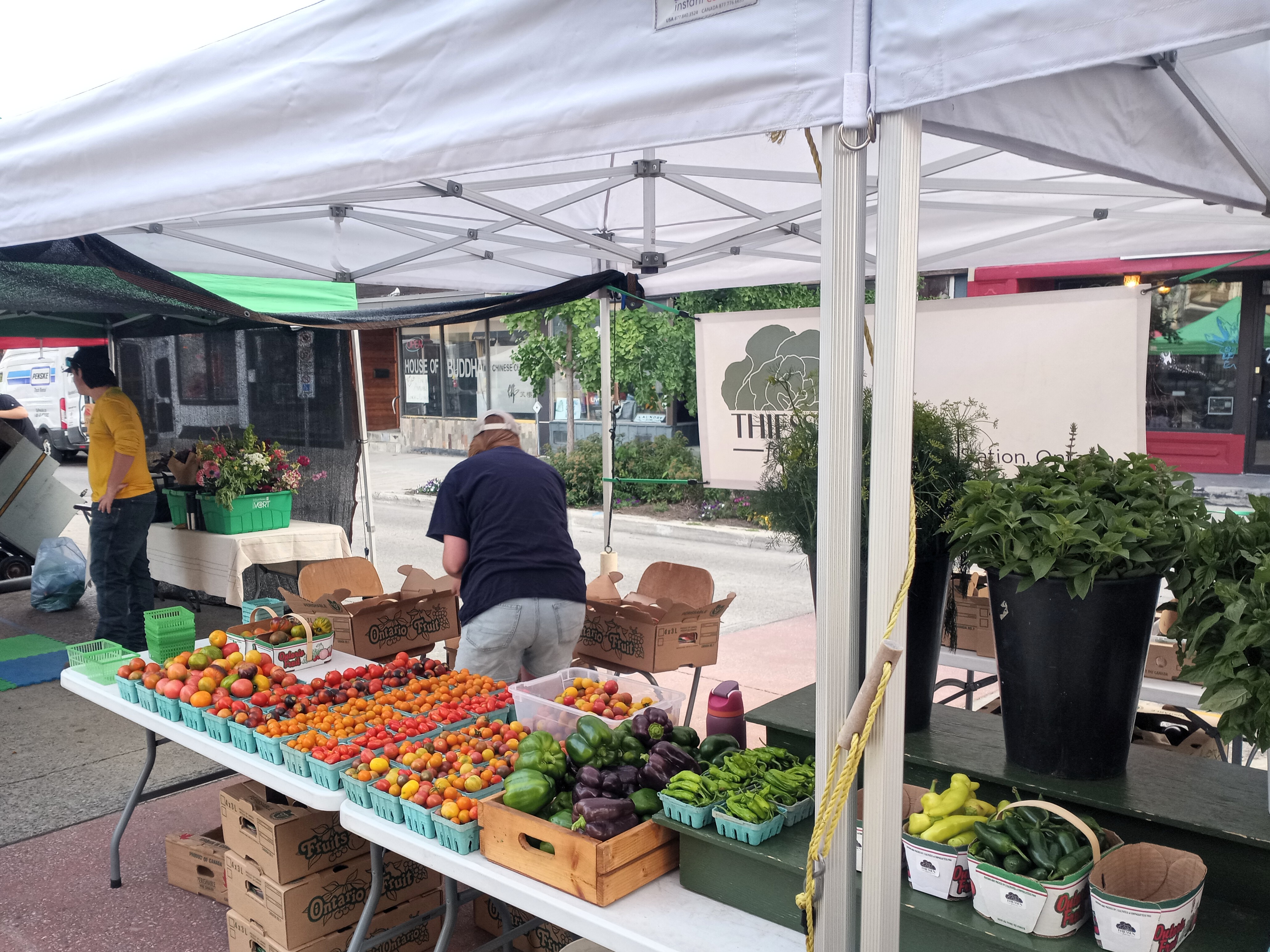
How about some colour to brighten your day! These are our vegetables at the Georgetown Farmers’ market on Saturday.
Check your email for details on our fall CSA. Sign up happens this week!
Fruit share – pears*this is the final week for fruit.
Blackberries are the big thing right now on the farm. Every Monday, Wednesday & Friday our 3 student workers pick blackberries. Sometimes Amy too. It usually takes 3 to 4 hours to harvest the patch. This is our 4th week of picking – hopefully there is another week or two remaining. The quality has been good and the taste amazing! The size of the berries is decreasing though due to the lack of rain. Enjoy them while they last!
Our last planting of zucchini is going strong! The expectation is that they will keep producing almost until the winter squash is ready – in another month or so.
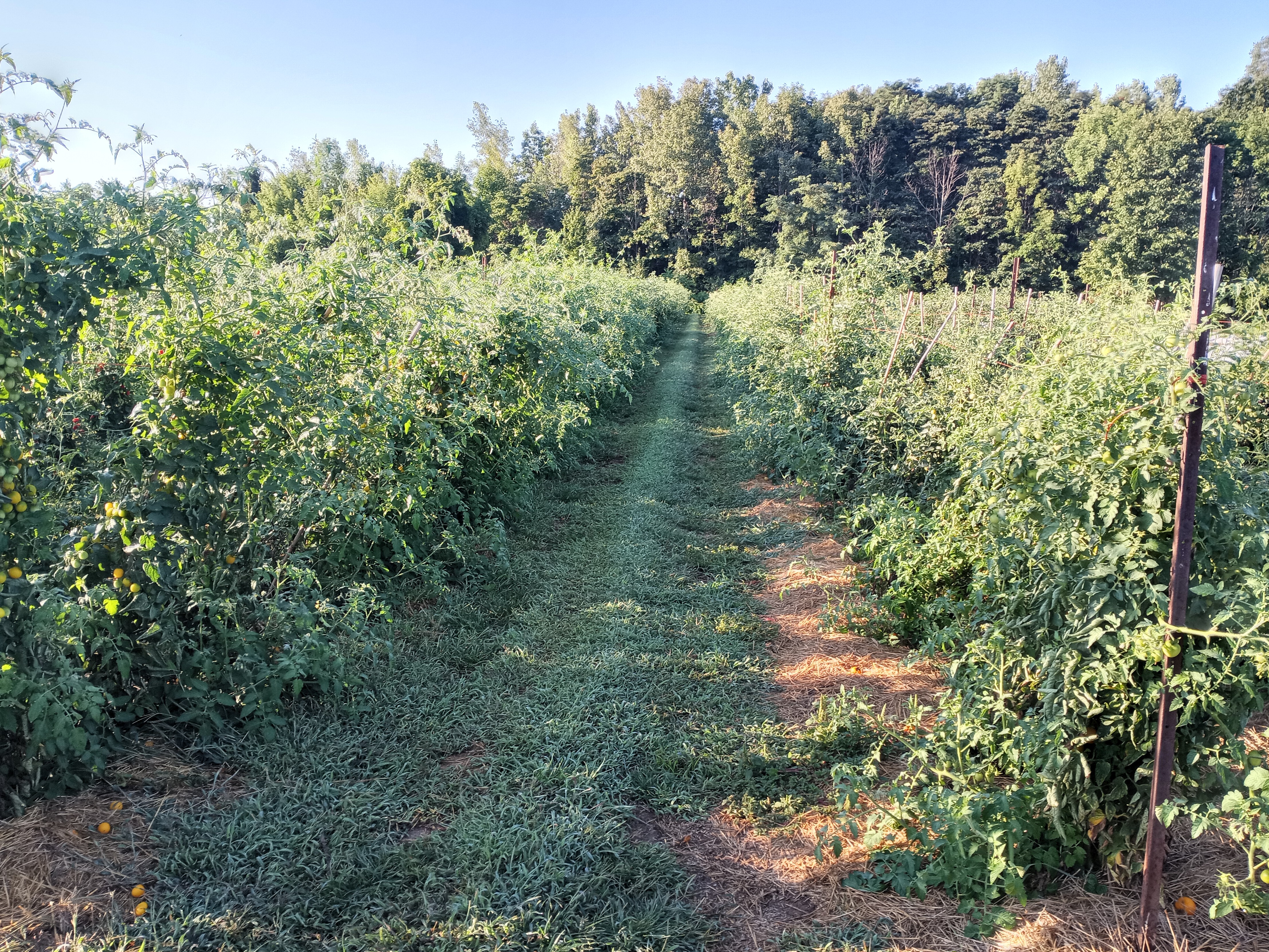
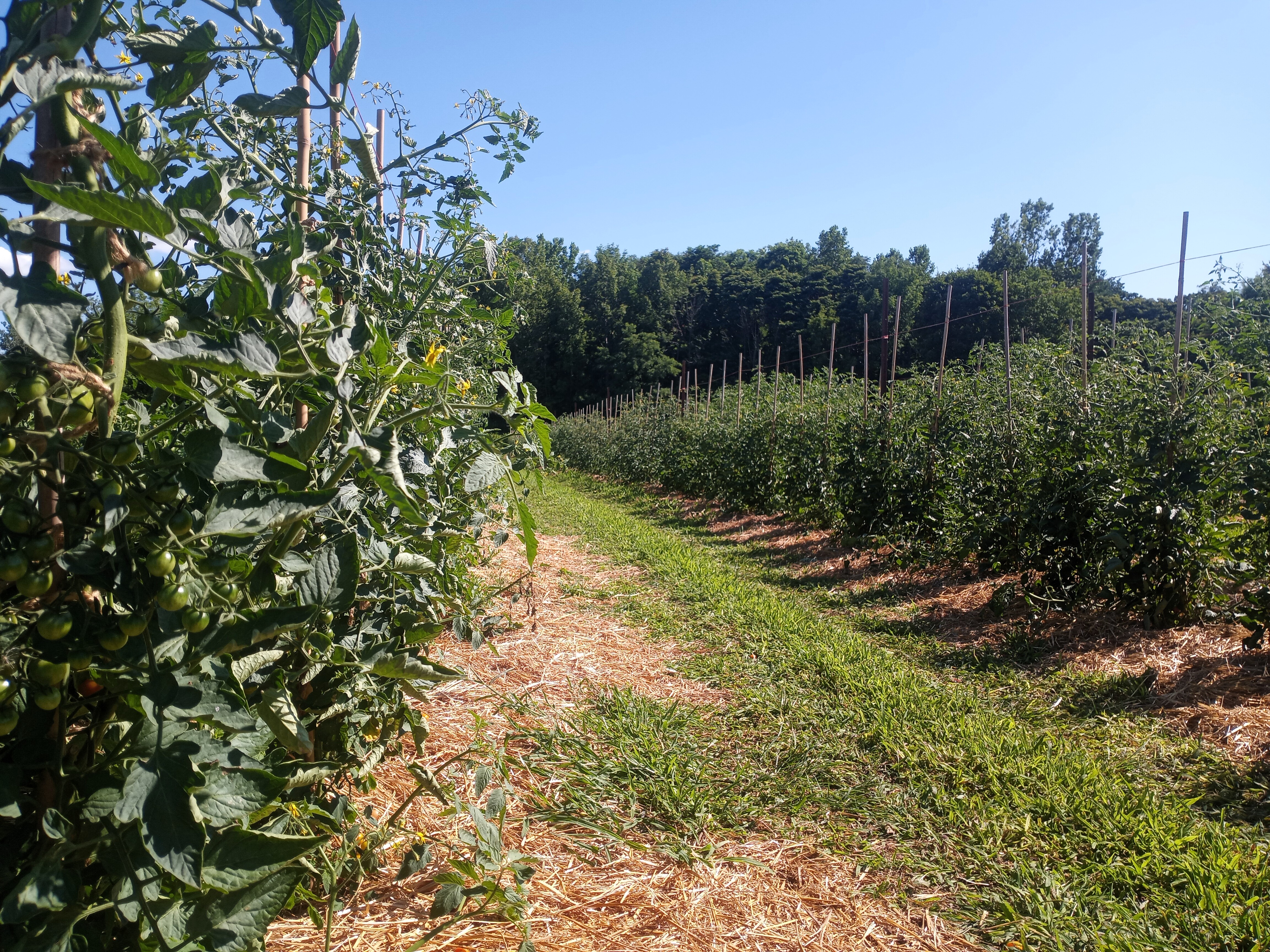
The tomato patch is out of control! It’s a bit of a jungle out there. The plants are surprisingly healthy as of now, despite the lack of rain, and continue to grow vigorously – cherry tomatoes especially. The heavy, fruit-laden plants are sagging and leaning, stretching the string that holds them upright to the limit. And the tomatoes sure are good!
The remainder of the box this week includes kohlrabi, a sweet pepper (bell or shepherd), another round of shishito peppers, a bunch of fresh basil or cilantro and a bulb of garlic.
_________________________________________
Around the farm this week …
Recent plantings – lots of salad greens, beets & green onions, plus fall vegetables including broccoli, cauliflower, cabbage …
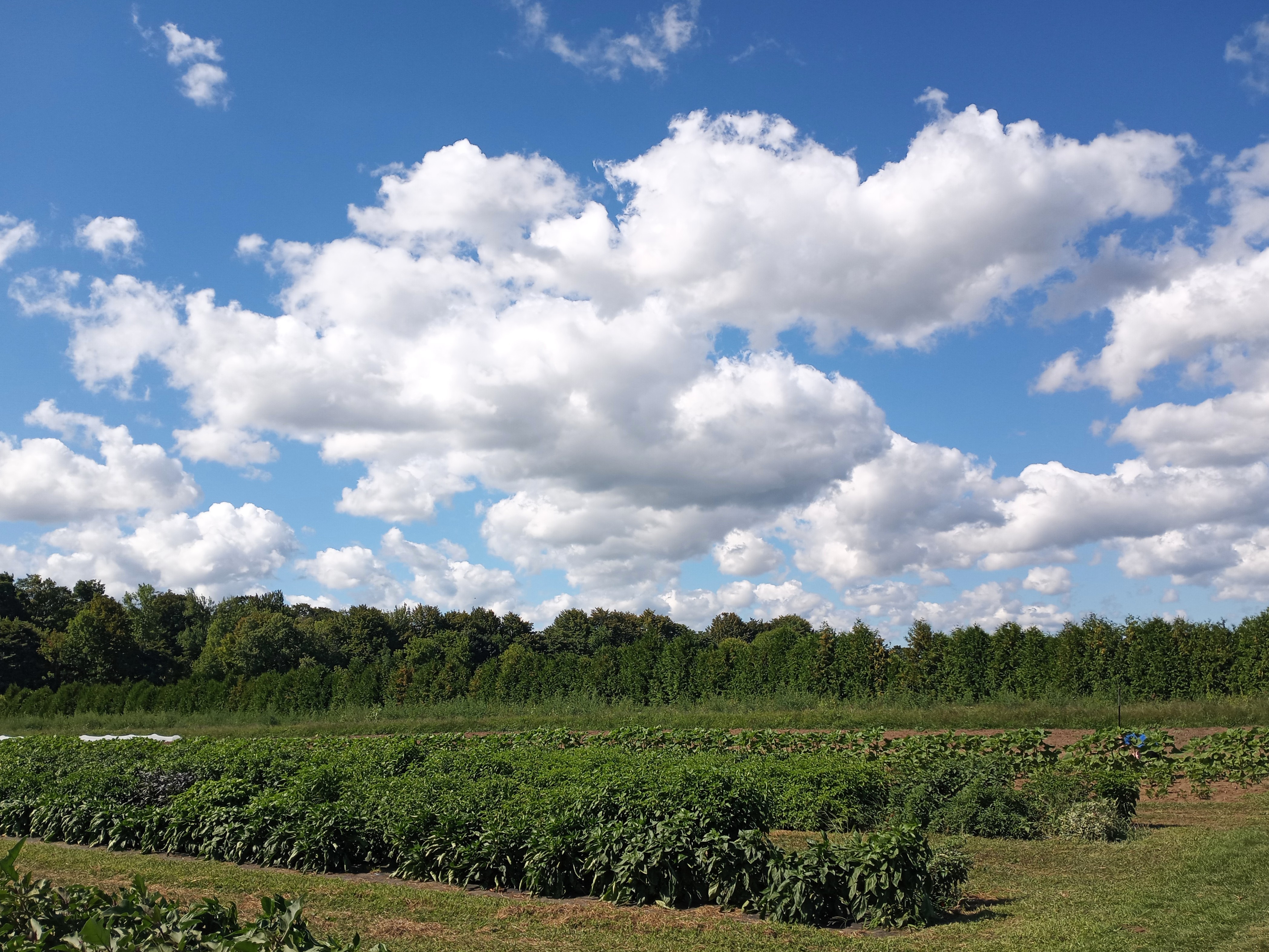
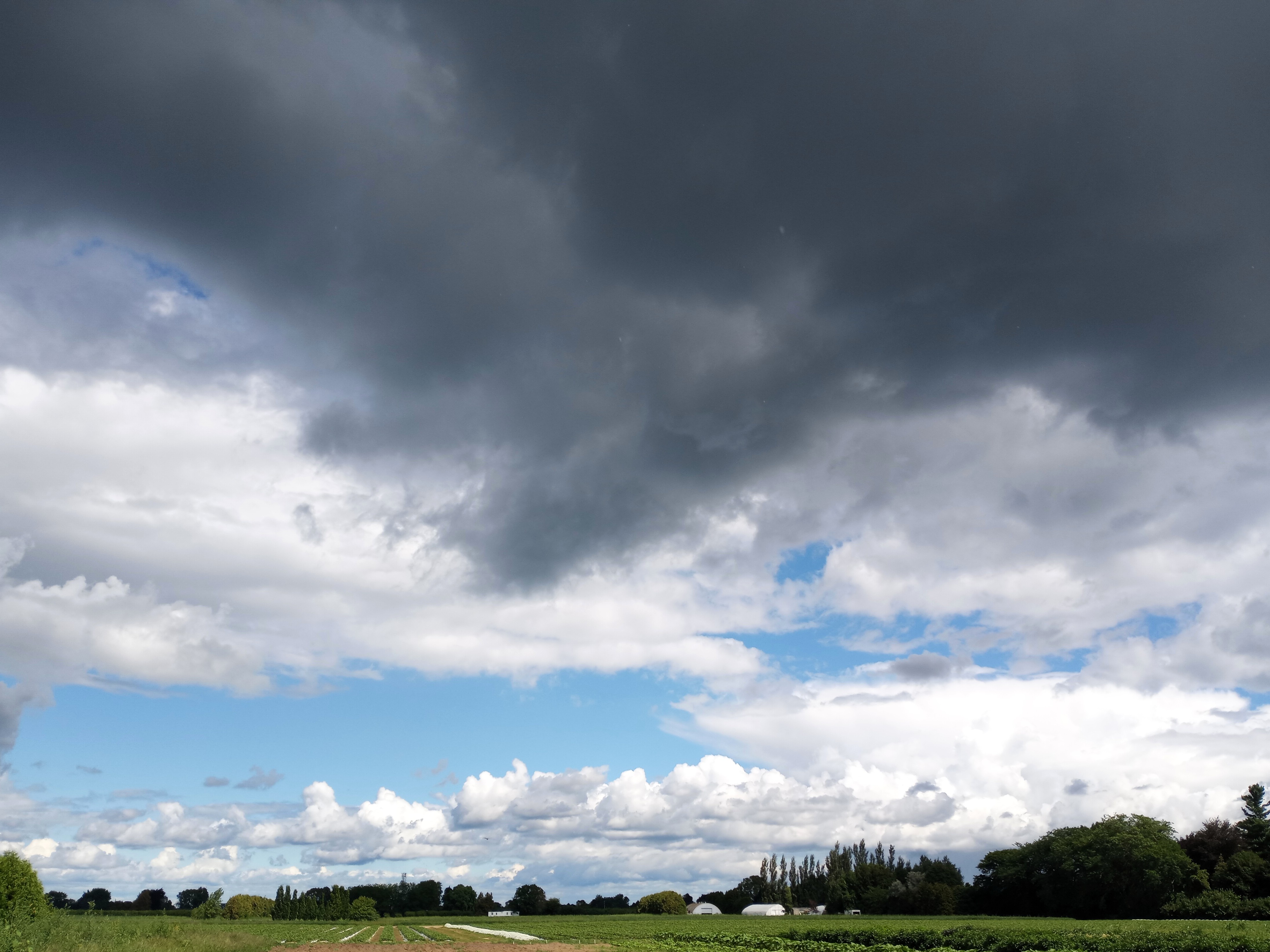
We have been awed by the amazing skies these last few days.
Blackberries, tomatoes, green beans or edamame, carrots or beets, sweet peppers, something green, garlic.
Fruit share – mixed basket of peaches, nectarines & blue plums.
The blackberries are beautiful! We are harvesting large amounts of quality berries that taste amazing.
We took sooooo many to market on Saturday – and sold almost everything!
Some rain on the weekend was very beneficial for the blackberries but the dry weather has already taken it’s toll on them. The berries are ripening smaller & canes are drying up. I’m predicting they will last only a few weeks and then be finished – but hopefully I am wrong and they continue to produce well into September.
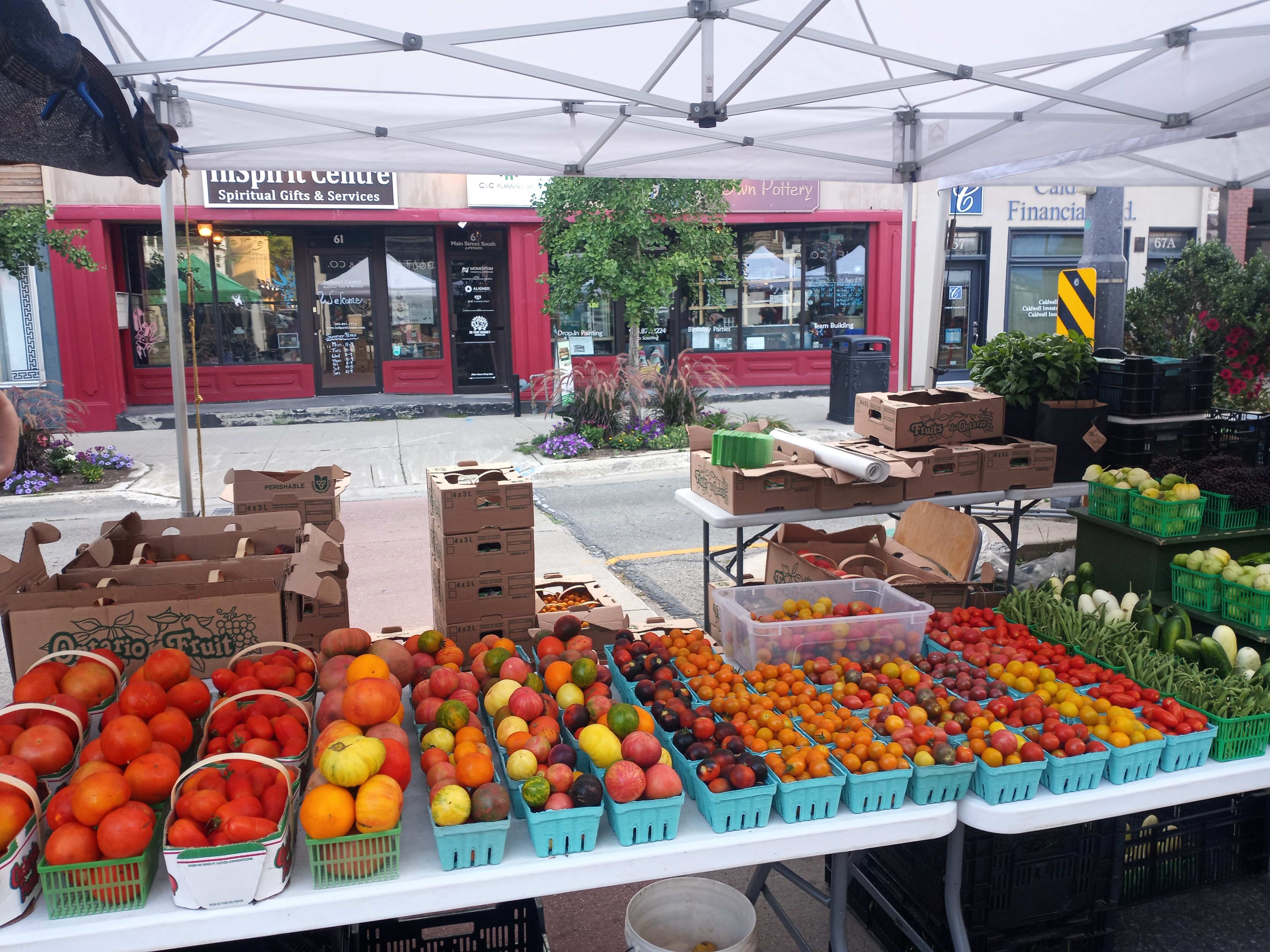
It is the peak of tomato season. This year we are growing more than 60 varieties of all sizes & colours. Here’s what some of them look like …
Edamame are fresh green soybeans with a history of 2000+ years, originally grown in China and then in Japan. There, it is a traditional bar snack eaten lightly steamed and sprinkled with salt. Edamame are full of protein, fibre and loaded with vitamins & minerals – a very healthy vegetable. And they are easy to prepare! Simply boil the pods in salted water for 3-5 minutes. Remove from the water & drain. Then squeeze the pods to pop out the beans and enjoy as a healthy snack. Delicious! We like them sprinkled with lime juice and salt. Or they can be added to soups, stews, salads, noodle dishe. We continue to deal with the affects of the hot & dry weather – our edamame crop is down considerably. So there will be a choice of edamame or green beans.
Another choice will be carrots or beets.
A sweet pepper, garlic bulb and a green complete the box this week.
____________________________________________
Around the farm this week …
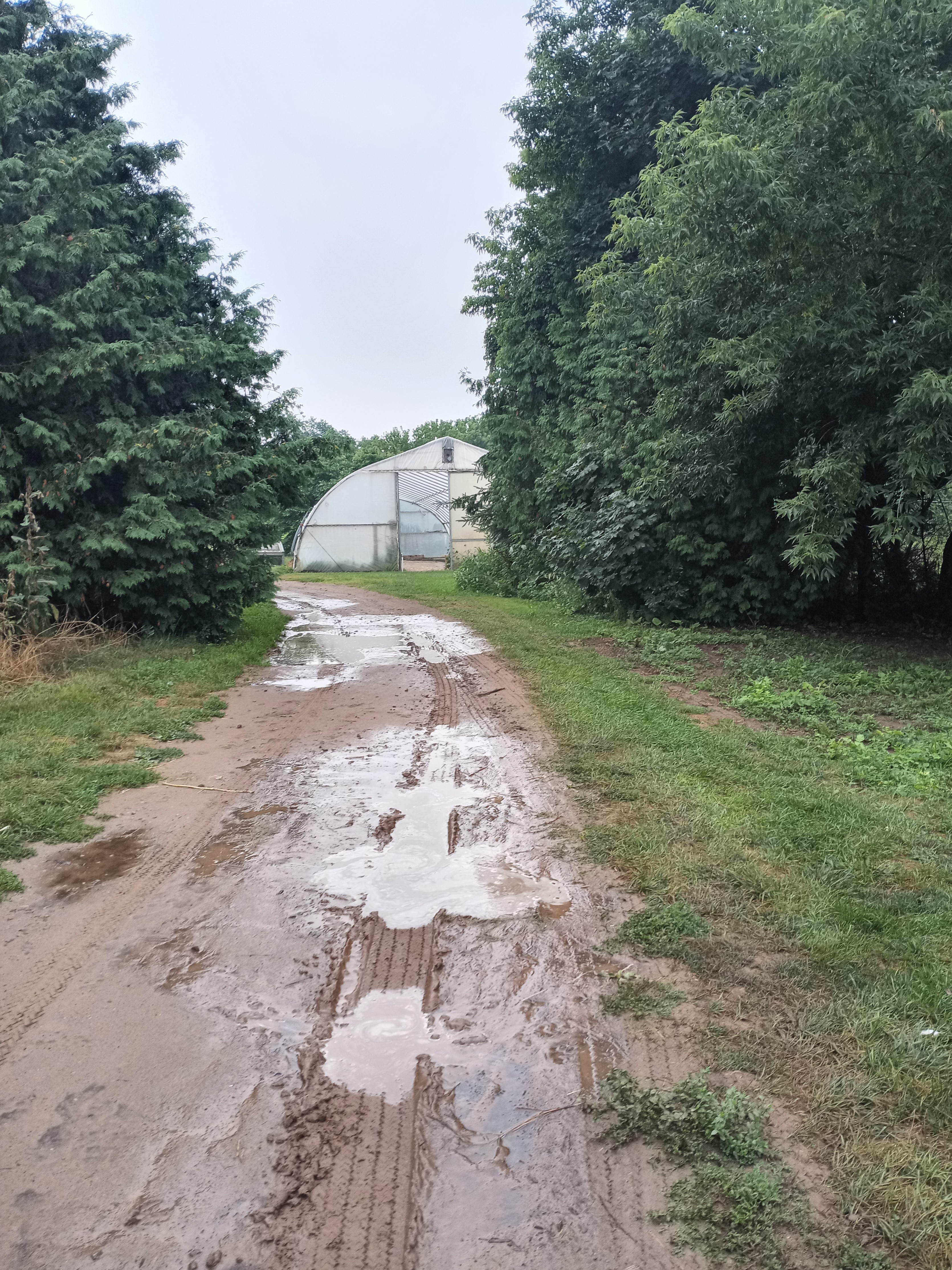
We were so happy & thankful to receive 1 inch of rain this past weekend. It came down slowly and the thirsty ground soaked it all in. The whole farm looks refreshed this morning! And the cooler temperatures and lower humidity raised our spirits as well.
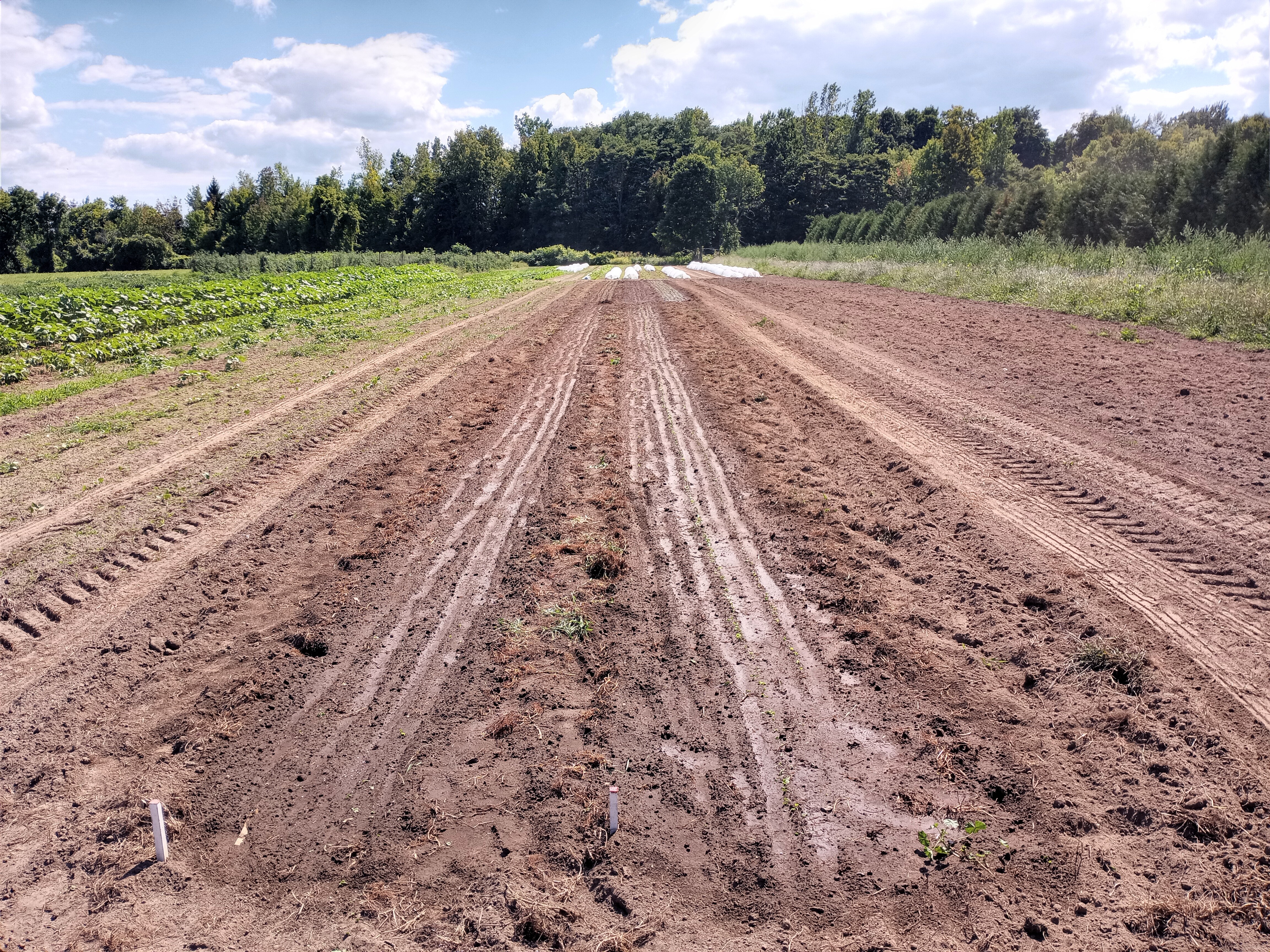
There are a lot of empty areas on the farm now – where vegetables have been grown & harvested. We will grow a second crop there if needed, but for now they are resting.
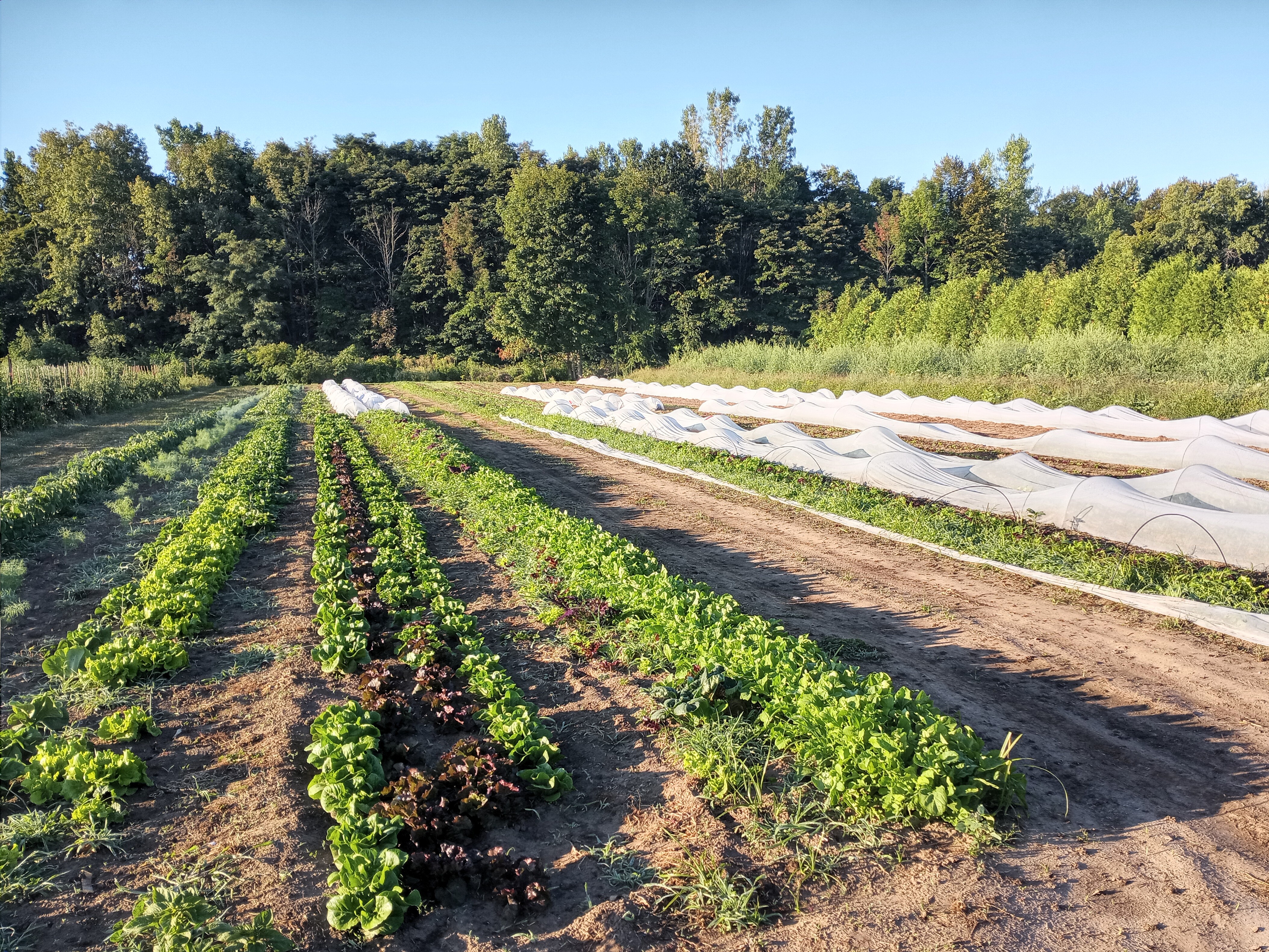
This will be one of the first weeks that the CSA box will not have lettuce. The heat finally caught up to this crop. Our lettuce mix or leaf lettuce has already been in short supply, but now all the romaine & summer crisp has been picked – or spoiled by the sun. The next harvest is a week or two away. But there are many trays of lettuce to plant this week, and with cooler temperatures forecast it has a much better chance of growing!
The weather cools and suddenly it’s soup time. Plus we had some blemished sweet peppers and tomatoes to use up. Lorie made roasted red pepper soup (left) and Chef Kyle prepared tomato & red pepper soup (right). Both delicious! Some we will eat now, some will be tucked away in the freezer for fall.
(Vampire plums are round, red plums with delicious blood red flesh – and the greatest name!)
The 1st taste of blackberries was a surprise in the box last week. But now you can expect blackberries for the next few weeks at least. For those not familiar with blackberries, they are a bit sweet & a bit tart. If they aren’t quite ripe they can be sour. Too ripe and they are soft & mushy – but incredibly sweet. We try to pick them as ripe as possible but still firm. Unlike raspberries, blackberries are not hollow but have a soft edible centre core. The only way to eat a blackberry is to pop the whole thing in your mouth. Try to take a small bite and you will be covered in dark, staining juice. While best eaten fresh, blackberries also make great jam, juice, sauce & ice cream. Please note that we do use pesticides on our blackberries, for the spotted wing drosophila. This invasive vinegar fly has the potential to cause extensive damage to many fruit crops, especially soft and dark coloured fruit – like blackberries. It is found throughout much of southern Ontario and most of the fruit-growing areas of North America, and has become a chronic pest in berry and tender fruit crops. There are cultural practices that we use to help reduce the insect populations, but the most effective control is chemical. So we spray regularly to protect our blackberries & keep them free of worms.
__________________________________
Here are some questions we have been asked this week – and our answers.
Why aren’t there more beefsteak tomatoes, sweet peppers, and cucumbers … etc in the box?
The quick answer – too much heat and too little rain.
Vegetable plants are feeling the heat & humidity the same as us these days. They’re thirsty, tired & wilting. The entire ripening process slows down as they use their energy to survive rather than ripening the crop. Blossoms drop instead of pollinating and setting fruit. Diseases also show up when it’s so hot. When conditions improve – temperatures moderate & we receive some rain – the plants should perk up and vegetable quantities will increase.
But not the cucumbers! We have only been picking them 1 week and already they are succumbing to disease.
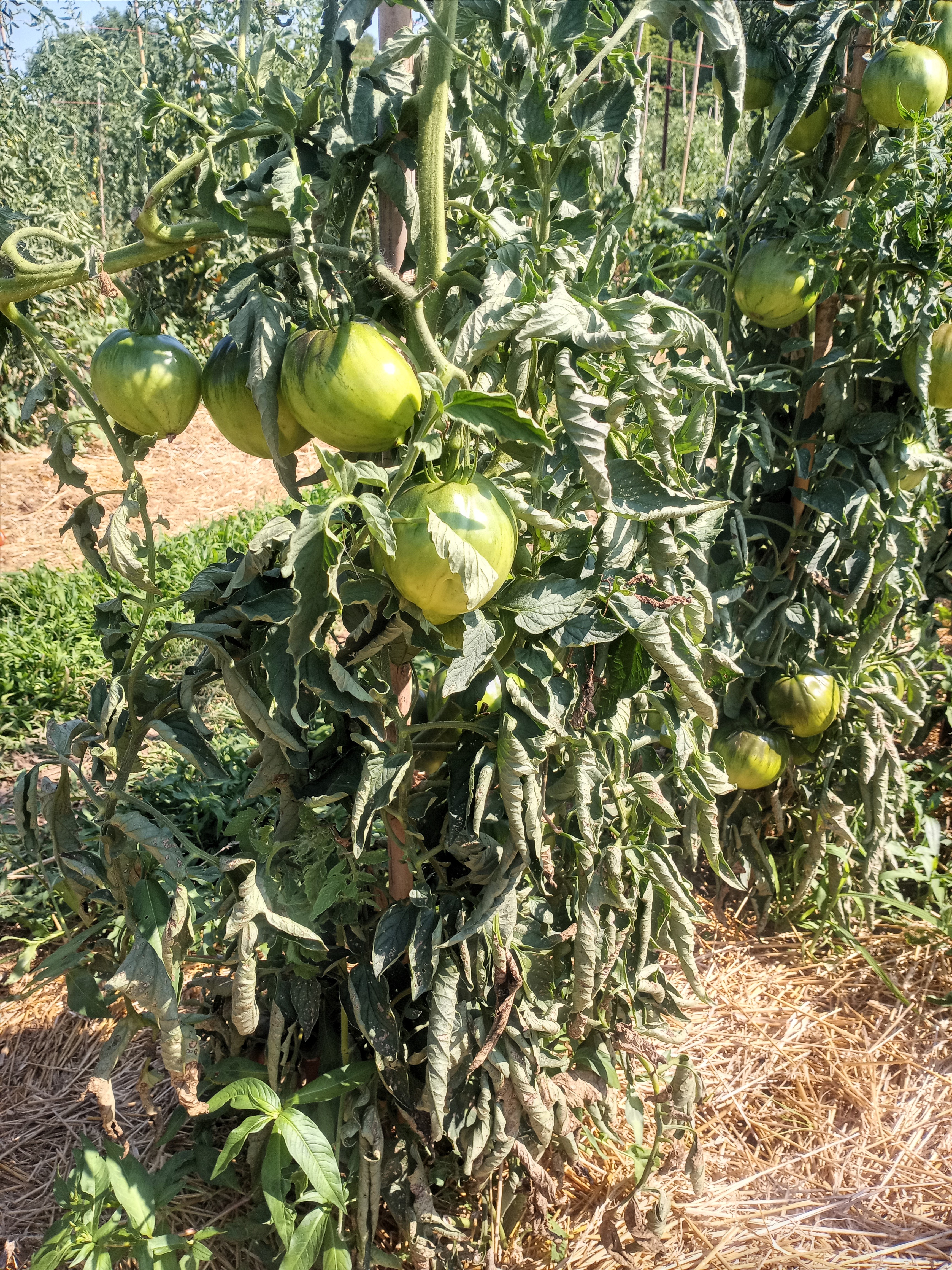
Tomato leaves curl when they are under stress.
2. What about spinach?
Spinach is a very popular crop! But we have only had limited amounts at market recently and it has not been in the CSA box since week 3. This is because spinach is a cool weather crop that grows best in spring & fall. We do attempt to grow it all summer with some success (call us optimistic, stubborn or maybe not too bright?). When this extreme heat eases there should be more spinach available again – and our lettuce mix too.
3. How do you irrigate & water your crops?
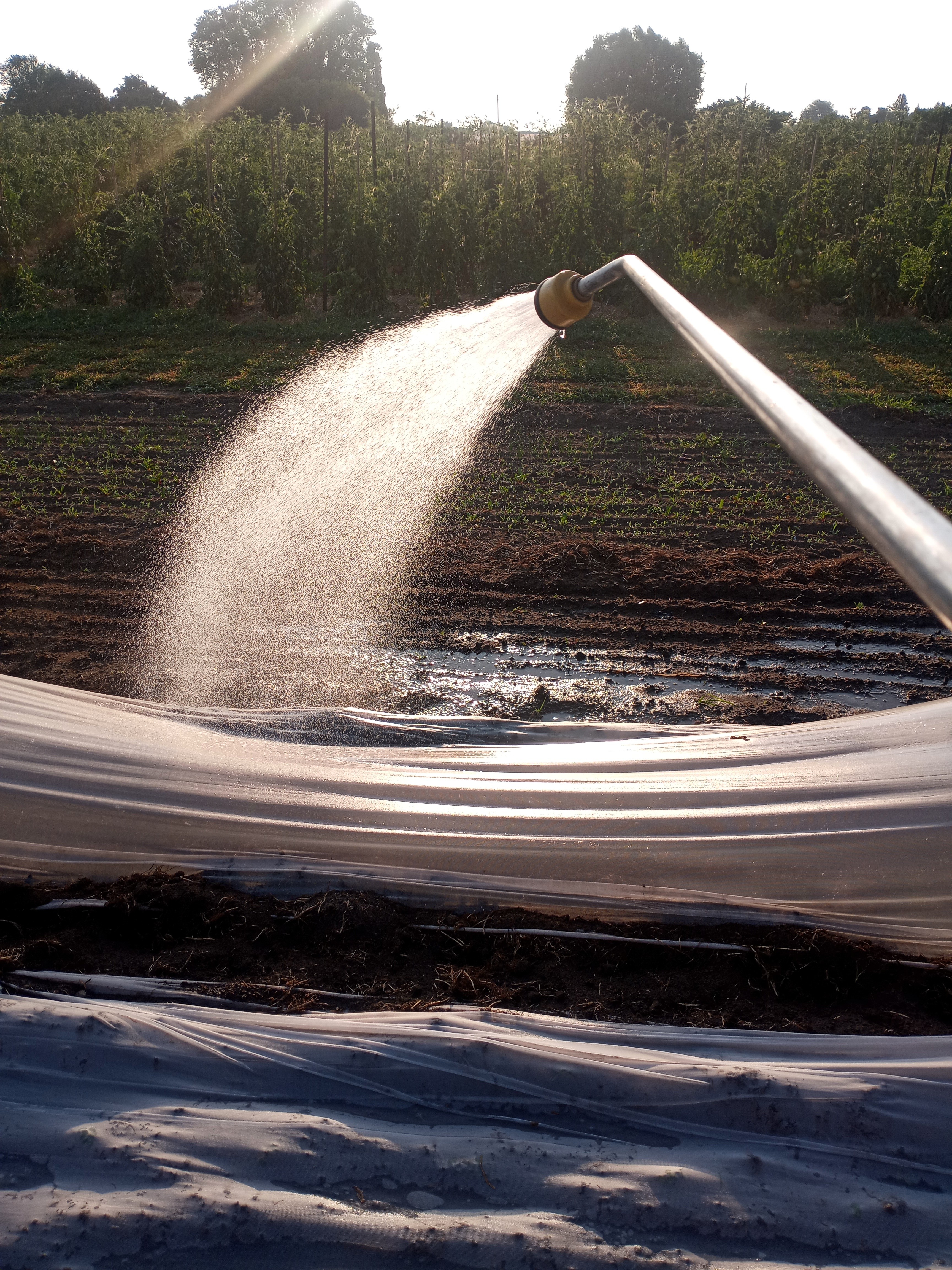
Only newly transplanted vegetables receive water. We water them using our old orchard sprayer with a hose & a water wand. They get water once or twice a day for about a week in this heat. By then their roots are established and they can hopefully survive on their own.
We collect rainwater from our barn roofs in 2 big cisterns which we use for this watering. When this is used up and it does not rain, we purchase water by the truckload, 3000 gallons at a time. It doesn’t last long!
In a season without rain we realize that our efforts to improve our soil are paying off. Our soil holds moisture longer because we have added organic matter with our cover cropping, and use manure & compost instead of chemical fertilizers. We have reduced our tillage, keep the ground covered with something growing most of the time, and use a lot of mulch. Without these measures I know our crops would not be growing as well as they are, and we would be purchasing even more water.
4. Did you pick everything this morning?
This is the classic question we get at the farmers’ market. The answer, of course, is a big no, which elicits surprise from the customer asking.
On market day (Saturday) I leave the house at 4:15am or earlier to load the truck. We’re on the road by 4:50 and arrive in Georgetown just around 6am. We unload, set up and are usually ready for customers by 7:30. It is a busy few hours! When could we pick?
Most of our harvesting for market happens on Friday (some vegetables might be picked earlier in the week as well) along with all the washing, packing and other prep. There are 6 of us working and it takes us all day to get ready. The notion of picking on market day is unrealistic.
___________________________________________
Around the farm this week …
The downside of watering is that the weeds grow too. So more weeding is necessary.
Green beans, cucumbers, tomatoes, garlic, eggplant, kohlrabi, salad green.
fruit share – peaches.
The CSA box for week 9 is a great mix of produce, with 2 new vegetables, beans & cucumbers. However the lack of rain is evident – in the quantity & also in the quality of the vegetables we are harvesting.
Green beans – finally! They seem to take forever! The variety we grow is supposed to take 60 days to mature and we seeded them in the field on June 4 – so they are right on time. Guess I’m just impatient! We have seeded beans every week since then. 9 times so far. Some plantings germinated well, others not so much – especially lately in the heat & drought. The earlier ones also struggled with weeds (as usual). But if things go according to plan, we should have green beans (and some yellow beans) in the box regularly.
We picked some lovely cucumbers from our new row this morning – not a lot but enough to enhance your salad.
Our tomatoes are getting more colourful each week as new kinds are harvested. They are tasting great too!
The garlic is curing quickly in this warm weather. Keep it dry & at room temperature for maximum storage life.
Eggplant, kohlrabi & a salad green complete the box this week.
Last week’s CSA pick up.
_______________________________________
Around the farm this week …
We received a very welcome half inch of rain last week. As dry as it is, a half inch doesn’t soak in very far – but it freshened things up, almost filled the cisterns, gave me a 1 day break from watering, and made a brief puddle or two! But what we really need now is an all night rain to soak in and saturate the ground.
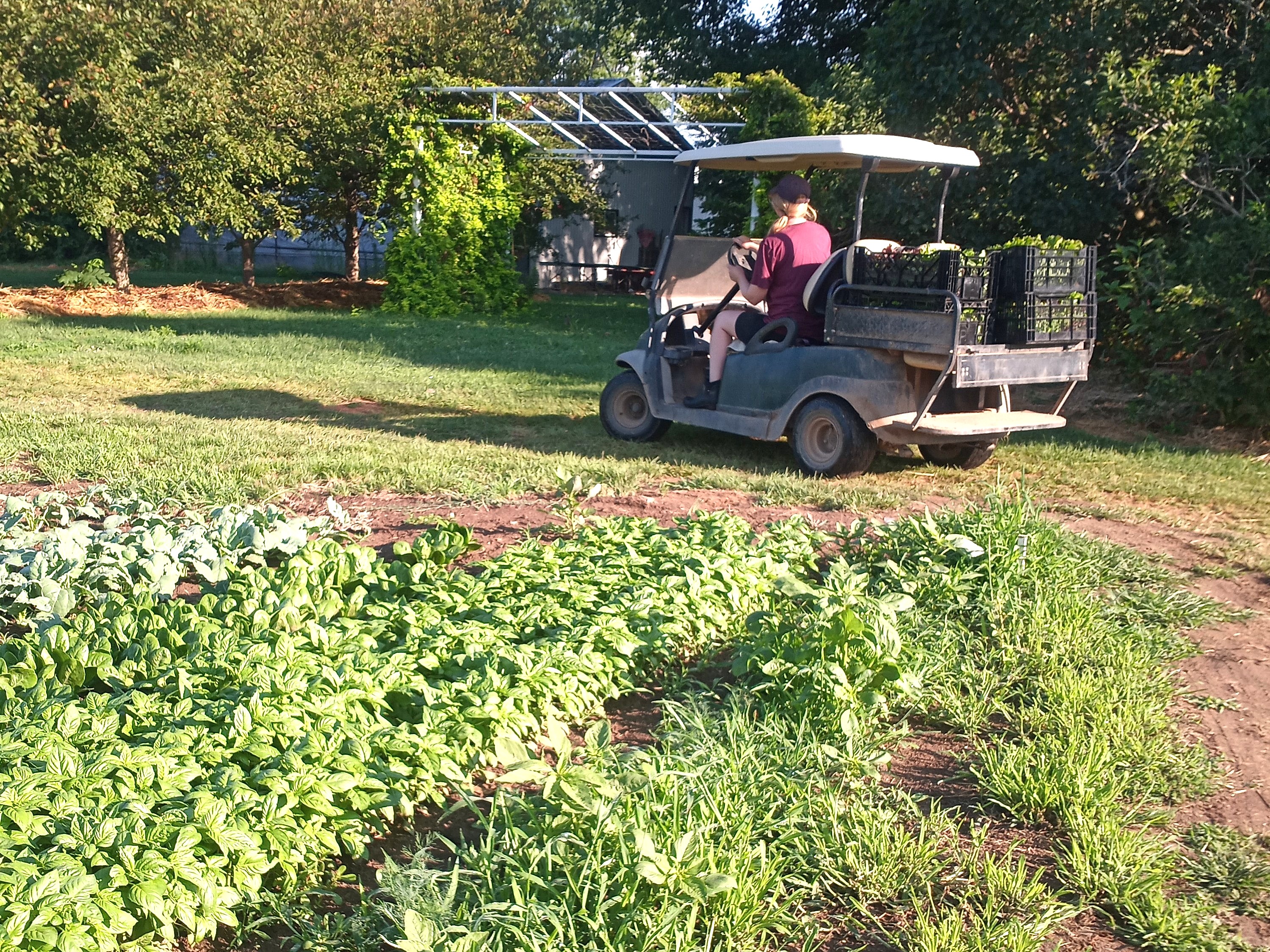
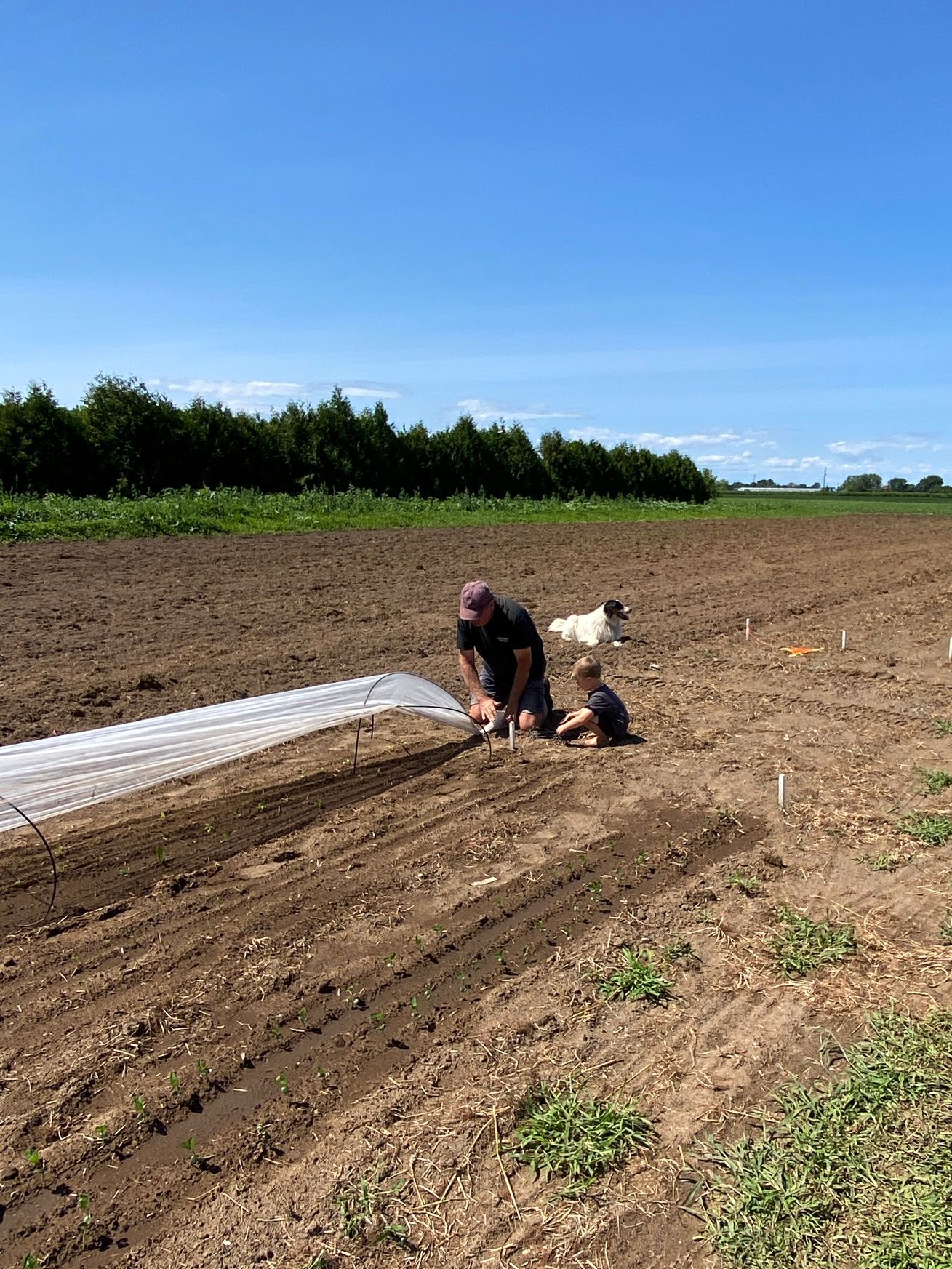
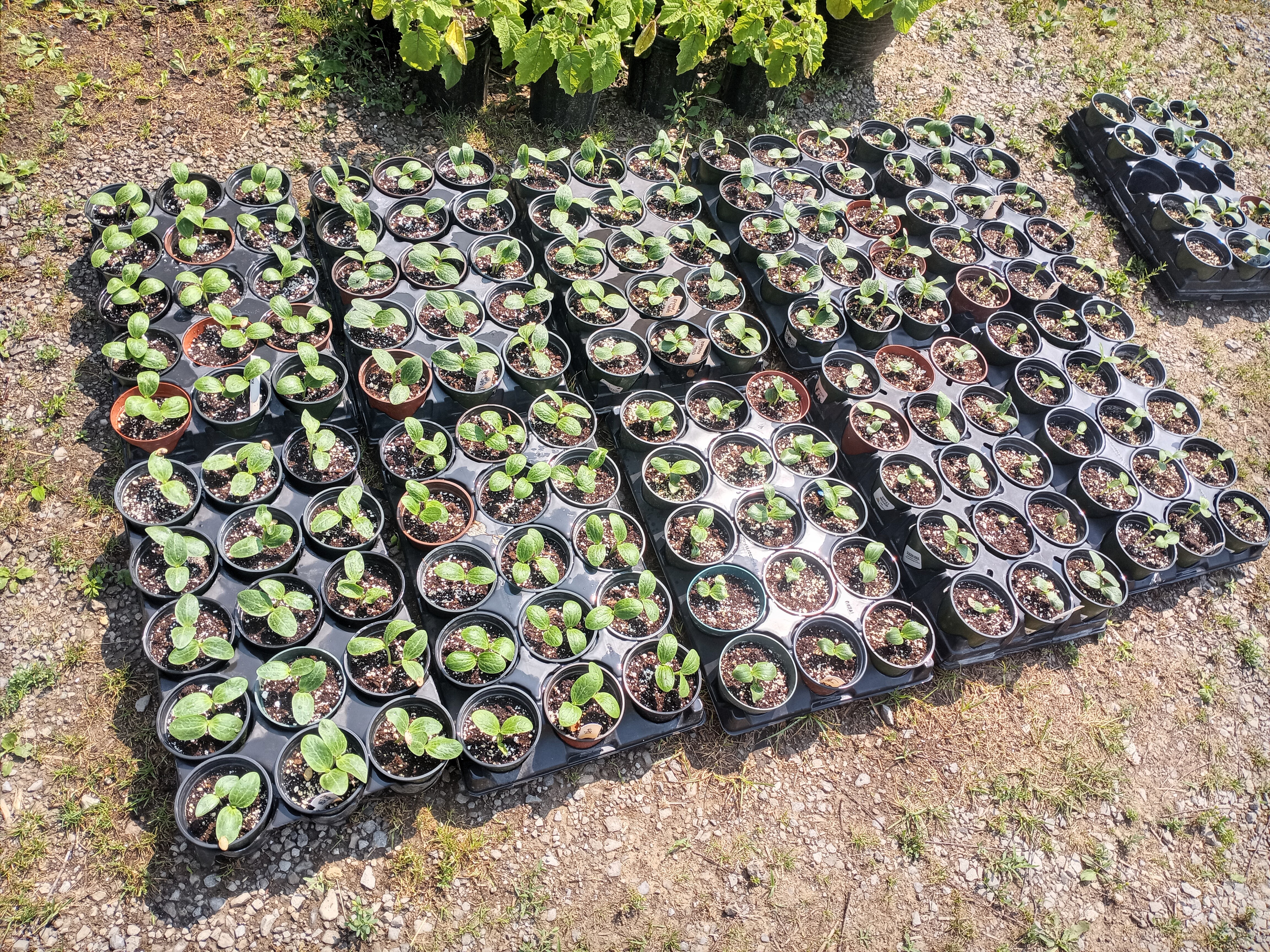
Today’s plantings. They will need to be watered several times a day to get established and take root in this dry soil.
Georgetown farmers’ market on Saturday.
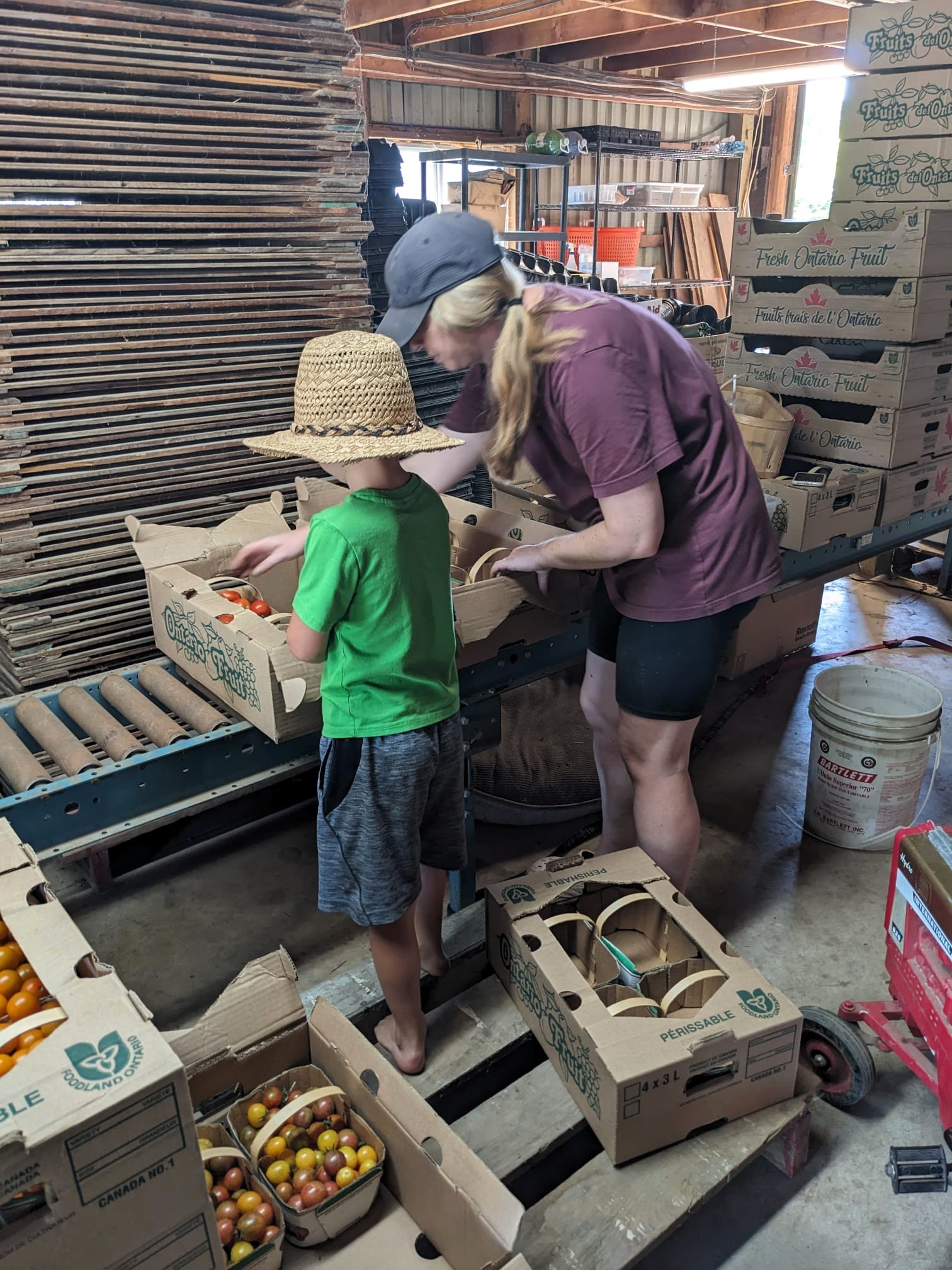
Helping Aunt Amy sort tomatoes.
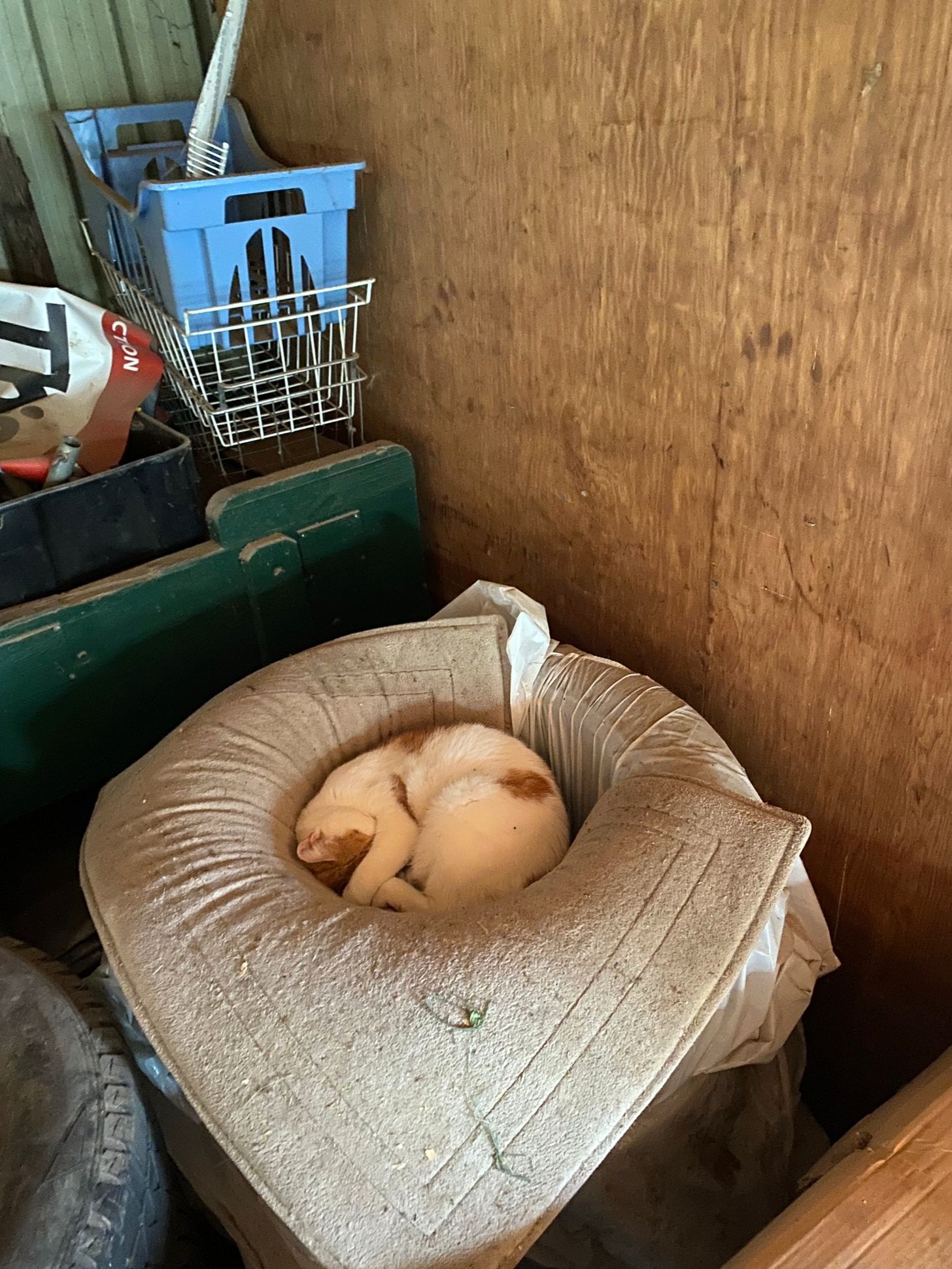
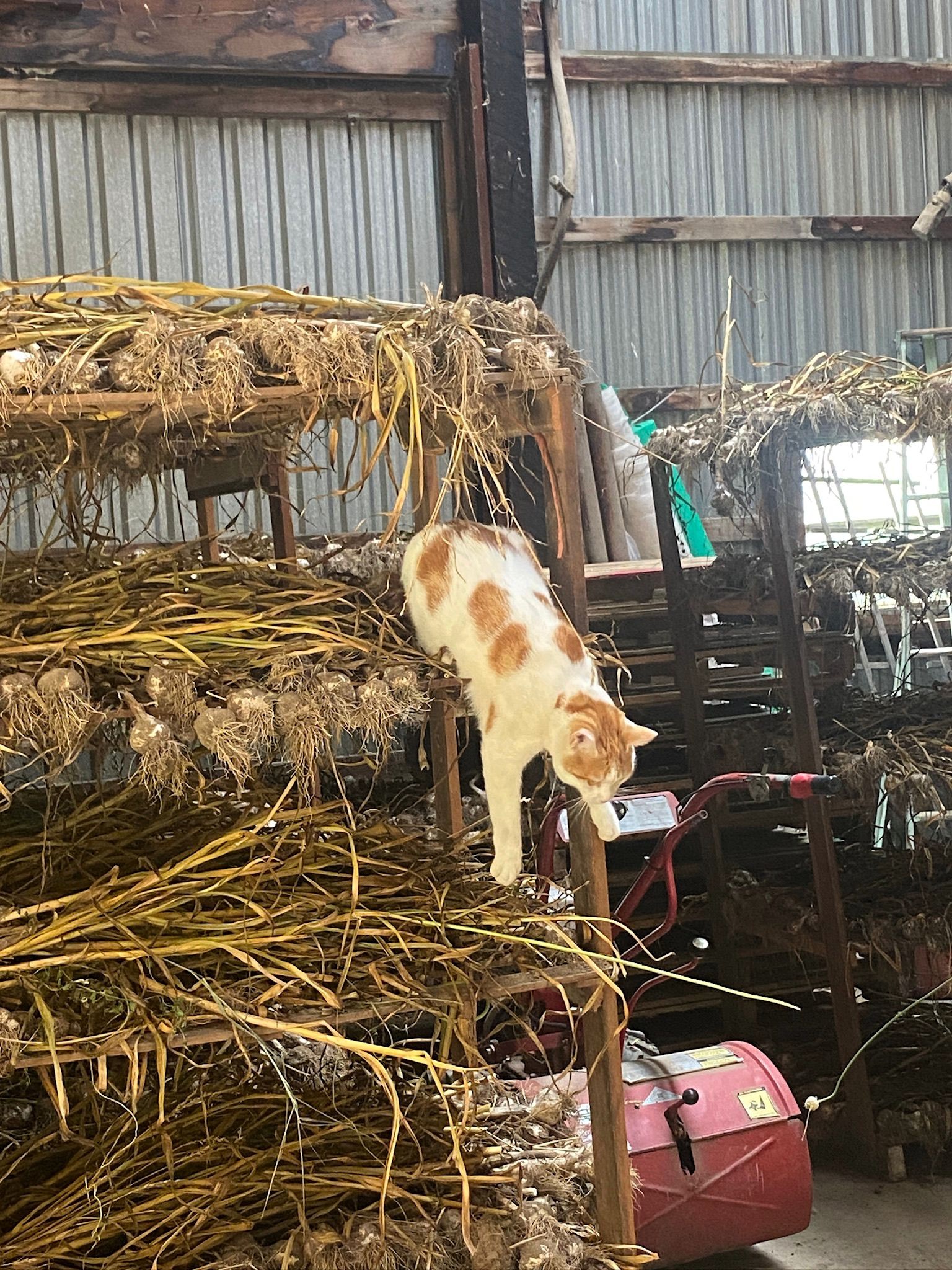
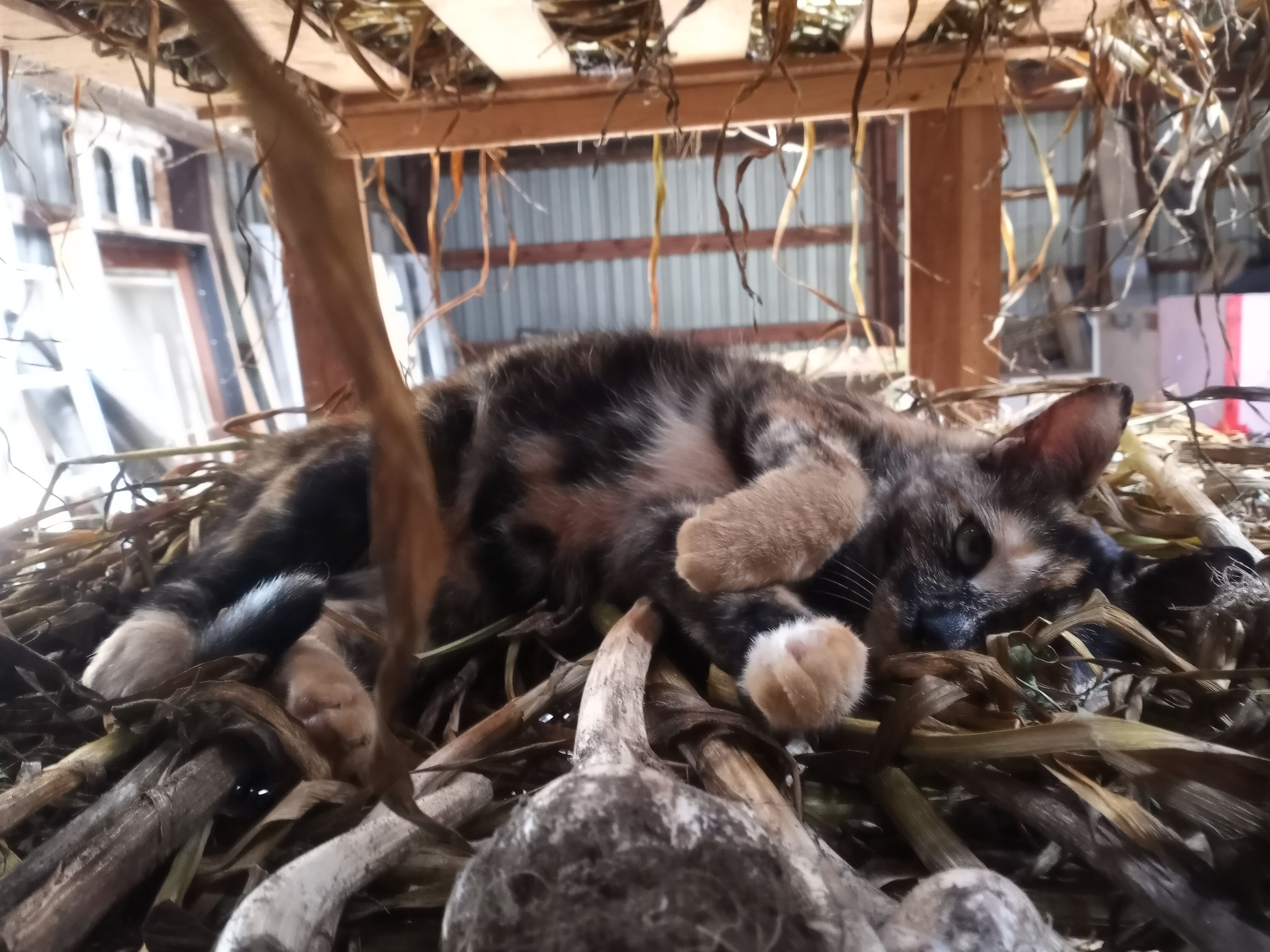
Apparently garlic makes a comfortable bed ??
Just a reminder to please return any containers from vegetables or fruit so we can reuse them.
Shishito peppers are one of our favourite vegetables. They are a small, thin, bright green pepper, with a sweet, fruity flavour and thin, tender, wrinkled skin. What makes a shishito exciting is that 1 in 10 peppers could be slightly hot! They are simple to prepare and delicious to eat! While you can use them as you would any other sweet pepper, they are best eaten charred in olive oil in a cast-iron skillet or other heavy pan over medium-high heat. Cook the peppers whole, turning occasionally, until they begin to blister on all sides. This only takes a few minutes! Sprinkle with salt & pepper and a splash of lime juice and some parmesan cheese, and serve immediately. Eat the whole pepper – except the stem. Charring shishitos on the BBQ works well or try them in the air fryer too. (We are hoping there will be enough shishitos for CSA all week. But if we are short, Thursday pick up might have to wait until next week – it’s all weather dependent. A good rain is much needed for all the crops.)
Basil and hot weather are a great match – and this week we have plenty of both!
Our tomato harvest continues to increase as more varieties begin to ripen.
We are at the height of eggplant season. Please give this often ignored vegetable a chance! I’m thinking maybe in ratatouille? The main ingredients are all in the box this week – eggplant, zucchini, tomatoes … Or try our new favourite recipe – https://10mzone.com/crispy-baked-eggplant/ It is easy & delicious!
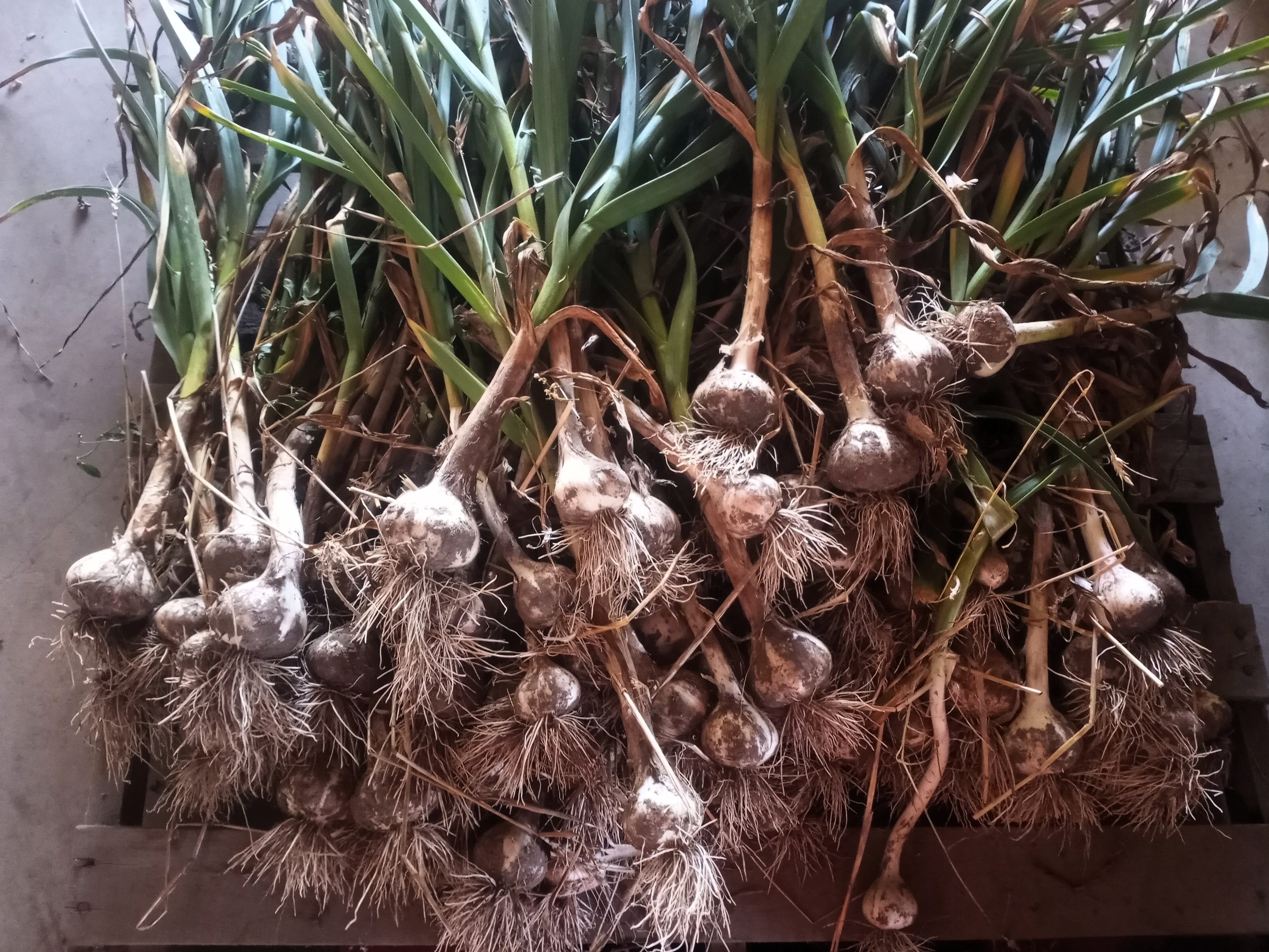
The garlic is freshly picked and not yet dry. So keep it at room temperature, and in a place with good air circulation. You can leave it there and it will slowly cure & dry. Or enjoy it right away in your cooking – but know that once the bulb is broken open, it should be used within a few days.
Beets, kohlrabi, & a salad green finish the box this week.
________________________________________
Around the farm this week …
Let’s answer the most asked question first – When will blackberries be ready?
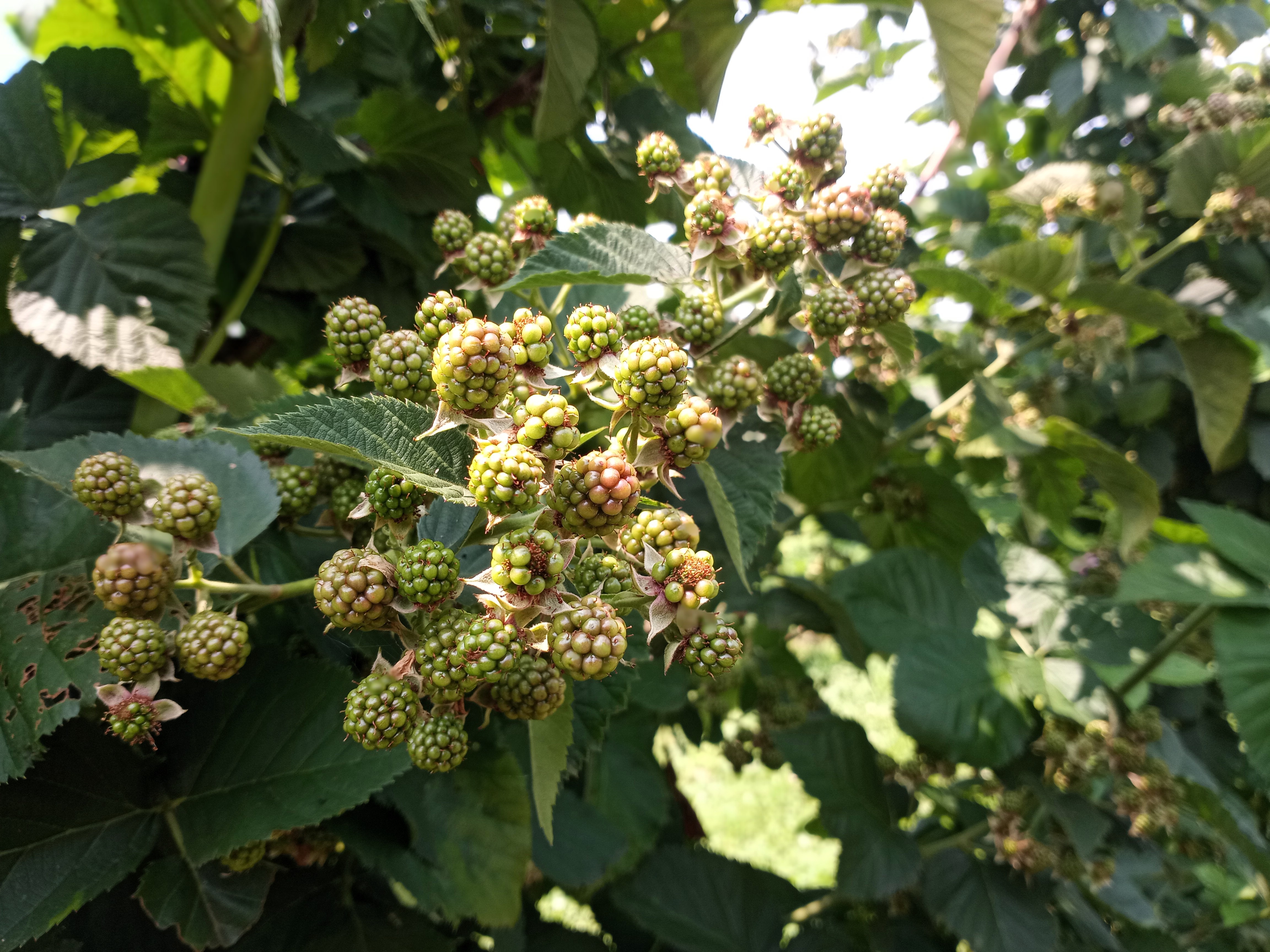
Blackberries are still a few weeks away. They are just beginning to show some colour. We are hoping for some rain soon so they can get big & juicy!
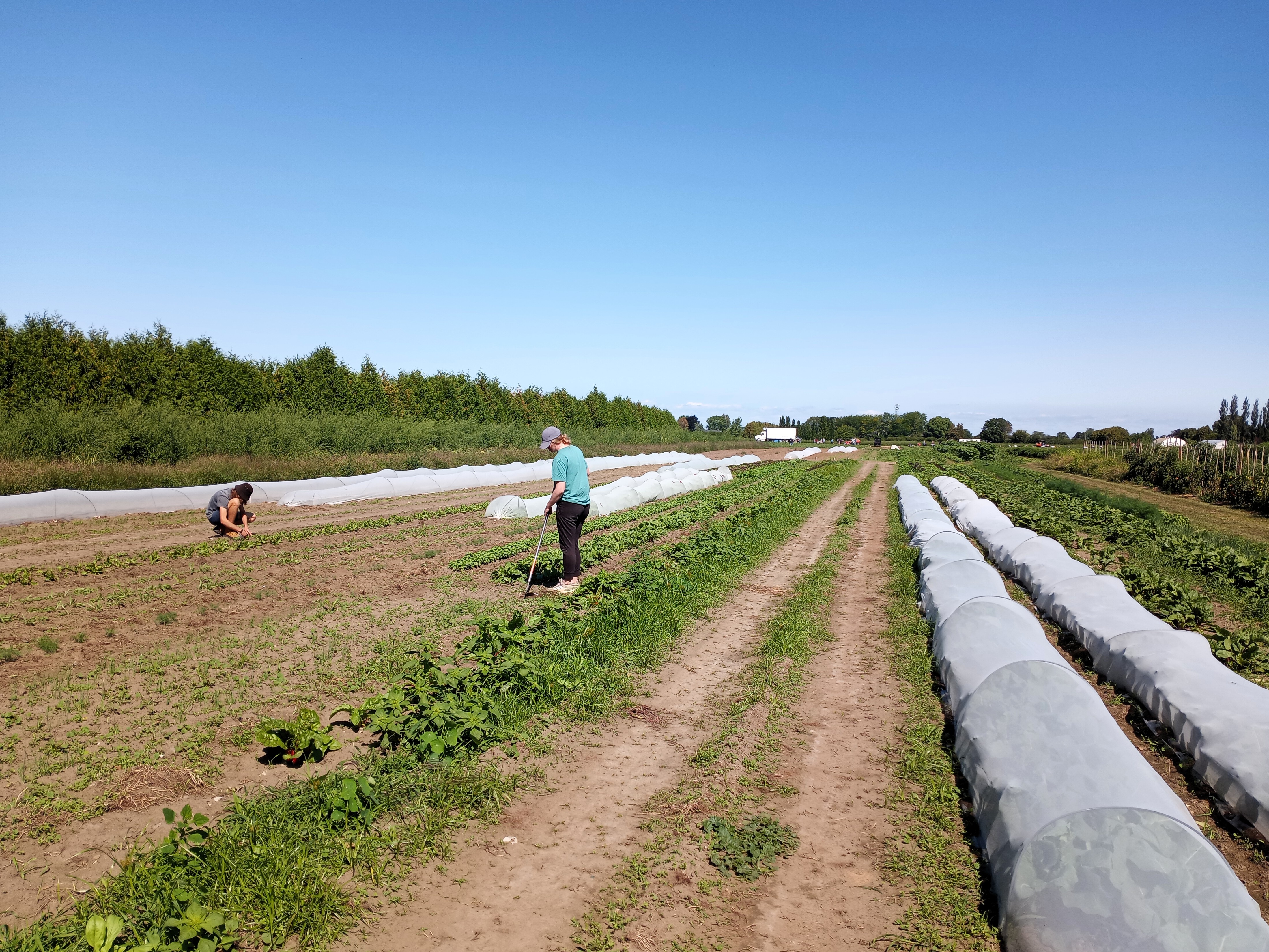
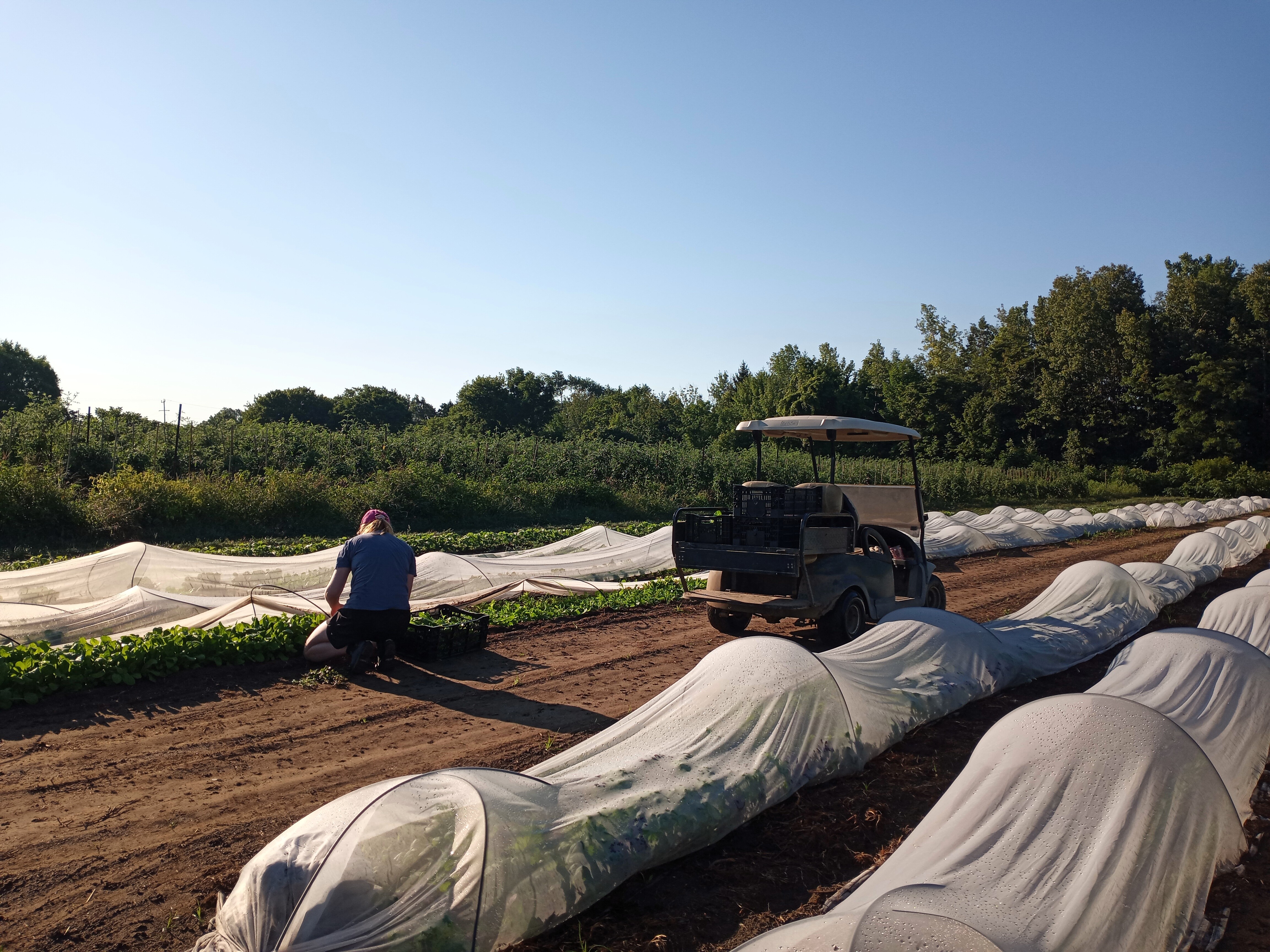
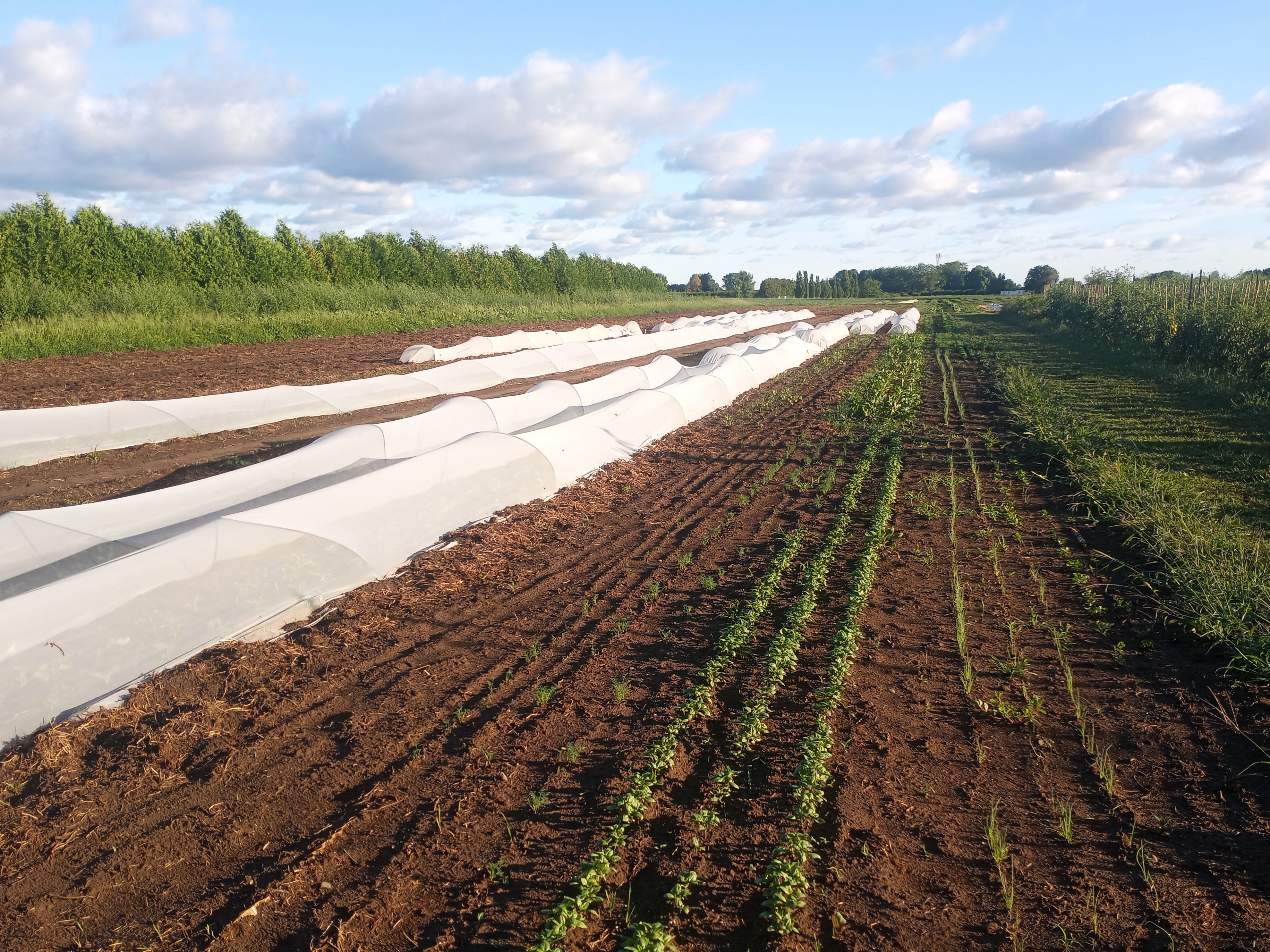
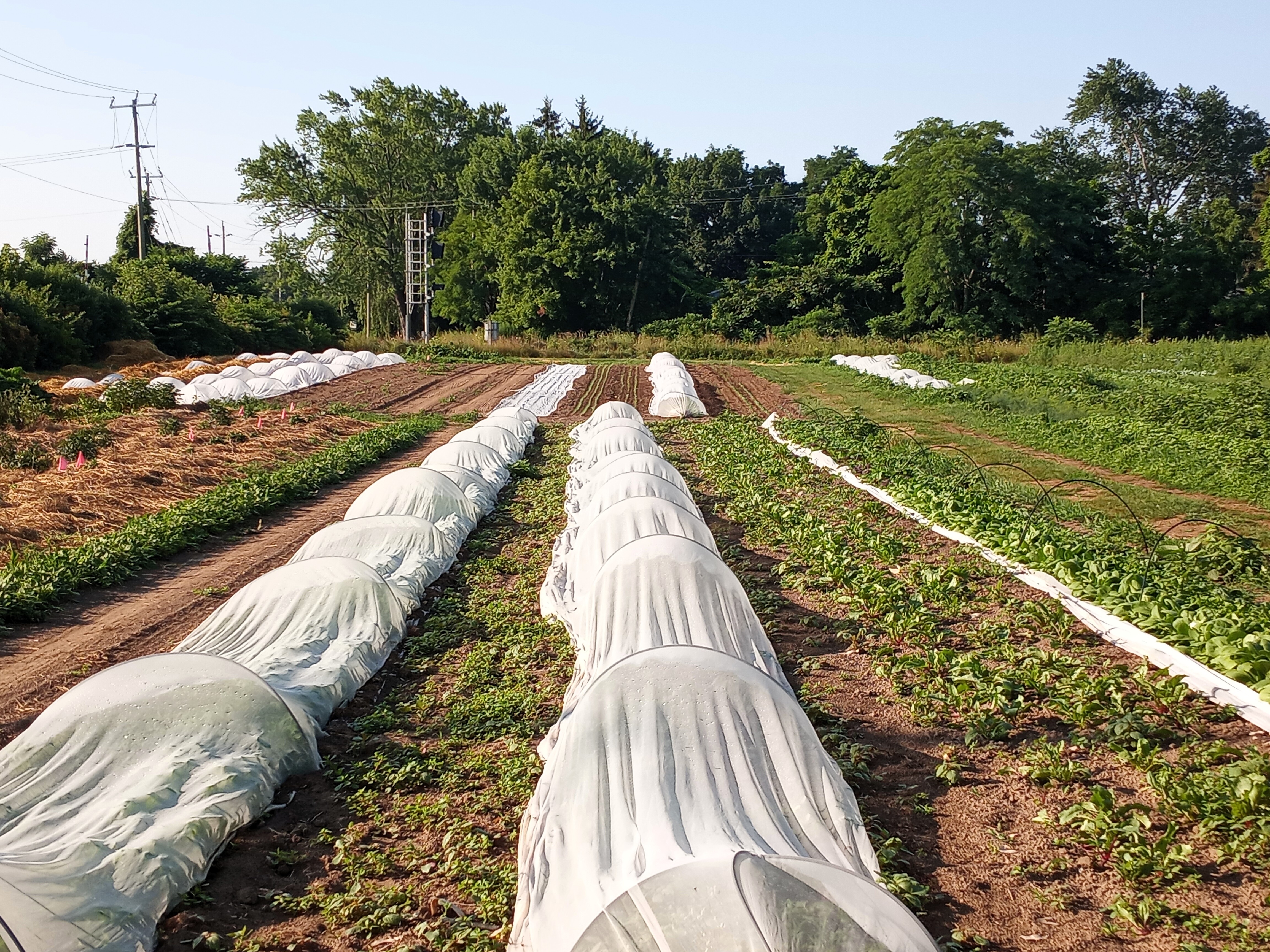
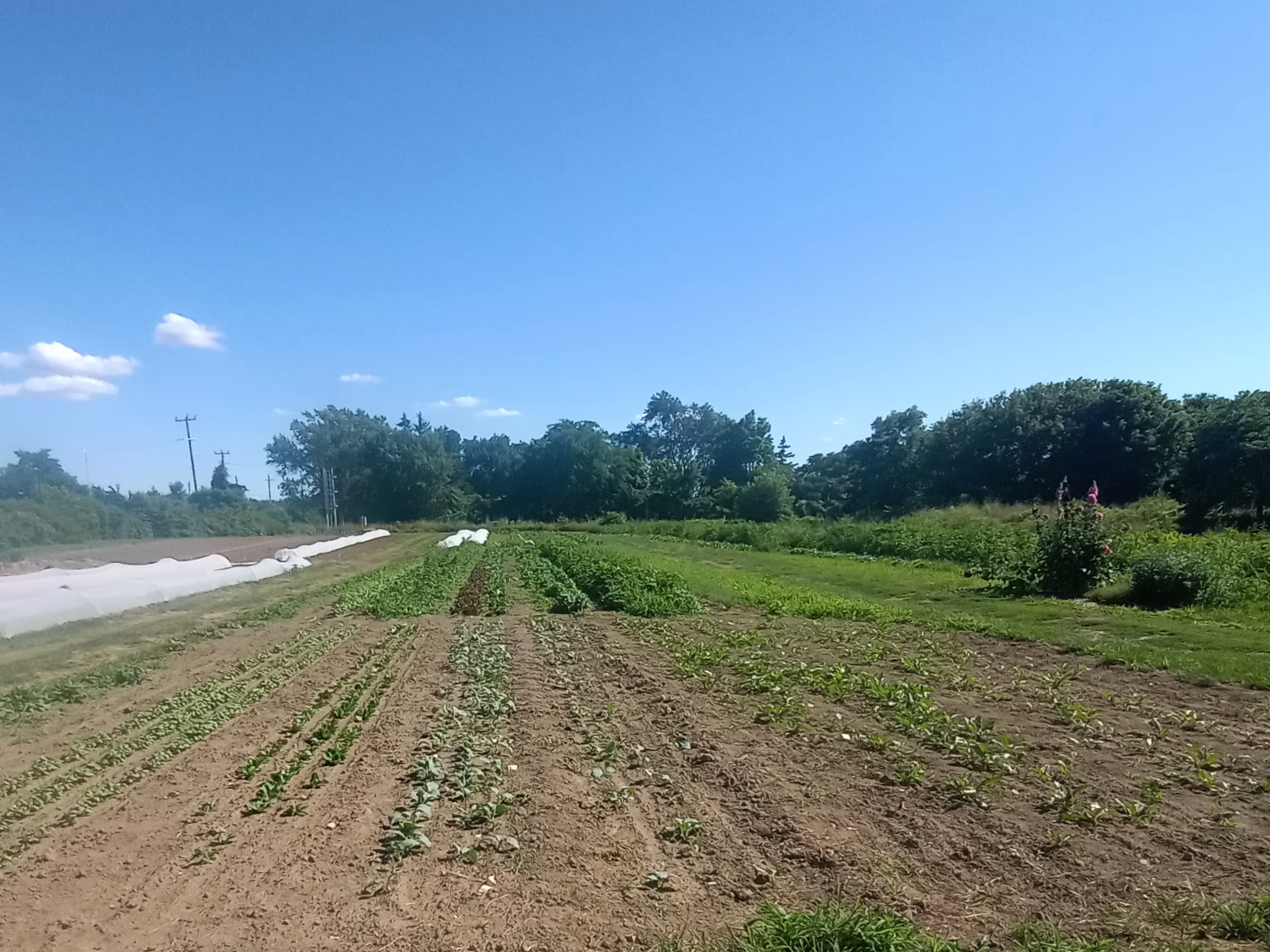
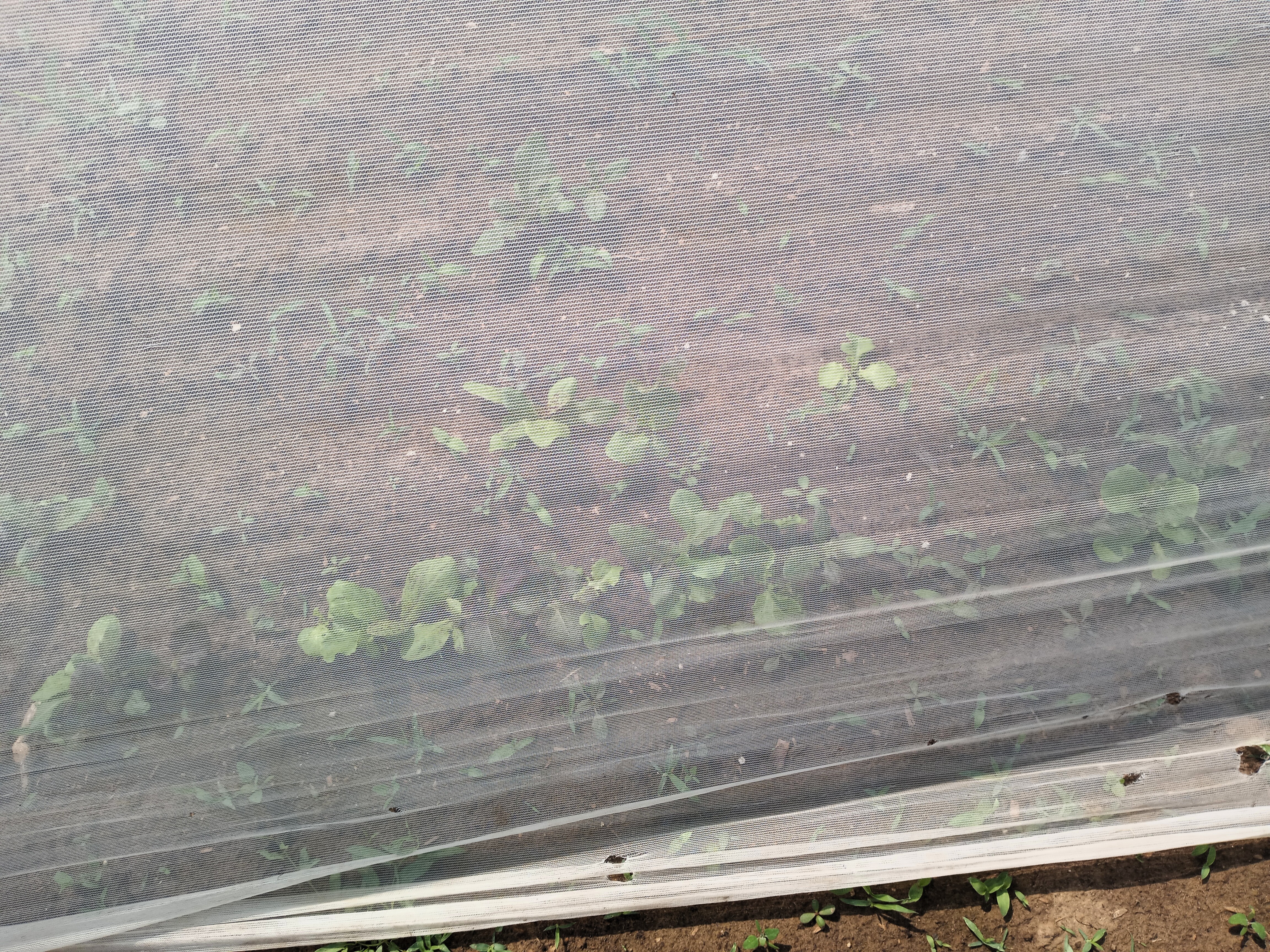
We are covering most crops with the white cover now, especially when they are smaller – as much for protection from the intense sun and heat as for insect protection.
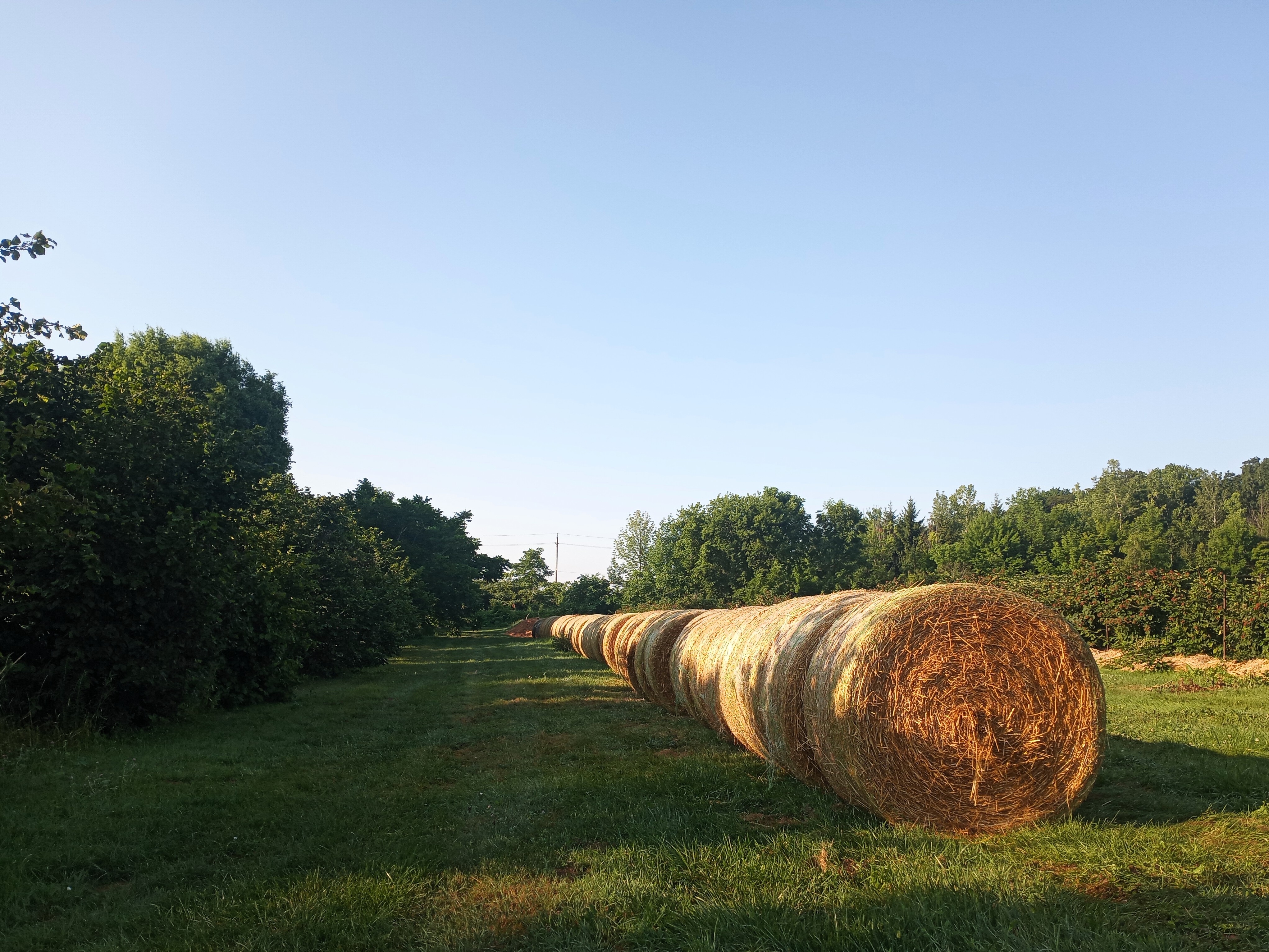
50 big round bales of straw were delivered last week, for mulching crops – next year.
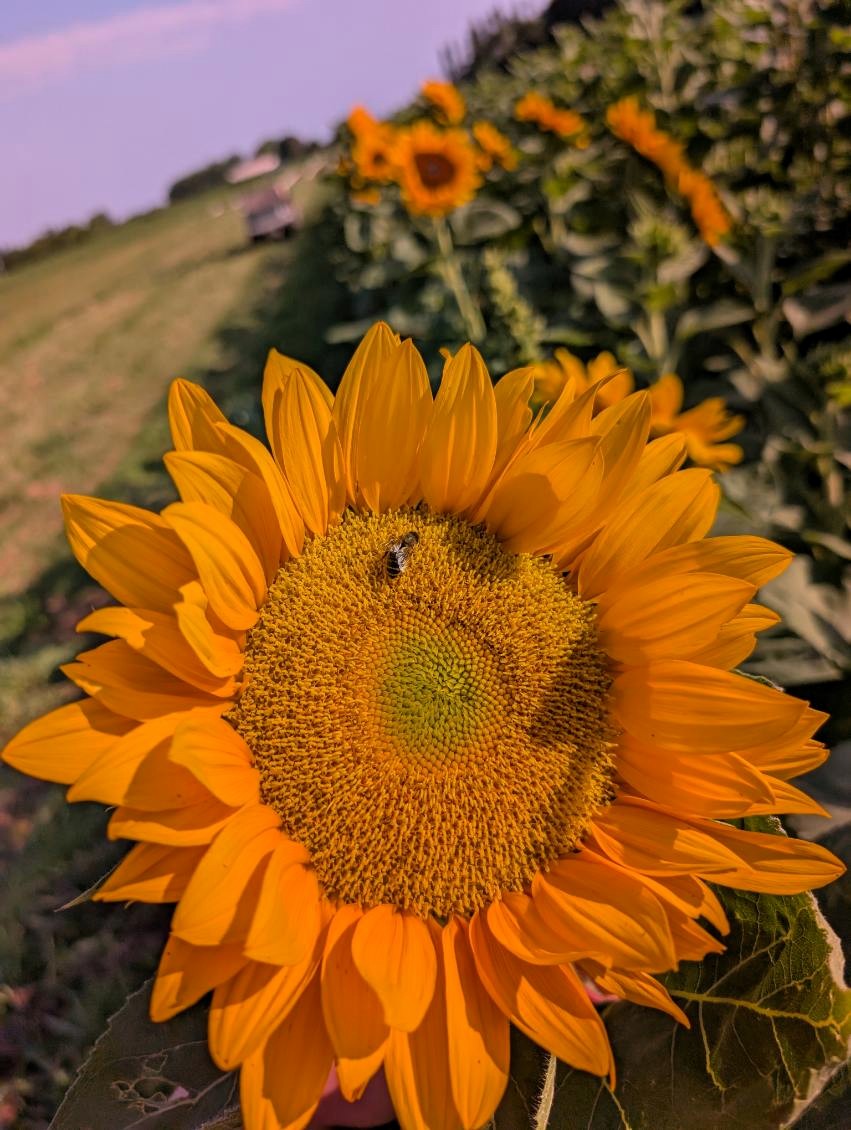
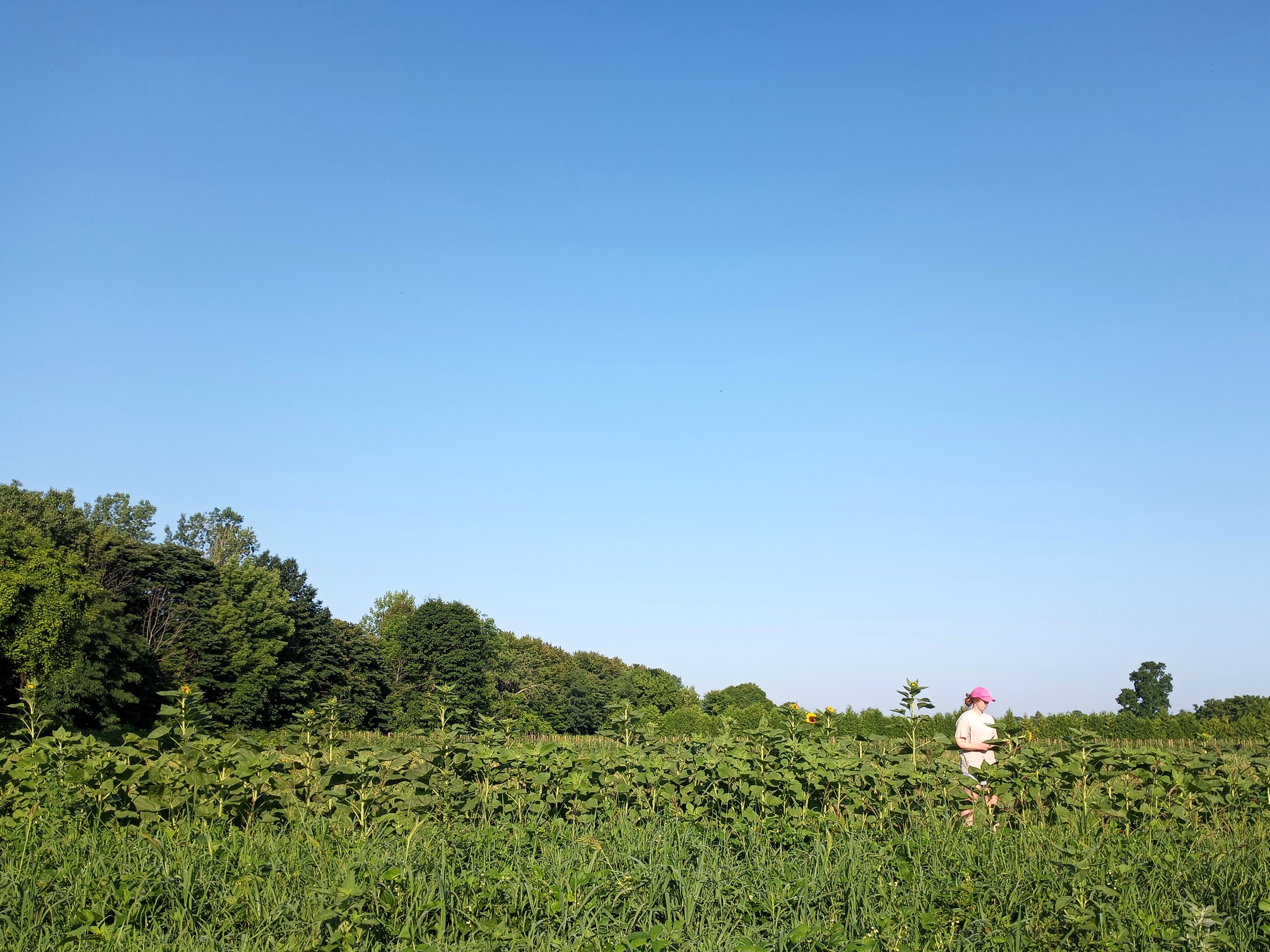
Sunflower harvest has begun.
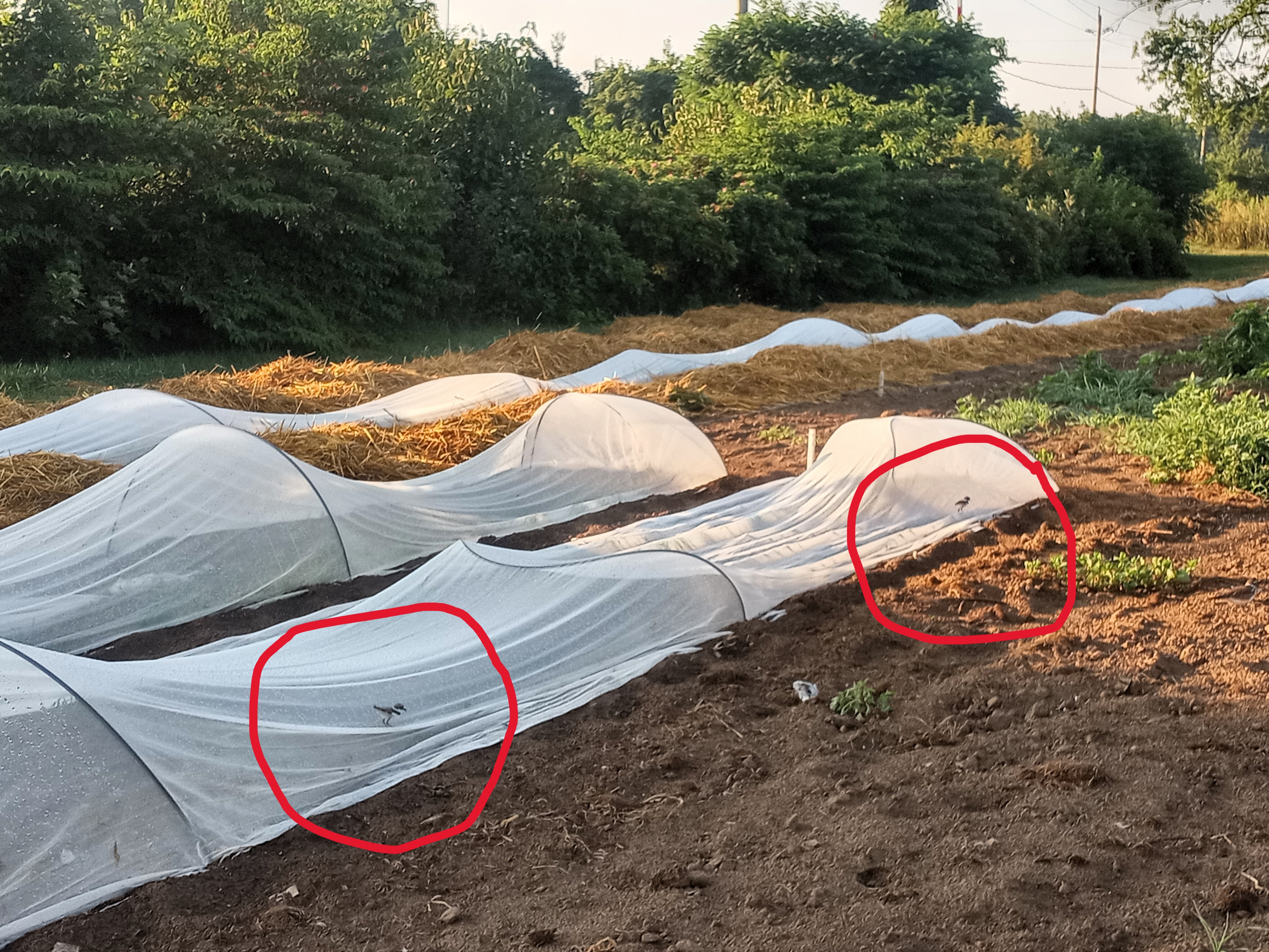
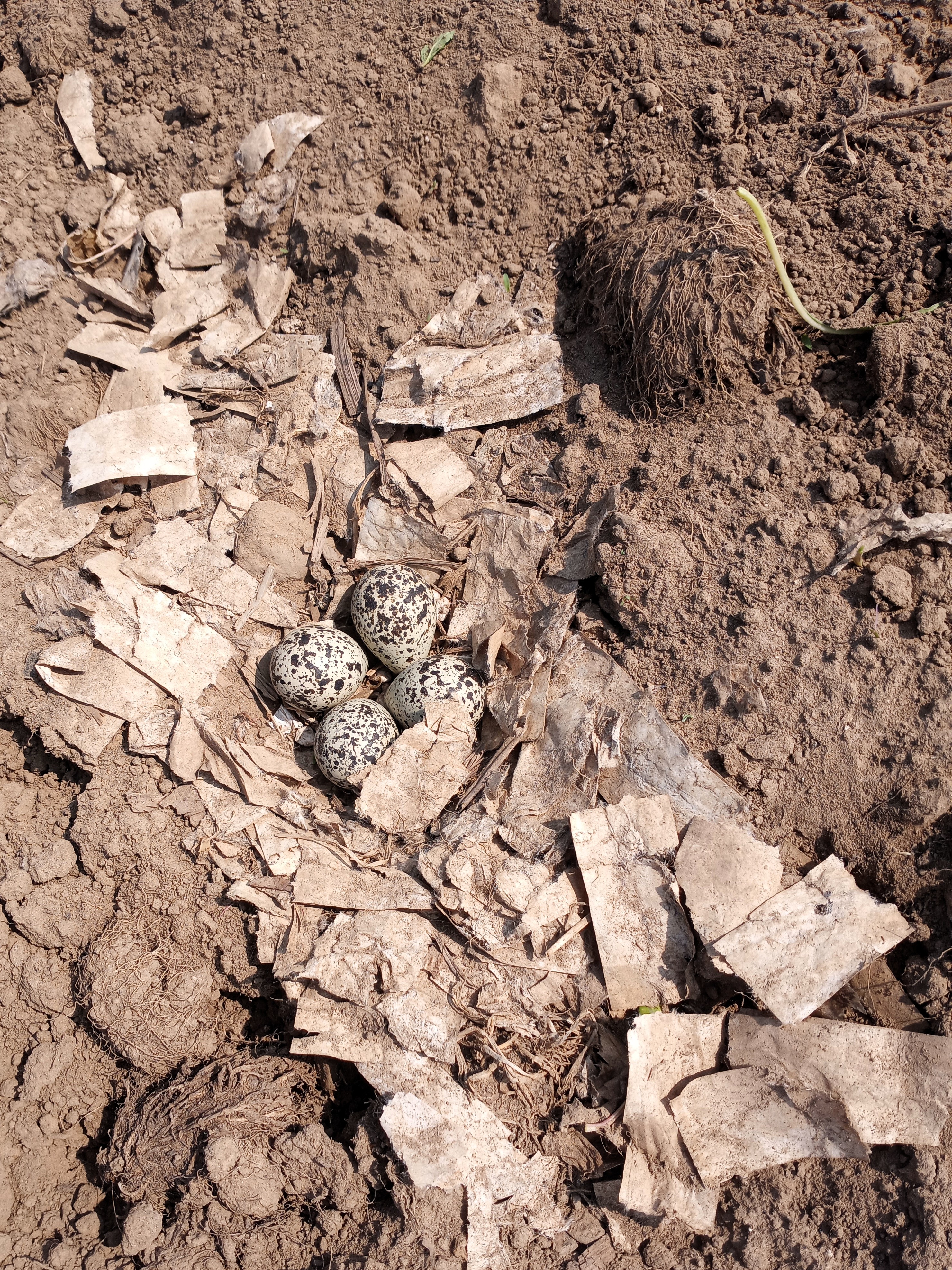
The killdeer eggs hatched sometime Sunday afternoon (3 out of 4 eggs hatched), and the baby killdeer were already running around Monday morning. Amazing how fast they can move on those little, spindly legs!
Also amazing – how little these guys move in the heat!
Cherry tomatoes,fresh garlic, Swiss chard, zucchini, head lettuce, green onions.
Choice of Chinese cabbage or kohlrabi or Chinese kale or salad turnips or beets or …
Fruit share – apricots & early golden plums.
The 1st cherry tomatoes are ready! Actually we have been picking a very few these last couple of weeks which we have been taking to market. But this week there is enough for CSA – but just a small taste. They should be increasing in quantity every week now. The larger tomatoes are also starting to colour up so you can expect them in early August. Tomatoes are ripening about 1 week later than last year – not too bad considering how dry it is now.
Fresh garlic has a wonderful strong, pungent garlic flavour – much stronger than the garlic scapes you received in your box earlier. Because it has just been pulled and is not dry, it should be kept at room temperature, and in a place with good air circulation. You can leave it there and it will slowly cure & dry. Or enjoy it right away in your cooking – but know that once the bulb is broken open, it should be used within a few days.
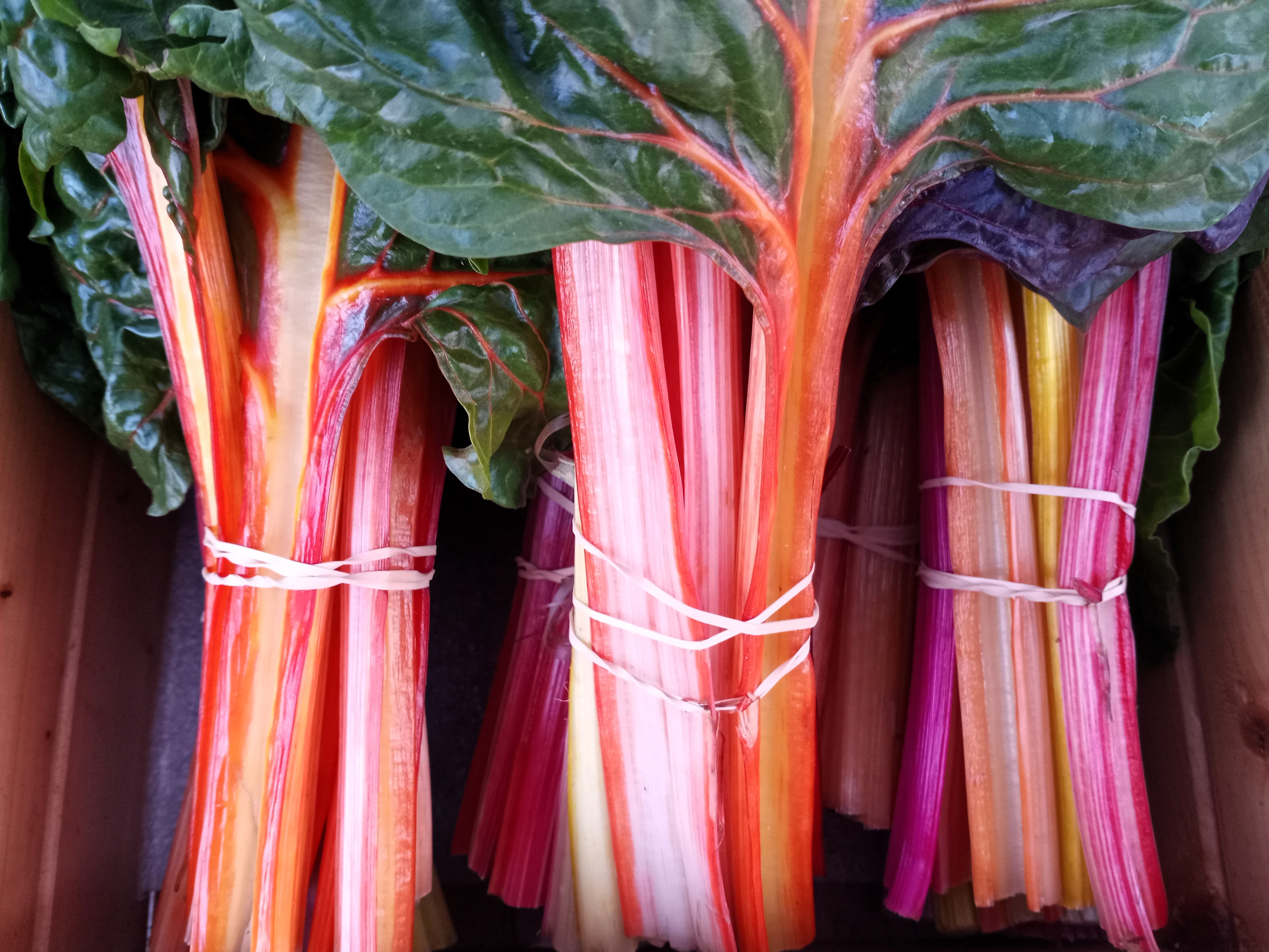
Swiss chard is certainly one of the most colourful “green vegetable” we grow. It is beautiful! And tasty too! Chard can be used raw or cooked. It is delicious sauteed, stir fried or added to soups and stews. It can also be substituted for spinach or kale in many recipes. Keep in mind that the leaves & stems should be separated as the thick stalks take longer to cook than the leaves.
Our next (and probably last) planting of zucchini went into the ground today. Meanwhile the row we are harvesting continues to pump out amazing amounts of fruit.
Head lettuce & green onions are also in the box this week.
Choose from Chinese cabbage, kohlrabi, Chinese kale, salad turnips or beets or … to complete your share.
_____________________________
We could use a good soaking rain right now, please!
But other than a few light showers we have not had any amount of precipitation for several weeks now – and not much in the forecast either. This lack of rain together with the hot temperatures of late (today’s cooler air being a welcome change!) has made for dry & difficult growing conditions.
This is reflected in the CSA box this week.
We have a variety of vegetables but not the quantity we would normally expect. And our salad greens – those that should be maturing this week were the ones we lost at transplanting 2 weeks ago in the heat.
___________________________________________
Around the farm this week …
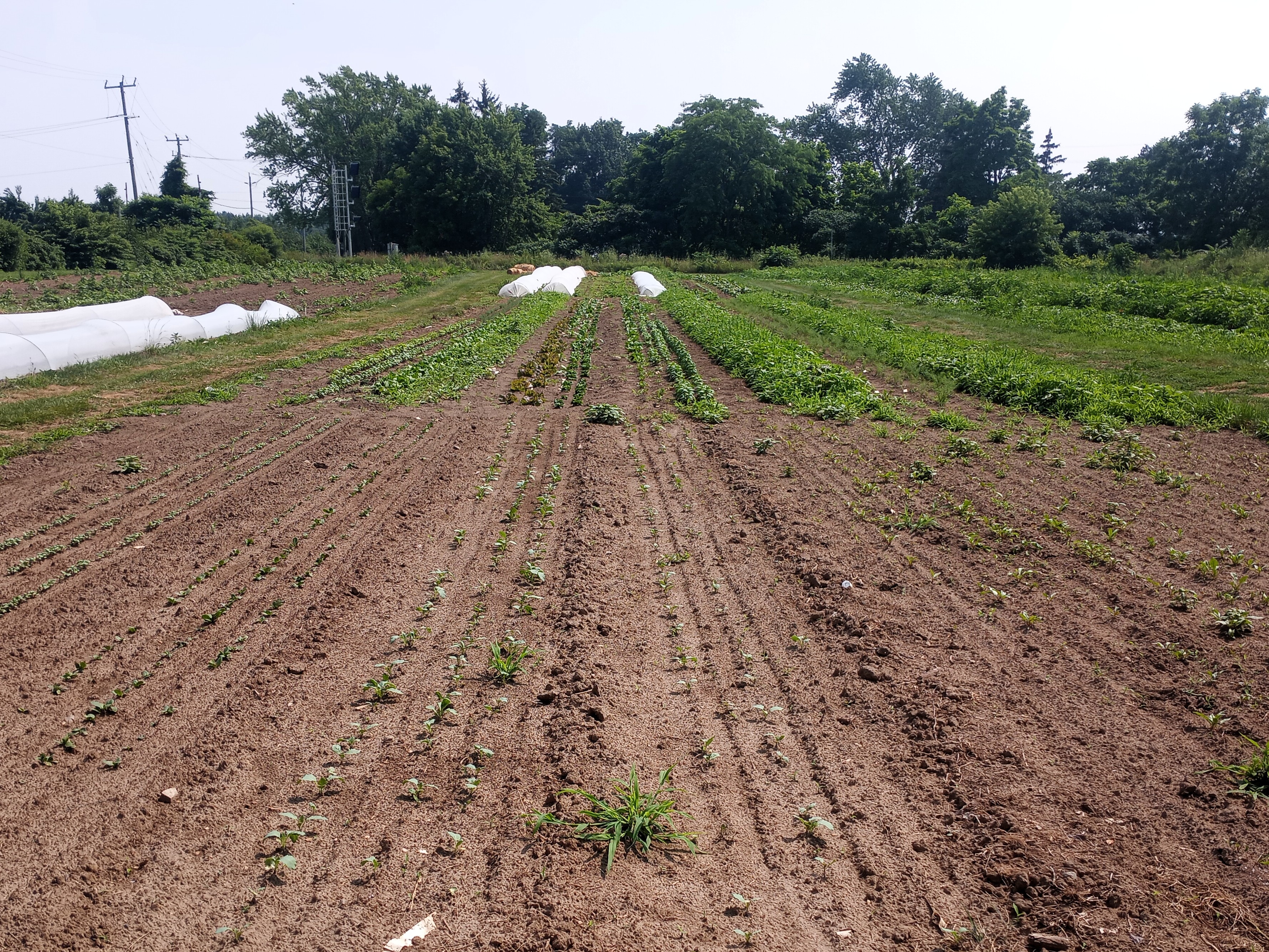
Preparing the next patch of ground for planting. We keep the land in cover crop until we are ready to use it for vegetables. Then we mow it down and disc or cultivate the soil as necessary – even if it’s dry & dusty.
When it comes to nest building killdeer are minimalists at the best of times. Here, they used scraps of paper from our earlier transplanting to build their nest.
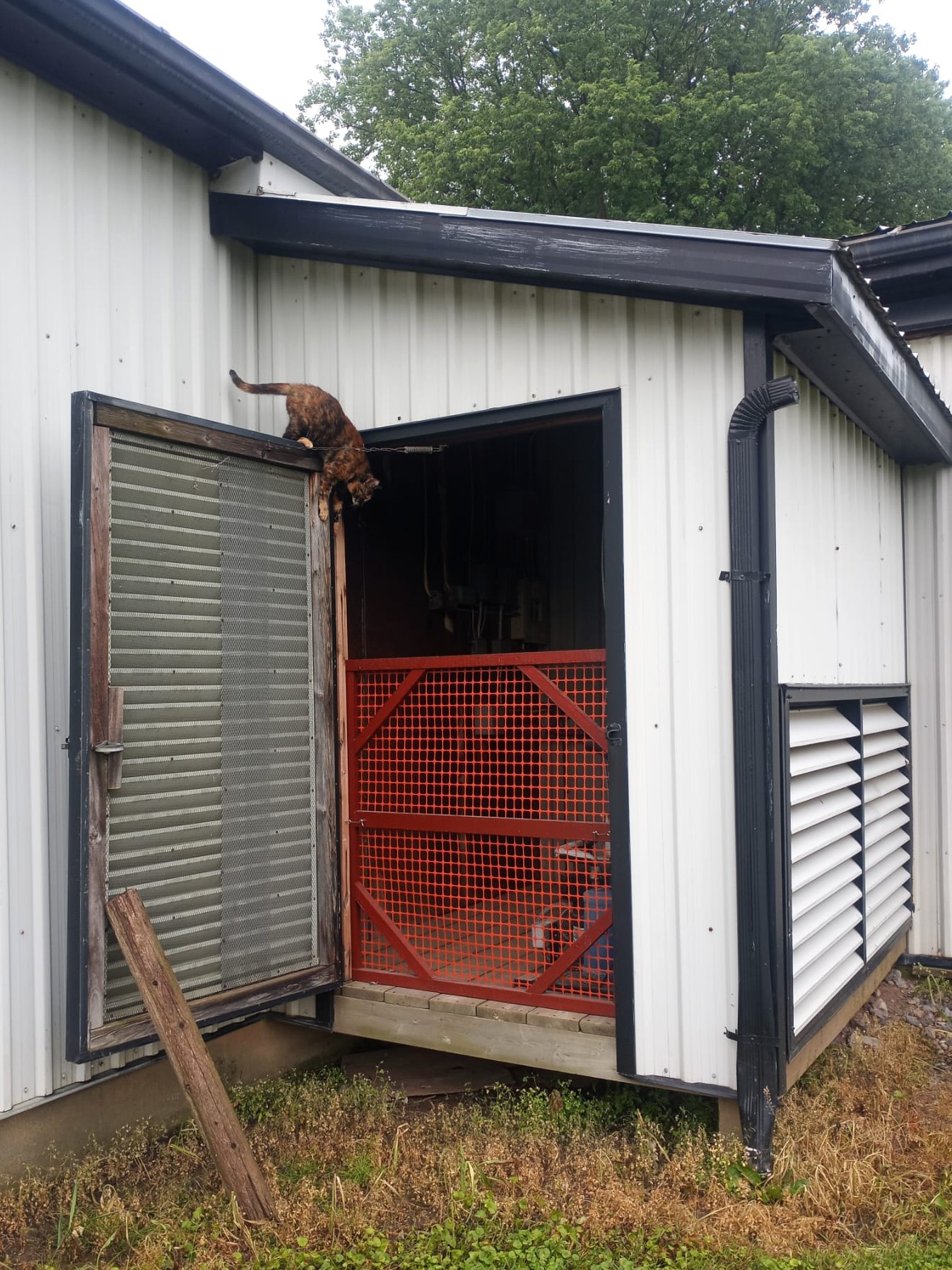
These 2 smarties figured out that a bit of cold air leaks out of the cold storage under the door – so that’s where they hang out!
Green onions, carrots, beets, romaine lettuce, zucchini.
Fruit share – Sweet cherries
This will be the 1st week for fruit for those who signed up for fruit on their application.
The sweet cherries come from Wall Farms. Similar to Amy, the Wall sisters (who happen to be Amy’s cousins) farm together with their parents. Their fruit farm is located just a few roads east of us at the edge of St. Catharines. Wall Farms will be supplying sweet cherries & apricots for our CSA this season. Peaches & plums will come from Pineview Orchards.
______________________________
The heat continues!
And the contents of the CSA box this week reflects this.
All these vegetables in the box were planted long before the heat set in and were well established by the time the temperatures rose. Certainly the green onions, carrots, beets & romaine were slowed down by the heat & humidity and have taken longer to mature & get to size – but now we have them. And the zucchini thrives in the heat and is pumping out a plethora of fruit!
(But we know that with the heat comes disease so the next planting of zucchini is already seeded and waiting in the wings.)
Shorter season crops including all our salad greens, and anything else planted in the last couple of weeks are really struggling to take hold and grow. Normally we transplant and then water the seedlings for several days to get them growing. Now, we transplant and then have to water several times a day for at least a week, with limited success. Fortunately we planted a lot of romaine lettuce earlier so there will be salad!
__________________________________________
Around the farm this week …
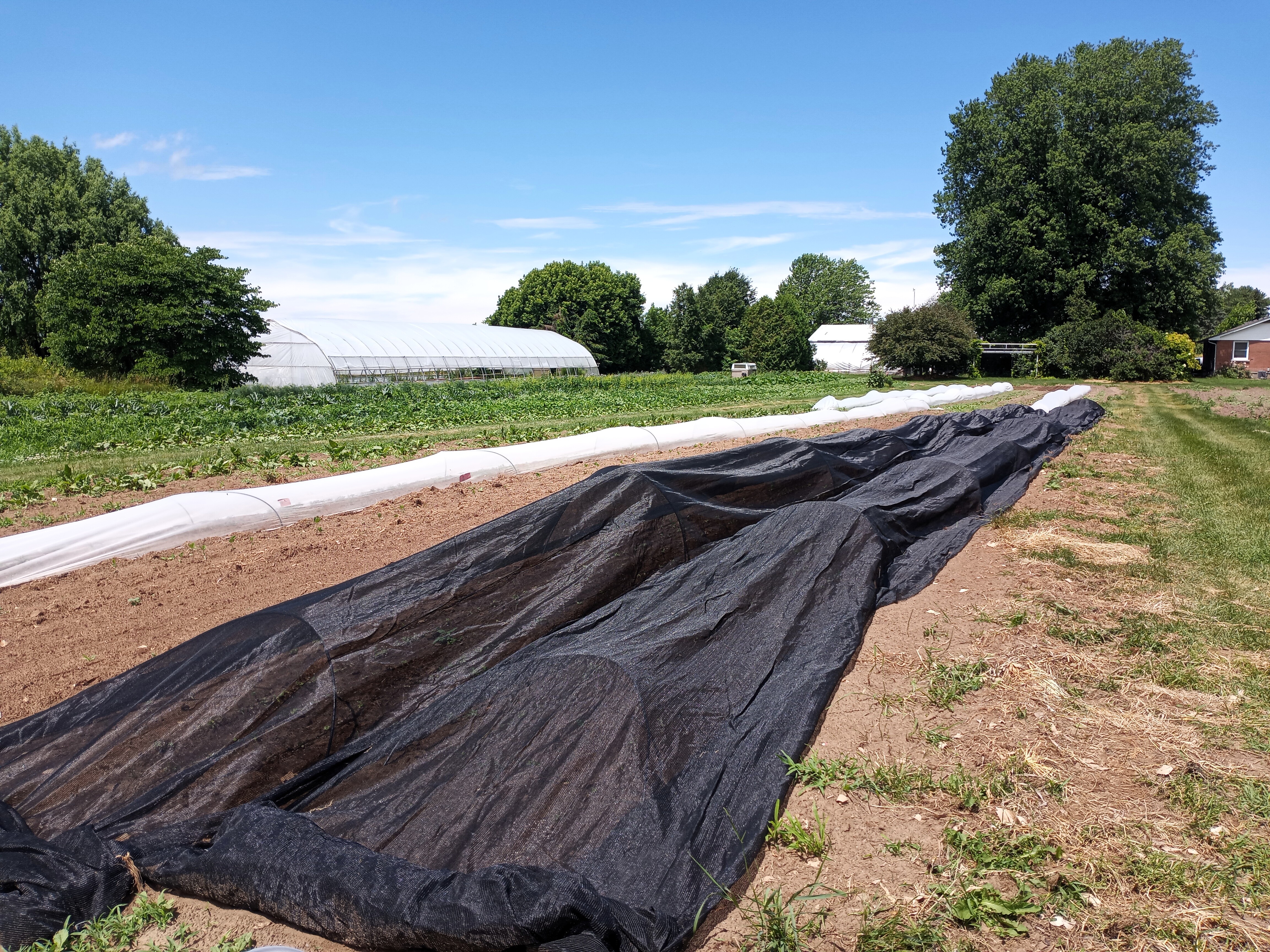
The black shade cloth that we used to cover a new planting of lettuce seemed to work. Much of the lettuce survived, plus it required only half as much water as the uncovered crops. However it supplied too much shade, hindering the growth. We removed it after a week and replaced it with a white covering which still provides some protection from the hot sun. Fingers crossed we will be picking lettuce mix in a week or two. And more romaine.
Cucumbers under the white insect netting. Once they outgrow the cover we will remove it and the vines will spread over the straw.
It is Japanese beetle season. Right now they are mainly feasting on weeds in the edible flower rows – so that’s good! But they also enjoy edamame. There are plenty in the blackberries as well, but hopefully not causing too much damage.
The blackberries are growing.
Shady spots provide welcome relief from the hot sun!
Carrots, kohlrabi, salad turnips, head lettuce, zucchini, fresh herb bunch, garlic scapes.
Our 1st carrots are ready – already! Last year our 1st carrots appeared in week 11, so that makes us 6 weeks earlier this season. We seeded them much sooner this spring and hit it just right with sunshine, rain, weeds etc. Hurray! (Subsequent plantings did not fare as well so there will be a lull until the next time that carrots are in the box.) So enjoy! Fresh carrots are so delicious.
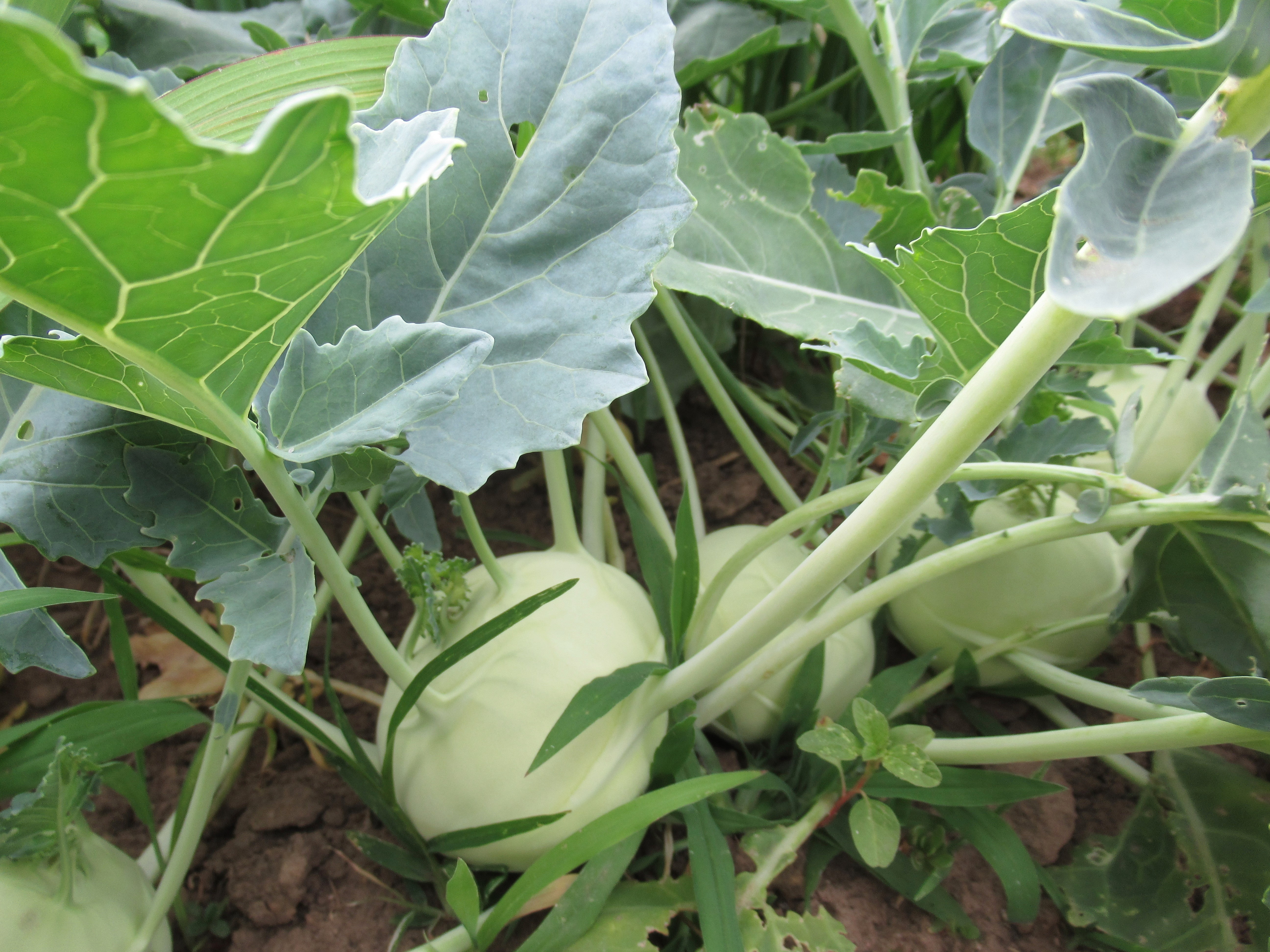
Kohlrabi is a strange-looking vegetable – sort of like a cross between a little cabbage and a turnip. It is considered a root vegetable, though the edible round globe grows above ground. Kohlrabi is most often eaten raw – just peeled & sliced. The taste & texture resembles fresh, crunchy broccoli stems, with a bit of radish thrown in, and perhaps cabbage. Use on raw vegetable platters and serve with a creamy dip. Grated kohlrabi can be added to slaws. We like to spiralize our kohlrabi and use it instead of pasta. Kohlrabi can also be steamed or boiled – cook until the bulbs are tender, then peel the skin, season with butter, salt, and pepper, a cheese sauce, or just enjoy plain. They are good for mashing with other vegetables – parsnips, carrots or potatoes. Kohlrabi absorbs the flavour of other ingredients making it ideal to add to soup, stew and stir-fries. The bulbs should be stored, unwashed, in a plastic bag in the fridge. Our favourite way to cook kohlrabi is to sautée it in butter with garlic scapes for just a few minutes. Then add just a dash of nutmeg. Delicious!
They’re back! Salad turnips are in the box again this week.
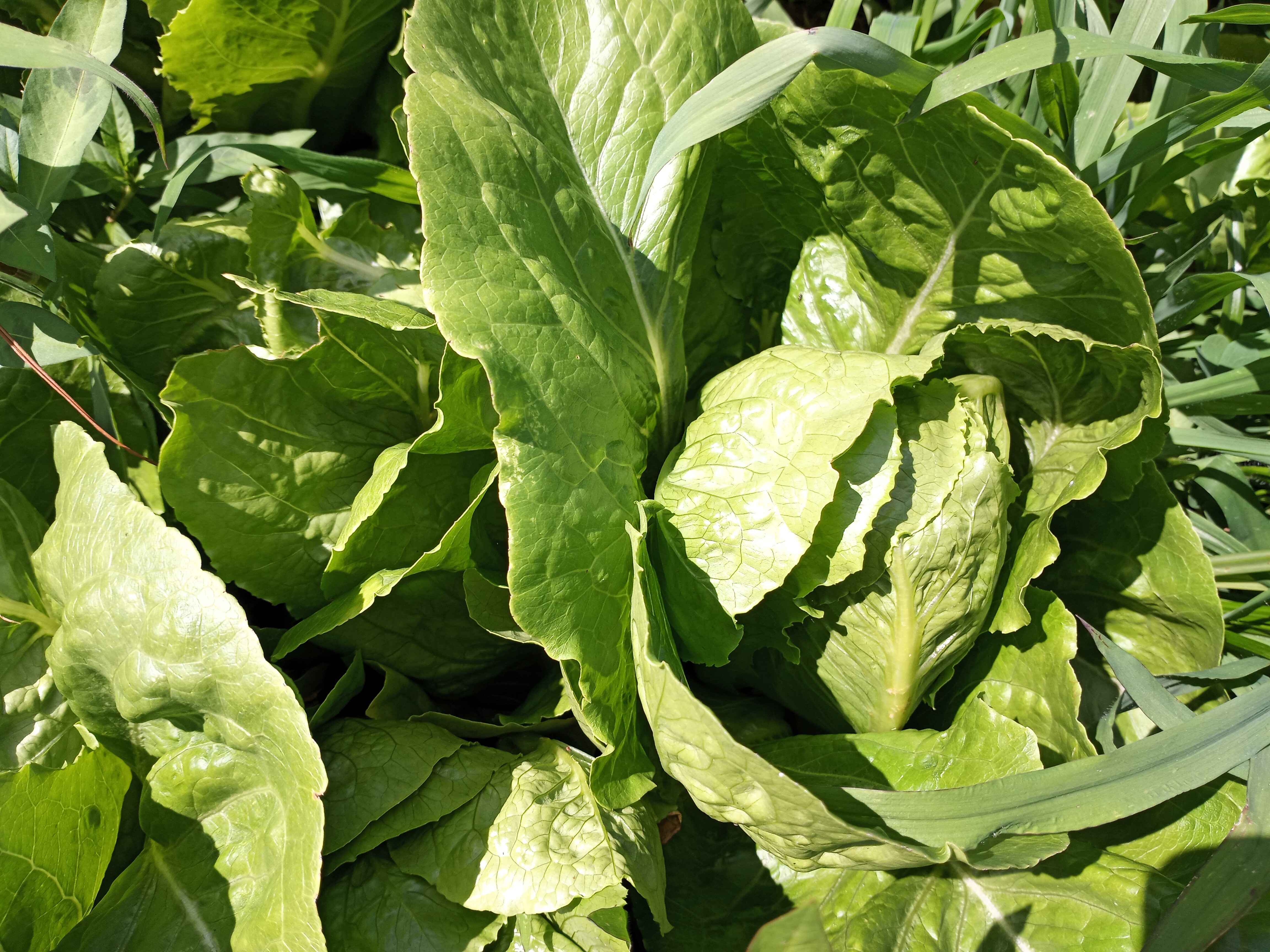
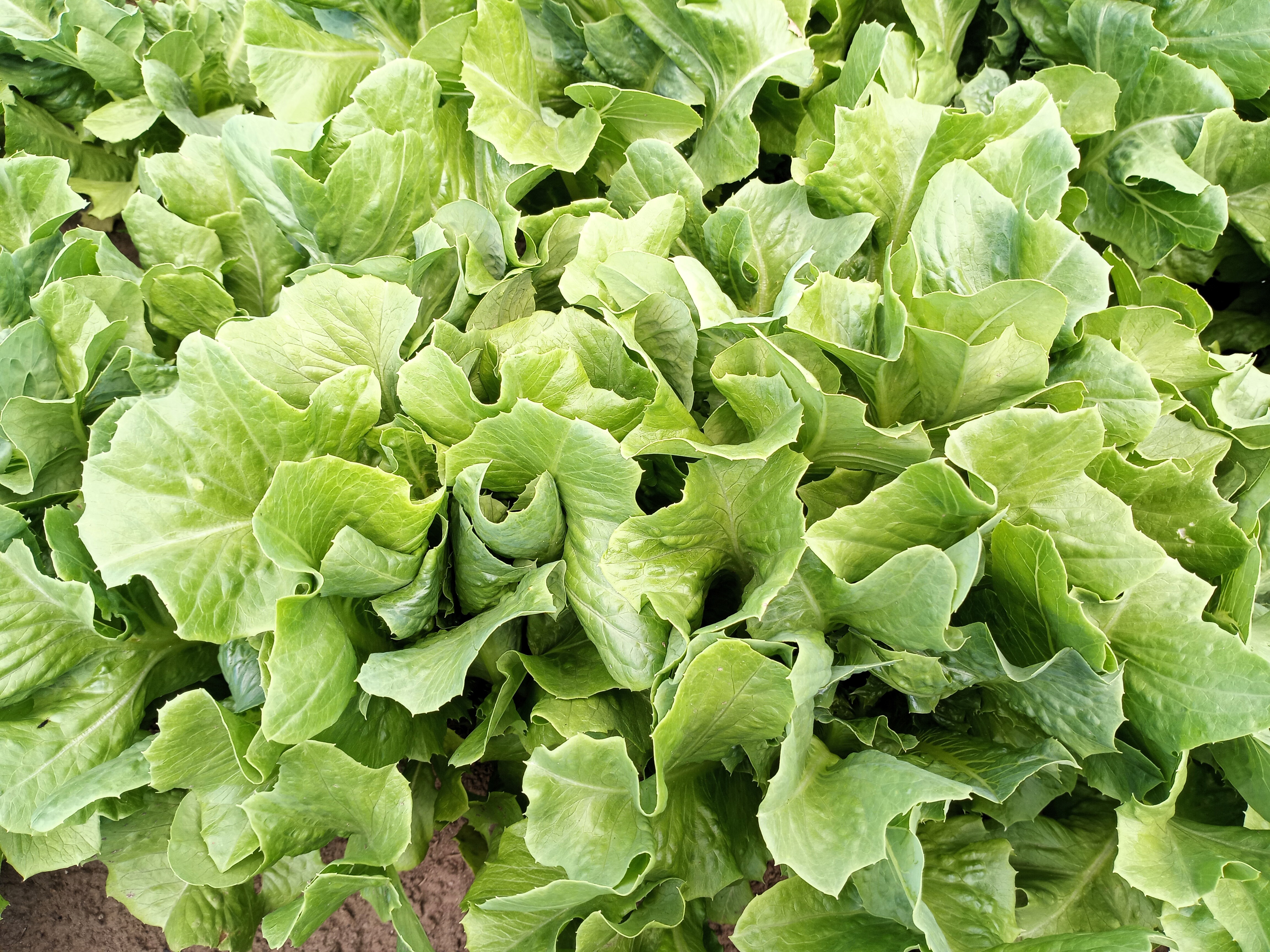
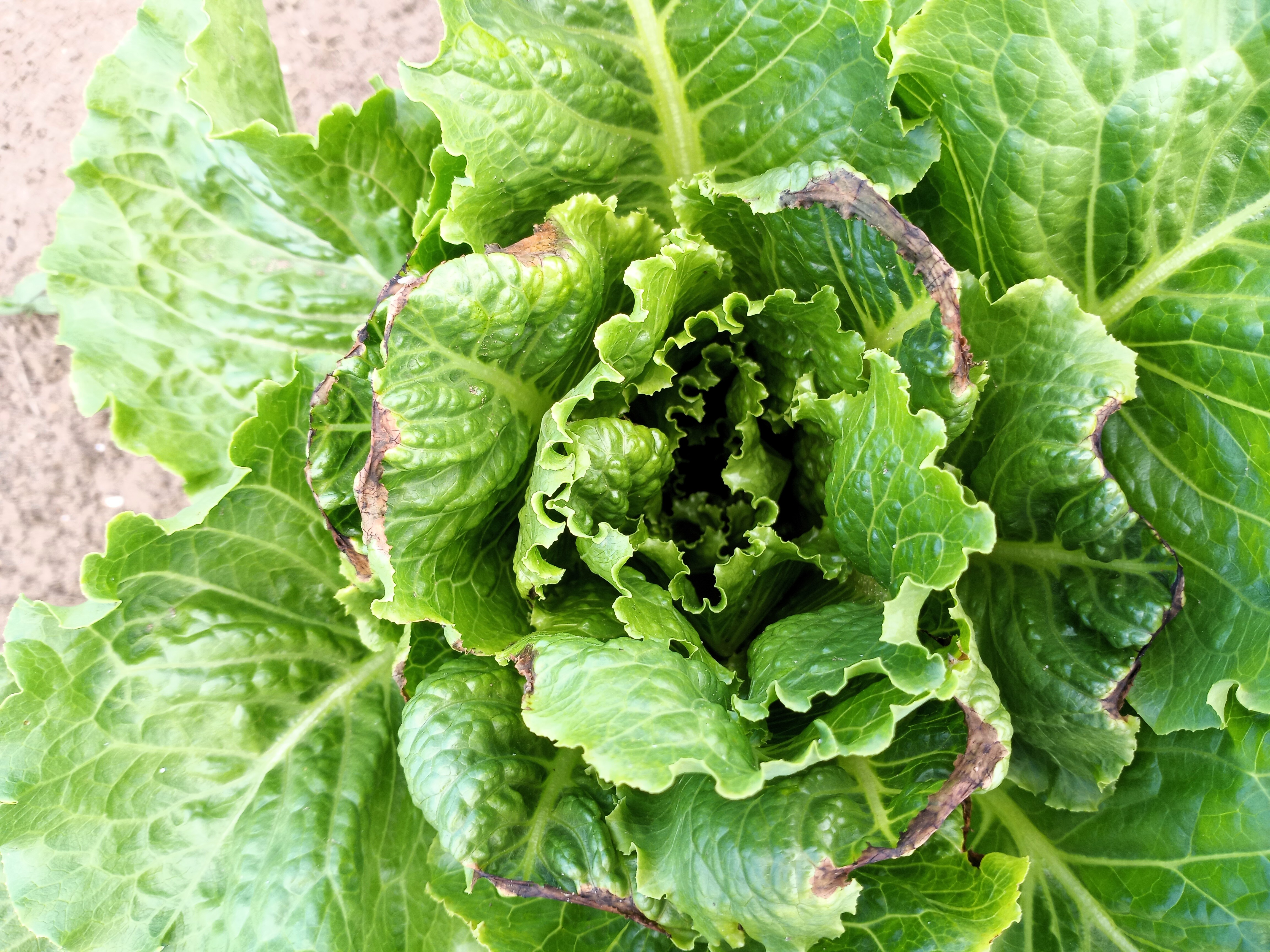
We have a selection of head lettuces this week. Here are some of them …
And this interesting one called spinach lettuce. Row 7 seeds who developed it describes it as a revolutionary romaine selected to bring more nutrition and flavor to everyday lettuce. Spinach lettuce marries the best of spinach and romaine, with tender, dark green leaves that are as stunning as they are delicious.
Another variety has heads that look look like this with a crispy burnt edge to some of the outer leaves. This is caused by the extreme heat we have experienced lately and is cosmetic only.
This is one of our favourite kinds of romaine. The other day these were small, perfectly formed round heads. Now they have stretched tall & lean due to the heat. We will leave them in the field for the groundhogs to enjoy.
Yes, there is a family of groundhogs who live along the banks of our pond and spend much of their day munching on our romaine lettuce. They know what’s good! Fortunately we have other beds maturing so we are leaving this one mostly for them (hoping they stay here and leave the others for us). If you read the newsletter last week, you will understand that this is one of the weedy beds that we are harvesting now and thus will not attempt to clean up.
Zucchini, fresh herbs and garlic scapes complete the box this week.
_________________________________________
Around the farm this week …
Most of the lettuce that we have planted in the last two weeks has been lost to the heat. We are using shade cloth on these beds to try and save them. Shade cloth – as the name suggests – shades the crop, providing protection from the hot sun and also preserving moisture in the soil. So far the lettuce appears to be doing ok.
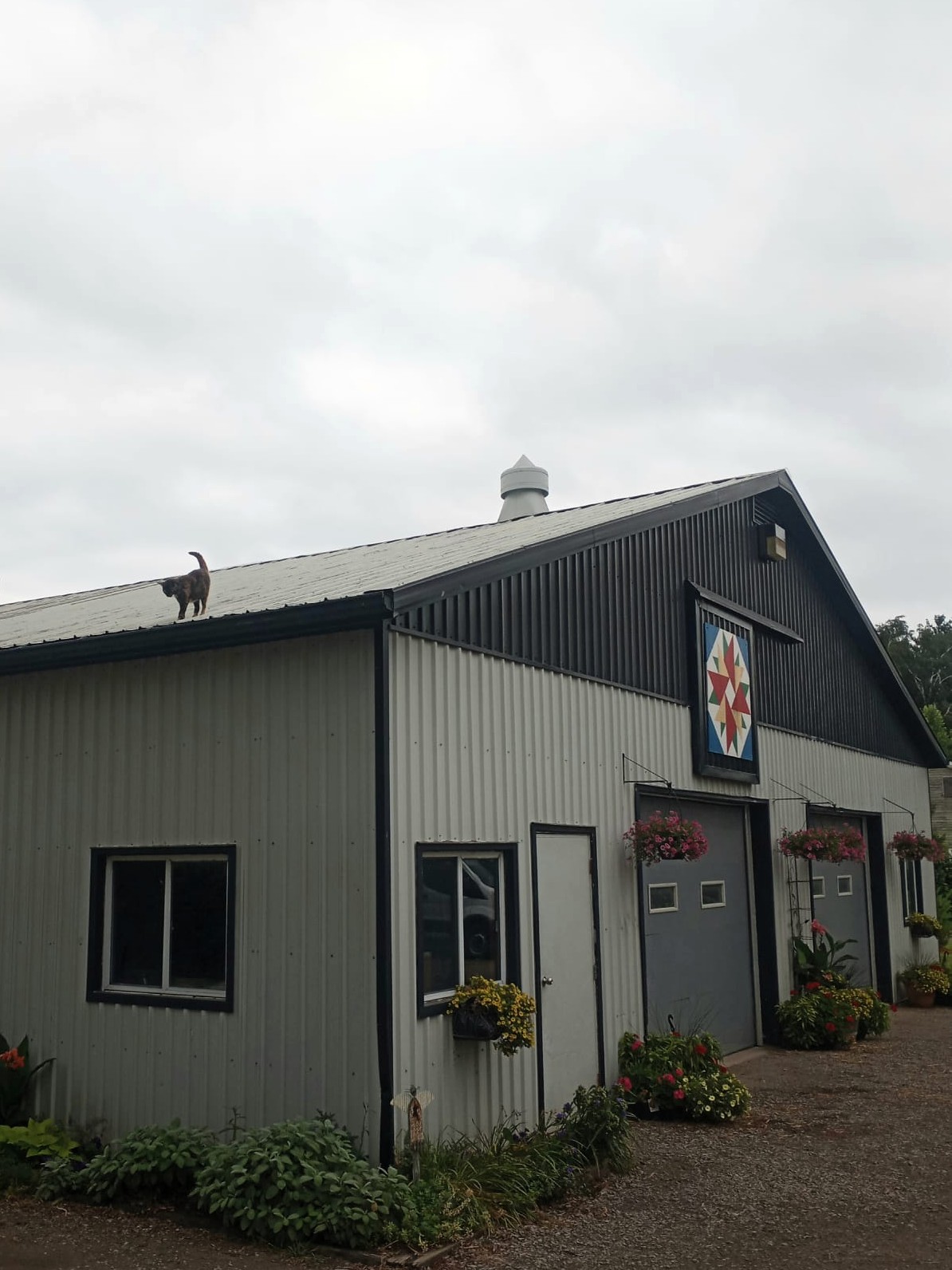
Hot days are meant for taking it easy – at least for some of us!
Canada Day treats from our CSA members. You guys are the best! Thank you!


















































































 thiessenfarms.com