
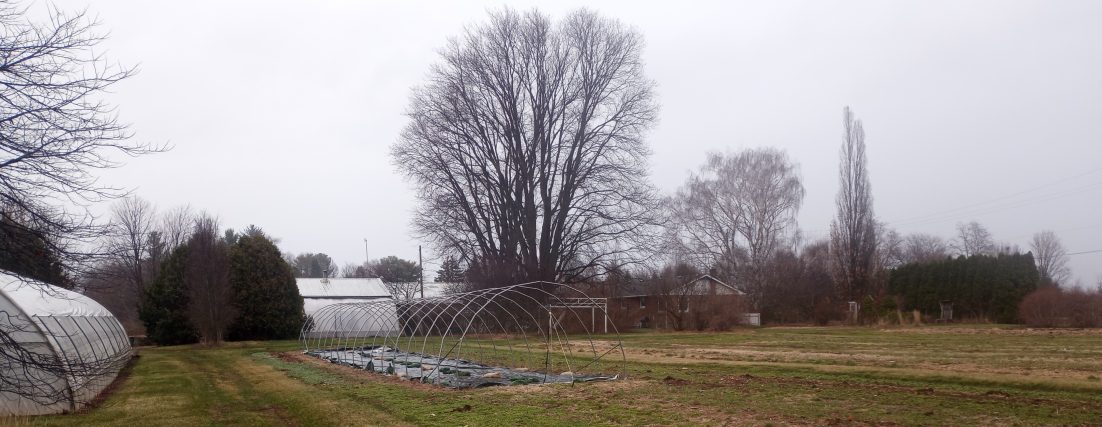
Welcome to CSA 2025!
What’s in the box?
Salad turnips, spinach, arugula, spicy stir fry mix, green garlic.
- Salad turnips are small, round, white turnips that resemble radishes, but without the bite! Mild in flavour, crisp, and quite tender, they are best eaten raw – simply wash, cut off the tops and enjoy! They can also be stir fried, sautéed, or steamed – both the turnips & the green tops.

- The spinach has been thriving in this cool spring weather. It is one of our most popular greens. Eaten fresh in a salad or lightly steamed, it is always delicious – and nutritious!
- Arugula is a bit spicy & nutty. Use it in salads, sandwiches or wraps, on pizza … If you find the taste a bit strong on its own, add it to your salad or maybe our spicy stir fry mix.
- Our spicy stir fry mix contains kale, mustard, mizuna & arugula. When the leaves are smaller it makes a delicious salad. This week the leaves are a bit larger so we suggest stir frying it. Add the turnip greens and green garlic – the taste will be amazing!
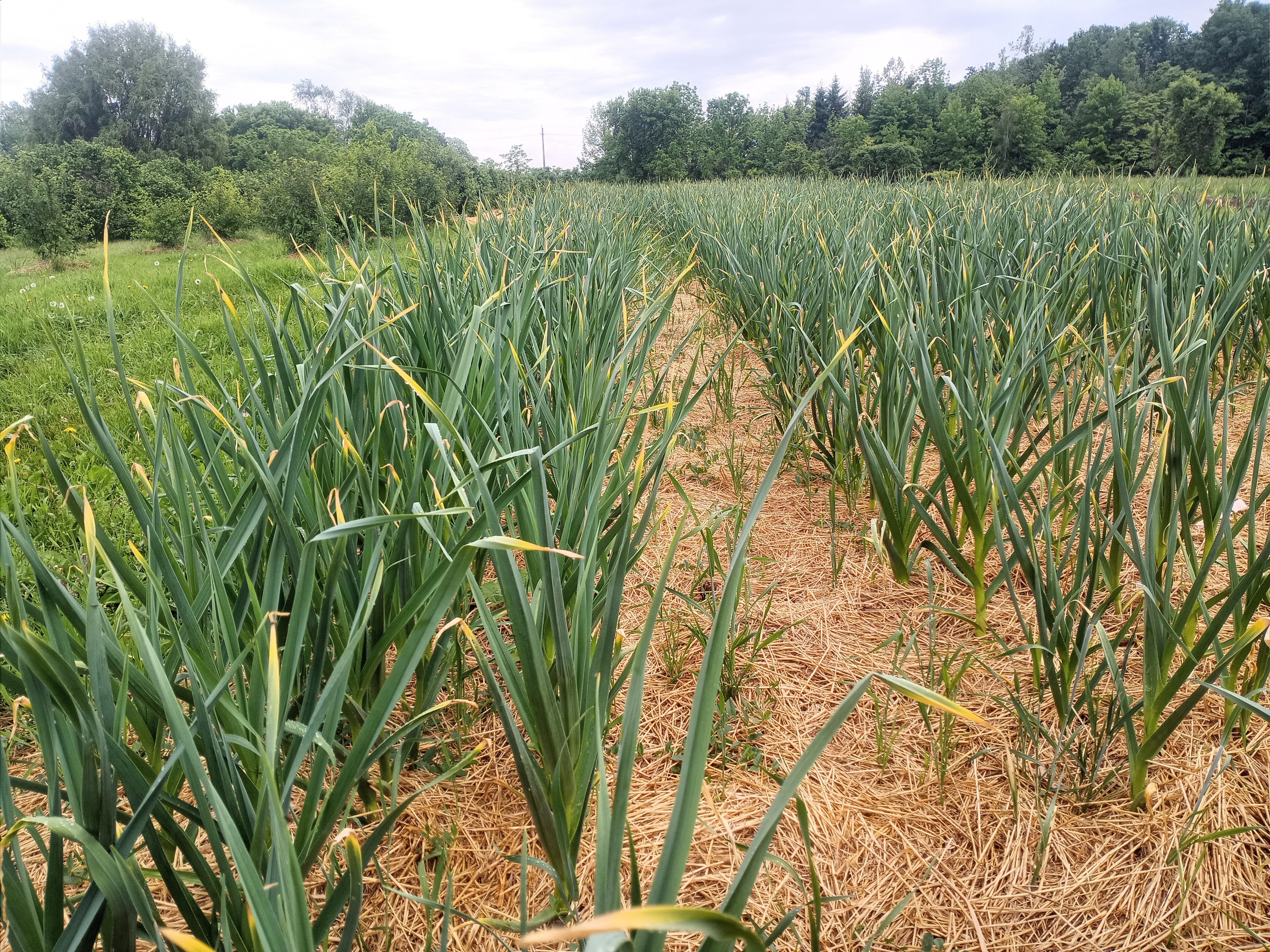
- Green garlic is a fresh garlic plant. At this time of year the garlic bulb has not yet formed below ground, and the green top is still tender enough to eat, like a scallion or green onion. Green garlic is milder than fall garlic bulbs. Use them raw (sliced into salads or mashed with goat cheese for a spread) or cooked (sautéed with scrambled eggs maybe) anywhere you would use garlic bulbs. They are also delicious brushed with olive oil & tossed whole on the barbecue. Store green garlic in the fridge.
All our greens (including lettuce, spinach, arugula … ) have been rinsed once to remove most of the field soil. You may want to wash them more thoroughly, bag them & store in the refrigerator. They should last at least a week.
____________________
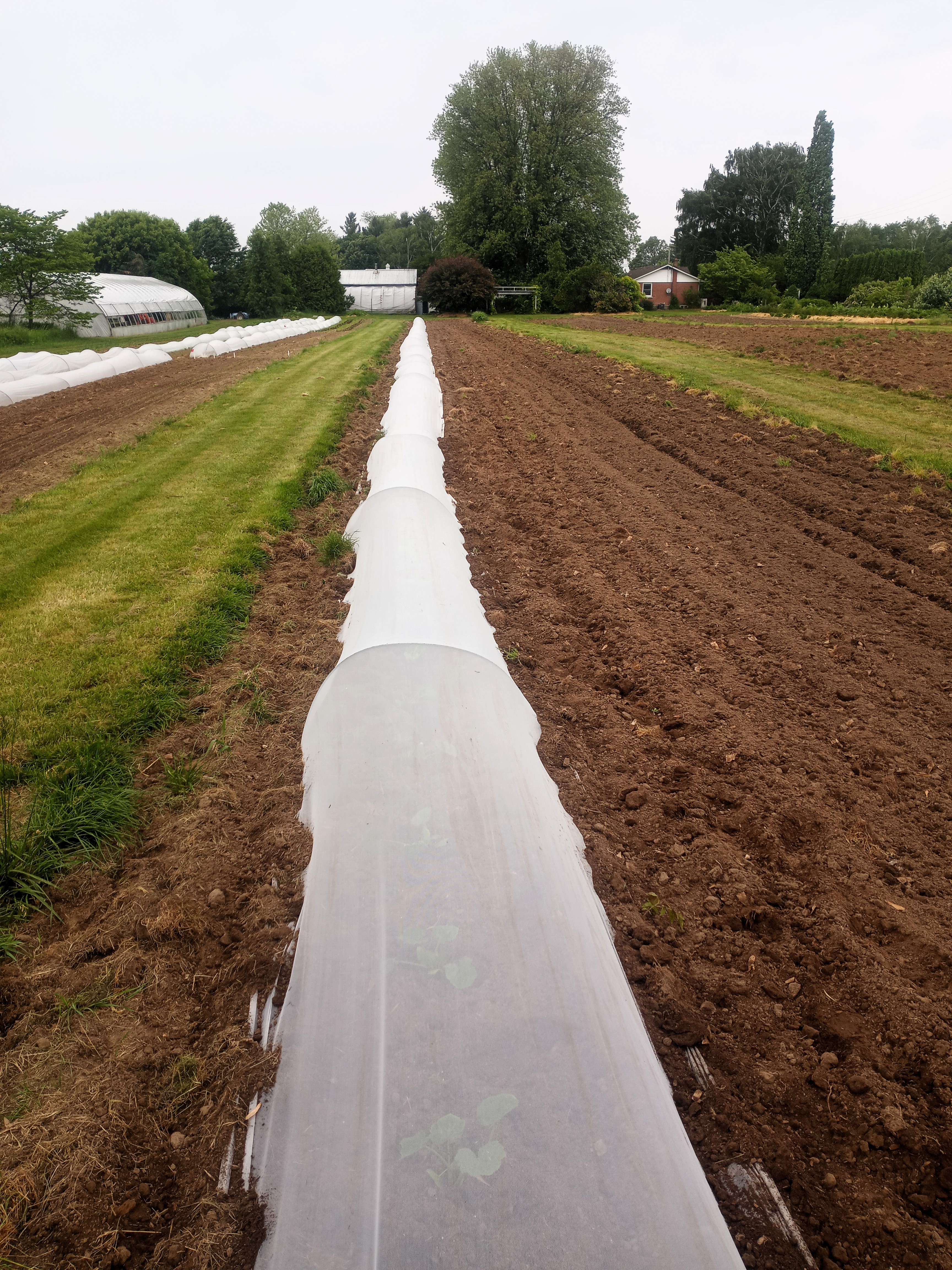
Our fields are dotted with white tunnels these days.

While they are not the most beautiful to look at, they have a very important function – they protect our crops from pests.
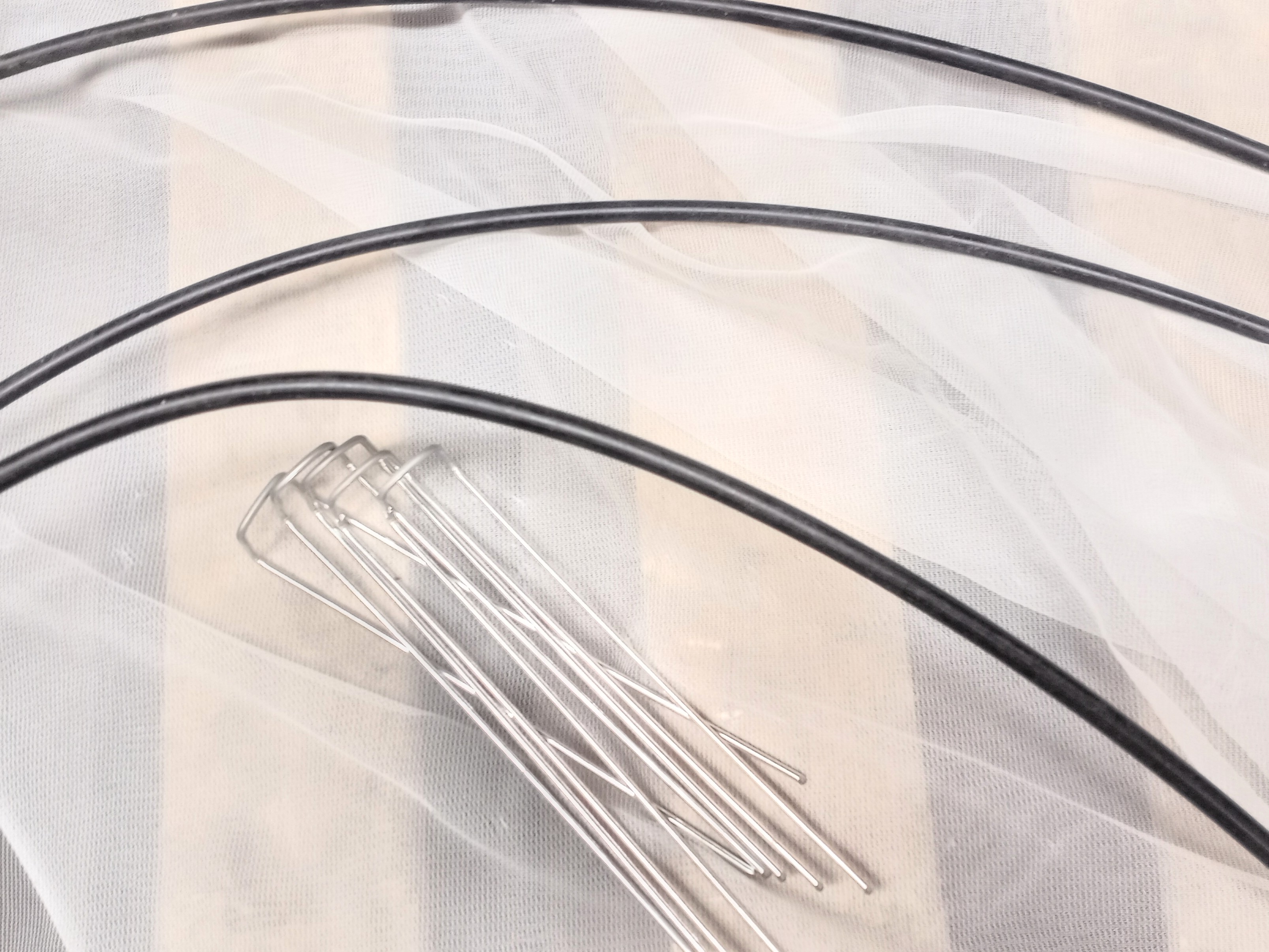
The tunnels are made of a knitted white mesh fabric similar to nylon. The mesh is small enough to keep insects from getting through and munching on our vegetables, but still allows sunlight to reach the crops and let the rain through. Most importantly, they protect our vegetables without the use of pesticides. After seeding or transplanting our crops, we insert hoops into the ground every 8′ to form an arch over the bed and stretch the insect netting over. We use metal staples to secure the netting and then cover the edges with soil.
Once the crops are able to withstand some insect damage or outgrow the covering, we remove the tunnel – and reuse it on the next crop that needs protection.
The hoops & staples have lasted for many years now, and we can usually get 3 years use from the netting before it weakens and tears, making the whole setup cost effective.


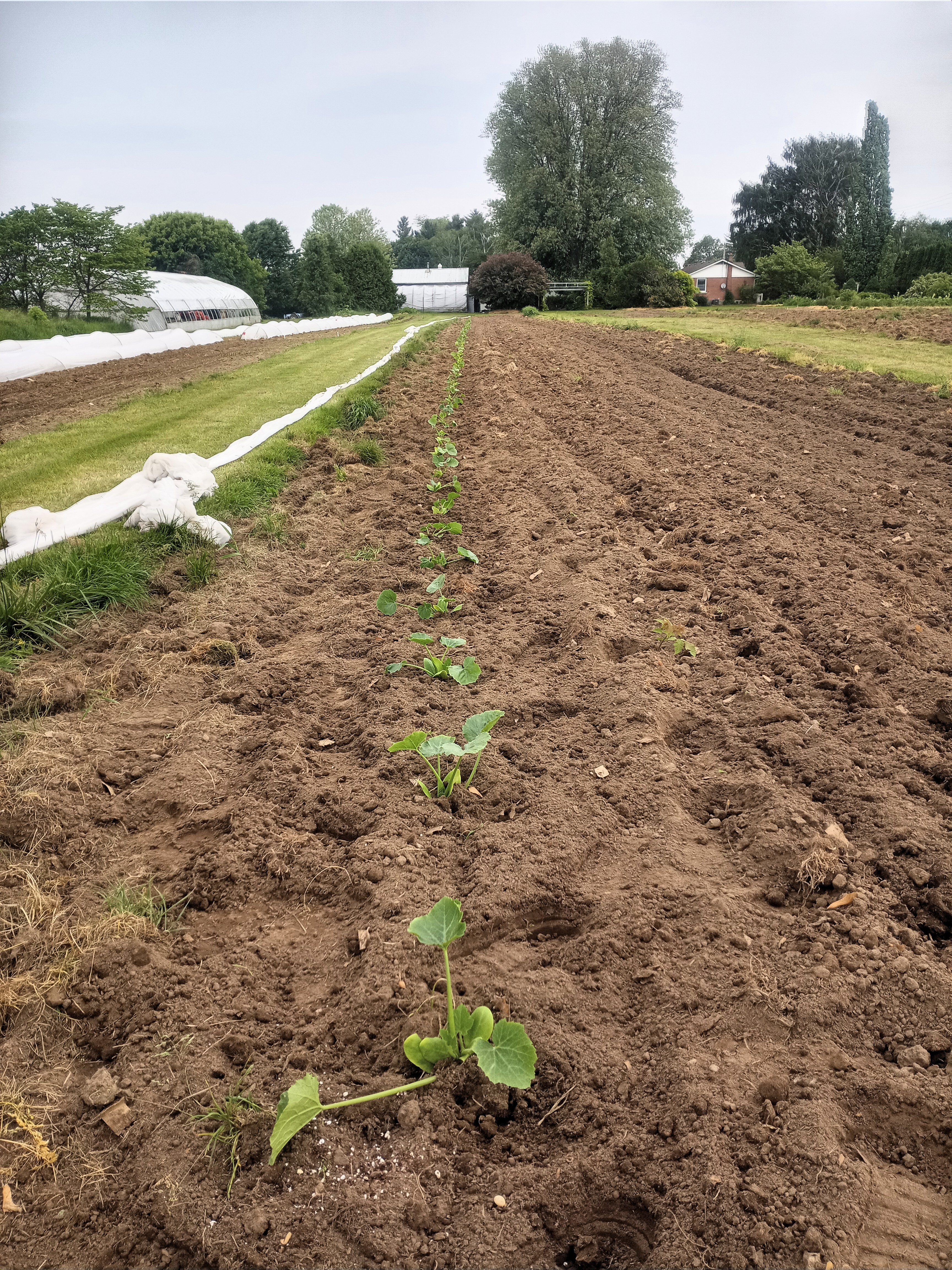
Today we planted zucchini and then promptly covered it to prevent damage from cucumber/squash beetles. When the plants blossom we will uncover them to allow the bees to pollinate the zucchini.
_________________________________________
Around the farm this week …
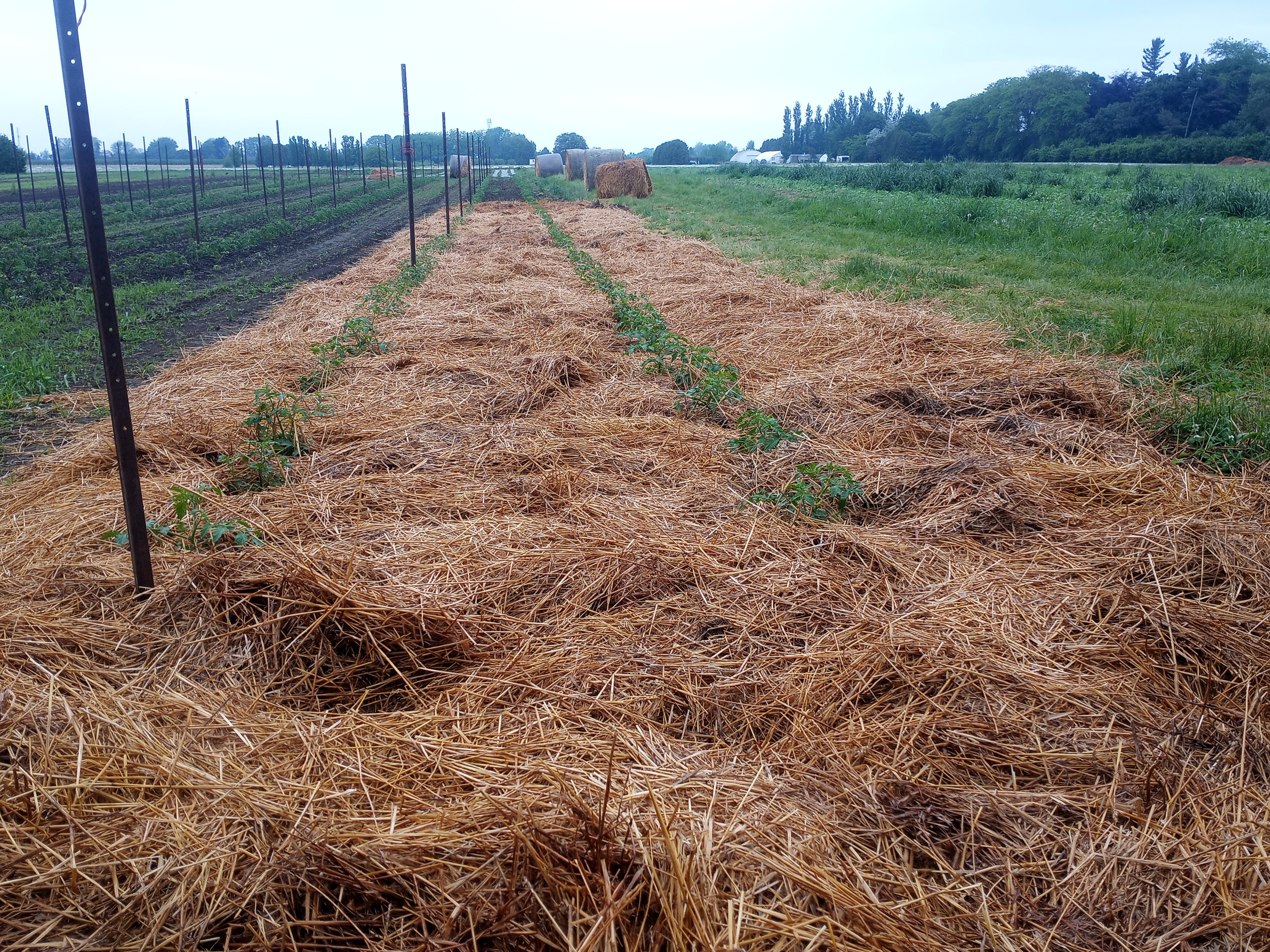
Tomatoes getting mulched with straw to keep the moisture in and the weeds out.
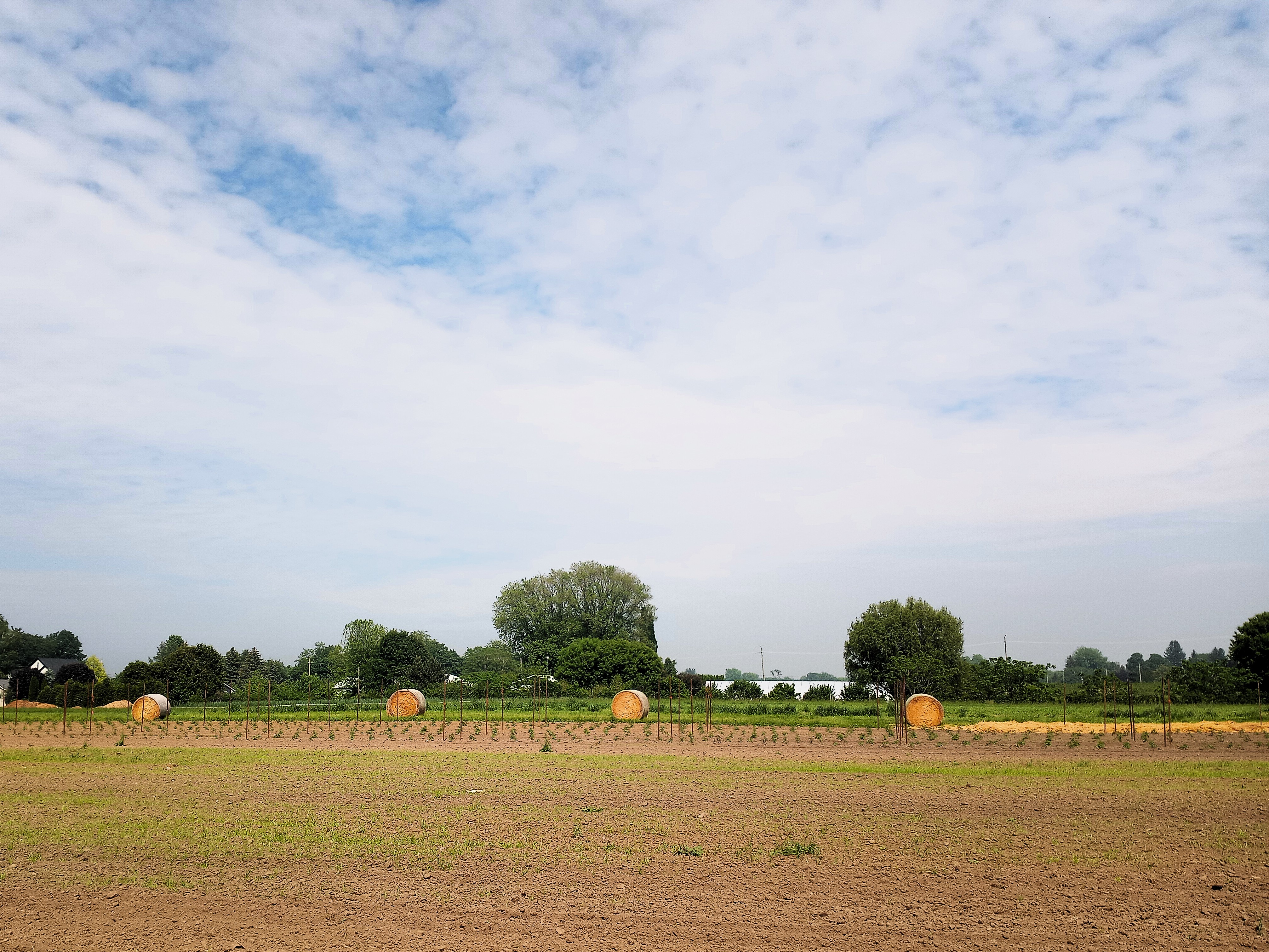
Our warm weather crops like tomatoes, peppers & eggplant loved the sun & seasonable temperatures last week.


Our farmers’ market stall looked beautiful on Saturday with the 1st of the peonies!


 thiessenfarms.com